
| Review | Open Access |
|---|
Renaissance of Urban Public Parks: Sustainable Park Management Practices on Alleviating Park Physical Value |
 |
|---|
 Joyce Marie S. Cagampang* 1 and Nurvin Zary E. Bustillo1,2
1University of Mindanao, Davao City, Philippines
2University of San Carlos, Talamban Campus, Cebu City, Philippines
The sustainable management practices of urban parks consider responsibility towards the environment and society. Moreover, these also focus on the short-term gains and long-term effects of managing parks oriented towards a sustainable approach. It is equally important to consider the contribution of urban parks to sustainability as much as they are valued for their visitor attraction and appreciation of nature. The current study aimed to evaluate the sustainable park management practices that alleviate the public space's physical value of Doña Vicenta Park in Davao City. The study is a descriptive-quantitative research, where the sustainable park management practices of the Doña Vicenta Park were first identified and then assessed by evaluating the environmental sustainability level of the urban park. The specific results suggested that Doña Vicenta Park has a rating of 48.8% with 2.44 points out of a 5-point scoring. The urban park did not meet even half of the valuation standards, which may suggest that it needs to incorporate environmentally friendly practices and be able to adjust to the varying needs of the establishment in terms of sustainability. Allowing other sustainable practices in managing and maintaining the park, such as the provision of the following: organic waste management for composting solid waste, bioswales, upgraded park entrances, bicycle infrastructure, solar-reflective paving materials, waste collection and separation service strategies, community gardens, and other factors may further improve the physical value of its amenities, facilities, services, and utilities.
1. INTRODUCTION
Public open spaces are areas that are kept from the development of built structures and can be either green spaces or civic spaces (Aly & Dimitrijevic, 2022). Urban parks and plazas are among the civic spaces in a city (Aly & Dimitrijevic, 2022), and they are considered recreational spaces for active and passive activities (Mohandespor & Yücel, 2019). These recreational spaces are significant for various uses, such as exercising, spending time with other people, and bonding with nature. This offers a valuable resource to design sustainable cities in order to maintain a healthy urban environment for urban residents (Dizdaroglu, 2022).
Several considerations in constructing and maintaining an urban park involve economic constraints and budget limitations (Kazemi et al., 2022). Sustainable strategies for the management of urban parks demand a high cost of design, construction, or maintenance, which prevents urban planners and designers from following such strategies compared to the standard methods of managing such public spaces (Kazemi et al., 2022). In the study of Dizdaroglu (2022), there are ten core sustainable design objectives of urban parks: (1) provision of green infrastructure; (2) formation of a place appropriate for all ages; (3) Walking distance connection of buildings and park systems; (4) conservation practices on energy and water consumption; (5) waste management; (6) promotion of access to low-cost, fresh, and healthy food; (7) preservation of biodiversity; (8) hands-on activities on environmental education and stewardship; (9) long-term maintenance and management of the park; and (10) disaster resilience support. Managing public parks encompasses the components of physical features, such as park facilities and equipment, safety, and security, and in a more elaborate view, it is grouped into sufficient assets, staffing, and equipment (Chan et al., 2018). Ensuring the establishment of connectivity and ecosystem services in an urban open space offers an appropriate design fit for such space (Wang & Foley, 2021). These are the established criteria for a sustainable design of urban parks. In enhancing and managing the image of urban parks, it is important to balance the experience of the users and the protection of urban park quality while minimizing its negative consequences (Aly & Dimitrijevic, 2022).
The context of analyzing the sustainable management practices applicable in maintaining the quality of urban parks can be a guideline for designing a better public open space suited to the environmental and physical needs of urban residents. The study's main objective was to evaluate the sustainable park management practices that alleviate the public space's physical value of Doña Vicenta Park in Davao City. The first sub-objective of the study was to determine the sustainable management practices incorporated in Doña Vicenta Park, Davao City, which alleviate the public space's physical value. The second sub-objective of the study was to assess the current environmental park management value of Doña Vicenta Park, Davao City. The third objective of the study was to evaluate the ecological sustainability level of Doña Vicenta Park, Davao City. These research objectives can be used to inquire into the existing sustainable management practices applied in the physical environment of the Doña Vicenta Park. This highlights the maintenance and management of the facilities, amenities, utilities, and services in the park for an enhanced experience and utilization by urban residents. Fulfilling the park management requirements and equipping sustainable park management practices could change the trajectory of how urban parks can be a valuable resource for designing sustainable urban communities and cities.
Case StudyFigure 1
Map of Doña Vicenta Park, Davao City
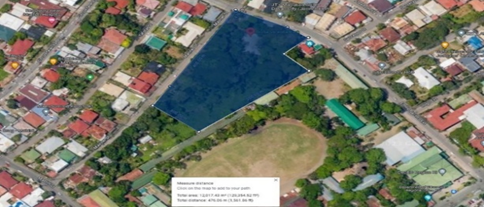
There are 34 public parks targeted to be launched by the City Environment and Natural Resources (CENRO) in Davao City (Olivares, 2023). The 1.2-hectare Doña Vicenta Park is one of the parks constructed in the existing urban environment (Saron, 2023b), which is located behind the Davao City National High School (Olivares, 2023). The newly opened park has notable features, such as an amphitheater, koi pond, stage, library, tropical garden, 200-meter skywalk (Newsline Philippines, 2023), bike lanes, and pathways for exercise (Mendoza, 2022). The second largest park is next to the People’s Park of Davao City (Olivares, 2023). It holds the most significant green space title from CENRO’s development project for developing urban green spaces (Cudis, 2022).
The budget allocation for the park was approximately 82.6 million, integrating a closed-circuit television video surveillance for security management (Mendoza, 2022) and using solar-powered lighting to promote sustainability (Newsline Philippines, 2023). The usual opening hours of the park are from 6 a.m. to 9 p.m., with 24-hour security surveillance (Saron, 2023a). The Doña Vicenta Park was marked as the 26th public park established by the Local Government Unit (Newsline Philippines, 2023). This offers a place to relieve stress and unwind (Saron, 2023a) while also enriching the natural landscape of the urban environment for several active and passive activities (Newsline Philippines, 2023).
Figure 2
Man’s Eye Perspective (Newsline Philippines, 2023) and Aerial Perspective (Sunnexdesk, 2023) of the Doña Vicenta Park, Davao City

The Doña Vicenta Park has an approximate location of 7°04'52"N 125°36'21"E in Emilio Jacinto Extension, Poblacion District, Davao City, Davao del Sur. Commercial, institutional, and residential areas surround the location of the urban park. It is near commercial establishments, such as Daidokoro Diner, Café Pelaya, Savory Bistro, Sweet Labao Pomelo, and other Fresh Fruit stores, BC Chicken, I Screamery, and known coffee shops. The institutional establishments are near the Barangay 10-A Barangay Hall, DepED Region XI, Davao City National High School, Our Lady of Fatima Assumption Parish, and other known institutional buildings. The residential establishments are near Global Dormitory, Junesis Residences, RedDoorz, other hotels and inns, and several private residential dwellings. The location of Doña Vicenta Park is an ideal recreational space used by urban residents, aiming to provide a picturesque environment within a highly urbanized city. Assessing the current condition of Doña Vicenta Park is beneficial in that the Local Government Unit can further maintain and manage it throughout the years.
Development of Sustainable Design Criteria for Urban ParksThe detached role of urban park managers in adequately planning and developing sustainable urban parks resulted in the degradation of urban park conditions (Chan et al., 2015). The management of urban parks is a long-term problem that should be combined with the public-service theory, focusing on the people-oriented concept, encouraging the public and the government to participate in its management work (Yu, 2021). It is equally important to consider the contribution of urban parks to sustainability as much as they are valued for its visitor attraction and appreciation of nature (Gonzalez et al., 2023).
A study was conducted by Dizdaroglu (2022) to develop design criteria for sustainable urban parks. In addressing the environmental problems of urban spaces, the sustainable design of urban parks was considered to be one of the most successful approaches (Dizdaroglu, 2022). In defining a sustainable urban park, various factors should correspond to the built environment, including the preservation of natural resources and improvement of wildlife habitat while serving the needs of the urban residents (Dizdaroglu, 2022). These sustainable parks should promote sustainable planning and management practices to correspond to the ever-changing environmental needs of a self-resilient landscape (Dizdaroglu, 2022). The ten core sustainable design objectives of urban parks were strategized for planning a sustainable urban park and minimizing the adverse effects of pollution on the environment (Dizdaroglu, 2022). These objectives correspond to enhancing the urban environment through the provision of green alternatives in transportation, increase in tree canopy, decrease in power demand and landfill waste, provision of green structures for reducing flooding and stormwater runoff, protection of watersheds, and promotion of educational activities and public engagement for sustainability (Dizdaroglu, 2022). These ten core sustainable design objectives are mentioned as : (1) provision of green infrastructure; (2) creation of a place for people of all ages; (3) construction of connected park systems within walking distance; (4) implementation of water and energy conservation practices; (5) waste management; (6) promotion of accessibility towards fresh, healthy, and low-cost food; (7) support and preservation of biodiversity; (8) hands-on activities through environmental education and stewardship; (9) assurance of long-term maintenance and management of the park; and (10) support for disaster resilience (Dizdaroglu, 2022). The established criteria for sustainable landscape maintenance were validated and enhanced in the study of Ahmad et al. (2022). Whereas, ten variables were considered in the study: (1) plant strategies; (2) fertilize organically; (3) soil and composting; (4) water efficiency; (5) pruning and shearing strategies; (6) pest and weed control; (7) sustainable hardscape materials; (8) minimization of fuel consumption; (8) sustainable drainage systems; and (10) sustainable tools and equipment. The criteria were linked to the practical operational maintenance of urban landscapes, which was then associated with the operation for cost-efficiency (Ahmad et al., 2022).
The provision of theory and information to manage public recreational spaces may guide the planning and designing of such spaces in the urban parks (Chen et al., 2013). Integrating practices aiming at a sustainable design process for urban parks is essential in assuring a better, more resilient, and healthier community (Dizdaroglu, 2022). In order to ensure the approaches and policies are in harmony, innovations in practice should be optimized, and planning should also be considered as a vital coordinating function (Carmona, 2019).
Emergence of Urban ParksLate in the 1980s, the United Kingdom (UK) adopted a new political philosophy, moving away from a social democratic welfare-based policy and towards an entrepreneurial policy in the process of defining leisure policy and services in urban parks. This movement occurred as the country moved from the 1980s to the 1990s (Page et al., 1994). This resulted in the establishment of public sector leisure services in the early 1990s in the form of social benefits provided by the establishment of parks in urban areas, with a larger emphasis placed on the economic side (Page et al., 1994). Between the years 1976 and 1992, a 55% rise in the number of public parks was seen as a direct result of the concern over the management of rules in the setting up of green spaces (Sadeghian & Vardanyan, 2015). In the early 1990s, the protected areas were expanded in terms of the land surface area they covered. This was made possible due to fund-raising efforts, obtained authorities, and activity in administering categories that identify the parks' status (West et al., 2008).
The need for a public open space symbolizing the botanical gardens, pleasure gardens, and landscape parks that existed in England in the 18th century led to the establishment of urban parks as a response to the vast urbanization that took place in cities across the United States and Europe (Sadeghian & Vardanyan, 2015). The development of urban parks was blown out of proportion in the latter part of the 20th century, whereas in the middle of the century, the development of urban parks was predicated on the upkeep of national exhibits (Sadeghian & Vardanyan, 2015). From the point of view of modernism, there has been an emergence to societal modernization, on which urban parks functions as an escape from the typical urban living which, in turn, has an influence on the absence of connection between people and landscape (Sadeghian & Vardanyan, 2015). There is a widespread lack of park services in the majority of the world's cities (Chen et al., 2019). This is caused by a number of causes, including park size and facilities, both of which are constrained as a result of the intense competition to enjoy park services (Chen et al., 2019). To contribute significantly to the resilience and sustainability of urban environments, it is essential to implement local sustainable management practices of urban parks. These practices should consider that water consumption, energy consumption, and waste management all have a global impact. Additionally, it is essential to hone the skills of park managers and their capacity to be held responsible for governing urban parks (Gonzalez et al., 2023).
Urban park designers should be well aware of designing urban landscapes and public spaces in relation to the concept of time, where natural elements are interrelated in terms of physical and chemical changes reproduced within the dynamic process of birth, growth, and decline of the natural components of urban parks and landscapes (Sadeghian & Vardanyan, 2015). The identification of many management techniques in the pursuit of sustainable green infrastructure with high levels of sustainability performance has the potential to benefit the people of urban areas and the quality of life they enjoy in urban areas (Pantaloni et al., 2022).
Urban Parks: Essential or Not?People have increasingly been estranged from nature as a result of the urbanization of their lifestyles, which was heavily influenced by the appearance of urban landscape (Hung et al., 2022). The abundance of urban green areas is reflected in the city's green infrastructures, which have shown considerable improvements in their social, economic, and environmental performance (Pantaloni et al., 2022). There are a number of studies that demonstrate the benefits of urban green areas with a restorative impact on human beings, particularly in terms of their contribution to attention functioning (Hung et al., 2022).
A significant component of metropolitan areas, urban parks, give the impression of vigor and culture from the outside while also adhering to the principles of public service and welfare (Yu, 2021). These parks play an essential part in the maintenance and development of smart cities by fostering the growth of environmentally friendly infrastructures and strengthening the fortitude of the urban environment (Gonzalez et al., 2023). When it comes to the care and administration of urban parks, there should be consistent maintenance, the implementation of sound management and monitoring practices, as well as the identification and resolution of concerns with the parks' level of safety and security (Ahmed, 2021). The planning, construction, and administration of urban public parks are paid for with public money. Nevertheless, the growing complexity of managing and sustaining such parks has forced the formation of public-private partnerships in order to keep them up and running (Takyi & Seidel, 2017). The various weaknesses and threats in urban parks are noticeable in terms of the following: (1) lack of integration management and proactive approach (2) prolonged shortage of funds in managing urban parks; and (3) park managers are less responsive in addressing the current situation of urban parks (Chan et al., 2015). There are factors that hinder the conservation and integration of urban parks including financial limitation, non-existence of environmental policies regarding environmental risks, and lack of integration between decision-making and availability of scientific knowledge (Zanin et al., 2005). Assessing the monetary value of an urban area properly requires determining its value to the environment which is necessary in order to slow the rate at which its resources are used up (Nimi, 2020).
It has been demonstrated that people's emotional and physical well-being may be restored to a greater degree when they spend time in green places in the city, such as urban parks and natural landscapes (Hung et al., 2022). The rapid globalization within the realm of a city's economy concentrated largely on the establishment of modern communication and information systems, with significantly less attention paid to the protection and preservation of the natural landscape (West et al., 2008). It is advantageous for the physical and mental health of urban residents to provide a sanctuary from the active noise of the urban environment through the creation, improvement, and management of green spaces (Chen et al., 2022). This may be accomplished by providing an escape from the urban environment in the form of a park (Chen et al., 2022).
Methodology
The study is a descriptive-quantitative research. Whereas, the sustainable park management practices of the Doña Vicenta Park were first identified and then assessed by evaluating the environmental sustainability level of the urban park. The study mainly focused to identify the sustainable park management practices that alleviate the physical value of the Doña Vicenta Park in Davao City.
Research DesignThe study was based on a descriptive-quantitative research design that assessed the physical value of the Doña Vicenta Park in Davao City regarding its environmental sustainability level. Moreover, it also identified the urban park's existing sustainable park management practices. The study's research design determined the level of environmental sustainability of the Doña Vicenta Park by examining the present condition of its facilities. The quantitative data collected from rating the park's current conditions provided insight into what sustainable park management practices are being utilized to conserve the physical value of the urban park.
Data CollectionThe data collection comprised three parts mentioned as follows:
- The identification of the physical value of the Doña Vicenta Park in the existing environment and the quality of the urban park facilities.
- The identification of the sustainability level of the urban park through assessing different methods that make it environmentally adept in its practices.
- The identification of applying the ten core sustainable design objectives of urban parks to sustainable park management practices.
The study used a modified checklist, which was developed based on a synthesis of existing literature and guidelines on sustainable urban park design (e.g., EPA’s “Sustainable Design and Green Infrastructure” and selected international standards). The checklist was initially drafted with 45 indicators, categorized under the ten core sustainable design objectives. To ensure its validity, the draft checklist underwent expert review by three professionals in landscape architecture and environmental planning. Their feedback was used to refine the checklist for relevance, clarity, and completeness.
To assess the physical value of the urban park and determine its environmental sustainability level, the checklist was applied in the field through ocular inspection and site documentation. Each indicator was rated using a three-point Likert scale: Excellent (5), Sound (3), and Poor (1), based on observable features, maintenance conditions, and alignment with sustainable practices. The final part of the data collection involved evaluating the sustainable park management practices of Doña Vicenta Park through the lens of the core objectives and supported by photographs of the site.
Data AnalysisThe study's data was further analyzed by determining the existing sustainable management practices of the Doña Vicenta Park. The study was based on a descriptive-quantitative research that additionally assessed the environmental sustainability level of the park and its physical value. The data analyzed in this study gave insights into the existing practices utilized by the park manager in maintaining the environmental and physical quality of the Doña Vicenta Park.
To quantify sustainability performance, the study utilized the Weighted Sum Method (WSM) for the composite calculation. Each of the 45 indicators was assigned an equal weight of 0.222 or 2.22%. The final score for each design objective was computed by multiplying the weight of each indicator by its assigned score and summing the results. This produced a numerical representation of the park’s performance across the ten sustainable objectives. Along with incorporating WSM, the researcher included images depicting the existing conditions of the urban park. The ocular inspection was used to further assess the sustainable management practices visually.
Table 1 Valuation Standards Defined in the Study
| Elements | Environmental Indicators | Availability (YES or NO) | Interpretation of Evaluation | Scoring | Evaluation Method (Qualitative and Quantitative) | ||
|---|---|---|---|---|---|---|---|
| Excellent (5) | Good (3) | Poor (1) | |||||
| Green Infrastructure | Presence of Bioswales | Yes or No | Provision of bioswales (relatively) | Abundant | Average | Scarce | Physical survey of the site |
| Presence of Bioretention Ponds | Yes or No | Number of bioretention ponds | More than 1 | 1 | No provision | Physical survey of the site | |
| Presence of Constructed Wetlands | Yes or No | Number of constructed wetlands | More than 1 | 1 | No provision | Physical survey of the site | |
| Presence of Water Permeable Pavers | Yes or No | Provision of bioswales (relatively) | Abundant | Average | Scarce | Physical survey of the site | |
| Place for all Ages | Provision of Water Fountains | Yes or No | Provision of water fountains | More than 1 | 1 | No provision | Physical survey of the site |
| Provision of restrooms | Yes or No | Provision of clean, hygienic, and secure restrooms | Clean, hygienic, and secure | Not clean but secure | Not clean and secure | Physical survey of the site | |
| Provision of Informative Signs or Boards | Yes or No | Quantity and Quality of Informative Signs of Boards in terms of content | Abundant | Average | Scarce | Physical survey of the site | |
| Provision of Comfortable Sitting Areas | Yes or No | Number of comfortable sitting areas | Abundant | Average | Scarce | Physical survey of the site | |
| Building Connections to Park Systems and Wayfinding | Provision of interconnected streets for pedestrians and cyclists | Yes or No | Presence of sidewalks and bicycle lanes in the area | Abundant | Average | Scarce | Physical survey of the site |
| Provision of Traffic Calming Strategies | Yes or No | Quantity and Quality of signs and boards for mitigating traffic in the area | Abundant | Average | Scarce | Physical survey of the site | |
| Provision of Entry Points to the Park | Yes or No | Number of entrances | More than 4 | Between 2 and 4 | Fewer than 2 | Physical survey of the site | |
| Provision of Upgraded Park Entrances | Yes or No | Presence of technological devices for security along the entry points of the park's entrances | More than 1 | 1 | No provision | Physical survey of the site | |
| Provision of Bicycle Infrastructure | Yes or No | Provision of eco-bicycles in the area | Abundant | Average | Scarce | Physical survey of the site | |
| Water and Energy Practices | Provision of Greywater and Rainwater Harvesting Systems | Yes or No | Number of Water tanks incorporated in the area | More than 1 | 1 | No provision | Physical survey of the site |
| Provision of Smart Irrigation | Yes or No | Presence of drainage in the area | Abundant | Average | Scarce | Physical survey of the site | |
| Provision of Water-wise plants | Yes or No | Number of plants which does not require lots of water to grow | Abundant | Average | Scarce | Physical survey of the site | |
| Provision of Renewable Energy for Urban Lighting and Furniture | Yes or No | Provision of solar lighting around the park | Abundant | Average | Scarce | Physical survey of the site | |
| Provision of Solar-reflective paving materials | Yes or No | Provision of solar lighting around the park | Abundant | Average | Scarce | Physical survey of the site | |
| Provision of Water-saving devices | Yes or No | Provision of solar lighting around the park | Abundant | Average | Scarce | Physical survey of the site | |
| Presence of water bodies inside the park | Yes or No | Number of water bodies | More than 1 | 1 | No provision | Physical survey of the site | |
| Provision of Clean Energy Generation | Yes or No | Number of renewable energy saving devices | More than 5 | 3 to 5 | Less than 3 | Physical survey of the site | |
| Provision of LED Lighting in the offices | Yes or No | Number of LED Lighting | More than 5 | 3 to 5 | Less than 3 | Physical survey of the site | |
| Provision of LED Lighting in the green area | Yes or No | Number of LED Lighting | More than 10 | 5 to 10 | Less than 5 | Physical survey of the site | |
| Waste Management | Provision of Centers for Recycling and Recycling Programs | Yes or No | Number of recycling centers | More than 2 | 1 to 2 | No provision | Physical survey of the site |
| Provision of Organic Waste Management for Composting Solid Waste | Yes or No | Number of composting beds | More than 10 | 5 to 10 | Less than 5 | Physical survey of the site | |
| Provision of urban furniture specifically benches | Yes or No | Number of benches | More than 10 | 5 to 10 | Less than 5 | Physical survey of the site | |
| Provision of Pavements | Yes or No | Percentage of pavements | Abundant | Average | Scarce | Physical survey of the site | |
| Provision of Waste Collection and Separation Service Strategies | Yes or No | Number of trash bins | More than 5 | 3 to 5 | Less than 3 | Physical survey of the site | |
| Provision of pavements made from Recycled Materials | Yes or No | Percentage of pavements made from recycled materials | Abundant | Average | Scarce | Physical survey of the site | |
| Access to Fresh, Healthy, and Low-cost Food | Provision of Community Gardens | Yes or No | Number of community gardens | More than 2 | 1 to 2 | No provision | Physical survey of the site |
| Preservation of Biodiversity | Preservation of Native Trees | Yes or No | Richness of Native Trees | Abundant | Average | Scarce | Physical survey of the site |
| Preservation for healthy trees | Yes or No | Richness of Healthy Trees | Abundant | Average | Scarce | Physical survey of the site | |
| Preservation of diverse habitats for community animals | Yes or No | Number of habitats | More than 5 | Between 3 and 5 | Fewer than 3 | Physical survey of the site | |
| Preservation of pollinator gardens | Yes or No | Number of habitats | More than 5 | Between 3 and 5 | Fewer than 3 | Physical survey of the site | |
| Environmental Education and Stewardship | Provision of urban park activity programs | Yes or No | Provision of activities for enhancing the park's environmental value | Abundant | Average | Scarce | Physical survey of the site and interview |
| Provision of voluntary works | Yes or No | Provision of voluntary works promulgated by the park management | Abundant | Average | Scarce | Physical survey of the site and interview | |
| Provision of After School Activities | Yes or No | Number of students going in the park for after school activities | More than 50 | Between 30 to 50 | Fewer than 30 | Physical survey of the site | |
| Provision of Therapeutic Landscapes and Healing Gardens | Yes or No | Percentage of green space in the area | More than 75% | Between 40% and 75% | Less than 40% | Physical survey of the site | |
| Long-term Maintenance and Management | Provision of framework for linking urban park assets to the community | Yes or No | Provision of activities such as general cleaning, proper disposal of garbage which enhances the park's environmental value through giving access for the community to contribute | Abundant | Average | Scarce | Physical survey of the site and interview |
| Provision of opportunities for community engagement | Yes or No | Provision of spaces for picnics, family gatherings, social activities, meetings, etc. | Abundant | Average | Scarce | Physical survey of the site and interview | |
| Disaster Resilience | Provision of temporary shelters | Yes or No | Percentage of open space in the area that will serve as a space for constructing temporary shelters in the area | More than 75% | Between 40% and 75% | Less than 40% | Physical survey of the site |
| Provision of basic needs for food | Yes or No | Provision of Community gardens in the area for the production of food | More than 5 | 2 to 5 | Less than 2 | Physical survey of the site | |
| Provision of public water access | Yes or No | Whether or not the site layout addresses extreme events, such as designed constructed wetlands for storage in the event of extreme storms | More than 1 | 1 | No Adaptation Measure | Physical survey of the site and interview |
|
| Provision for waste management practices | Yes or No | Number of Waste Management Strategies incorporated in the area | More than 5 | 2 to 5 | Less than 2 | Physical survey of the site and interview | |
| Provision for power supply | Yes or No | Number of generators or batteries for storing solar energy | More than 1 | 1 | No Adaptation Measure | Physical survey of the site and interview |
|
Results
The overall results of the study showed different practices that the urban park management adapted, as represented in the graph and tabulated based on the evaluation standards set in Table 1.
Figure 3
Evaluation of the Sustainable Park Management Practices of Doña Vicenta Park Graph
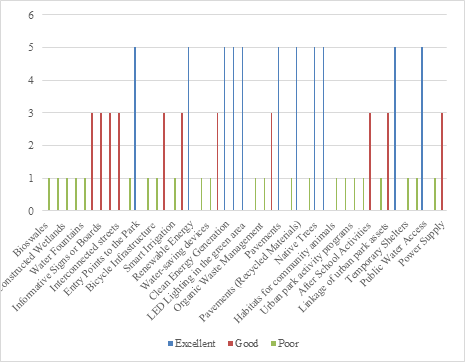
The Doña Vicenta Park is located in the Población District, Davao City, at the heart of the city. The researcher used valuation standards based on the study of Wang and Foley (2021) in determining the level of sustainable management practices incorporated in the urban park. The calculated evaluation of the results grounded on the WSM was also based on the existing factors within the park and how they are being utilized and managed. The valuation standards defined in the study, as shown in Table 1.0, were used for the evaluation of the physical environment of the Doña Vicenta Park. The specific results suggested that Doña Vicenta Park has a score of 48.8% with 2.44 points (with a maximum score of 5 points). In the assessment of the sustainable park management practices, the urban park did not meet even half of the intended score of the indicators. This may suggest that it needs to incorporate environmentally friendly practices and be able to adjust to the varying needs of the establishment in terms of sustainability. The bar graph above shows which urban park element has an excellent score, equivalent to 5 points—a good score equals 3 points, and a poor rating equals 1 point. The 11 urban park elements showed an excellent rating, and the other 11 elements represented a good rating. Meanwhile, 23 urban park elements showed a poor rating. All in all, 45 urban park elements were assessed in the Doña Vicenta Park. Mainly, the park's interior spaces were focused with minimal attention to what is happening outside its vicinity.
Table 2 shows the results of the study, in which the following sections were allotted to identify the urban park elements and the evaluation made for each of them. There are various practices that were not integrated into the maintenance and management of the identified urban park, which contributed to its below-average score. Identifying these elements was crucial in assessing the physical environment of the park and what could be further improved and established in terms of sustainability. This can be a benchmark to assess the different urban parks in order to provide a public space that practices sustainability in the facilities, amenities, utilities, and services. The local government unit may benefit from the results of the city to have a better understanding of the quality of maintenance and management of parks. The engagement of this research at the local level can be a benchmark for more sustainable public spaces able to accommodate the varying environmental aspects of the urban park design and development, taking a fresh and modern view on how it can be supported in the modern age.
Table 2 Results of the Study based on the Evaluation Standards in Table 1
| Elements | Environmental Indicators | Availability (YES or NO) | Remarks | Scoring | Subtotal | ||
|---|---|---|---|---|---|---|---|
| Excellent (5) | Good (3) | Poor (1) | |||||
| Green Infrastructure | Presence of Bioswales | NO | There is no provision. | 1 | 0.022 | ||
| Presence of Bioretention Ponds | NO | There is no provision. | 1 | 0.022 | |||
| Presence of Constructed Wetlands | NO | There is no provision. | 1 | 0.022 | |||
| Presence of Water Permeable Pavers | NO | Uses Eco-bricks | 1 | 0.022 | |||
| Place for all Ages | Provision of Water Fountains | NO | There is no provision. | 1 | 0.022 | ||
| Provision of restrooms | YES | There are instances where there is no available water, making it non-hygienic. | 3 | 0.066 | |||
| Provision of Informative Signs or Boards | YES | Informative signs such as Park’s Rules and Regulations are provided, and also signage such as “Keep off the grass”. | 3 | 0.066 | |||
| Provision of Comfortable Sitting Areas | YES | Sitting areas are everywhere in the vicinity (e.g., seating areas in the amphitheater) | 3 | 0.066 | |||
| Building Connections to Park Systems and Wayfinding | Provision of interconnected streets for pedestrians and cyclists | YES | Bicycle lanes and path walks are provided in the vicinity. | 3 | 0.066 | ||
| Provision of Traffic Calming Strategies | NO | There are no calming strategies in the area because the neighboring areas are less dense. | 1 | 0.022 | |||
| Provision of Entry Points to the Park | YES | There are 2 major designated entrances for vehicles and pedestrians, and 1 minor designated entrance for pedestrians. | 5 | 0.11 | |||
| Provision of Upgraded Park Entrances | NO | There are no upgraded features for the park entrances. | 1 | 0.022 | |||
| Provision of Bicycle Infrastructure | NO | Bicycles were not allowed in the area. | 1 | 0.022 | |||
| Water and Energy Practices | Provision of Greywater and Rainwater Harvesting Systems | YES | There are water tanks provided at the back of the Green Library, but it is not functional at the moment. | 3 | 0.066 | ||
| Provision of Smart Irrigation | NO | Typical drainage systems were provided. | 1 | 0.022 | |||
| Provision of Water-wise plants | YES | Some of the plants require less water, but the grasses require more attention in order to grow and cover the ground. | 3 | 0.066 | |||
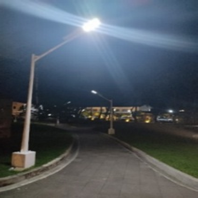
| Provision of Renewable Energy for Urban Lighting and Furniture | YES | The light posts in the area were solar-powered. | 5 | 0.11 | |||
| Provision of Solar-reflective paving materials | NO | There is no provision. | 1 | 0.022 | |||
| Provision of Water-saving devices | YES | There is a water tank provided, but it is not functional. | 1 | 0.022 | |||
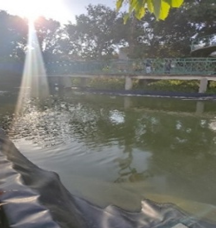
| Presence of water bodies inside the park | YES | There is a koi pond provided in the area. | 3 | 0.066 | |||
| Provision of Clean Energy Generation | YES | Solar panels located above the lamp posts or light posts were provided. | 5 | 0.11 | |||
| Provision of LED Lighting in the offices | YES | There is a provision of LED Lighting in the Green Library. | 5 | 0.11 | |||
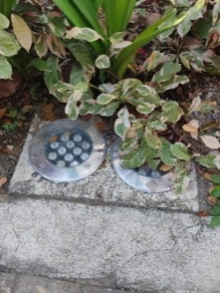
| Provision of LED Lighting | YES | There is a provision of LED Lighting along path. | 5 | 0.11 | |||
| Waste Management | Provision of Organic Waste Management for Composting Solid Waste | NO | There is no provision. | 1 | 0.022 | ||
| Provision of urban furniture specifically benches | YES | There is a provision along the edges of the park. | 3 | 0.066 | |||
| Provision of Pavements | YES | There is a provision of paved walkways. | 5 | 0.11 | |||
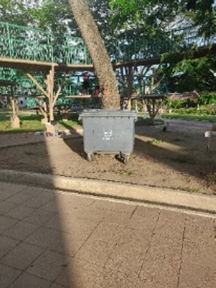
| Provision of Waste Collection and Separation Service Strategies | NO | There is only one garbage bin allocated in the area to secure the safety of the park users from any potential bombing incident, according to the assigned park personnel. | 1 | 0.022 | |||
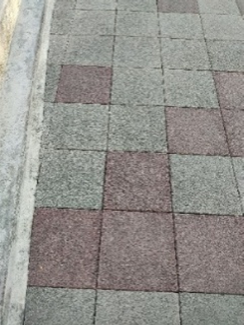
| Provision of pavements made from Recycled Materials | YES | The park material used for the path walk is made from eco-bricks, recycled plastics mixed with a cement mixture. | 5 | 0.11 | |||
| Access to Fresh, Healthy, and Low-Cost Food | Provision of Community Gardens | NO | There is no provision. | 1 | 0.022 | ||
| Preservation of Biodiversity | Preservation of Native Trees | YES | The native trees were preserved in the area and serve as a shade from the heat of the sun, making the park still usable even during a hot sunny day. | 5 | 0.11 | ||
| Preservation of healthy trees | YES | There were no trees cut down. | 5 | 0.11 | |||
| Preservation of diverse habitats for community animals | NO | Stray animals were not allowed to get inside the park, as it is stated in the park’s rules and regulations. | 1 | 0.022 | |||
| Preservation of pollinator gardens | NO | There is no provision. | 1 | 0.022 | |||
| Environmental Education and Stewardship | Provision of urban park activity programs | NO | There is no provision. | 1 | 0.022 | ||
| Provision of voluntary work | NO | The park personnel handling the management are given salaries from government funds. | 1 | 0.022 | |||
| Provision of After-School Activities | YES | There are school field trips happening in the area, and these schools came all the way from General Santos City and Cotabato City. | 3 | 0.066 | |||
| Provision of Therapeutic Landscapes and Healing Gardens | YES | There are gardens with benches located at the edges of the park and much farther away from the crowd that commonly uses the park. | 1 | 0.022 | |||
| Long-term Maintenance and Management | Provision of a framework for linking urban park assets to the community | YES | The urban park assets, such as the green library, koi pond, sky garden, and restrooms, are all made available to the neighboring community. | 3 | 0.066 | ||
| Provision of opportunities for community engagement | YES | The open spaces, structures, and buildings allocated in the area give an opportunity for community engagement. | 5 | 0.11 | |||
| Disaster Resilience | Provision of temporary shelters | YES | The amphitheater can be a temporary shelter during unforeseen events caused by natural disasters in the area. | 1 | 0.022 | ||
| Provision of basic needs for food | NO | There is no community garden or any sort of storage provided in the area. | 1 | 0.022 | |||
| Provision of public water access | YES | There are various faucets allocated in the park. | 5 | 0.11 | |||
| Provision for waste management practices | YES | There is no particular provision given but there is a garbage bin provided. | 1 | 0.022 | |||
| Provision for power supply | YES | There is a provision of power supply to power the whole park through the public power supply. | 3 | 0.066 | |||
| Total Score of the Computation Calculation | 2.442 | ||||||
Provisions of spaces for all ages are evident in the restroom facility, seating areas, and information boards and signage in the park’s vicinity.
Figure 4Provision of Secure but Unhygienic Restrooms for Males and Females

Provision of Seating Areas in the Park’s Vicinity

Provision of Information Boards – Park’s Rules and Regulations and Signages

The park can be accessed from three different sides, one on the corner where the main entrance is located, and where the drop-off area is provided. However, it is closed at the moment to control access in the area. The second entrance is located on the side adjacent to the major road, while the minor entry point is located on the opposite side, adjacent to the minor road in the area. There are also provisions for bicycle lanes adjacent to the perimeter sides of the park.
Figure 7The pathway at the park Interconnected to the Bicycle Lanes Allocated Outside the Park

Entry Points of the Doña Vicenta Park

The provisions of water and energy-saving practices are found in Doña Vicenta Park. These provisions involve solar energy and water tanks, ponds, and LED lighting in their building and pathways.
Figure 9Water Tank Provision

Typical Irrigation System
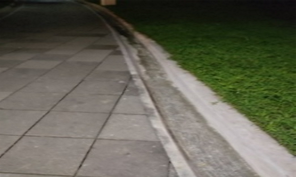
Water-wise Plants

Solar-powered Light Post
Provision of a Koi Pond
LED Lighting
The urban park has provided a garbage bin. However, there is no waste segregation practice, as it would compromise the safety of the park. The pavement is made of recycled plastics, that is, eco-brick. There are several seating areas in the park.
Figure 15Garbage Bin
Pavement made from Eco-bricks (Recycled Plastics)
Provision of Urban Furniture in the Park

The park has preserved the existing native and healthy trees in the area, and now it has contributed to the cool and refreshing ambiance exuded by the urban park.
Figure 18Native Trees were not Cut Down and were Well-Maintained

The park has provided healing gardens and therapeutic landscapes where people can enjoy whenever they want, as there are a lot of people who use the open spaces and amphitheater.
Figure 19Healing Gardens and Therapeutic Landscapes

The park can be used as a place of refuge in times of disaster, as it may provide basic needs, such as water and energy, as well as incorporate garbage bins for managing waste. However, the basic need for food was not provided. Thus, it cannot be fully functional as a long-term refuge area.
Figure 20Provision of Water, Garbage Bin, and Power Supply in the Park
Discussion
There is a provision for plants that consume less water, solar lamp posts for the park’s pathways, water-saving devices, such as water tanks, water bodies including koi ponds, clean energy generation through solar lighting, LED lighting for the offices, and green areas. The provision of urban furniture is evident in the area with pavements made from recycled materials, specifically eco-bricks. The native and healthy trees have been preserved. There are after-school activities held in the area, for it is open to people of all ages. Therapeutic landscapes and healing gardens were placed on the sides of the park’s premises. A framework links the urban park assets to the community, such as the green library, koi pond, sky garden, and restrooms available to the community and urban park users. Community engagement is also included. However, it is limited only to the provision of open spaces, park structures, and buildings. The provision of temporary shelters for any disaster is seen in the condition of amphitheaters and open spaces. There is access to public water and power supply, as well as waste management practices. However, it is limited to providing only one garbage bin in the park’s area.
The Doña Vicenta Park, located in Doña Vicenta Village, Barangay 9-A, with a 1.2-hectare land, has recently been opened to the public this year in August (Newsline Philippines, 2023). With this in consideration, the park is made for leisure. Although sustainable management practices are incorporated in the park, these are somewhat low, with a total score of 2.442 out of the 5-point scale. The 2.442 rating is between excellent and poor conditions, signifying that the facilities in the park are low to average in incorporating sustainable park management practices. The physical and environmental value of the park needs improvement, considering its rating. Allowing other sustainable practices in managing and maintaining the park may further improve its environmental value. Despite its low rating, the urban park is in good condition, for it is clean and well-maintained by the park management. However, there are practices that still need to be encouraged. These include waste segregation and provision of green infrastructure, such as rain gardens, use of water tanks, full use of solar-powered lighting in the park’s open spaces, establishment of community gardens for sustenance, as well as community engagement and provision of various activities for the active engagement of residents in the area. These sustainable park management practices can be a tool for a more progressive use of the park, aiming for a more sustainable approach in a diverse community of users and park managers. Considering these various factors may help alleviate the physical value of Doña Vicenta Park, which can be a prototype for parks aiming for sustainability within their management practices. Urban parks are not easily maintained and require funds to sustain their physical environment. Thus, assessing the park’s sustainable management practices may further help see what needs improvement in its amenities, facilities, services, and utilities.
Conflict of Interest
The authors of the manuscript have no financial or non-financial conflict of interest in the subject matter or materials discussed in this manuscript.
Data Availability Statement
Data availability is not applicable as no new data was created.
Funding Statement
The authors received no specific funding for this work.
REFERENCES
Ahmad, S., Ayob, Z., Hussain, N. H. M., & Nayan, N. M. (2022). Assessment of landscape maintenance towards cost planning: Expert validation on the criteria of sustainable landscape maintenance for public park. Journal of the Malaysian Institute of Planners, 20(3), 87–98.
Ahmed, M. O. (2021). Sustainable development of urban parks. International Journal of Advances Engineering and Civil Research, 1(1), 49–60. https://doi.org/10.21608/ijaecr.2023.214444.1012
Aly, D., & Dimitrijevic, B. (2022). Systems approach to the sustainable management of urban public parks. Urban Forestry & Urban Greening, 68, Article e127482. https://doi.org/10.1016/j.ufug.2022.127482
Asimgil, B. (2012). Sustainable planning of urban parks – The case of Balıkesir, Turkey. Megaron, 7(1), 1–14.
Carmona, M. (2019). Principles for public space design, planning to do better. Urban Design International, 24(1), 47–59. https://doi.org/10.1057/s41289-018-0070-3
Chan, C.-S., Marafa, L. M., & Van Den Bosch, C. C. K. (2015). Changing perspectives in urban park management: A longitudinal study of Hong Kong. Managing Sport and Leisure, 20(1), 56–76. https://doi.org/10.1080/13606719.2014.944411
Chan, C.-S., Si, F. H., & Marafa, L. M. (2018). Indicator development for sustainable urban park management in Hong Kong. Urban Forestry & Urban Greening, 31, 1–14. https://doi.org/10.1016/j.ufug.2018.01.025
Chen, B., Lu, S., & Hu, S. (2013, April 21–22). Assessing the public recreational space in the urban park from the psychological and behavioral aspects, a case study of Quyuan Park, Hangzhou, China [Paper presentation]. The 2nd International Conference On Systems Engineering and Modeling, Beijing, China.
Chen, K., Lin, H., You, S., & Han, Y. (2022). Review of the impact of urban parks and green spaces on residence prices in the environmental health context. Frontiers in Public Health, 10, Article e993801. https://doi.org/10.3389/fpubh.2022.993801
Chen, Q., Wang, C., Ge, L., Zhang, M., & Wu, S. (2019). Measurement of urban park accessibility from the Quasi-Public goods perspective. Sustainability, 11(17), Article e4573. https://doi.org/10.3390/su11174573
Cudis, C. (2022, June 10). Public parks to make Davao “more livable city.” Philippine News Agency. https://www.pna.gov.ph/index.php/articles/1176386
Dizdaroglu, D. (2022). Developing design criteria for sustainable urban parks. Journal of Contemporary Urban Affairs, 6(1), 69–81. https://doi.org/10.25034/ijcua.2022.v6n1-7
Gonzalez, T., Berger, P., Sanchez, C. N., & Mahichi, F. (2023). Sustainability of urban parks: Applicable methodological framework for a simple assessment. Sustainability, 15(21), Article e15262. https://doi.org/10.3390/su152115262
Hung, S.-H., Wu, C.-C., Yeh, Y.-C., Yeh, A., Chang, C.-Y., & Tang, H.-F. (2022). A study on measuring ecosystem service and physical and psychological health benefits in agricultural landscape. HortScience, 57(6), 708–714. https://doi.org/10.21273/HORTSCI16542-22
Kazemi, F., Hossein pour, N., & Mahdizadeh, H. (2022). Sustainable low-input urban park design based on some decision-making methods. Land Use Policy, 117, Article e106092. https://doi.org/10.1016/j.landusepol.2022.106092
Mendoza, I. F. (2022, August 12). City eyes to open park in Dona Vicenta in OCT. Pressreader. https://www.pressreader.com/philippines/sunstar-davao/20220811/281530819797654
Mohandespor, S., & Yücel, G. (2019). Evaluation of urban park design criteria in the Case Of Taraqi Park (Afghanistan, Herat). Journal of Architectural Research and Development, 1(1), 62–75. https://doi.org/10.26689/jard.v3i4.770
Newsline Philippines. (2023, August 5). P76-million Doña Vicenta Park unveiled in Davao City. https://newsline.ph/davao-region/2023/08/05/p76-million-dona-vicenta-park-unveiled-in-davao-city/
Nimi, K. S. (2020). Environment value: Concept and Measurement. EPRA International Journal of Research and Development, 6(6), 350–353. https://doi.org/10.36713/epra2013
Olivares, S. P. (2023, June 1). Cenro: City to open more public parks – Mindanao Times. Mindanao Times. https://mindanaotimes.com.ph/70858/
Page, S., Nielsen, K., & Goodenough, R. (1994). Managing urban parks: User perspectives and local leisure needs in the 1990s. The Service Industries Journal, 14(2), 216–237. https://doi.org/10.1080/02642069400000024
Pantaloni, M., Marinelli, G., Santilocchi, R., Minelli, A., & Neri, D. (2022). Sustainable management practices for urban green spaces to support green infrastructure: An Italian case study. Sustainability, 14(7), Article e4243. https://doi.org/10.3390/su14074243
Sadeghian, M. M., & Vardanyan, Z. (2015). A brief review on urban park history, classification and function. International Journal of Scientific & Technology Research, 4, 120–124.
Saron, R. G. (2023a, August 4). 30 workers to maintain Doña Vicenta Park. Mindanao Times. https://mindanaotimes.com.ph/30-workers-to-maintain-dona-vicenta-park/
Saron, R. G. (2023b, August 13). City set to open new park. Mindanao Times. https://mindanaotimes.com.ph/city-set-to-open-new-park-official/
Sunnexdesk. (2023, August 4). Doña Vicenta Park now open. SunStar. https://www.sunstar.com.ph/davao/local-news/dona-vicenta-park-now-open
Takyi, S. A., & Seidel, A. D. (2017). Adaptive management in sustainable park planning and management: Case study of the city of Vancouver Parks. Journal of Urban Ecology, 3(1), Article ejuw009. https://doi.org/10.1093/jue/juw009
Wang, J., & Foley, K. (2021). Assessing the performance of urban open space for achieving sustainable and resilient cities: A pilot study of two urban parks in Dublin, Ireland. Urban Forestry & Urban Greening, 62, Article e127180. https://doi.org/10.1016/j.ufug.2021.127180
West, P., Igoe, J., & Brockington, D. (2008). Parks and Peoples: The Social Impact of Protected Areas. Annual Review of Anthropology, 35, 251–277. https://doi.org/10.1146/annurev.anthro.35.081705.123308
Yu, X. (2021). Research on urban park management problems and countermeasures from the view of new public service theory—Taking chengdu as an example. Open Access Library Journal, 8(8), Article e7811. https://doi.org/10.4236/oalib.1107811
Zanin, E. M., Santos, J. E. dos, & Henke-Oliveira, C. (2005). Environmental analysis and zoning for an urban park management purpose. Brazilian Archives of Biology and Technology, 48, 647–655. https://doi.org/10.1590/S1516-89132005000500018