
| Review | Open Access |
|---|
Contemporary Islamic Ethics: An Analysis of Tariq Ramadan’s Perspectives on the Jurisprudence of Minorities and the Realities of Life in the West |
 |
|---|
 Andi Nurlela1, Aprianif2, Muhammad Ainur Rofiq2, Yazeed Ghinan Abdullah2, Akhmad Nizar2, and Hanung Sito Rohmawati2
1Sunan Gunung Djati State Islamic University Bandung, Indonesia
2Syarif Hidayatullah State Islamic University Jakarta, Indonesia
Every society is built upon particular values, and for Muslims, Islam provides the core framework that unites and guides their lives. In Western secular societies, however, Muslims face a dual challenge: integrating/assimilating successfully into the broader community while also preserving their Islamic identity and overcoming social barriers. To address this, Tariq Ramadan advocates for a dynamic hermeneutics of maqāṣid al-sharīʿah, positioning it as an ethical framework within Islamic methodology. Yet, his approach has not gone without critique. Scholars, such as al-ʿAlwānī, have advanced the concept of fiqh al-aqalliyyāt (minority jurisprudence) as an alternative way of responding to the unique realities of Muslim life in the West. This study explored contemporary Islamic ethics through the lens of Tariq Ramadan’s thought, with a particular focus on minority jurisprudence and the lived experiences of Muslim minorities in the West. Drawing on qualitative, library-based research, the study examined Ramadan’s key writings to assess his contributions. The findings indicated that Ramadan’s vision goes beyond offering an alternative to fiqh al-aqalliyyāt. It presents a more integrative framework that enables Muslims in the West to navigate their faith in harmony with modern life. In this process of identity formation, Ramadan works towards reconciling Islam with citizenship and the values of Western civilization. From an economic standpoint, Ramadan does not reject capitalism outright but calls for moral reforms that align economic activity with Islamic principles and social justice values, such as equity, sustainability, and community welfare. In this way, he reframes the presence of Muslims in the West not as a theological anomaly or an exception to Islamic tradition, however, as a legitimate and enriching force that contributes to the broader ethical fabric of society. This study, therefore, added to the wider discourse on contemporary Islamic ethics. Moreover, it highlighted the role of minority jurisprudence in shaping the lived experiences of Muslim communities in Western contexts.
1. INTRODUCTION
Over the past few decades, scholarship on the ethics of jurisprudence for Muslim minorities has grown into an important field of study, attracting the attention of both academics and Muslim thinkers. This discourse arose out of the recognition that traditional fiqh often fell short in addressing the complex sociopolitical realities experienced by Muslims living as minorities in largely secular contexts, particularly in America and Europe. It reflects an effort to bridge the gap between inherited legal traditions and the practical challenges of Muslim life in modern Western societies.1 Thus, this discussion seeks to provide not only a normative position but also an Islamic legal position that understands the socio-cultural realities of experienced Muslims in the West.
Fazlur Rahman (1919–1988) observes that traditional fiqh often relies on rigid interpretations of Islam that do not sufficiently account for the complexities of modern life. By contrast, he argues that an ethical approach is more adaptable, providing Muslims with a framework that supports the practice of their faith without compromising its core principles. Such an approach, in Rahman’s view, fosters a deeper and more meaningful understanding of religion, making it more applicable to everyday life than a system narrowly focused on legal rulings alone.2
Fazlur Rahman offers a critical perspective on maqāṣid al-sharīʿah, the framework that emphasizes the objectives of Islamic law. This approach began to gain wider recognition in the United States and Europe during the 1990s and has since become an enduring part of academic debates. Rahman’s critique contributes to the ongoing evolution of this discourse, which continues to shape contemporary scholarly discussions on the role and application of maqāṣid al-sharīʿah in modern contexts.3 Much of the conceptual foundation of this discourse has been developed by scholars from the Middle East who have sought to sensitively integrate Islamic law into Western cultural contexts.
Since the beginning of the 21st century, there has been a noticeable rise in English-language scholarship on maqāṣid al-sharīʿah. Among the most influential contributions is the development of fiqh al-aqalliyyāt, which seeks to address the specific legal and ethical needs of Muslims living in Western societies. These writings form part of a broader conversation on uṣūl al-fiqh and maqāṣid al-sharīʿah in the West, a discourse that has been significantly shaped by Tariq Ramadan’s ethical interpretation of Islam. His works To Be a European Muslim (1999) and Western Muslims and the Future of Islam (2004) stand out as foundational texts in framing this discussion.
From the latter half of the 20th century into the early 21st, growing attention has been given to how Muslim minority communities might find their place within predominantly non-Muslim societies. These debates paved the way for the emergence and development of fiqh al-aqalliyyāt in the early 1990s, establishing it as a significant strand of discourse within the broader framework of maqāṣid al-sharīʿah in Western contexts.4 Some scholars do consider Ramadan’s work as an essential part in constructing fiqh al-aqalliyyāt. This is because his approach is that of a dialogue and an interaction of Islam and the Western society.5
Nevertheless, in Radical Reform, Ramadan critiques the broader discourse on fiqh al-aqalliyyāt, arguing that much of it remains overly presumptive and fails to deliver practical solutions for Muslims living in the West. In response, he puts forward an innovative model of Islamic ethics designed to engage directly with the lived realities of Western societies. Through this model, he seeks to reaffirm Islam’s relevance in modernity, presenting it not as a static tradition but as a dynamic framework capable of guiding Muslims in complex and evolving contexts.6
This study also examined fiqh al-aqalliyyāt with reference to Taha Jâbir al-ʿAlwānī’s (1935–2016) Towards a Fiqh for Minorities: Some Basic Reflections (2003), which laid important groundwork for the field. Yet, Ramadan’s perspective is distinctive for its emphasis on integrating the idea of a “Western Muslim” through dialogue and the exchange of ideas, reflecting Islam’s inherently interactive character. In contrast to al-ʿAlwānī, whose approach tends towards a more parochial application of fiqh al-aqalliyyāt, Ramadan’s formulation draws on the insights of Islamic sociology to present a more fluid and adaptable conception of Western Muslim identity.
These elements, which shape the foundation of Tariq Ramadan’s contemporary vision of Islamic ethics, help explain the rationale behind fiqh al-aqalliyyāt and its practical use for Muslims living in the West. His approach emphasizes context, identity, and economic participation, making it possible for Western Muslims to embrace a broader ethical outlook that allows them to engage fully in an open society without compromising their faith or intellectual integrity. In terms of identity, Ramadan presents a dynamic understanding of what it means to be a Western Muslim—an identity that is not only rooted in Islam but also enriched by the absorption of Western cultural experiences as part of one’s Muslim selfhood.7 This places Ramadan in contrast with Taha Jâbir al-ʿAlwānī, who places greater emphasis on strict adherence to Islamic cultural practices. Ramadan, by comparison, aims to develop a value system that harmonizes the lived identity of Muslims in the West with the foundational principles of Islam. In doing so, he seeks to create a framework that allows Muslims to remain faithful to their tradition while fully engaging with the societies in which they live.
Ramadan’s approach to modern Islamic ethics in relation to the economy is grounded in dialogue, as it addresses the intersection between Islamic values and the realities of today’s global financial system. He argues that Muslims should actively participate in the international economic sphere while remaining guided by Islamic ethical principles. In this respect, his perspective contrasts with that of al-ʿAlwānī, who advocates for a more closed Islamic economic model that operates apart from global systems. Ramadan, by contrast, envisions an economic framework that engages with the modern economy, allowing for a dynamic exchange in which Islamic ethics can both respond to and shape international economic developments.
2. Literature Review
2.1. Islamic EthicsIn Islam, ethics serve as guiding principles that shape how human beings relate both to one another and to God. These principles are grounded in the Qur’ān and Hadīth and have been expanded over time through the contributions of scholars in areas, such as Islamic philosophy, Sufism, and fiqh. Within academic discourse, Islamic ethics is closely tied to the concept of akhlāq, which goes beyond ethics in a narrow sense to encompass the broader moral values and ideals that define the Islamic way of life.8
In Islam, ethics is rooted in akhlāq, which refers to a person’s character and conduct as shaped by Islamic teachings. Al-Ghazali describes good akhlāq as the natural outcome of sincere faith and an awareness of one’s responsibilities towards both God and society. Seen in this way, Islam functions as a comprehensive moral system one that extends beyond individual acts of devotion and worship to include social, economic, and political life. This holistic scope is what gives Islamic ethics its depth and relevance across all aspects of human existence.9
A central concept in understanding the Islamic ethical system is maqāṣid al-sharīʿah, or the objectives of Islamic law. These objectives serve as guiding principles that ensure the law fulfills its higher purpose. As Laldin explains, Islamic law is fundamentally designed to safeguard five essential aspects of human life: religion (dīn), life (nafs), intellect (ʿaql), lineage (nasl), and wealth (māl). Together, these elements form the core framework for protecting human dignity and ensuring social harmony.10 The principle of tawḥīd, which emphasizes that all aspects of life should be oriented towards submission to the Divine, is central to this ethical framework.11
Tariq Ramadan’s views on ethics stem directly from the primary sources of the Islamic tradition: the Qur’ān and the Hadith. However, as maqāṣid al-sharī’ah argues, these sources alone are not sufficient. Ramadan introduces the concept of sukūt Allāh, the idea that the silence of the primary sources on certain contemporary issues creates room for human reasoning and ethical reflection. For him, this silence is not a limitation but an invitation to interpret Sharīʿah in ways that remain responsive to evolving social realities. Building on this principle, he proposes an ethical framework he describes as “the application of Sharīʿah in muʿāmalah,” emphasizing its role in guiding human interactions and social affairs. Unlike some scholars who keep the objectives of Sharīʿah in the abstract, Ramadan seeks to translate them into practice, with the goal of enhancing the full development of human life in this world.12
The objectives of Sharīʿah, or maqāṣid al-sharīʿah, are structured in a hierarchy, with ad-dīn (religion) and maṣlaḥah (public interest) occupying the highest tier. Beneath them are secondary objectives, such as conscience, physical integrity, health, and livelihood. While these may not carry the same legal weight as the supreme objectives, they are nonetheless essential rights that must be safeguarded across all spheres of life, including politics. Ramadan argues that the true spirit of democracy can only be realized when it actively protects and promotes these fundamental human rights.13
3. Research Method ology
This study adopted a qualitative, library-based research approach to critically explore contemporary Islamic ethics as articulated by Tariq Ramadan, with particular attention to fiqh al-aqalliyyāt (minority jurisprudence) and the socio-religious experiences of Muslims in Western societies. Since the inquiry was primarily theoretical, this method was deemed most suitable, enabling a thorough examination of philosophical and jurisprudential debates through a systematic review of academic literature. This approach provided the depth and flexibility needed to engage critically with Ramadan’s ideas and their broader implications. Data for this study were gathered through a systematic review of both primary and secondary sources, including books, peer-reviewed journal articles, and other scholarly works. Particular emphasis was placed on Tariq Ramadan’s key writings To Be a European Muslim (1999), Western Muslims and the Future of Islam (2004), and Radical Reform: Islamic Ethics and Liberation (2009). These provided the core foundation for analyzing his ethical framework and its relevance to contemporary Islamic thought. To situate Ramadan’s contributions within the wider intellectual landscape, the review also engaged with existing scholarship on fiqh al-aqalliyyāt, Islamic ethics, and minority jurisprudence. Thereby, the study offered a contextualized understanding of his ideas in relation to broader academic debates. Finally, the study employed content analysis as its main analytical approach, concentrating on identifying and interpreting the central themes, arguments, and ideas within the selected texts. This method allowed for a nuanced exploration of the ethical principles underlying Ramadan’s vision of Sharīʿah and provided insight into its potential applicability and relevance in the context of today’s diverse and multicultural societies.
Results
4.1. Tariq Ramadan: Biography and Intellectual DevelopmentTariq Ramadan was born in 1962 in Switzerland into a family with strong intellectual and religious roots. He is the grandson of Hasan al-Banna (1906-1949), the founder of the Muslim Brotherhood, and the son of Said Ramadan (1926-1995), a respected Islamic scholar and activist. Although born into an Egyptian family, Ramadan grew up in Europe, where he grappled with the complexities of living between two worlds, that is, his Islamic heritage and his Western environment. By the age of 13, he had already embarked on an intellectual and spiritual quest to reconcile these identities. The scholarly influence of his father and grandfather provided both guidance and inspiration, shaping his early reflections on faith, identity, and modernity. His enduring curiosity led him to raise critical questions about the relationship between Islam and Western civilization, as well as the role of global Islamic ethics in contemporary society.
In 1987, Tariq Ramadan completed his Master’s degree in Philosophy and French Literature, a milestone that demonstrated his engagement with European intellectual and cultural traditions. This foundation significantly shaped his later scholarship, particularly as he became involved in debates about Islam’s place in Europe. His voice gained prominence in the wake of key controversies, such as the fatwa against Salman Rushdie in 1989, the hijab debates in France, and discussions surrounding French ḥudūd laws issues that continue to spark dialogue today. Over time, Ramadan emerged not only as a scholar but also as a public figure addressing the challenges facing Muslims in the West. Motivated by intellectual inquiry and a search for identity, he turned towards advanced Islamic studies in Cairo. By early 1992, he had begun intensive training in religion under scholars from Al-Azhar University, further grounding his work in classical Islamic knowledge.14
Between 1997 and 2003, Tariq Ramadan served as a professor at the University of Fribourg in Switzerland. He was later appointed to a position at the University of Notre Dame in the United States. However, his move was disrupted when the U.S. Department of State revoked his visa. As a result, he accepted a post at the University of Oxford in the United Kingdom. Since the autumn of 2005, he has held the role of Professor of Contemporary Islamic Studies at St. Antony’s College, Oxford, where he continues to contribute to scholarship on Islam and modern society.15
In Radical Reform: Islamic Ethics and Liberation, Tariq Ramadan explains Islamic ethics through two interrelated sources: the Book of Revelation, which includes the Qur’ān and Hadith, and the Book of Nature, which reflects the realities of society and the environment. His approach integrates the textual sciences, such as ʿulūm al-Qurʾān and uṣūl al-fiqh with the contextual sciences, including sociology and philosophy while remaining rooted in the tradition of maqāṣid al-sharīʿah, the objectives of Islamic law. Building on this foundation, Ramadan introduces a four-tiered conceptual framework in which the most universal objectives stand at the highest level, gradually narrowing to more specific aims at the lower levels. This hierarchical model reflects his vision of a dynamic, layered, and contextually responsive understanding of Islamic ethics.16
Tariq Ramadan deepens the meaning of ad-dīn by grounding it in two essential sources: the Book of Revelation (the Qur’ān and Hadīth) and the Book of Nature (the social, cultural, and environmental realities of the world). Through engagement with both, human beings as God’s creations are guided to recognize and believe in Him, and to fulfill His commands with conscious awareness. For Ramadan, the significance of ad-dīn goes beyond safeguarding the traditional pillars of faith (arkān al-īmān) and the pillars of Islam (arkān al-Islām) emphasized in classical maqāṣid al-sharīʿah. Instead, it extends to the broader existential dimensions of human life, shaping how individuals find meaning and purpose in their existence. Ad-dīn is understood as a “conception of life and death,” giving Islamic moral philosophy a renewed depth of meaning and purpose. In Ramadan’s view, Islamic law operates along both vertical and horizontal dimensions, which led him to develop a carefully structured hierarchy of sharīʿah objectives. This hierarchy is organized into four levels: at the top are the most universal aims, while each subsequent level narrows in scope, addressing increasingly specific dimensions of human existence and social life.17
In this regard, Ramadan places two overarching goals at the highest tier of his framework: ad-dīn (faith) and al-maṣlaḥah (the common good and collective human interest). He views creation as an interconnected system in which every species has a distinct role, forming the basis for a structure that enables human beings to flourish both individually and as communities. From this perspective, he argues that all elements of creation are ultimately directed towards protecting humanity from fasād any form of corruption or harm that threatens the integrity of life and society.18
At the second level of objectives, which Ramadan grounds in ad-dīn and al-maṣlaḥah, he identifies three core principles: safeguarding life, protecting nature, and promoting peace. He argues that the teachings of the Qur’ān and Sunnah consistently point back to these foundations. This can be seen, for instance, in the Qur’ān’s prohibition of murder described as equivalent to killing all of humanity19 in the injunctions to avoid causing harm to God’s creation, and in numerous Hadiths that stress the need to preserve ecological balance while cultivating harmony within society. Through these principles, Ramadan highlights the universality and enduring relevance of Islamic ethics.20
Ramadan frames these as objectives that relate to the broader fabric of human social life. Among them are values that directly shape individuals as members of society, such as dignity, well-being, knowledge, creativity, autonomy (both personal and collective), equality, justice, freedom, diversity, fraternity, compassion, solidarity, and socio-cultural plurality. He argues that Islamic texts can be understood in light of these aims as society continues to evolve, which is why he insists on the importance of contextual interpretation. In this way, the objectives at this level are not fixed but remain dynamic and adaptable, ensuring that Islamic ethics stay relevant to the changing needs of modern society.21
At the fourth level of his framework, Ramadan turns to more concrete objectives that focus on the inner self, the individual, and the social sphere. For the inner self, he emphasizes spiritual and moral growth, highlighting the importance of nurturing the heart and soul through qualities, such as conscience, honesty, reflection, balance, and humility. In relation to the individual self, he extends this vision to include a person’s overall wellbeing covering physical and mental health, education and intelligence, employment, family background, economic security, and even the surrounding neighbourhood. Finally, within the social self, he underscores the significance of collective values, such as harmony, cooperation, and the promotion of general welfare. Through these layers, Ramadan seeks to link personal development with wider social responsibility.22
Yet, even with the breadth of Ramadan’s hierarchical maqāṣid framework, critics contend that it lacks methodological precision when translated into practical jurisprudence. While he stresses the importance of integrating revelation with contemporary context, scholars note that he does not fully resolve the dilemmas that emerge when Qur’ānic directives stand in direct tension with liberal-democratic values in Western societies. This gap raises concerns about how effectively his model can be operationalized to address the complex realities faced by Muslim minorities.23 Moreover, his reliance on the idea of “contextualization” has been criticized as being overly idealistic and lacking concrete mechanisms for legal implementation.24 For instance, although Ramadan’s emphasis on al-maṣlaḥah (the common good) reflects the spirit of classical maqāṣid thought, critics argue that he offers little clarity on how to weigh competing interests in pluralistic societies. Muslim minorities in the West often face situations where moral claims clash, yet Ramadan’s framework provides limited direction to resolve such tensions. As a result, his vision is often seen as more aspirational than practical, leaving open questions about its real effectiveness in guiding Muslim communities in Western contexts.
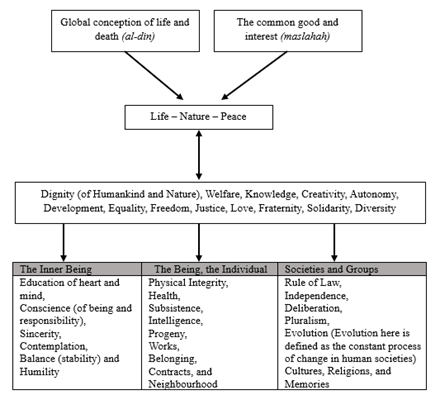
Figure 1. Ramadan’s Ethical Objectives in Sharī’ah
4.2. Dynamics of Minority Fiqh in the Context of Muslims in the WestFiqh al-aqalliyyāt, or “jurisprudence of minorities”, refers to a specialized strand of Islamic law developed to address the unique circumstances of Muslim communities living outside majority-Muslim societies. The concept began to take shape in the early 1990s in both America and Europe, primarily through the efforts of two key institutions: the Fiqh Council of North America in Virginia and the European Council for Research and Fatwa in the United Kingdom. Among its most influential proponents was Yusuf al-Qaradawi (1926–2022), whose contributions in Qatar played a pivotal role in shaping and advancing this field of jurisprudence. He was an Egyptian academic who, following a long stay in Qatar after being granted temporary residency in the early 70s, devoted the remainder of his life there. In the U.S., Taha Jabir al-‘Alwani, co-founder of the Fiqh Council of North America (FCNA), pioneered systematic fiqh al-aqalliyyāt frameworks from the 1980s.25
Another significant development of fiqh al-aqalliyyāt emerged in the United States as a response to the practical challenges Muslims encountered in living out their faith within Western societies. It became clear that the frameworks of medieval classical fiqh were insufficient to address the daily realities of Muslims in America. As a result, many fatwās were issued based on contemporary circumstances, even if they seemed paradoxical when measured against traditional jurisprudence. These contradictions pushed Western Muslims into deeper discussions aimed at shaping a more authentic and systematic approach—one that could provide Islamic guidance while remaining grounded in their lived context. In 1994, the Fiqh Council of North America (FCNA), together with al-ʿAlwānī and his colleagues, initiated a concerted effort to develop fiqh al-aqalliyyāt into a more coherent and comprehensive framework.
Al-ʿAlwānī recognized that the situation of Muslims in the West has changed significantly over the past few decades. He argued that the traditional model of fiqh al-rukhṣah, a jurisprudence of concessions designed for communities in temporary or exceptional circumstances, was no longer adequate. For Muslims who hold permanent citizenship in Western societies, this framework had become outdated, as their lived reality now requires a more stable and enduring approach to Islamic jurisprudence. This model was originally built on the premise that Muslim minorities represented a vulnerable community living under exceptional conditions. Resultantly, the fiqh developed for them was intentionally flexible and accommodating. Yet, the reality has shifted over time. Today, Muslim minorities in the West are no longer seen primarily as marginalized or powerless. As al-ʿAlwānī observed, these communities now consist of educated professionals who hold citizenship or permanent residency, fulfil their civic duties by pledging allegiance, obeying the law, paying taxes, and actively participating in social and political life all while maintaining their Islamic faith and cultural identity.26
Al-ʿAlwānī emphasized that fiqh al-aqalliyyāt must remain directly relevant to the challenges faced by Muslims living in the West. He envisioned this branch of jurisprudence as a practical tool that allows Muslim minorities to uphold and represent Islam, a faith that he saw as inherently universal and open to acceptance. This perspective aligns with the notion of a “fiqh of the exemplary community”, a legal and ethical framework that not only guides individual practice but also functions as a social code. At its core, this approach reflects Islam’s capacity to foster harmony and nurture peace within diverse societies.27
Al-ʿAlwānī s ideas highlight that a central principle of fiqh al-aqalliyyāt is its flexibility and capacity to adapt to change. Rather than being a fixed set of rules, it functions as a dynamic legal framework that responds to the circumstances of time and place. In this light, Mubasirun emphasizes that any fatwā issued within the scope of fiqh al-aqalliyyāt must be grounded in the concrete realities and specific conditions of the Muslim community it intends to guide. This ensures that the law remains both relevant and responsive to the lived experiences of minority Muslims.28
Mawardi observed that fiqh al-aqalliyyāt jurisprudence is indeed regarded as a specific area under the general jurisprudence dealing with Muslims in non-Muslim countries.29 However, with the growing emphasis on maqāṣid al-sharīʿah, recent discourse shows a shift away from narrowly defined legal rulings towards broader ethical and value-based frameworks in Islam. This development aligns with Fazlur Rahman’s concept of The Ideal Law, which argues against rigid, text-bound applications of Islamic law. Instead, he envisions a rational and dynamic approach where the law serves as a means to achieve the higher objectives of Islam and to uphold its fundamental aims in diverse and changing contexts.30
The framework of fiqh al-aqalliyyāt plays an important role in understanding the modern ethical vision proposed by Tariq Ramadan. He argues that the traditional, law-centred model of fiqh, with its often rigid and formalistic roles, falls short of addressing the complex realities faced by Muslims, particularly in Western contexts. To bridge this gap, Ramadan advocates for an ethical system rooted in universality, one that moves beyond surface-level prescriptions while remaining faithful to Islamic principles. In this sense, the evolution of fiqh al-aqalliyyāt reflects a broader transformation in Islamic thought—seeking to craft context-sensitive responses to contemporary Muslim societies without losing the core identity and integrity of Islam.31
Nevertheless, Ramadan’s treatment of fiqh al-aqalliyyāt has faced notable criticism. His call to move beyond a rigid, rule-based jurisprudence towards a universal ethic anchored in maqāṣid al-sharīʿah is seen by some scholars as problematic. They caution that such an approach, while expansive and inclusive, may blur the distinctive boundaries of Islamic law by reducing it to broad moral ideals, thereby weakening the concrete legal guidance that communities often need in practice.32 Moreover, some critics suggest that his universalism may unintentionally undermine the distinctiveness of Muslim identity by prioritizing ethical abstraction over concrete legal norms.33 Others note that Ramadan does not provide sufficient practical mechanisms to resolve tensions between Western secular legal systems and Islamic ethical imperatives.34 These critiques underscore the continuing debate over whether fiqh al-aqalliyyāt should develop primarily as a contextual legal methodology or as an ethical discourse—and whether Ramadan’s model truly succeeds in bridging the divide between the two.
4.3. Tariq Ramadan’s Islamic Ethics in the Western Context: The Relationship Between Minority Fiqh and the Realities of Muslims in the WestThis discussion is situated within the sociocultural realities that shape the lives of most Muslims today, especially those living in the United States and Europe. The model utilized in this case draws from the American and European perspectives of Taha Jâbir al-’Alwânî and Tariq Ramadan. Al-‘Alwānī posits that Western contexts facilitate actualizing Sharīʿah’s objectives (maqāṣid): tawḥīd (divine unity), tazkiyah (spiritual purification), and ‘umrān (civilizational development) through ibādah (worship-oriented living).
At the same time, Tariq Ramadan views the Western context as an opportunity to realize the maqāṣid al-sharīʿah, particularly the promotion of human wellbeing in this life. In his ethical framework, the role of Muslims in advancing maṣlaḥah (public welfare) within both the vertical and horizontal dimensions of the Sharīʿah’s objectives is seen as integral to the spiritual journey towards Allah (SWT).35
In the American context, al-ʿAlwānī identifies the primary challenge for Muslim minorities as strengthening their community while ensuring its capacity to respond to questions about Islam and to live out its teachings in practice.36 He argues that for Muslim minority communities, the central concern is not resistance to the majority, rather the pursuit of civil and political assimilation as the dominant issue shaping their engagement.37
Ramadan’s vision on providing educational infrastructure for Muslim minorities in Europe is crucial for many French Muslims to grasp the religion and its teachings within social boundaries.38 He rejects the notion that Islam has no place in Europe. While acknowledging the concerns of non-Muslims about cultural change, he emphasizes that Muslims should take pride in their identity as European citizens who also enjoy the rights and privileges of their faith. On this basis, he argues that Muslims in Europe carry a responsibility to engage actively in public life, framing such participation as a core duty of citizenship.39
Ramadan’s approach to Islamic ethics integrates the sacred dimensions of Islamic texts with contemporary social realities, giving his framework a more holistic character than al-ʿAlwânī’s fiqh al-aqalliyyāt. Whereas al-ʿAlwânī views fatwas within this framework as a means of regulating Muslim life in the West, Ramadan instead seeks to articulate unifying ethical principles that can resonate both with Muslims and with wider society.40 Within this framework, the objectives of Sharī’ah go beyond legalistic expectations; they call for a positive engagement with wider humanitarian ideals.
Ramadan reconceptualizes Muslim identity through the lens of ‘European Muslims,’ synthesizing: a) Islamic faith (īmān), b) Civic citizenship, and c) Western cultural belonging. This study analysed three essential components: Islam, citizenship, and culture which are the primary identity markers in Ramadan’s description of a Western Muslim. In his schema, the core of Islam is īmān (faith), and the citizenship’s essence is the acknowledgment of civic rights and duties. With regard to culture, Ramadan argues that Western cultural frameworks are more suitable for Muslims living in Europe than identities rooted exclusively in Middle Eastern or South Asian traditions.41
Ramadan’s exploration of Muslim diaspora identities in America and Europe underscores that the authority to define identity ultimately rests with Muslim minorities themselves. Within this framework, several interpretations emerge. The first, articulated by al-ʿAlwânī, places Islam at the core of identity. The second envisions a fusion of the host country’s culture with Islamic practices, reflecting the lived experiences of immigrant Muslim communities. The third, which Ramadan advocates, seeks to integrate citizenship, Islam, and Western culture into a unified identity. The final interpretation reduces identity almost entirely to Western citizenship and culture, with Islam playing little to no defining role.42
Ramadan’s reflections on Muslim minorities in America and Europe stress that Islam is not only a minority faith but also one frequently viewed with suspicion. The increasing secularization of Western societies further complicates the position of these communities. Against this backdrop, among the four identity constructs previously outlined, the fourth, an identity grounded primarily in citizenship and Western culture appears to be the most prevalent. This suggests that an identity defined exclusively by Islamic components is unlikely to gain broad acceptance within Western societies.43
Although Ramadan seeks to integrate Islam, citizenship, and culture into a cohesive identity, critics maintain that his vision of 'European Muslims' is largely aspirational rather than practical. Roy, in particular, cautions that this framework risks fostering a form of 'cultural Islam' that emphasizes social belonging at the expense of religious practice, thereby diluting normative commitments to Sharīʿah.44 Similarly, Cesari highlights that while Ramadan emphasizes integration, he does not sufficiently address structural Islamophobia and socio-political exclusion that hinder Muslim participation in European public life.45 Furthermore, while his ethical universalism is intellectually compelling, it often remains overly abstract thus, offers limited practical guidance for Muslims grappling with the everyday challenges of balancing Islamic principles with secular legal systems.46 These critiques highlight a central tension within Ramadan’s framework: although it aspires to strengthen Muslim identity in the West through a balanced synthesis, it risks overlooking the enduring realities of secular pressures, societal suspicion, and unequal forms of citizenship.
4.4. Tariq Ramadan’s Economic Ethics: The Relationship Between Islamic Economic Principles and the Modern Economic SystemThe contrasting views of Taha Jâbir al-ʿAlwānī and Tariq Ramadan illustrate the ways in which Islamic values engage with the modern economic system. Al-ʿAlwānī argues that contemporary capitalism founded on ribā (usury), human exploitation, and unchecked greed—stands in direct opposition to the maqāṣid al-sharīʿah (the higher objectives of Islamic law). Consequently, he maintains that the modern economy can only be deemed acceptable within an Islamic framework if it undergoes a comprehensive Islamization process that fundamentally reshapes its structure.47
In contrast, Ramadan adopts a reformist stance, advocating for the ethical recalibration of capitalism through Islamic principles, such as: a) Ḥalāl profit-making, b) Zakāh-driven wealth redistribution, c) Environmentally-sustainable practices (ḥifẓ al-bīʾah)". Ramadan acknowledges that capitalism has generated remarkable material growth, yet he also stresses that it has produced serious social and ecological consequences. These include extreme poverty, widening economic inequality, the exploitation of labour, and significant damage to the natural environment. Hence, he aspires to provide more coherent and ethically sound principles of Islamic economics based on maqāṣid al-sharī’ah to help reform the ailing global economy.48
According to Ramadan, one of the greatest challenges for Muslims today is constructing an Islamic economic ethic that can offer a credible Islamic justification for engaging with capitalist structures. Al-ʿAlwānī’s position, however, is far more radical: he regards the modern economic order as fundamentally incompatible with Islam. By contrast, Ramadan maintains that Islam does not prescribe a fixed economic system, instead calls for embedding moral principles within business practices to strengthen social responsibility and promote justice.49
Ramadan’s perspective resonates with the modern school of Islamic economics, particularly with the writings of Muhammad Nejatullah Siddiqi. He argues that Islamic economics should not be reduced to a set of legal prescriptions but understood as a broader philosophy of life. Within this modern framework, it becomes clear that addressing destructive economic practices driven by unethical motives requires the active engagement of both Islam and other moral traditions in fostering social responsibility grounded in ethical values.50
Ramadan challenges the compartmentalized, legalistic approach to problem-solving that reduces Islamic law to its bare framework without considering the complexities of global social and economic interaction. In contrast, his methodology emphasizes the integration of two foundational elements in Islamic economics: wahy (revelation Qur’ān and Hadīth) and contextual knowledge (human economic thought and practice). This synthesis accounts for divine-human interaction, social action, culture, and the specific economic and ecological conditions of a given region. By weaving together theology, economic philosophy, and social science, Ramadan advances a contemporary paradigm he terms a phenomenological conception of Islamic economics.51
Although Ramadan incorporates aspects of al-ʿAlwānī’s vision of an Islamic economy, he gravitates more towards what Amartya Sen describes as an “ethical market economy”. Similar to Sen, Ramadan argues that an economic system should not function solely as a market mechanism but must also actively promote social welfare, distributive justice, and environmental responsibility.52 By contrast, al-ʿAlwānī aligns more closely with Ismail Raji al-Faruqi’s (1921-1986) project of Islamizing economics, which calls for the creation of a distinctly Islamic economic system that stands in direct opposition to capitalism.53
Building on this, Ramadan’s utopian vision of Islamic economics can also be linked to the socially responsible capitalist model known as Ides vertes (Green ideals), which seeks to mitigate the negative social and environmental impacts of capitalism. He underscores the importance of Muslim participation in shaping economically just and socially responsive conditions through ethical financial instruments. For instance, socially responsible Islamic finance, halal investments, and charitable mechanisms including zakat and waqf.54
Critics argue that while Ramadan’s economic ethics are visionary, they remain largely normative and offer few institutional mechanisms for practical implementation. Wilson further observes that initiatives framed as “ethical Islamic finance” frequently mirror conventional capitalist financial products under an Islamic label, thereby casting doubt on their genuine transformative potential.55 Similarly, Zaman notes that Ramadan’s reliance on maqāṣid principles are too abstract to guide complex financial practices in global markets.56 Moreover, his framework underestimates systemic structural inequalities in capitalism that cannot be solved merely by ethical recalibration.57 Thus, although Ramadan presents a compelling critique of exploitative capitalism, his model is often regarded as overly idealistic—rich in moral rhetoric but lacking concrete institutional strategies to translate ethical principles into practical pathways for achieving economic justice.
5. Discussion
The key distinction between Taha Jâbir al-ʿAlwânî and Tariq Ramadan lies in how each approaches Islamic law in relation to Muslim minority communities living in the West. Al-’Alwânî supports the framework of fiqh al-aqalliyyāt, which is an attempt to modify classical fiqh rulings to suit the realities of a Muslim community living in non-Muslim majority societies. In contrast, Ramadan advocates for a more holistic and transformational legal agenda that approaches pluralistic societies not only from a legal perspective but also from a set of ethical values and guiding principles that must be integrated.
In comparison to al-’Alwânî’s fiqh al-aqalliyyāt being firmly placed within the classical fiqh paradigm and focusing on fatwas and routine legalistic solutions for Muslims in the West, Ramadan’s method stems from maqāṣid al-sharī’ah (the grand aims of Islamic legislation). Ramadan places greater emphasis on social justice, public welfare, and ethical engagement than on mere mechanical adherence to Islamic rules. For him, one of the central challenges of Muslim identity in the West is that it cannot be shaped exclusively by normative Islam. Instead, identity must also emerge through the social, political, and cultural frameworks of Western societies, where Islamic identity is constructed as an ongoing and dynamic process.
In his study, Savage introduces the concept of “European Muslims”, a notion that parallels Ramadan’s vision. This perspective emphasizes that Muslims in Europe should not be seen merely as a peripheral diaspora but as an integral and active part of the continent’s social and political fabric.58 On the other hand, the more inclusivist model associated with fiqh al-aqalliyyāt tends to view Muslim minorities as closed communities with little contact to the surrounding Western culture and politics.
Ramadan calls for Islamic economists to adopt critical engagement with capitalism, ethical recalibration (through zakāh, ribā prohibition), and ecological consciousness (ḥifẓ al-bīʾah). Rather than promoting the establishment of a separate Islamic economic system, Ramadan argues for a moral reform of the existing global economy. While he does not reject capitalism outright, he criticizes its tendencies towards inequality, environmental degradation, and worker exploitation. In response, he calls for the infusion of Islamic ethical principles into capitalist practices as a way to build a fairer and more sustainable system. This vision resonates with Amartya Sen’s economic theory, which emphasizes that economies should extend beyond mere market mechanisms to prioritize human welfare and social justice. In this light, Ramadan’s economic perspective particularly regarding Islamic finance has been gaining traction in Europe and America. The expansion of Islamic banking demonstrates how Shariah-compliant instruments can operate alongside conventional financial structures without demanding their replacement.
The discussion of Tariq Ramadan’s approach to Islamic ethics in the West carries significant weight for Muslim communities living in Europe and America. His framework offers a model for fostering constructive engagement between Muslims and Western societies, particularly in the realms of politics, economics, and social integration. Yet, several challenges complicate the implementation of Ramadan’s vision. Within Muslim communities themselves, many continue to adhere to traditionalist fiqh perspectives that encourage cultural distance or even disengagement from Western society. At the same time, Western publics often remain hesitant to accept Islam as a natural and enduring part of Europe’s multicultural and multinational identity, which hinders the broader project of integration.59
However, several critical points warrant attention. Firstly, as scholars, such as Bano observed, Ramadan’s discourse though visionary often remains at the level of normative exhortation. This offers limited guidance on how meaningful institutional change might be achieved within highly secularized and capitalist contexts.60 Secondly, Ramadan’s attempt to synthesize Islamic ethics with Western models of citizenship has drawn criticism for being “overly integrationist”, raising concerns that such an approach risks diluting Islamic distinctiveness in the pursuit of cultural acceptance.61 Thirdly, while al-ʿAlwānī’s fiqh al-aqalliyyāt is largely legalistic, it offers concrete and pragmatic guidance for the everyday religious practice of Muslims living as minorities—an element that Ramadan’s broader ethical framework can sometimes lack in specificity. Finally, the lived reality of Islamophobia and securitization across Europe complicates Ramadan’s optimism: even when Muslims embrace his vision of ethical citizenship, full acceptance by the majority population remains far from assured.62
This tension underscores a deeper paradox. Although Ramadan articulates a universalist Islamic ethic that engages meaningfully with global debates on justice and sustainability, its practical influence is limited on the one hand, by traditionalist Muslim audiences wary of reformist interpretations, and on the other, by Western publics who remain sceptical of Islam’s role within modern democracies. Any evaluation of Ramadan’s contribution must therefore recognize his thought not only as a theological-ethical project but also as a contested intervention shaped by the socio-political dynamics of Europe and America.
5.1. Conclusion
Throughout his lifetime, Taha Jaber al-ʿAlwānī advanced the paradigm of fiqh al-aqalliyyāt, offering pragmatic though primarily legalistic guidance for Muslim minorities living in non-Muslim societies. By contrast, Tariq Ramadan’s approach to Islamic ethics moves beyond legal adaptation, aiming instead to build a more comprehensive framework that weaves together Islamic faith, civic engagement, and a sense of cultural belonging within Western contexts. For Ramadan, Muslim identity in the West cannot be reduced either to ethnic heritage or to a purely Islam-centric framework; rather, it must be actively constructed through the resources of Islam, citizenship, and culture. This vision situates Muslims as contributors to the broader social fabric rather than as isolated communities on the margins. From an economic perspective, the contrast is equally pronounced. Al-ʿAlwānī views capitalism as fundamentally irreconcilable with Islam, advocating for its complete Islamization. In contrast, Ramadan proposes an ethical recalibration of capitalism by integrating core Islamic principles, such as zakāh, the prohibition of ribā, and ecological stewardship (ḥifẓ al-bīʾah). His vision of economic ethics aligns with broader global discussions on sustainability and distributive justice, positioning Islam not as an alternative system but as a moral corrective to the excesses of neoliberal economies. The perspectives outlined carry important implications for Muslim diaspora communities. Firstly, Ramadan’s framework highlights the need for Muslims in Europe and America to establish educational infrastructures that not only strengthen Islamic literacy but also support broader civic integration. Secondly, in the economic realm, his emphasis on ethical finance, halal investment practices, and zakāh-based redistribution offers practical models for engaging with global markets in a responsible and principled manner. Finally, his reflections on identity encourage Muslims to view themselves not as outsiders but as active contributors to the political and cultural life of the West.
Authors’ Contribution
Andi Nurlela: conceptualization, methodology. Aprianif: data curation, writing – original draft. Muhammad Ainur Rofiq: data curation, writing – original draft. Yazeed Ghinan Abdullah: project administration, resources. Akhmad Nizar: formal analysis. Hanung Sito Rohmawati: validation, writing – review & editing
Conflict of Interest
The authors affirm that they have no financial or non-financial conflicts of interest that could be perceived as influencing the content of this manuscript.
Data Availability Statement
The corresponding author will make the data underlying this study available upon reasonable request.
Funding Details
This article represents the outcome of a collaborative effort among awardees of the Indonesian Endowment Fund for Education (LPDP). The study was made possible through financial support from LPDP, whose funding enabled the comprehensive conduct of the research as well as the preparation of the manuscript.
Generative AI Disclosure Statement
The authors did not used any type of generative AI software for this research.
Bibliography
Abdelsalam, Omneya, and Mohamed El-Komi. “Islamic Finance: An Introduction.” Journal of Economic Behavior and Organization 103 (2014): S1–3. https://doi.org/10.1016/j.jebo.2014.03.019.
Abdulroya Panaemalae, Abdul Razak., and Zaenuddin Hudi Prasojo. “Islam and the West: Tariq Ramadan and the Discourse of Religion of Peace for a Global Understanding.” Al-Albab 5, no. 2 (2016): 237–50, https://doi.org/10.24260/alalbab.v5i2.507.
Al-Alwani, Taha Jabir. Towards a Fiqh for Minorities: Some Basic Reflections. Virginia: International Institute of Islamic Thought, 2003.
Al-Attas, Syed Muhammad Naquib. Prolegomena to the Metaphysics of Islam. Kuala Lumpur: UTM Press, 2014.
Alwani, Taha Jabir Al. “Toward An Islamic Alternative In Thought and Knowledge.” American Journal of Islam and Society 6, no. 1 (September 1, 2005): 1–12, https://doi.org/10.35632/ajis.v6i1.2830.
Amir, Ahmad Nabil. “Tariq Ramadan: Inclusive and Plural Value in Islamic Intellectual Tradition.” Al-Risalah 13, no. 1 (2022): 50–73, https://doi.org/10.34005/alrisalah.v13i1.1550.
Asutay, Mehmet. “Conceptualising and Locating the Social Failure of Islamic Finance: Aspirations of Islamic Moral Economy vs the Realities of Islamic Finance.” Asian and African Area Studies 11, no. 2 (2012): 93–113, https://doi.org/10.14956/asafas.11.93.
Bano, M. Modern Islamic Authority and Social Change. Edinburgh: Edinburgh University Press, 2018.
Caeiro, Alexandre. “The Power of European Fatwas: The Minority Fiqh Project and The Making of An Islamic Counter Public.” International Journal of Middle East Studies 42, no. 3 (August 15, 2010): 435–449, https://doi.org/10.1017/S0020743810000437.
Castellino, Joshua. “Muslim Political Participation in Europe.” Ethnic and Racial Studies 37, no. 10 (August 24, 2014): 1906–1908, https://doi.org/10.1080/01419870.2014.894204.
Cesari, Jocelyne. Why the West Fears Islam: An Exploration of Islam in Western Liberal Democracies. Palgrave: Macmillan Publishing Company, 2013.
Chin, Clayton., and Geoffrey Brahm Levey. “Recognition as Acknowledgement: Symbolic Politics in Multicultural Democracies.” Ethnic and Racial Studies 46, no. 3 (February 17, 2023): 451–74, https://doi.org/10.1080/01419870.2022.2075233.
Corbridge, Stuart. “Development as Freedom: The Spaces of Amartya Sen.” Progress in Development Studies 2, no. 3 (2002): 183–217. https://doi.org/10.1191/1464993402ps037ra.
Dogan, Okan. Minority Fiqh and Muslim Minorities: A Theoretical and Practical Analysis of Islamic Jurisprudence in the West. Palgrave: Macmillan Publishing Company, 2015.
Khirzul Haq, Fardana., Muhammad Shulthoni, and Fahrudin Mukhlis. “Tariq Ramadan’s View on Western Muslims Identity: Between Nation and God’s Revelation.” Progresiva: Journal of Islamic Thought and Education 11, no. 1 (2022): 55–69, https://doi.org/10.22219/progresiva.v11i01.20496.
Laldin, Mohamad Akram. “Ethics in the Light of Maqasid Al-Shari’ah: A Case Study of Islamic Economics and Finance.” In Handbook of Ethics of Islamic Economics and Finance, edited by Abbas Mirakhor and Idris Samawi Hamid, 21–47. Berlin: De Gruyter, 2020. https://doi.org/10.1515/9783110593419-002
Mandaville, P. Islam and Politics. London: Routledge, 2014.
March, A. Islam and Liberal Citizenship: The Search for an Overlapping Consensus. Oxford: Oxford University Press., 2011.
Marko, Joseph. “Minority Protection through Jurisprudence in Comparative Perspective: An Introduction.” Journal of European Integration 25, no. 3 (September 24, 2003): 175–88, https://doi.org/10.1080/0703633032000133600.
Mawardi, A. Minority Fiqh in the Western Context: A Maqasid Al-Shari’ah Approach. Jakarta: Gema Insani Press, 2010.
Mostafa, Gamal M. M. “Correcting the Image of Islam and Muslims in the West: Challenges and Opportunities for Islamic Universities and Organizations.” Journal of Muslim Minority Affairs 27, no. 3 (2007): 371–86. https://doi.org/10.1080/13602000701737210.
Mubasirun, M. “The Dilemmatic Issues of Muslim Minorities and Their Solutions.” Episteme: Journal of Islamic Knowledge Development 10, no. 1 (2015): 99–122, https://doi.org/10.21274/epis.2015.10.1.99-122.
Parrott, Justin. “Al-Ghazali and the Golden Rule: Ethics of Reciprocity in the Works of a Muslim Sage.” Journal of Religious and Theological Information 16, no. 2 (2017): 68–78, https://doi.org/10.1080/10477845.2017.1281067.
Qomaruzzaman, Bambang., and B Busro. “Tolerance Islam Theology of Education Hermeneutic Reading of Tariq Ramadan Thought.” QIJIS (Qudus International Journal of Islamic Studies) 7, no. 2 (December 26, 2019): 203–238. https://doi.org/10.21043/qijis.v7i2.5128.
Rahman, Fazlur. Islam and Modernity: Transformation of an Intellectual Tradition. London: The University of Chicago Press, 1998.
Roy, Olivier. “Globalized Islam: The Search for a New Ummah.” Islamology 7, no. 1 (2017): 11–40. https://doi.org/10.24848/islmlg.07.1.01.
Sakellariou, Alexandros. “Reviewed Work: Why the West Fears Islam, An Exploration of Muslims in Liberal Democracies by Jocelyne Cesari.” Nordic Journal of Migration Research 5, no. 4 (2015): 215–16.
Saumantri, Theguh. “Principles and Foundations of Multicultural Society from Tariq Ramadan’s Perspective.” Sophist: Journal of Social Politics, Islamic Studies, and Tafsir 5, no. 1 (2023): 1–36, https://doi.org/10.20414/sophist.v5i1.79.
—. “Religious Philosophy Perspective on Religious Harmony.” Living Islam: Journal of Islamic Discourses 6, no. 2 (2023): 337–58, https://doi.org/10.14421/lijid.v6i2.4470.
Savage, Timothy M. “Europe and Islam: Crescent Waxing, Cultures Clashing.” The Washington Quarterly 27, no. 3 (2004): 25–50, https://doi.org/10.1162/016366004323090241.
Sawaluddin, Sawaluddin., Koiy Sahbudin Harahap, Imran Rido, and Iwan Agus Supriono. “The Islamization of Science and Its Consequences: An Examination of Ismail Raji Al-Faruqi’s Ideas.” Journal of Islamic Education Studies 10, no. 2 (2022): 115–28, https://doi.org/10.15642/jpai.2022.10.2.115-128.
Schielke, Samuli. “Being Good in Ramadan: Ambivalence, Fragmentation, and the Moral Self in the Lives of Young Egyptians.” Journal of the Royal Anthropological Institute 15, no. s1 (2009): S24–S40, https://doi.org/10.1111/j.1467-9655.2009.01540.x.
Sistyamurti, Febintha., Rokhmat Subagiyo, and M. Aqim Adlan. “The Ethical Concept of Production and Distribution in Islamic Economics from the Perspective of M. N. Siddiqi.” Interdisciplinary Journal of Advanced Research and Innovation 2, no. 1 (2024): 43–51. https://doi.org/10.58860/ijari.v2i1.44.
Syafaah, Nayla., and Theguh Saumantri. “Understanding Violence Against Minority Groups in the Context of Religious Harmony.” Setyaki: Study of Islamic Religion 2, no. 1 (2024): 10–18. https://doi.org/10.59966/setyaki.v2i1.918.
Tariq Ramadan. Islam, the West and the Challenges of Modernity. Leicester: Islamic Foundation, 2009.
—. Radical Reform: Islamic Ethics and Liberation. Oxford: Oxford University Press, 2009.
—. To Be a European Muslim. Leicester: Islamic Foundation, 1999.
—. Western Muslims and the Future of Islam. Oxford: Oxford University Press, 2004.
Welton, Mark D. “Minority Jurisprudence in Islam: Muslim Communities in the West by Susanne Olsson.” The Middle East Journal 71, no. 2 (2017): 320–21. https://muse.jhu.edu/pub/119/article/657700/summary.
Wilson, Rodney. Islamic Finance in Europe. Florence: RSCAS Working Papers, European University Institute, 2007.
Zaman, Asad. “Islamic Economics: A Survey of the Literature.” Islamic Studies 48, no. 4 (2009): 525–66.
1Gamal M. M. Mostafa, “Correcting the Image of Islam and Muslims in the West: Challenges and Opportunities for Islamic Universities and Organizations,” Journal of Muslim Minority Affairs 27, no. 3 (2007): 371–86, https://doi.org/10.1080/13602000701737210.
2Fazlur Rahman, Islam and Modernity: Transformation of an Intellectual Tradition (London: The University of Chicago Press, 1998). p. 32.
3A Mawardi, Minority Fiqh in the Western Context: A Maqasid Al-Shari’ah Approach (Jakarta: Gema Insani Press, 2010),54.
4Mawardi. Minority Fiqh in the Western Context: A Maqasid Al-Shari’ah Approach, 60.
5Okan Dogan, Minority Fiqh and Muslim Minorities: A Theoretical and Practical Analysis of Islamic Jurisprudence in the West (Palgrave: Macmillan Publishing Company, 2015), 91.
6Tariq Ramadan, Radical Reform: Islamic Ethics and Liberation (Oxford: Oxford University Press, 2009), 112.
7Tariq Ramadan, To Be a European Muslim (Leicester: Islamic Foundation, 1999), 56.
8Syed Muhammad Naquib Al-Attas, Prolegomena to the Metaphysics of Islam (Kuala Lumpur: UTM Press, 2014), 51.
9Justin Parrott, “Al-Ghazali and the Golden Rule: Ethics of Reciprocity in the Works of a Muslim Sage,” Journal of Religious & Theological Information 16, no. 2 (2017): 68–78, https://doi.org/10.1080/10477845.2017.1281067.
10Mohamad Akram Laldin, “Ethics in the Light of Maqasid Al-Shari’ah: A Case Study of Islamic Economics and Finance,” in Handbook of Ethics of Islamic Economics and Finance, ed. Abbas Mirakhor and Idris Samawi Hamid (Berlin: De Gruyter, 2020), 21–47, https://doi.org/10.1515/9783110593419-002.
11Theguh Saumantri, “Religious Philosophy Perspective on Religious Harmony,” Living Islam: Journal of Islamic Discourses 6, no. 2 (2023): 337–58, https://doi.org/10.14421/lijid.v6i2.4470.
12Ahmad Nabil Amir, “Tariq Ramadan: Inclusive and Plural Value in Islamic Intellectual Tradition,” Al-Risalah 13, no. 1 (2022): 50–73, https://doi.org/10.34005/alrisalah.v13i1.1550.
13Samuli Schielke, “Being Good in Ramadan: Ambivalence, Fragmentation, and the Moral Self in the Lives of Young Egyptians,” Journal of the Royal Anthropological Institute 15, no. s1 (2009): S24–S40, https://doi.org/10.1111/j.1467-9655.2009.01540.x.
14Fardana Khirzul Haq, Muhammad Shulthoni, and Fahrudin Mukhlis, “Tariq Ramadan’s View on Western Muslims Identity: Between Nation and God’s Revelation,” Progresiva: Journal of Islamic Thought and Education 11, no. 01 (2022): 55–69, https://doi.org/10.22219/progresiva.v11i01.20496.
15Abdul Razak Abdulroya Panaemalae and Zaenuddin Hudi Prasojo, “Islam and the West: Tariq Ramadan and the Discourse of Religion of Peace for a Global Understanding,” Al-Albab 5, no. 2 (2016): 237–50, https://doi.org/10.24260/alalbab.v5i2.507.
16Tariq Ramadan, Radical Reform: Islamic Ethics and Liberation, 130.
17Tariq Ramadan, Radical Reform: Islamic Ethics and Liberation, 137.
18Tariq Ramadan, Radical Reform: Islamic Ethics and Liberation, 138.
19Al-Mā’idah 05:32.
20Tariq Ramadan, Radical Reform: Islamic Ethics and Liberation, 139.
21Tariq Ramadan, Radical Reform: Islamic Ethics and Liberation, 140.
22Tariq Ramadan, Radical Reform: Islamic Ethics and Liberation, 142.
23P Mandaville, Islam and Politics (London: Routledge, 2014), 108.
24M Bano, Modern Islamic Authority and Social Change (Edinburgh: Edinburgh University Press, 2018), 67.
25Mark D. Welton, “Minority Jurisprudence in Islam: Muslim Communities in the West by Susanne Olsson,” The Middle East Journal 71, no. 2 (2017): 320–21, https://muse.jhu.edu/pub/119/article/657700/summary.
26Taha Jabir Al-Alwani, Towards a Fiqh for Minorities: Some Basic Reflections (Virginia: nternational Institute of Islamic Thought, 2003), 39.
27Al-Alwani, Towards a Fiqh for Minorities, 58.
28M Mubasirun, “The Dilemmatic Issues of Muslim Minorities and Their Solutions,” Episteme: Journal of Islamic Knowledge Development 10, no. 1 (2015): 99–122, https://doi.org/10.21274/epis.2015.10.1.99-122.
29Mawardi, Minority Fiqh in the Western Context: A Maqasid Al-Shari’ah Approach, 63.
30Rahman, Islam and Modernity: Transformation of an Intellectual Tradition, 116.
31Joseph Marko, “Minority Protection through Jurisprudence in Comparative Perspective: An Introduction,” Journal of European Integration 25, no. 3 (2003): 175–88, https://doi.org/10.1080/0703633032000133600.
32Alexandre Caeiro, “The Power of European Fatwas: The Minority Fiqh Project and The Making of An Islamic Counter Public,” International Journal of Middle East Studies 42, no. 3 (August 15, 2010): 435–49, https://doi.org/10.1017/S0020743810000437.
33Olivier Roy, “Globalized Islam: The Search for a New Ummah,” Islamology 7, no. 1 (2017): 11–40, https://doi.org/10.24848/islmlg.07.1.01.
34Bano, Modern Islamic Authority and Social Change, 70.
35Bambang Qomaruzzaman, and B Busro, “Tolerance Islam Theology of Education Hermeneutic Reading of Tariq Ramadan Thought,” QIJIS (Qudus International Journal of Islamic Studies) 7, no. 2 (2019): 203–238, https://doi.org/10.21043/qijis.v7i2.5128.
36Taha Jabir Al Alwani, “Toward an Islamic Alternative In Thought and Knowledge,” American Journal of Islam and Society 6, no. 1 (2005): 1–12, https://doi.org/10.35632/ajis.v6i1.2830.
37Nayla Syafaah, and Theguh Saumantri, “Understanding Violence Against Minority Groups in the Context of Religious Harmony,” Setyaki: Study of Islamic Religion 2, no. 1 (2024): 10–18, https://doi.org/10.59966/setyaki.v2i1.918.
38Tariq Ramadan, Western Muslims and the Future of Islam (Oxford: Oxford University Press, 2004), 78.
39Theguh Saumantri, “Principles and Foundations of Multicultural Society from Tariq Ramadan’s Perspective,” Sophist: Journal of Social Politics, Islamic Studies, and Tafsir 5, no. 1 (2023): 1–36, https://doi.org/10.20414/sophist.v5i1.79.
40Tariq Ramadan, Radical Reform: Islamic Ethics and Liberation, 167.
41Roy, “Globalized Islam: The Search for a New Ummah.”
42Jocelyne Cesari, Why the West Fears Islam: An Exploration of Islam in Western Liberal Democracies. (Palgrave: Macmillan Publishing Company, 2013), 14.
43Clayton Chin, and Geoffrey Brahm Levey, “Recognition as Acknowledgement: Symbolic Politics in Multicultural Democracies,” Ethnic and Racial Studies 46, no. 3 (February 17, 2023): 451–74, https://doi.org/10.1080/01419870.2022.2075233.
44Roy, “Globalized Islam: The Search for a New Ummah.”
45Alexandros Sakellariou, “Reviewed Work: Why the West Fears Islam, An Exploration of Muslims in Liberal Democracies by Jocelyne Cesari,” Nordic Journal of Migration Research 5, no. 4 (2015): 215–16.
46A March, Islam and Liberal Citizenship: The Search for an Overlapping Consensus (Oxford: Oxford University Press., 2011).
47Al Alwani, “Toward An Islamic Alternative In Thought and Knowledge,” 124.
48Tariq Ramadan, Radical Reform: Islamic Ethics and Liberation, 212.
49Tariq Ramadan, Islam, the West and the Challenges of Modernity (Leicester: Islamic Foundation, 2009), 89.
50Febintha Sistyamurti, Rokhmat Subagiyo, and M. Aqim Adlan, “The Ethical Concept of Production and Distribution in Islamic Economics from the Perspective of M. N. Siddiqi,” Interdisciplinary Journal of Advanced Research and Innovation 2, no. 1 (2024): 43–51, https://doi.org/10.58860/ijari.v2i1.44.
51Omneya Abdelsalam, and Mohamed El-Komi, “Islamic Finance: An Introduction,” Journal of Economic Behavior & Organization 103 (July 2014): S1–3, https://doi.org/10.1016/j.jebo.2014.03.019.
52Stuart Corbridge, “Development as Freedom: The Spaces of Amartya Sen,” Progress in Development Studies 2, no. 3 (July 1, 2002): 183–217, https://doi.org/10.1191/1464993402ps037ra.
53Sawaluddin Sawaluddin et al., “The Islamization of Science and Its Consequences: An Examination of Ismail Raji Al-Faruqi’s Ideas,” Journal of Islamic Education Studies 10, no. 2 (December 30, 2022): 115–28, https://doi.org/10.15642/jpai.2022.10.2.115-128.
54Tariq Ramadan, Western Muslims and the Future of Islam, 167.
55Rodney Wilson, Islamic Finance in Europe (Florence: RSCAS Working Papers, European University Institute, 2007).
56Asad Zaman, “Islamic Economics: A Survey of the Literature,” Islamic Studies 48, no. 4 (2009): 525–66.
57Mehmet Asutay, “Conceptualising and Locating the Social Failure of Islamic Finance: Aspirations of Islamic Moral Economy vs the Realities of Islamic Finance,” Asian and African Area Studies 11, no. 2 (2012): 93-113, https://doi.org/10.14956/asafas.11.93.
58Timothy M. Savage, “Europe and Islam: Crescent Waxing, Cultures Clashing,” The Washington Quarterly 27, no. 3 (2004): 25–50, https://doi.org/10.1162/016366004323090241.
59Joshua Castellino, “Muslim Political Participation in Europe,” Ethnic and Racial Studies 37, no. 10 (August 24, 2014): 1906–1908, https://doi.org/10.1080/01419870.2014.894204.
60Bano, Modern Islamic Authority and Social Change.
61Roy, “Globalized Islam: The Search for a New Ummah.”
62Cesari, Why the West Fears Islam: An Exploration of Islam in Western Liberal Democracies.