
| Review | Open Access |
|---|
From InstaCulture to Islamic Ethics: Cultural Hybridization and Halloween Celebrations in Pakistani Society |
 |
|---|
 Saima Waheed1 *,
Mohd. Khairie Ahmad1 ,
Zafar Iqbal Bhatti2
Saima Waheed1 *,
Mohd. Khairie Ahmad1 ,
Zafar Iqbal Bhatti2
1Universiti Utara, Malaysia
2Minhaj University Lahore, Pakistan
The current study aimed to explore how Halloween, a Western cultural celebration, is represented on Instagram. Furthermore, the study identified how Pakistani youth engage with or resist such content in light of their religious values. Data was collected in Lahore from 16 participants across four categories: youth, young professionals, parents/educators, and religious scholars. Guided by Agenda-setting and Uses and Gratifications Theories (UGT), the analysis identified six themes. These included representation of Halloween on Instagram, cultural influence via social media, media engagement and user motivation, content creation and sharing behaviour, negotiation between faith and trends, and cultural hybridization and identity. The findings revealed that Instagram frames Halloween as a visually-appealing and secular lifestyle trend, contributing to its normalization in Muslim digital spaces. Youth often interact with such content for entertainment and social belonging. On the other hand, others adopt selective exposure strategies to align with Islamic values. Parents and educators emphasize cultural preservation and moral safeguarding, whereas religious scholars caution against Westernization and the erosion of religious identity. Participants navigated these tensions by reframing their engagement as cultural rather than religious. The study concluded that Pakistani youth are not passive consumers of global media but active negotiators of cultural and religious boundaries. By blending digital trends with faith-based values, they construct hybrid identities that merge Instagram culture with Islamic ethics. This study offered empirical evidence on how Pakistani youth selectively adapt Western cultural trends within an Islamic ethical framework. Additionally, the study contributed to discussions on digital literacy, cultural sensitivity, and the negotiation of global media.
1. INTRODUCTION
Halloween is celebrated both by Christians and non-Christians across the globe although, its origins go back to Christianity. Other conventional activities involve trick-or-treating,1 wearing costumes, carving jack-o-lanterns, going to parties, lighting bonfires, apple bobbing, and fortune telling games. The religious activities could involve church services, prayer, fasting, and vigil. The holiday is also culturally-associated with other days of remembrance of the dead, such as the Samhain, the Day of the Dead,2 and the All-Saints’ Day. It is a widespread event celebrated on an annual basis on the 31st of October. Halloween has Christian roots, marking the eve of All Saints’ Day and the start of All Hallowtide, a time to honour saints, martyrs, and the dead.
Instagram is rapidly gaining popularity among Pakistani youth, particularly in the age group of 18-35 years at a university level where the student population is in large numbers and which contributes to its users.3 In the sociocultural and religious environment of Pakistan, Islam equally influences individual beliefs as well as community morals and lifestyle. Social media has great moral implications. Halloween of Western pagan and Christian origin has received a presence and an ever-growing influence in the non-Western culture across social media networks, specifically on Instagram.4
Halloween in Pakistani society is a contested practice regarding culture and ethics. On the one hand, urban Muslim youth become more exposed to the world trends via digital networks and tend to become part of it. On the other side, religious scholars accuse Halloween of contradicting the Islamic values. This is because it presents the aspects of paganism and horror in their views. Such conflict between the Instagram culture and Islamic morality raises further questions pertaining to cultural hybridization, identity negotiation, and religious boundaries in the context of globalization.5 It highlights a contrast between the type of participation and local cultures of the world.
This research examined the mode in which Pakistani youth produce and circulate Halloween-related information on Instagram. Moreover, it explored the ideas of belongingness or the resistance of such material as well as the reactions of the youth towards cultural practices considered to be hostile to the Islamic values. The study placed Pakistani youth in the context of daily interactions of electronic communication by prefiguring the process of negotiating religious identity, cultural boundaries, and globalised electronic interactions.
The study highlighted that Pakistan is steadily eating the foreign fragments of the digital cultural garland. The market is concerned about the promotion of different holidays. For instance, Halloween on social networks and, in particular, on Instagram when the cultural and moral situations conflict with the Islamic education and information familiar to the world. These practices cause their users to consider their systems of belief as well as the traditions and identities in the virtual world. The study described the processes of cultural hybridization, interpretive strategies, and nominating identities taking place within a group of Pakistani youth through the associations that Instagram culture (InstaCulture) develops with Islamic ethical standards.
The proposed study scrutinized how Pakistani youth observe cross-cultural involvements that are beyond their borders, that is, the virtual Halloween celebration on Instagram. Pakistan is an inspiring example to ponder over in terms of exploring how religious activities are erected in online connections around Western festivities as far as Islamic values are intrinsic in the personalities and daily life of the followers.
1.1. Research Objectives
Objectives of the study are as follows:
- To examine how Instagram promotes Halloween within the cultural and religious context of Pakistan.
- To analyse how Pakistani youth construe Halloween-related content in terms to their cultural and religious standards.
- To investigate the cultural hybridization that arises in Pakistan at the connection of globalized social media trends and Islamic ethical moralities.
2. Literature Review
In Pakistan, Instagram has evolved its digital presence as a mere form of social interrelation with a digital battleground where young people diligently balance Islamic principles with the requirements of the global cultural narrative. The socio-cultural factor in our case, mentioning the styles of clothing, it has been demonstrated that the American consumer studies have shown how far the gender-specific norms, and the social context into which the celebratory wear falls, how the followers initially select clothing that is modest, and then progressively wear increasingly visible clothing with ecstatic expensiveness.6 Such dynamics shape retail strategies in the United States but in Pakistan it is advanced through the lens of religious difference and cultural wholeness.
In a similar measure, a study that hypothesized alcohol7 consumption among adolescents during Halloween, as moderated by social media, concluded that the virtual world enhances the behaviour. The struggle of the cultural engagement is the question of Pakistani case, not alcohol. As an invitation to selective partaking or accommodation, Instagram aestheticizes Halloween images and peer-oriented stimuli. Moreover, at the same time, it creates anxiety about a cultural vanishing point of such phenomena as get Halloween.
New research demonstrated that these social networks, such as Instagram, affect the religious and moral consciousness of Pakistani youth. A Peshawar intra-faith relations study was conducted. Scholars observed that such Islamic teachings, as adab al-ikhtilāf (the ethics of peaceful difference), are re-worked with an increasing number of cases and situations within the context of digital interactions, when internet discourses can result not only in social integration but also in the increasing polarization around the principles of sectarianism.8
Most importantly, when the Halloween-like social media response develops consumerist and peer-fulfilling perversity in western settings, in Pakistan it overlaps with the business of religious identity and cultural phobias.9
This means that there is a research gap quickly: little data is available on how Pakistani young people perceive, subvert or localise world celebrations in Islamic perspectives. Halloween on Instagram gives us a crucial example to examine the re-signification of digital cultures globally in the societies controlled by Muslims.
Table 1. Summary of Research Gaps
|
Theme/Area |
Key Findings |
Research Gap (Pakistani Muslim Youth) |
|---|---|---|
|
Social media and youth values |
Instagram shapes morals; global content challenges Islamic norms. |
Little focus on youth negotiation of Western festivities, such as Halloween. |
|
Islamic ethics online |
Digital spaces reshape principles, such as adab al-ikhtilāf; can unite or divide. |
Limited study on ethics guiding youth in global cultural practices. |
|
Social media as religious space |
Platforms enable identity-making, negotiation, and advocacy. |
Lack of research on cultural hybridization during global events, such as Halloween. |
|
Halloween and culture |
Linked to identity, fashion, and risky behaviour online. |
No study on how youth interpret or adapt it within religious-cultural values. |
Agenda Setting Theory (AST) posits that media does not dictate what individuals think, rather what they think about.10 Through repeated exposure, visibility, and emphasis, media platforms shape the salience of certain issues or cultural trends in public consciousness. In modern contexts, AST applies to social media which illustrates how platforms influence agenda-setting among digital publics, extending the theory beyond traditional media.11
In the context of this study, Instagram plays the role of a cultural agenda-setter by consistently promoting Halloween through popular influencers, trending hashtags, aesthetic visuals, and user-generated content.
Uses and Gratifications Theory (UGT)12 suggests that audiences actively select media to satisfy specific needs, such as entertainment, identity, social connection, or escapism. This framework explains why Pakistani youth engage with Halloween-related content on Instagram. The festival’s visual creativity, interactive potential, and alignment with global youth culture enhance its appeal. For many, it serves as a medium of self-expression, sometimes producing hybrid identities blending global and Islamic elements. Audiences engage in diverse ways embracing, questioning, or rejecting such content shaped by religiosity, cultural orientation, and individual motivations.
In current framework, motivations for using multiple social networking sites reported that Instagram is preferred for entertainment and self-expression while also contributing to bridging and bonding social capital. More recently, Instagram photo-sharing is driven by gratifications, such as aesthetic expression, social validation, and self-presentation, underscoring the visual-centric nature of the platform.13
Framework shows that AST and UGT work together in explaining how Instagram affects cultural practices. AST emphasizes how the platform’s structure and algorithms make Halloween more visible and important in online spaces. In contrast, UGT focuses on how Pakistani youth actively respond to this content, based on their interests.
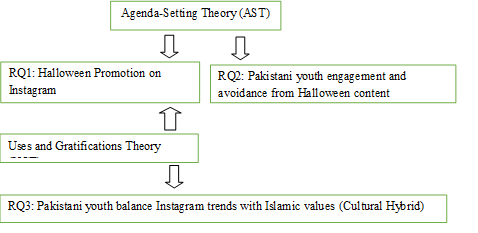
Figure 1. AST and UGT Framework Linked to Research Questions
Research Methodology
The current study adopted qualitative research design under focus group discussions (FGDs) to explore how Pakistani Muslims interpret the Halloween-themed content about Instagram. FGDs14 were used to stimulate a free discussion about religion, culture, and social media. The study was conducted in Lahore, a cosmopolitan city, where global digital culture meets unyielding Islamic and local traditions.
Volunteers were recruited through purposive sampling15 to ensure diversity in age, gender, religiosity, education, and intensity of Instagram use. The sample consisted of 16 Pakistani Muslim users (8 males and 8 females, aged 18–60 years), divided into four participant categories (FG1–FG4) to gain an intergenerational, professional, and religious perspective regarding Instagram and cultural negotiation; FG1–digital culture-conflicted youth-directed Instagram users (n=4, aged 18-30); FG2 youth-directed young experts (n=2, aged 22-35); FG3 culturally-oriented preservation-oriented parents and educators (n=6, aged 35-60); FG4 scholars and religious leaders within the Islamic faith (n=4, aged 40-60). This diversity of grouping further helped in portraying a rich finite data, that is, a dimensional representation of how users encapsulate and negotiate during Halloween and cultural negotiation.
Table 2. Details of Participant Categories
|
No of FG’s |
Gender |
Age |
FG Category |
(n) |
City |
|---|---|---|---|---|---|
|
FG1 |
Male and Female |
18–30 |
Youth |
04 |
Lahore |
|
FG2 |
Male and Female |
22–35 |
Young Professionals |
02 |
Lahore |
|
FG3 |
Male and Female |
35–60 |
Parents and Educators |
06 |
Lahore |
|
FG4 |
Male and Female |
40–60 |
Religious and Community Scholars |
04 |
Lahore |
Note: Total: | 4 Groups | 16 Focus Group Participants
Interviews were conducted in a semi-structured format with a strictly-designed interview schedule. Sessions were no longer than 90 minutes and located in convenient, free, and usual environments, such as cafes or university seminar rooms so as to reduce barriers to participation. It was confirmed that no ethical norms were violated. Every subject was aware about the purpose of the study, or gave written consent and anonymity was ensured, which was achieved by assigning of pseudonyms16 and the related codes.
Data were analysed using Braun and Clarke’s six-step thematic analysis.17 To strengthen credibility and reliability, several strategies were employed. Member checking involved sharing thematic summaries with selected participants to validate interpretations. Peer debriefing with academic colleagues helped critically reflect on emerging insights and reduce researcher bias. Triangulation across demographic groups and participant categories strengthened validity, while an audit trail documented decisions, coding, and analytical reflections to ensure transparency.
4. Findings and Analysis
This segment presents the findings from the thematic analysis of FGDs. Six key themes emerged from the data.
4.1. Representation of Halloween on InstagramAST + UGT: During October, Instagram becomes saturated with Halloween visuals, subtly normalizing the celebration across demographics. Repeated exposure enhances salience, encouraging engagement even among hesitant users. Youth highlighted algorithmic persistence: “Even if I follow mostly Islamic pages, Halloween finds a way into my explore tab” (FG1, Male, 19).
Scholars noted strategic framing, where content detaches from historical or religious roots, rebranded as entertainment: “Instagram has turned it into a visual spectacle, not a cultural practice” (FG3, Male, 33).
Content analysis confirmed feeds dominated by filters, stickers, ads, and influencer campaigns. Younger participants engaged for aesthetic or social gratifications, while professionals interpreted such practices as performative. Hybrid adaptations emerged, with “halal Halloween” gaining traction: “Even modest fashion bloggers take part” (FG1, Male, 22). Similarly, hashtags, such as #SpookySeason were used to maximize reach (FG2, Male, 24).
Instagram frames Halloween as fashion, fun, and fantasy, prioritizing spectacle over substance. Participants agreed that this aestheticization shapes perceptions without conveying origins: “It’s curated horror-dark lipstick, fog machines, cinematic reels. It’s not scary anymore; it’s stylized” (FG2, Female, 27).
Youth emphasize engagement, identity, and peer interaction, while scholars focus on framing and socialization effects of Instagram content. Perceptions broadly align with feed analysis, though interpretations differ by age, profession, and religious stance. Cultural hybridization appears as youth adapt trends, such as “halal Halloween” to balance social participation with cultural identity.
Evidence vs. Perception reveals that October feeds are drenched with Halloween visuals, filters, stickers, ads, influencer campaigns, and hashtags. Youth perceived algorithmic intrusion, engaging lightly through emojis, filters, or themed fashion as playful identity performance. Scholars argued that Instagram aestheticized Halloween, detaching it from origins and turning it into a spectacle, while religious scholars framed this as superficial participation that erases meaning. The convergence lies as youth view it as harmless fun, whereas older participants emphasize cultural negotiation and loss.
4.2. Cultural Influence via Social MediaAST: Instagram heavily amplifies Western cultural celebrations, such as Halloween, while Islamic and local festivals receive minimal visual attention. Youth participants noted that Western holidays are normalized and embedded within daily social media consumption: “Most top trending pages are Western-based, so their events get magnified for us too” (FG1, Female, 20, Sociology Student). “We’ve grown up watching American high school shows. Instagram just reinforces that same culture loop” (FG1, Male, 24, Aspiring Filmmaker).
Scholars highlight the disparity and cultural implications: “Instagram globalizes everything. You see Halloween content from the US, UK, even Korea and it shapes your view” (FG3, Male, 38, Islamic Scholar). “Islamic events feel private and humble; Halloween is a visual spectacle that’s what Instagram prefers” (FG4, Male, 44, Islamic Scholar).
UGT: Content also supports the observation that the trending feeds consist of Western holidays, which are hardly ever subjected to trending hashtags or viral campaigns. This constructs the youth awareness and interactions with Western standards.
Youth are more emphasized on enjoyment, participation, and visibility of peers. Whereas, scholars are more critical and interested in cultural framing, influence, and preservation of identities. Both accept the dominance of Western content but youth are exposed to it by adoption and reinterpret the content, whereas scholars interpret what it means to cultural continuity. The approach to negotiations is also different: the young people actively reconcile between globalization and traditions, as the scholars concentrate on the critique of such adaptions.
Evidence vs. Perception shows that the Instagram feeds are flooded with the Western holidays. The perceptions of the participants revealed the experience of this imbalance. Moreover, they explained its impact on user engagement, cultural understanding, and hybridization processes which aim to create a synthesis between worldwide visibility and regional cultures.
4.3. Media Engagement and User MotivationUGT: Instagram Halloween posts fulfil various needs of users, such as entertainment, inter-personal communication, and selective-focus. Students have termed it as a cause of light distraction, inventiveness, and collective humiliation, which provided a short-term relief of brown bagging and online stress and stimulated social bonds with other participants. Among the young attendees who value fun, which has peer orientation: “It is not a religion to me; it is time to laugh at, dress up and have fun with your friends” (FG2, Female, 22).
Participants aged over 25 were not so reciprocally gleeful. However, they witnessed that the material apparently strengthens communal themes within the digital environment and allows young people to experience culture through representations that are aesthetic and easily readable. In order to narrow down on the experience, users filter their feeds by following creators they like or silencing them to unfavourable posts, which creates a restrained management action. “I appreciate the artistic aspect -say, pumpkin-carving reels- but I do not believe in the occult” (FG3, Male, 36).
In contrast to older participants, who demonstrated a more objective orientation toward the tribe by negotiating curiosity, enjoyment, and shared values while exercising agency in regulating the economic flow of feeds, younger participants exhibited greater susceptibility to external negotiation and influence. Much more elementary forms of expressions, such as themed emojis or stories can pass: “one pumpkin emoji can arguably be called a winner the loop” (FG2, Male, 23).
Social interaction among young people is mainly playful, mentorship is peer-to-peer, and selectivity is a default mode. Their presence highlights the perennial trade-off between the global fashions and the boundaries imposed by the cultural and religious traditions of the world's regions. In contrast, older respondents are more critical and describe framing effects and socio-cultural implications of youth-driven practices. To this group, online presence is not a single consumption mode but a facility rooted in co-ownership hybridization and co-authorship of identity.
Evidence vs. Perception affirms the rampant ubiquity of Halloween trends and participation. Such perceptions allow them to unleash the fountainheads, selective techniques, and the currents of the social forces that preoccupy the participants involved.
4.4. Content Creation and Sharing BehaviourUGT: Instagram users interact with Halloween content across a continuum of passive consumption and active creation that varies with their degree of confidence, creativity, and social objectives.
Passive participants primarily scroll, like, or occasionally repost without producing original material, engaging with the trend while avoiding effort or visibility. As one participant explained, “I just like and scroll. I don’t have the energy or interest to create content for Halloween” (FG3, Female, 32).
Active users, by contrast, produce original posts, reels, or costumes, often motivated by creative expression and peer recognition. Media students, in particular, frame Halloween as a chance to display talent: “It’s become an opportunity to showcase creativity, especially for media students like us” (FG1, Female, 21).
Engagement metrics, such as likes, shares, and views strongly shape these practices. Even those less invested may post selectively to gain attention: “A Halloween reel got me triple the views I usually get. That told me what the algorithm loves” (FG2, Female, 23).
Another added, “Even friends who don’t care much about Halloween will post just for the likes” (FG3, Male, 29).
Youth and students actively experiment with digital content, motivated by creativity and peer recognition. They use the platform strategically, balancing enjoyment, identity, and social visibility. In contrast, older or professional participants adopt more passive roles, preferring observation or selective consumption. Their engagement is shaped less by algorithmic incentives and more by personal interest or critical reflection.
Evidence vs. Perception shows that posts with strong aesthetics and trending themes gain disproportionate visibility and interaction. Participants perceive these metrics as influential, shaping their behaviour across the active–passive spectrum. For students, it motivates creative production, while for professionals, it reinforces selective participation and critical detachment.
4.5. Negotiation Between Faith and TrendsUGT and AST: All three forms of enjoyment, peer participation, and religious or familial expectations can be seen as having a negotiated form of evasion at the Instagram usage of Halloween pictures. To justify the selective participation, many members framed it as not constituting a religious activity. Therefore, participation was made possible with no guilt: “I told myself it’s just makeup, not worship” (FG1, Female, 20). “It’s a tug-of-war between what’s popular and what’s right but I try to keep a balance” (FG3, Female, 30).
Limited involvement, as provided by peers, comfortably reassured IDs that their rate activity is socially-appropriate and thus, demonstrated a reciprocal alliance between personal convictions and authority conduct. An important feature given to play by the users was that they looked to intention rather than to look: “It’s like dressing up for a school play. Intentions matter more than appearance” (FG1, Male, 23). “If you’re not glorifying evil, then you’re just being playful” (FG4, Imam’s Assistant).
This is a framing, in which entertainment, humour, and creativity are portrayed but religious dispute is not emphasized. However, fear of family rejection or religious criticism has given rise to underrepresentation or seismic posting: “My sister warned me about posting Halloween stories” (FG2, Female, 24). Scholars note that the lack of counter instructiveness energetically works towards self-regulation, with children working to strike equilibrium among the digital communication and social and religious standards.
Youth are shown as selective participants, driven by playfulness and peer divides and being able to balance religious and family concerns. To justify participation, they filter and contextualise and present the global trends in a manner that feels socially and culturally acceptable. Older respondents pay more attention to the supervision and judgment of morality, as the use of youth strategies would no longer be considered a shallow activity.
Evidence vs. Perception describes the mental and social incentives that negotiate the pairing of enjoyment with values during the process of providing enjoyment. This shows a conscious nature of boundary setting as opposed to the passive nature of being a growing presence of the process. This trend is supported by content analysis, where the greater majority of the posts are neutral, playful or visual and shun outright ritualisation.
4.6. Cultural Hybridization and IdentityUGT: The respondents observed the phenomenon of selective adaptation of global digital culture (such as Halloween) by incorporating Islamic ideas. However, instead of a wholesale rejection of these cultural tendencies, they emphasized a process of negotiation and reinterpretation. Any involvement is regarded as creative modification on the part of majority of youth: preserving playful and attractively-aesthetic feature, with apparently religiously offensive elements pivot cut-off. “Some do not Halloween, horns of the devil, pumpkins and verse. That’s our remix” (FG2, Male, 26).
Some of these accommodator measures, such as the use of low-value clothing, hijab-friendly topics, or nondisruptive symbolic cues, make it easy to keep the audience engaged. Specific attention is given to young adults whose identity is manifested in a provisional and incipient form of the one believer and one who is always online. Their interest in Halloween-related material is also not defined by cultural dilution. On the contrary, it is also a manifestation of the new embodiment of Muslim self-hood that is combined with both spirituality and new digital practice. “I’m a Muslim and a digital native. Both matters. I choose what fits my path” (FG1, Male, 21).
Youth determined creative agency by reshaping Halloween into culturally and religiously acceptable forms. Their hybrid ideology makes them self-expressive and negotiate changing identities when they interact with their peer engagement. However, older members perceive hybridity more as practical tool, which is boundary-drawing and knowing intentional adjustment to global media pressures, thus recognizing the cutting-edge unifying of cultures.
Evidence vs. Perception shows that there are now hybridized and Muslim-friendly Halloween poses - characterised by muted costumes, neutral themes, and creative reinterpretations. Although numerical evidence confirms these approaches, the narratives of participants clarify the personal motivations: faith reconciliation with community involvement, the need to be responsive in the modern social environments, and the production of hybridized online identities, which, nevertheless, have their roots on the local scale.
5. Discussion
RQ1: How is Halloween shown and promoted on Instagram in Pakistani society?
Halloween has taken the form of a visual-oriented trend and phenomenon on Instagram and is mostly disconnected with its parent Western sacredness. During the month of October, the social media site becomes flooded with costume collections, cosmetic demonstration, themed food, and aesthetic design to be presented in a manner that this type of virtual content would be of the greatest visual appeal and satisfaction of social interactive requirements. The algorithmic amplification system favours seasonal and viral posts, so that the Halloween content reaches users even when users are not specifically querying. This dynamic illustrates AST platform visibility shapes salience while UGT explains audience agency in selective engagement where western celebrations are given more attention compared to Islamic celebrations, such as the Milad -un- Nabi or Ramadan.18 These turn-out influencers are the main actors to strengthen this topic, creating high-quality entertaining posts, and using hashtags to tell that the subject matter is culturally-appropriate, like those written by influencers, or hashtags19 or Halloween-aesthetics. They are framed around glamour, artistry, and the trend of life in the world but not around cultural or spiritual meanings.
Pakistani youth, with a Uses and Gratifications lens, find ways to conduct their uses on the desire to entertain, create, and connect with the social world without pushing the limits of religion and culture willingly. Participants maintained that Halloween material, albeit seen as neutral, seems to dominate feeds on the benchmark of other local Islamic festivals that are given significantly limited space. This is one of the imbalances that frames Instagram as the place of cultural hybridization where young people choose what and how to follow in the global fashion trends, resist, or reshape the international trends to fit into personal beliefs and social expectations. Those intergenerational negotiation strategies used by youth are informed by sectarian views, perceptions of Islamic ethics, as well as need to uphold respect, in the more conservative circles. Within this regard, the worthy interests of Islamic principles can be selectively applied in this direction, complex doctrinal ingredients can be turned into shallow online acts and, as a result, sectarian deviations can severely fragment concepts of acceptable involvements.
Critically, such negotiations face several challenges. These include simplification disposition of larger ethical continuum; the fragmentation caused by sectarian differences; and failure of digital adaptation as means or guard alone in protecting the youth against off-line moral motions or allegations of cultural erosion. These phenomena underline the unstable character of the digital cultural hybrid where identity and modernism keep on the families of contacts.
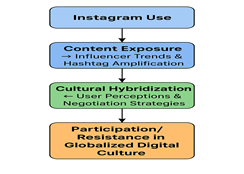
Figure 2. Halloween Promotion on Instagram
RQ 2: Why and how does Pakistani youth engage with or avoid Halloween content on Instagram?
The exposure and negotiation of Halloween content on Instagram—mediated through the self-mobilization of Pakistani youth—must be understood within the complex dynamics of cultural exchange and socialization. Halloween-themed posts, often framed as playful “magic tricks,” are re-created as digital tableaux on Instagram, where users actively insert and reinsert objects into a mediated social reality, producing a post-Halloween, real-time visual switch. These posts, positioned between religiosity and trendiness—typically featuring cute costumes, makeup tutorials, memes, and reels—secure Halloween’s place within the realm of social relevance. From a bottom-up perspective, this process reveals how cultural flows and social influence operate through digital platforms, providing further empirical support for the assumptions of the Audience and Socialization Theory (AST). Exposure does not determine participation; peer response and socialization are the only factors that determine engagement patterns. Individuals engage in the content cycle by participating in virtual interactions that help sustain interpersonal relationships with other users. This process resembles a Uses and Gratifications Theory (UGT) framework, where socialization, 20 self-expression, and virtual interaction become central to fulfilling entertainment needs in everyday life. Such dynamics illustrate that Instagram functions as an interactive and participatory space rather than a unidirectional medium, as young users actively negotiate between personal motives, social demands, and generational aspirations.21
Participation unfolds along a continuum, from direct engagement—such as re-posting content, applying thematic filters, and commenting on influencers’ posts—to more passive forms of involvement, including quasi-passive consumption or pure spectatorship. Simultaneously, users employ what may be described as a moral economy of media consumption, filtering out content perceived as repugnant, satanic, or religiously sensitive. This moral sieve is guided by religious traditions, domestic values, and broader social conventions, reflecting a form of digital religiosity where ethical boundaries are negotiated within virtual spaces. Yet, the relentless exposure to global cultural trends, compounded by the fear of missing out (FoMO),22 accentuates tensions and deepens value differentials within the local society. Although packed with creative and social prospects, Halloween-related content presents a problem for Pakistani youth. Meanwhile, when opportunities arise, global festivities—much like those that spread in the fifteenth century—can, in this broad sense, override indigenous cultural practices. Within algorithmic hierarchies, festive content acquires particular visibility, yet the adolescent experience often becomes caught in a paradox of selective engagement and avoidance: balancing peer-driven participation with the constraints of moral and religious norms. What appears most concerning here is not merely the question of exposure or the binary of positive and negative engagement, but rather the challenge of preserving authenticity and cultural integrity within a media environment that is primarily structured to serve the demands of global users rather than local cultural particularities.
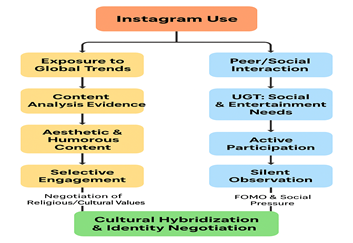
Figure 3. Youth Engagement and Avoidance of Halloween
RQ 3: How do Pakistani youth balance Instagram trends with Islamic values when it comes to Halloween?
Pakistan offers young Muslims a layered cultural boundary through which they negotiate Instagram trends—such as Halloween—via the prismatic values of Islamic tradition. Rather than simply liking or disliking such content, most adolescents employ more nuanced strategies that allow them to remain digitally engaged while preserving key religious and social inviolabilities.23 This practice reflects a form of value-based rationalization that mediates between faith and participation in global digital culture. Moreover, it suggests that youth must continually reassess their online behaviour in light of both peer culture and religious commitments, thereby redefining the boundaries of everyday digital exchange in a more consistent and reflective manner. Thus, Instagram functions as a transitional space where global trends intersect with local norms, allowing both participation and moderation. Empirical findings reveal a diversity of negotiation strategies. Some participants reframe Halloween as a socio-cultural or purely entertaining event, choosing modest costumes, creating themed memes, or producing aesthetic content while avoiding explicit religious connotations. Others hybridize the trend by incorporating hijab styles into their costumes or pairing playful imagery with dignified textual expressions, thereby affirming Islamic identity while engaging global digital culture. At the same time, a significant segment of youth remains passive consumers, preferring to scroll rather than post, often in response to family expectations, communal disapproval, or personal reservations. These dynamic highlights the enduring role of communal accountability within Pakistani society, rooted in historical traditions of collective moral regulation. The nature of the Instagram content shows how Halloween is staged as a visual and fashionable phenomenon, having little to do with religious background in general. Such aesthetic framing allows careful participation without an outright transgression. In Pakistan, youth engagement with digital culture produces a virtual self-characterized by ambivalence—Western cultural practices are encountered but not fully embraced, while resistance is often framed as defensive or even radical. Variations in Islamic interpretation, the enduring influence of religious and social forces, and the tension between global digital belonging and religious identity make selfhood a constant site of negotiation. This struggle is compounded by ambiguity over acceptable forms of engagement, reinforced by family expectations and societal pressures that limit digital self-expression. The resulting friction—between international cultural inclinations and religious obligations—often fosters conflict and self-repression, destabilizing hybrid identities when norms appear contradictory. Instagram, in this sense, is simultaneously a space of empowerment and a site of ethical contestation, encapsulating the complex mediations of cultural hybridity in the digital sphere.
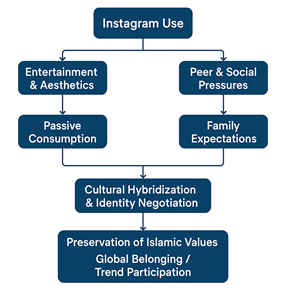
Figure 4. Islamic Values and Instagram Trends (Cultural Hybrid)
5.1. ConclusionThe current study examined how Pakistani youth react to Halloween-themed content on Instagram. Furthermore, the study also attempted to determine the significance of such content in the digital global community alongside their religious values. There are three key findings of this study. Firstly, Instagram enhances the popularity of Halloween due to algorithm-based search possibilities, promotion of influencers, and standstill scorecards. Thus, it transforms the holiday into a meme that dominates considerable space in the ecosystem of Instagram. Secondly, there is heterogeneity in youth responses. Some respond to enjoyment and socialization, some avoid the phenomenon on religious or cultural scruples, and a vast number of respondents adopt selective participation, being involved with only non-religious customs. Thirdly, these behavioural patterns indicate wider negotiation, associated with the activation of an equilibrium from Instagram-immediate trends to Islamic doctrines among native youth. Their strategies reconfigure Halloween as a cultural rather than spiritual practice, situating themselves not only as passive consumers but also as agents who subtly weave Islamic values into their online interactions. This demonstrates a process of digital cultural hybridization and glocalization, through which the younger generation negotiates global cultural flows while sustaining local religious commitments. The result is the construction of hybrid online identities that remain contemporary in form yet anchored in faith, reflecting the broader dynamics of identity formation in digitally mediated religious and cultural spaces. The present research addresses a significant gap, as it is among the first to examine the negotiation of a Western festival through Instagram within an Islamic society. It contributes to the scholarship on globalization, digital identity, youth culture, and religion by exploring how young Pakistani Muslims selectively manage the influence of global culture and reshape it in accordance with their religious and cultural frameworks. The study investigates how Pakistani youth construct spaces for themselves in a casteless, globalized, and digitized world by engaging with Halloween-related content on Instagram, without undermining their theological and cultural foundations. Rather than a wholesale acceptance or rejection, their practices reveal a selective participation: reinterpreting the festival as entertainment or localizing global forms by embedding Islamic values within them. This process illustrates a mode of cultural hybridization in which modern digital practices and religio-ethnic identities coexist. Ultimately, the study highlights the impact of Instagram on the cultural behaviours and adaptive strategies of Pakistani youth as they navigate and negotiate the evolving dynamics of online culture.
5.2. Implications of the StudyThe findings have practical implications. The results justify the necessity of launching media-literacy programs, the promotion of sympathetic communication styles by the political and religious leaders, as well as greater sensitivity on the part of policymakers to the effect of the global media on local cultures. From the viewpoint of religious sensitivity of the issue, self-reported data might be a potential source of bias.
The research contributed to the academic literature of media globalisation, religious identity, and cultural hybridization in Pakistani environment. It showed that the worldwide digital trends are immensely found among Pakistani youth. They are actively negotiated by loading the diverse elements of entertainment with religious convictions and moral beliefs. Utilizing both AST and UGT, the study exposed the role played by digital platforms in both the construction of cultural salience and the manner in which Pakistani youth is given agency to accept, challenge, and/or acclimate the content to meet the demands of both religious and cultural expectations in their localities. The practitioners and teachers concerned with media-literacy would be able to create a curriculum of Pakistani cultural and Islamic values. This initiative would allow students to be in a position to view the global media critically without subjecting relations to spiritual teachings to criticism. The religious leaders and community heads would be enlightened on how young people are considering the online cultural spaces. This would create a positive debate on how the global tendencies should be approached to positively influence moral systems of Pakistan.
At policy level, the research highlighted the need for Pakistan-specific approaches to protect young people against mindless adoption of the world cultural trends. This encompasses introducing the media-literacy programmes in schools and even in mosques.
5.3. Limitations- The study has limited scope to focus groups only in Lahore, Pakistan. Thus, results are not readily generalizable beyond Lahore or to cross-cultural settings.
- Sample size was relatively small to reflect the extent of views.
- Only Instagram was taken as the platform of interest; any other platform, such as Tik Tok, YouTube, or X (previously Twitter) may have different patterns of participation, resistance, and cultural negotiation.
- In future, Content analysis of user-generated posts, hashtags, and visuals could help reveal broader trends.
- Surveys with a larger and more diverse sample of Muslim youth could provide more generalizable findings about attitudes towards digital cultural practices.
- Cross-platform studies should examine how youth engagement differs between Instagram, TikTok, YouTube, and other digital spaces.
- Comparative studies across multiple Muslim-majority countries could highlight cultural similarities and differences in how global digital trends are received.
Authors’ Contribution
Saima Waheed: Data Collection, Findings, Analysis, Discussion, Post Revised Documents. Mohd. Khairie Ahmad: Theoretical framework. Methodology. Conclusion Limitations, Implication of the study and future recommendations. Zafar Iqbal Bhatti: Introduction, Proof reading, citation, editing, language corrections and formatting.
Conflict of Interest
The authors have absolutely no financial or non-financial conflict of interest regarding the subject matter or material discussed in this manuscript.
Data Availability Statement
The data associated with this study would be provided by the corresponding author upon request.
Funding Details
This research did not receive any grant from any funding source or agency.
Generative AI Disclosure Statement
The authors did not used any type of generative artificial intelligence software for this research.
Bibliography
Ahmad, Maiss., and Stephen Wilkins. “Purposive Sampling in Qualitative Research: A Framework for the Entire Journey.” Quality & Quantity 59 (2025):1461–479, https://doi.org/10.1007/s11135-024-02022-5.
Akhter, Naseem., Aftab Ahmad, and Laila Zubairi. “Social Media as Mirror and Mediator: Analysing Intra-Faith Dynamics among Youth in Peshawar, Pakistan within an Islamic Framework.” Advance Social Science Archive Journal (ASSAJ) 3, no. 02 (2025): 1355-1365, https://www.assajournal.com/index.php/36/article/view/427.
Alhabash, Saleem., Duygu Kanver, Chen Lou, Sandi W. Smith, and Pang-Ning Tan. “Trick or Drink: Offline and Social Media Hierarchical Normative Influences on Halloween Celebration Drinking.”Health communication 36, no. 14 (2021): 1942–1948, https://doi.org/10.1080/10410236.2020.1808406.
Braun, Virginia., and Victoria Clarke. “Reporting guidelines for Qualitative Research: A Values-Based Approach.” Qualitative Research in Psychology 22, no. 2 (2025): 399–438, https://doi.org/10.1080/14780887.2024.2382244.
DeFleur, Melvin L., and Margaret H. DeFleur. “Agenda-Setting Theory.” In Mass Communication Theories: Explaining Origins, Processes, and Effects, edited by Melvin L. DeFleur and Margaret H. DeFleur, 181–193. New York: Routledge, 2016, https://doi.org/10.4324/9781315663593.
Dobrin, Diana. “The Hashtag in Digital Activism: A Cultural Revolution.” Journal of Cultural Analysis and Social Change 5, no. 1 (2020): 1–14, https://doi.org/10.20897/jcasc/8298.
Geampana, Alina., and Manuela Perrotta. “Using Interview Excerpts to Facilitate Focus Group Discussion.” Qualitative Research 25, no. 1 (2025): 130-146, https://doi.org/10.1177/146879412412342.
Gilardi, Fabrizio., Theresa Gessler, Maël Kubli, and Stefan Müller. “Social Media and Political Agenda Setting.” Political Communication 39, no. 1 (2022): 39–60, https://doi.org/10.1080/10584609.2021.1910390.
Hutton, Ronald. “The Celtic New Year and Feast of the Dead.” Folklore 135, no. 1 (2024): 69–86, https://doi.org/10.1080/0015587X.2023.2282282.
Katz, Elihu., Jay G. Blumler, and Michael Gurevitch. “Uses and Gratifications Research.” The Public Opinion Quarterly 37, no. 4 (1973): 509–523, https://www.jstor.org/stable/2747854.
Kerim, Shamshadin., Maxat Kurmanaliyev, and Yershat Ongarov. “Social Networks as a Tool for Islamic Preaching.” Journal of Islamic Thought and Civilization 15, no. 1 (2025): 44–58, https://doi.org/10.32350/jitc.151.03.
Lisa Morton. Trick or Treat: A History of Halloween. London: Reaktion Books, 2012.
Mishnick, Nicole., and Dana Wise. “Social Media Engagement: An Analysis of the Impact of Social Media Campaigns on Facebook, Instagram, and LinkedIn.” International Journal of Technology in Education 7, no. 3 (2024): 535–549, https://doi.org/10.46328/ijte.699.
Mohyeddin, Zia. “Cultural identity in a Globalized World: Navigating Tradition and Modernity.” Frontiers in Humanities and Social Research 1, no. 3 (2024): 106-115, https://doi.org/10.71465/fhsr202.
Mokhtar, Aida., and Che Amnah Bahari. “Social Media and Islamic Ethics: An Insight to Instagram use by Muslim University Students in Malaysia.” Intellectual Discourse 29, no. 1 (2021): 175–206, https://doi.org/10.31436/id.v29i1.1764.
Pei, Zhang., Jusang Bolong, Tham Jen Sern, and Mohd Nizam Osman. “Gratification Needs Factors for Authentic Self-Expression on Instagram.” International Journal of Academic Research in Business and Social Sciences 14, no. 12 (2024): 703–718, http://dx.doi.org/10.6007/IJARBSS/v14-i12/24018.
Safdar, Ghulam. “Cultural Aspiration across the Borders: Measuring the Cultural Effects of Online Media on Pakistani Youth.” Online Media and Society 2 (2021): 41–50, https://doi.org/10.71016/oms/v1bp0k28.
Santino, Jack. “Halloween in America: Contemporary Customs and Performances.” Western Folklore 42, no. 1 (1983): 1–20, https://doi.org/10.2307/1499461.
Shodiqoh, Rozanatush. "Digital ethics: Social media ethics in a contemporary Islamic perspective." Solo International Collaboration and Publication of Social Sciences and Humanities 2, no. 3 (2024): 215–226, https://doi.org/10.61455/sicopus.v2i03.153.
Subedi, Khim Raj. “Safeguarding Participants: Using Pseudonyms for Ensuring Confidentiality and Anonymity in Qualitative Research.” KMC Journal 7, no. 1 (2025): 1–20, https://doi.org/10.3126/kmcj.v7i1.75109.
Tandon, Anushree., Amandeep Dhir, Intesar Almugren, Ghada Naif AlNemer, and Matti Mäntymäki. “Fear of Missing out (FoMO) among Social Media Users: a Systematic Literature Review, Synthesis and Framework for Future Research.” Internet Research 31, no. 3 (2021): 782–821, https://doi.org/10.1108/INTR-11-2019-0455.
Wibowo, Arif Ardy. “Publication trends related to Uses and Gratification Theory on Social Media.” International Journal of Communication and Society 4, no. 2 (2022): 258–266, https://doi.org/10.31763/ijcs.v4i2.789.
Yolanda, Agnita., Ria Wuri Andary, Ilma Saakinah Tamsil, Khalil Zaman, and Sun Wei. “The Role of Social Media in the Formation of Global Cultural Identity.” Journal of Social Science Utilizing Technology 3, no. 1 (2025): 10–18, https://doi.org/10.70177/jssut.v3i1.2102.
1Lisa Morton, Trick or Treat, A History of Halloween (London: Reaktion Books, 2012).
2Ronald Hutton, “The Celtic New Year and Feast of the Dead,” Folklore 135, no. 1 (2024): 69–86, https://doi.org/10.1080/0015587X.2023.2282282.
3Agnita Yolanda, Ria Wuri Andary, Ilma Saakinah Tamsil, Khalil Zaman, and Sun Wei, “The Role of Social Media in the Formation of Global Cultural Identity,” Journal of Social Science Utilizing Technology 3, no. 1 (2025): 10–18, https://doi.org/10.70177/jssut.v3i1.2102.
4Aida Mokhtar, and Che Amnah Bahari, “Social Media and Islamic Ethics: An Insight to Instagram Use by Muslim University Students in Malaysia,” Intellectual Discourse 29, no. 1 (2021): 175–206, https://doi.org/10.31436/id.v29i1.1764.
5Ghulam Safdar, “Cultural Aspiration across the Borders: Measuring the Cultural Effects of Online Media on Pakistani Youth,” Online Media and Society, 2 (2021): 41–50, https://doi.org/10.71016/oms/v1bp0k28.
6Jack Santino, “Halloween in America: Contemporary Customs and Performances,” Western Folklore 42, no. 1 (1983): 1–20, https://doi.org/10.2307/1499461.
7Saleem Alhabash et al., “Trick or Drink: Offline and Social Media Hierarchical Normative Influences on Halloween Celebration Drinking,” Health Communication 36, no. 14 (2021): 1942–1948, https://doi.org/10.1080/10410236.2020.1808406.
8Naseem Akhter, Aftab Ahmad, and Laila Zubairi, “Social Media as Mirror and Mediator: Analysing Intra-Faith Dynamics among Youth in Peshawar, Pakistan within an Islamic Framework,” Advance Social Science Journal Archive (ASSAJ) 3, no. 02 (2025): 1355–1365, https://www.assajournal.com/index.php/36/article/view/427.
9Zia Mohyeddin, “Cultural Identity in a Globalized World: Navigating Tradition and Modernity,” Frontiers in Humanities and Social Research 1, no. 3 (2024): 106–115, https://doi.org/10.71465/fhsr202.
10Melvin L. DeFleur and Margaret H. DeFleur, “Agenda-Setting Theory,” in Mass Communication Theories: Explaining Origins, Processes, and Effects, ed. Melvin L. DeFleur and Margaret H. DeFleur (New York: Routledge, 2016), 181–193, https://doi.org/10.4324/9781315663593.
11Fabrizio Gilardi et al., “Social Media and Political Agenda Setting,” Political Communication 39, no. 1 (2022): 39–60, https://doi.org/10.1080/10584609.2021.1910390.
12Elihu Katz, Jay G. Blumler, and Michael Gurevitch, “Uses and Gratifications Research,” The Public Opinion Quarterly 37, no. 4 (1973): 509–523, https://www.jstor.org/stable/2747854.
13Zhang Pei et al., “Gratification Needs Factors for Authentic Self-Expression on Instagram,” International Journal of Academic Research in Business and Social Sciences 14, no. 12 (2024): 703–718, http://dx.doi.org/10.6007/IJARBSS/v14-i12/24018.
14Alina Geampana, and Manuela Perrotta, “Using Interview Excerpts to Facilitate Focus Group Discussion,” Qualitative Research 25, no. 1 (2025): 130–146, https://doi.org/10.1177/146879412412342.
15Maiss Ahmad, and Stephen Wilkins, “Purposive Sampling in Qualitative Research: A Framework for the Entire Journey,” Quality & Quantity, 59 (2025): 1461–1479, https://doi.org/10.1007/s11135-024-02022-5.
16Khim Raj Subedi, “Safeguarding Participants: Using Pseudonyms for Ensuring Confidentiality and Anonymity in Qualitative Research,” KMC Journal 7, no. 1 (2025): 1–20, https://doi.org/10.3126/kmcj.v7i1.75109.
17Virginia Braun, and Victoria Clarke, “Reporting Guidelines for Qualitative Research: A Values-Based Approach,” Qualitative Research in Psychology 22, no. 2 (2025): 399–438, https://doi.org/10.1080/14780887.2024.2382244.
18Shamshadin Kerim, Maxat Kurmanaliyev, and Yershat Ongarov, “Social Networks as a Tool for Islamic Preaching,” Journal of Islamic Thought and Civilization 15, no. 1 (2025): 44–58, https://doi.org/10.32350/jitc.151.03.
19Diana Dobrin, “The Hashtag in Digital Activism: A Cultural Revolution,” Journal of Cultural Analysis and Social Change 5, no. 1 (2020): 1–14, https://doi.org/10.20897/jcasc/8298.
20Nicole Mishnick, and Dana Wise, “Social Media Engagement: An Analysis of the Impact of Social Media Campaigns on Facebook, Instagram, and LinkedIn,” International Journal of Technology in Education 7, no. 3 (2024): 535–549, https://doi.org/10.46328/ijte.699.
21Arif Ardy Wibowo, “Publication Trends Related to Uses and Gratification Theory on Social Media,” International Journal of Communication and Society 4, no. 2 (2022): 258–266, https://doi.org/10.31763/ijcs.v4i2.789.
22Anushree, Tandon, et al., “Fear of Missing out (FoMO) among Social Media Users: a Systematic Literature Review, Synthesis and Framework for Future Research,” Internet Research 31, no. 3 (2021): 782-821, https://doi.org/10.1108/INTR-11-2019-0455
23Rozanatush Shodiqoh, “Digital Ethics: Social Media Ethics in a Contemporary Islamic Perspective,” Solo International Collaboration and Publication of Social Sciences and Humanities 2, no. 03 (2024): 215–226, https://doi.org/10.61455/sicopus.v2i03.153.