

| Review | Open Access |
|---|
Comparative Assessment of Adams-Bashforth-Moulton, 4th Order Runge-Kutta, and Euler Methods for the Synthesis of Zinc Oxide Nanostructures via the Lengyel Epstein Reaction Model |
 |
|---|
 Kaniz Fatima1 ,
Basit Ali2* ,
Sarwat Ishaque3 ,
Asif Sumeer4 , and
Qaiser Hafeez5
Kaniz Fatima1 ,
Basit Ali2* ,
Sarwat Ishaque3 ,
Asif Sumeer4 , and
Qaiser Hafeez5
1Department of Humanities and Social Sciences, Bahria University Karachi campus, Karachi, Pakistan
2Department of Electrical Engineering, Bahria University Karachi Campus, Karachi, Pakistan
3Department of Computer Science and Information system, KASBIT, Karachi, Pakistan
4Department of Management Sciences, Shaheed Zulfiqar Ali Bhutto Institute of Science and Technology University, Gharo campus, Karachi, Pakistan
5Mari Energies Limited, Islamabad, Pakistan
The current study aimed to determine which approximation technique is the most successful in studying the rise in ion concentrations in forms of Zinc Oxide (ZnO) nanostructures using the Lengyel Epstein Reaction Model. To achieve this objective, Ordinary Differential Equations (ODEs) were formulated utilizing three separate numerical methods. These included Euler, Adams-Bashforth-Moulton (ABM), and 4th Order Runge-Kutta (RK) methods. The current study aimed to identify the optimal approximation approach for computing concentrations of zinc ions Zn+2 and hydroxyl ions OH- while examining the reaction kinetics of ZnO nanostructures. The research findings indicated that the ABM approach surpasses the Euler and RK methods, convergence speed, and reduced error relative to the Euler and RK methods. The ABM approach further verifies experimental findings about ZnO nanostructure synthesis by the aqueous chemical growth (ACG) process, that affirms its efficacy practically.
Highlights
- The study formulates and solves the Lengyel–Epstein reaction model for ZnO nanostructure synthesis using three numerical schemes (Euler, 4th order Runge–Kutta, and Adams–Bashforth–Moulton) to track Zn²⁺ and OH⁻ concentration dynamics.
- Quantitative error analysis against reference solutions shows that the multistep Adams–Bashforth–Moulton method achieves the lowest absolute percentage errors and fastest convergence, outperforming both Euler and 4th order Runge–Kutta for this nonlinear kinetic system.
- By linking numerical performance to experimentally observed aqueous chemical growth behavior, the work establishes Adams–Bashforth–Moulton as the most reliable computational tool for accurately modeling ZnO nanostructure growth kinetics.
1. INTRODUCTION
Due to heavy technological development, new materials are discovered in order to support the growing industrial demands [1]. Zinc oxide (ZnO) is one of the fundamental chemicals which is remarkably beneficial in a variety of technologies, thereby cementing its place in the contemporary world. ZnO is distinguished by its white granular form, which is incapable to be dissolved in water. Nevertheless, it can be readily dissolved in mild acids and bases. ZnO nanoparticles exhibit superior physical and chemical properties in comparison to other metal oxides due to their small dimension of less than 100 nm. ZnO is a critical component of numerous industries, such as glass and paint, optical materials, polymers, plastics, batteries, as well as coatings and cosmetics due to its distinctive quality [2].
ZnO nanoparticles are becoming more and more important in medicine, especially in the quickly growing areas of cancer and antimicrobial therapies. Its unique capacity to produce reactive oxygen species (ROS) and release zinc ions indicates that it may be an effective therapeutic agent. ZnO nanoparticles may improve diabetes treatment by changing insulin level in the body [3, 4]. ZnO has several unique qualities since it is a natural semiconductor. It can conduct electricity, detect chemicals, make piezoelectricity, and be photosensitive. No matter what the temperature is around them, ZnO nanoparticles give forth a glowing light. They have a band gap of 3.4 to 3.7 eV and a large excitonic binding energy [5]. The band gap renders ZnO an effective UV absorber, making it a valuable component in sunscreens, skin creams, and wound-healing ointments. ZnO nanoparticles have several medicinal advantages and may potentially serve as medication carriers due to their exceptional biocompatibility, as validated by the US Food and Medication Administration [6, 7].
Nanostructures made of ZnO are considerably helpful in finding gases, such as hydrogen, nitrogen dioxide, carbon monoxide, and ethanol. They could swiftly interact with gases in the air since they are tiny and have a lot of surface area. Moreover, it can be discovered that what kind of gas is present in the material along with its quantity by measuring how much electricity it can hold. This transformation happens when a gas touches the ZnO surface. These sensors are easy to manufacture, perform well in the cold, as well as respond rapidly. ZnO is good for medical equipment that checks breath, industrial gas leak detectors, and air pollution monitors due to these qualities.
ZnO nanoparticles have several uses. Furthermore, they need to be made in large quantity. The aqueous chemical growth (ACG) approach stands out among low temperature synthesis procedures. This is because it works well and may be used in many different ways. The ACG method’s strict control over growth conditions renders it possible to make a wide range of ZnO nanostructures, such as nanorods, nanotubes, nanowires, and nanospheres [8]. Nanostructures of ZnO have received considerable attention due to their unique features. These are cheaper, safer, easy to make, highly-biocompatible, have high electron transfer rates, and are able to do better analysis [9]. By optimizing the growing conditions, many morphologies of ZnO may be produced [10, 11].
Mathematical analysis of the Lengyel Epstein reaction model may also be used to look at the making of ZnO nanostructures. This model helps figure out how much zinc ions Zn+2 and hydroxyl ions OH- are there in a solution. Moreover, it also helps grasp the many processes that are followed into making ZnO nanostructures in practical math modeling [12]. The differential equations used in this model can be solved by using different numerical techniques. Euler’s method has been consistently used to predict the concentrations of ions in this model. The other numerical techniques can also be used in Lengyel Epstein reaction model to determine the concentration of zinc ions and hydroxyl ions .
In this study, ABM method and 4th Order Runge-Kutta method were used to solve the differential equations of the model. The comparison of Euler’s method with ABM method and the RK method was carried out. This combination of methodologies is designed to not only enhance the accuracy and durability of the modeling process but also to identify the complex forces that are causing the absorptions of Zn ions and hydroxyl ions to change over time. This novel approach aims to enhance the understanding of the development of ZnO nanoparticles, thereby establishing a connection between theoretical concepts and practical observations.
The ABM method is used to attain efficiency and accuracy of higher level. This method includes the predictor and the corrector steps. In the predictor step, it estimates the solution by using previous values and the corrector step refines the estimated values. Due to this reason, this method provides more stability and accuracy in the model. This method is widely used in the modeling of non-linear dynamic systems [13]. In recent years, the Lengyel Epstein reaction model has been used to investigate the self-organization processes that include the formation of ZnO nanostructures that go beyond chemical oscillations. It helps in explaining how the size, shape, and arrangement of ZnO nanostructures during synthesis are influenced by reaction diffusion interactions between ions. The model offers a simple but effective mathematical method to understand how chemical reactions and diffusion work together to regulate the production and structuring of nanomaterial [14, 15].
1.1. Experimental ProcedureTo synthesize ZnO nanoparticles, the upkeep of a controlled environment is basic due to the characteristic helplessness of the ACG strategy to barometrical impacts. In this strategy, a flawless gold-coated glass substrate is utilized to play down contaminants. The gold-coated glass substrate is submerged in an arrangement of low concentration hydrofluoric corrosive. As a result, the substrate is first subjected to an intensive acetone cleaning process and subsequently dried with nitrogen gas at ambient temperature. With the basis laid, the substantive preparation unfurls, starting by implying the spin coating strategy. Utilizing rotational speeds of 4500 revolutions per minute, a mixture of Zinc acetate is added to the substrate through numerous cycles of spin coating. Post-application, the substrate is subjected to a temperature of 70°C, advancing the stabilization of the solution [12].
In the interim, a solution is carefully prepared by mixing hexamethylenetetramine and Zinc Nitrate in equal amounts in a container. When it is combined with 250 ml of deionized water, it gets a ready-to-use solution. Then, using a specific holder, the pre-coated substrate is introduced to the combined solution. After being immersed, the container is put in an oven that has been warmed to 100°C and left there for 7 hours. After the synthesis phase, the oven is switched off for 30 minutes to cool down. At the completion of this process, the substrate is no longer attached to the holder. The final result is a coating of ZnO nanorods [16–18].
A transformational evolution happens when the pH of the solution is regulated by the addition of 25% ammonia solution. This pH manipulation causes the formation of ZnO nanowires, which broadens and diversifies the scope and variety of the synthesized nanostructures. Two ions are required for the production of ZnO. The first is zinc ion (Zn+2), whereas the second is hydroxyl ion (OH-). After the disintegration of zinc nitrate, Zn+2 may be produced from metal salt as explained in equation 1-5 [19].
2. MATHEMATICAL MODEL
An analytical model may also be utilized to illustrate the growing rate of the and concentrations that are desirable for the synthesis of ZnO [5]. The Lengyel reaction model is applied for this analytical model. Euler’s and RK methods are applied as analytical methods in this model to approximate the results in the reference [12]. The ABM method was employed in this study to estimate the increase of zinc ion and hydroxyl ion. The subsequent equations were utilized to build the model:
The differential equations derived in [11] using the Lengyel Epstein reaction model are as follows: where x and y indicate the concentrations of and Zn(+2), , respectively.
The suggested differential equations were built using the theory presented by Carmen Chicone in [20]. The differential equations above are affected by the values of a1 and a2. To calculate the steady-state concentrations, use a2>(3a1)/5-25/a1 . The experimental development of ZnO was observed to end at a given time period and to exhibit linear behavior [21, 22].
While utilizing a computer to solve ODEs, many methods exist to provide approximate solutions at distinct time intervals. It examines the efficacy of three prevalent methodologies including Euler’s method, RK method, and ABM method that concentrate on their efficacy in examining the growth kinetics of ZnO nanostructures.
2.1.Euler’s MethodIt is a fundamental numerical approach for approximating the solution of ODEs by linearly extrapolating from the present position using the derivative. Despite its apparent simplicity, Euler’s approach can result in severe inaccuracies, particularly when working with stiff equations or complex dynamics. Euler's approach may provide basic insights in the context of ZnO nanostructure formation. However, it is restricted in precision and accuracy.
2.2. 4th Order Runge-Kutta MethodThis method is a commonly-used numerical integration method that is better than Euler's method in terms of accuracy. Four intermediary steps are required to estimate the next point. These methods are ultimate for solving ODEs with moderate to complicated problems. RK gives a more accurate depiction of the behavior of the system than Euler's method when applied to the growth kinetics of ZnO nanostructures.
2.3. Adams-Bashforth-Moulton MethodThis method is a numerical approach for solving ODEs by integrating a system of equations across discrete time steps. The ABM method was used deliberately in this study to improve the computational efficiency of the Lengyel reaction model for the growth kinetics of ZnO nanostructures. Using the ABM method, the following processes can be used to determine the growth rate of ZnO at each time step. When utilizing a computer to solve ODEs, many methods exist to provide approximate solutions at distinct temporal points.
The predictor step employs a fourth-order-ABM method to predict the values of x and y at the next step. The predictor formula for ‘x’ is given by:
Here, fi and gi depicts the evaluated results of the equations rate at time ti.
Using the predicted values xpred and ypred from the predictor step, a corrected estimate for x and y is obtained using the ABM corrector formula:
The combination process continues over the specified period of time, that refines the values of x and y using the estimated and corrected predictions.
Table 1 shows how the three numerical approaches used in this study, that is ABM, RK, and Euler’s method were compared to each other. This table shows how well each method works, how accurate they are, and novel formulas, especially when coupled with the Lengyel Epstein reaction model to show how ZnO is made.
Table 1. Comparison of Numerical Methods with their Formulas and Order of Accuracy
|
Method |
Formula |
Order of Accuracy |
Remarks |
|---|---|---|---|
|
Euler’s Method |
 |
1st order |
It is simple and fast but has less accuracy. |
|
4th Order Runge-Kutta Method |
|
4th order |
It is a multi-step method but very accurate and widely used in nonlinear systems. |
|
Adams-Bashforth-Moulton Method |
|
4th order |
It is a multistep method, has high accuracy, and is efficient for long time integration. However, it requires initial values. |


3. RESULTS
This study analyzed how well different numerical approaches can simulate the amounts of hydroxide ions OH⁻ and zinc ions Zn+2 over time. The study not only aimed to determine how accurate each approach is but also how effectively they show the main dynamics of the chemical system. Figure 1 shows the reference numerical solution, which may be used as a point of reference. This answer says that the lowest amount of OH⁻ is 0.3808 at about 1.19 hours, while the maximum amount of Zn⁺2 is 1.30732 at around 0.41 hours. These figures are used as benchmark references against which other approaches are evaluated.
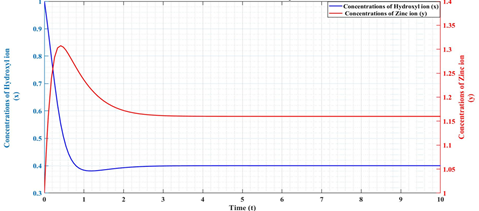
Figure 2 illustrates the findings of Euler’s method. It gets the timing of these events right but it greatly underestimates the concentration of OH⁻ (0.379341) and overestimates the concentration of Zn²⁺ (1.314709). This is not surprising given that individuals know that Euler’s method is simple but not particularly accurate. It is a fast method to get an estimate but it is not an ideal solution if accuracy needs to be achieved.
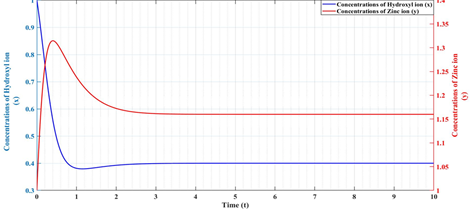
Figure 2. Euler’s Method Concentrations of and
On the other hand, the RK method, presented in Figure 3, performs significantly better. The results it produces 0.380547 for OH⁻ and 1.309011 for Zn²⁺ are very close to the values of the reference numerical solution. This method strikes a great balance between accuracy and computational effort, making it a strong choice for problems like this where detail matters.
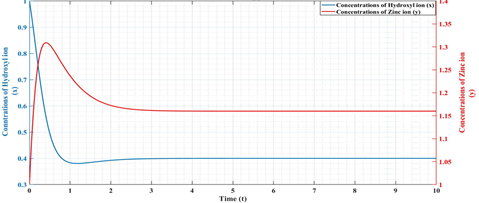
Figure 3. RK Method Concentrations of and
Similarly, the ABM method, shown in Figure 4, also delivers impressive accuracy. The minimum OH⁻ concentration is estimated at 0.3806, whereas the highest Zn⁺2 concentration is 1.30886, closely aligning with the precise solution. This multi-step technique leverages knowledge from preceding phases to enhance its predictions. It estimates the minimum OH⁻ concentration as 0.3806 and the maximum Zn⁺2 concentration as 1.30886, virtually matching the reference numerical solution. As a multi-step approach, it benefits from using information from earlier steps to improve its predictions.
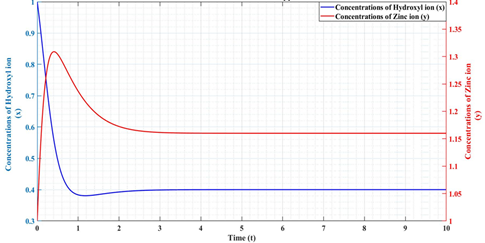
Figure 4. ABM Method Concentrations of and
The ABM approach, depicted in Figure 4, also works quite effectively. The lowest concentration of OH⁻ is thought to be 0.3806, while the greatest concentration of Zn⁺2 is 1.30886, which is quite near to the exact solution. This multi-step method uses information from earlier steps to make its predictions better. It shows that the lowest OH⁻ concentration is 0.3806 and the highest Zn⁺2 concentration is 1.30886, which is almost the same as the reference numerical solution. It is a multi-step process that uses information gathered from preceding phases to make better predictions.
Table 2. Numerical Method Concentrations for Zn^(+2) and OH^-
|
Numerical Technique |
Concentrations |
Concentrations |
|---|---|---|
|
Time(t) = 1.18658 |
Time(t) =0.41048 |
|
|
Euler’s Method |
0.379341 |
1.314709 |
|
4th Order Runge-Kutta Method |
0.380547 |
1.309011 |
|
Adams-Bashforth-Moulton Method |
0.3806 |
1.30886 |
By comparing the numerical results with the known reference numerical solutions, the error of the mathematical methods employed to solve the differential equations of the Lengyel Epstein reaction model was determined. The following formula was used to determine the absolute percentage error:
When finding out the concentrations of OH- and Zn+2 at various periods, the three numerical methods, that is Euler, RK, and ABM give substantially-distinct results. At t=1.18658, the highest errors for Euler’s method are 0.383% for OH- and 0.565% for Zn+2. This means that it is not particularly accurate. The RK method and the ABM technique both cut down on errors by a lot at their own times. The error rates for OH- and Zn+2 are 0.129% and 0.118%, respectively. This study demonstrates the trade-off between the simplicity and accuracy of a numerical approach, since ABM's concentration estimations have decreased error rates. Using the Euler methodology, the RK method of fourth order, and the ABM approach, Table 3 illustrates the error check for the concentrations of OH- and Zn+2. This table also indicates how well each method works for calculating chemical kinetics in ZnO synthesis by showing how accurate and beneficial they are. It tells about how precise and different each method is for figuring out different chemical concentrations, which helps figure out how well they operate on their own. Figure 5 demonstrates how wrong each of the three numerical techniques were.
Table 3. Error-based Computational Efficiency Comparison of Numerical Techniques
|
Numerical Technique |
Error of Concentrations |
Error of Concentrations |
Relative Efficiency (R.E) |
|---|---|---|---|
|
Time(t) = 1.18658 hr |
Time(t) =0.41048 hr |
||
|
Euler’s Method |
0.383% |
0.565% |
R.E is low due to high error rates; method is simple but less accurate. So, this is not suitable for synthesis of ZnO. |
|
4th Order Runge-Kutta Method |
0.066% |
0.129% |
R.E is moderate, good balance of accuracy, and computational effort. It is better than Euler so, it can be widely used for synthesis of ZnO |
|
Adams-Bashforth-Moulton Method |
0.053% |
0.118% |
R.E is high because it has lowest error values and is best suited for accurate modeling of synthesis of ZnO |
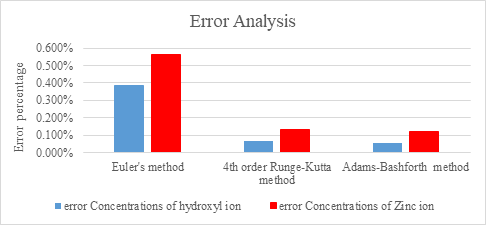
Figure 5. Error of and Concentrations for Numerical Techniques
4. CONCLUSION
In the current study, three different numerical methods were compared and based on their error comparison, the authenticity of the model was checked. When it comes to numerically solving ODEs, the approach chosen relies on how accurate, fast, stable, and complicated the system is. Euler’s approach is easy to use but not very accurate. Thus, it is good for tasks that do not need a lot of processing. On the other hand, RK and ABM are more accurate, and ABM is usually the most accurate since it includes processes for predicting and correcting. When working with complicated systems, such as the growth kinetics of ZnO nanostructures, where indirect interactions are important, both RK and ABM methods are better than Euler’s method. ABM is especially good at capturing complex behaviors while still being reasonably fast.
Author Contributions
Kaniz Fatima: methodology, conceptualization. Basit Ali: data curation, software, formal analysis. Sarwat Ishaque: supervision, validation. Asif Sumeer: investigation, visualization. Qaiser Hafeez: writing – review & editing.
Conflict of Interest
The authors of the manuscript have no financial or non-financial conflict of interest in the subject matter or materials discussed in this manuscript.
Data Availability Statement
The data associated with the study may be provided by the corresponding author if requested.
Funding Details
No funding was received for this research.
Generative AI Disclosure Statement
The authors did not use any type of generative artificial intelligence software for this research.
REFERENCES
- Ali B, Khan AA. Real-time distribution system analysis and load management algorithm for minimizing harmonics. Roman J Tech Sci Electrotech Ene Ser. 2021;66(4):237-242.
- Siddiqi KS, Rahman AU, Tajuddin N, Husen A. Properties of zinc oxide nanoparticles and their activity against microbes. Nanoscale Res Lett. 2018;13:1-13. https://doi.org/10.1186/s11671-018-2532-3
- Tang E, Cheng G, Ma X, Pang X, Zhao Q. Surface modification of zinc oxide nanoparticle by PMAA and its dispersion in aqueous system. Appl Surf Sci. 2006;252(14):5227-5232. https://doi.org/10.1016/j.apsusc.2005.08.004
- Jiang J, Pi J, Cai J. The advancing of zinc oxide nanoparticles for biomedical applications. Bioinorg Chem Appl. 2018;2018(1):e1062562. https://doi.org/10.1155/2018/1062562
- Fatima K, Khan A, Hussain M. Mathematical modelling of reaction kinematics of one dimensional zinc oxide nanostructures. NED Univ J Res. 2018;15(4):117-122.
- Mishra PK, Mishra H, Ekielski A, Talegaonkar S, Vaidya B. Zinc oxide nanoparticles: a promising nanomaterial for biomedical applications. Drug Discov Today. 2017;22(12):1825-1834. https://doi.org/10.1016/j.drudis.2017.08.006
- Sabir S, Arshad M, Chaudhari SK. Zinc oxide nanoparticles for revolutionizing agriculture: synthesis and applications. Sci World J. 2014;2014(1):e925494. https://doi.org/10.1155/2014/925494
- Osman DAM, Mustafa MA. Synthesis and characterization of zinc oxide nanoparticles using zinc acetate dihydrate and sodium hydroxide. J Nanosci Nanoeng. 2015;1(4):248-251.
- Chandiran AK, Abdi-Jalebi M, Nazeeruddin MK, Grätzel M. Analysis of electron transfer properties of ZnO and TiO2 photoanodes for dye-sensitized solar cells. ACS Nano. 2014;8(3):2261-2268. https://doi.org/10.1021/nn405535j
- Bai X, Wang L, Zong R, Lv Y, Sun Y, Zhu Y. Performance enhancement of ZnO photocatalyst via synergic effect of surface oxygen defect and graphene hybridization. Langmuir. 2013;29(9):3097-3105. https://doi.org/10.1021/la4001768
- Hatamie A, Khan A, Golabi M, et al. Zinc oxide nanostructure-modified textile and its application to biosensing, photocatalysis, and as antibacterial material. Langmuir. 2015;31(39):10913-10921. https://doi.org/10.1021/acs.langmuir.5b02341
- Fatima K, Ali B, Mahnoor. Implementation of Lengyel-Epstein reaction model for Zinc Oxide (ZnO) nanostructures by comparing euler and fourth-order Runge–Kutta (RK) Methods. Sci Inq Rev. 2022;6(1):23-33. https://doi.org/10.32350/sir.61.02
- Ruby T, Azis D, Sutrisno A, Falen, Andrade PMF. Application of Adams-Bashforth-Moulton method for predict population growth in Banten province with logistic equation. Int J Adv Soc Sci Educ. 2025;3(1):73-86.
- Cardoso D, Narcy A, Durosoy S, Bordes C, Chevalier Y. Dissolution kinetics of zinc oxide and its relationship with physicochemical characteristics. Powder Technol. 2021;378:746-759. https://doi.org/10.1016/j.powtec.2020.10.049
- Kaur Y, Jasrotia T, Kumar R, Chaudhary GR, Chaudhary S. Adsorptive removal of eriochrome black T (EBT) dye by using surface active low cost zinc oxide nanoparticles: a comparative overview. Chemosphere. 2021;278:e130366. https://doi.org/10.1016/j.chemosphere.2021.130366
- Khan A, Hussain M, Abbasi MA, Ibupoto ZH, Nur O, Willander M. Analysis of junction properties of gold–zinc oxide nanorods-based Schottky diode by means of frequency dependent electrical characterization on textile. J Mater Sci. 2014;49(9):3434-3441. https://doi.org/10.1007/s10853-014-8053-2
- Qiu Y, Zhang H, Hu L, et al. Flexible piezoelectric nanogenerators based on ZnO nanorods grown on common paper substrates. Nanoscale. 2012;4(20):6568-6573. https://doi.org/10.1039/C2NR31031G
- Lee CY, Wang J, Chou Y, et al. White-light electroluminescence from ZnO nanorods/polyfluorene by solution-based growth. Nanotechnology. 2009;20(42):e425202. https://doi.org/10.1088/0957-4484/20/42/425202
- Greene LE, Yuhas BD, Law M, Zitoun D, Yang P. Solution-grown zinc oxide nanowires. Inorg Chem. 2006;45(19):7535-7543. https://doi.org/10.1021/ic0601900
- Chicone C. Mathematical Modeling and Chemical Kinetics. University of Missouri: 2010.
- Caetano BL, Santilli CV, Meneau F, Briois V, Pulcinelli SH. In situ and simultaneous UV- vis/SAXS and UV- vis/XAFS time-resolved monitoring of ZnO quantum dots formation and growth. J Phys Chem C. 2011;115(11):4404-4412. https://doi.org/10.1021/jp109585t
- Mishra YK, Modi G, Cretu V, et al. Direct growth of freestanding ZnO tetrapod networks for multifunctional applications in photocatalysis, UV photodetection, and gas sensing. ACS Appl Mater Interfaces. 2015;7(26):14303-14316. https://doi.org/10.1021/acsami.5b02816