

| Review | Open Access |
|---|
Impact of Energy Drink Consumption on Sleep Quality of Medical Students |

|
|---|
 Fariha Zulfiqar1, Saba Riaz2*, Ayesha Arooj3, Tooba Mazhar2, and Muhammad Ahad Gill4
1Rashid Latif Medical College, Lahore, Pakistan
2School of Health Sciences, University of Management and Technology, Lahore, Pakistan
3University Institute of Physical therapy, University of Lahore, Pakistan
4Punjab Small Industries Cooperation, Lahore, Pakistan
The study aims to evaluate the impact of energy drink consumption on the sleep quality of the medical students of Lahore, Pakistan. A cross-sectional study design was employed and data were collected through convenience sampling. After taking informed consent, 236 MBBS students of both gender within the age range of 18-25 years filled the questionnaire. Quality of sleep was by assessed by using the Pittsburgh Sleep Quality Index. The mean age of students was 22.33 ± 1.47 years, with 94 (39.8%) male and 142 (60.2%) female students. Among these 236 participants, 110 (46.6%) were regular consumers of energy drinks, while 126 (53.4%) had not consumed any energy drink during the last 1 year. Out of 110 students who consumed energy drinks during the last 1 year, 21 (38.16%) reported good quality sleep. Among the 106 students who consumed energy drinks in the last 1 month, only 19 (17.92%) reported good quality sleep. These findings indicate that students who consumed energy drinks continuously in the last month had a higher percentage of poor sleep quality. The study concluded that the majority of students consuming energy drinks had poor sleep quality. This shows an association between energy drink consumption and poor sleep quality among students. The findings suggest that the students who consumed energy drinks in the past month were more likely to have difficulty in their sleep as compared to those who did not.
1. INTRODUCTION
Sleep is an essential requirement for an individual in order to successfully proceed with cultural and bio-psycho-social functions [1]. The disruption of healthy sleep habits may contribute to poor psychological well-being observed in the younger population [2]. Good sleep quality is important for overall health. It plays an essential part in the knowledge, memory, and immunity of a person. On the other hand, poor sleep quality debilitates the immune system of the body. It also affects the mental or cognitive ability of a person which may manifest as distorted awareness and delusion [3].
The impact of energy drinks can last up to 8 hours and may also lead to sleep disturbances. This can badly upset a student’s academic performance as asymmetrical sleep patterns have been revealed to have a destructive impression on memory and learning [4]. Caffeinated beverages are becoming a part of day-to-day existence. Caffeinated beverages such as soft drinks, energy drinks, coffee, and tea are easy to purchase. These are often used by young college students intended to upgrade sharpness levels and give a jolt of energy [5, 6]. The consumption rate of energy drinks is increasing because of their ability to enhance concentration [7]. However, insomnia, anxiety, and headache are some of the adverse effects of energy drink consumption [6, 8].
This study aims to evaluate the sleep quality of students consuming energy drinks. The purpose is to take one small step toward creating the awareness of health hazards in students due to the use of energy drinks in daily life. Notably, if this issue is left unattended, it can lead to further health problems in the upcoming generation.
2. MATERIAL AND METHODS
2.1. Research Design and SettingA cross-sectional study was conducted from June 18, 2022 to August 22, 2022 using convenience sampling. Data was collected from the students of five medical institutes in Lahore, which included Allama Iqbal Medical College, Rashid Latif Medical College, King Edward Medical College, University of Lahore, and Lahore Medical and Dental College. Informed consent was taken prior to form filling.
2.2. ParticipantsThe sample consisted of 236 participants. It was calculated using the WHO formula n = Z2 p (1-p)/e2 [9]. Students of any year of MBBS from 5 medical institutes of Lahore, of both gender, within the age range 18-25 years, and willing to participate, were included [10]. Students who had any self-reported psychological or previously diagnosed sleep-related disorder and those who refused to take part in the study were excluded.
2.3. QuestionnaireData was collected using the Pittsburgh Sleep Quality Index (PSQI) questionnaire with some demographic questions. It is a valuable tool to assess sleep quality. It has good validity as it captures multiple dimensions of sleep, including both subjective experiences and objective parameters [11, 12].
2.4. Data Collection ProcedureAfter approval from the Office of Research, Innovation, and Commercialization (ORIC), UMT, Lahore, data collection was commenced. Ethical concerns were taken into consideration. The purpose of the study was explained to the students. After taking informed consent, a questionnaire was regulated to ascertain demographic and behavioral characteristics. Sleep habits and quality was assessed by using the Pittsburgh Sleep Quality Index. This questionnaire gathered information about sleep complaints, socio-demographics, and lifestyle characteristics. The global PSQI score was then calculated by totaling the seven component scores, giving an overall score ranging from 0 to 21. Healthier sleep quality was indicated by lower scores. A total score of 5 or more was indicative of poor sleep quality. The question regarding oral energy drink consumption was asked to find the effect of energy drinks.
2.5. Data AnalysisData was analyzed using SPSS (version 22) to calculate frequencies, mean values, standard deviation and to create pie charts.
3. RESULTS
The mean age of students was 22.33 ± 1.47 years. Male students in the population were 94 (39.8%) and female students were 142 (60.2%). The mean PSQI score reported was 7.27 ± 3.39 (Table 1). The mean sleep time reported in hours was 7.52 ± 2.18. The mean sleep latency reported in minutes was 30.521± 32.76 (Table 1).
Table 1. Descriptive Statistics of Sleep Quality
|
|
N |
Min |
Max |
Mean |
Std. Deviation |
|---|---|---|---|---|---|
|
Components |
|||||
|
Sleep Quality |
236 |
.00 |
3.00 |
1.2119 |
.91188 |
|
Sleep Latency |
236 |
.00 |
8.00 |
1.1949 |
1.03355 |
|
Sleep Duration |
236 |
.00 |
3.00 |
1.1568 |
1.10934 |
|
Sleep Efficiency |
236 |
.00 |
3.00 |
.8178 |
.86827 |
|
Sleep Disturbance |
236 |
.00 |
3.00 |
1.2373 |
.60040 |
|
Sleep Medication |
236 |
.00 |
3.00 |
.4703 |
.81160 |
|
Sleep Dysfunction |
236 |
.00 |
3.00 |
1.1695 |
.87329 |
|
PSQI Score |
236 |
0 |
19 |
7.27 |
3.391 |
|
Time Variables |
|||||
|
Sleep Time (hours) |
236 |
1 |
13.00 |
7.5297 |
2.18388 |
|
Sleep Latency (minutes) |
236 |
.00 |
180.00 |
30.5212 |
32.76109 |
During the last 1 year, out of 236 participants, 110 (46.6%) remained regular consumers of caffeinated drinks, while 126 (53.4%) were not (Figure 1). Whereas, in the last 1 month, 106 (44.9%) students reported consuming energy drinks, while 130 (55.1%) did not. Out of 236 students, 181 (76.69%) had complaints of poor quality sleep, while 55 (23.31%) reported good quality sleep (Figure 2). Out of 110 students who consumed energy drinks during the last 1 year, 21 (38.16%) enjoyed good quality sleep and 89 (49.17) had poor quality sleep. Out of 106 students who consumed energy drinks in the last 1 month, 19 (17.92%) enjoyed good quality sleep and 87 (82.20%) reported poor quality sleep (Table 2).
Table 2. Result for Sleep Quality (PSQI) and Consumption of Energy Drinks
|
|
|
Sleep Quality Result |
Total |
||
|---|---|---|---|---|---|
|
Good |
Poor |
||||
|
1 |
Energy drink consumption during the last 1 year |
Yes |
21 (19.1%) |
89 (80.9%) |
110 |
|
No |
34 (27.0%) |
92 (73%) |
126 |
||
|
Total |
55 (23.3%) |
181 (76.7%) |
236 |
||
|
2 |
Energy drink consumption in the last 1 month |
Yes |
19 (17.9%) |
87 (82.1%) |
106 |
|
No |
36 (27.7%) |
94 (72.3 %) |
130 |
||
|
Total |
55 (23.3%) |
181 (76.7%) |
236 |
||
These findings indicate that students who consumed energy drinks regularly over the past month had a higher prevalence of poor sleep quality as compared to those who did not. Specifically, 82.2% of students who consumed energy drinks in the past month reported poor sleep quality, while only 49.2% of those who had consumed energy drinks during the last one year experienced the same. Overall, the study suggests that more frequent energy drink consumption, especially in the past month, was linked to poorer sleep quality among students, highlighting the potential negative impact of energy drinks on sleep.
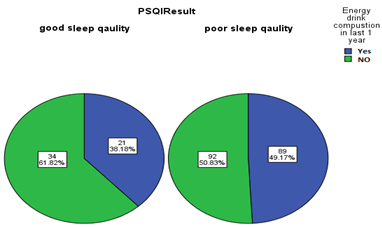
Figure 1. Pie Chart of Sleep Quality and Energy Drink Consumption during the Last 1 Year
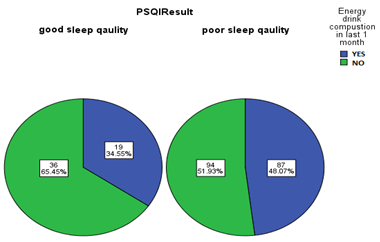
Figure 2. Pie Chart of Sleep Quality and Energy Drink Consumption in the Last 1 Month
4. DISCUSSION
In the current study, out of 236 students, 110 (46.6%) were found to use energy drinks to manage sleep deprivation while studying for exams or completing major academic projects. Megan E Patrick conducted a study to find whether energy drink usage predicted sleep quantity and quality among students. The study found that 46.6% of students reported energy drink consumption and their quality of sleep was low. There were no distinctions in sleep quality by gender, individual mean sleep amount, semester, or semester-mean caffeinated drink usage. According to the above study, the intake of energy drinks in medical students was found to be common, while the information of makings and the knowledge of health hazards of energy drinks among them was inadequate [13, 14].
The current study reported that 106 (44.9%) students consumed energy drinks in the last month. Out of these 106 (44.9%), 19 (34.5%) consumers reported good quality of sleep, while 87 (48.07%) reported poor quality of sleep. These findings are consistent with previous research showing that energy drink consumers experience reduced sleepiness and heightened alertness. According to the previous study, 66.3% of students consumed energy drinks in the past month. Out of them, 34.3% reported poor quality of sleep, while 29.5% of non-consumers reported poor sleep quality. However, no significant association was found between energy drink intake and time required to fall asleep [14].
The consumption of energy drinks is now increasing among medical students, with many reporting that the main reason for their consumption is to support general daily routine activities. One third of these consumers are also affected by some side effects which are destructive for health. In 2018, David Hammond conducted a study to assess the effects of events from energy drinks. It was reported that 55.4% of respondents consumed energy drinks, out of which 24.1% reported difficulty in sleeping [15].
The current study stated that out of 236 students, 110 (46.6%) energy drink consumers reported poor quality of sleep. On the other hand, caffeine utilization was not found to influence scholarly execution among students [16-18].
The limitation of the current study is that the quantity of energy drink consumption among medical students was not assessed. It is recommended that future researchers should measure the quantity of energy drink consumption and correlate it with factors.
4.1. ConclusionThis study concluded that the majority of students consuming energy drinks had poor sleep quality. The study shows an association between the consumption of energy drink and poor sleep quality among students. The findings suggest that students who consumed energy drinks in the past month were more likely to have difficulty in their sleep, as compared to those who did not. As energy drinks have a high caffeine and sugar content, it is likely that the stimulants hinder with the body’s normal sleep cycle, making it harder for students to fall asleep or achieve restful sleep. This disruption in sleep affects students’ academic performance and can lead to other health related problems.
CONFLICT OF INTEREST
The author of the manuscript has no financial or non-financial conflict of interest in the subject matter or materials discussed in this manuscript.
DATA AVAILABILITY STATEMENT
The data associated with this study will be provided by the corresponding author upon request.
FUNDING DETAILS
No funding has been received for this research.
REFERENCES
- Gariépy G, Doré I, Whitehead RD, Elgar FJ. More than just sleeping in: a late timing of sleep is associated with health problems and unhealthy behaviours in adolescents. Sleep Med. 2019;56:66-72. https://doi.org/10.1016/j.sleep.2018.10.029
- Dinis J, Bragança M. Quality of sleep and depression in college students: a systematic review. Sleep Sci. 2018;11(4):e290. https://doi.org/10.5935/1984-0063.20180045
- Mwape RK, Mulenga D. Consumption of energy drinks and their effects on sleep quality among students at the Copperbelt University School of Medicine in Zambia. Sleep Disord. 2019;2019. https://doi.org/10.1155/2019/3434507
- Cojocaru T, Pî GM, Sauciuc DG, et al. The impact of sleep patterns on academic performance and social integration among medical students. J Biosci Med. 2024;12(8):189-98.
- Choi J. Motivations influencing caffeine consumption behaviors among college students in Korea: associations with sleep quality. Nutrients. 2020;12(4):e953. https://doi.org/10.3390/nu12040953
- Erdmann J, Wiciński M, Wódkiewicz E, et al. Effects of energy drink consumption on physical performance and potential danger of inordinate usage. Nutrients. 2021;13(8):e2506. https://doi.org/10.3390/nu13082506
- Hladun O, Papaseit E, Martín S, et al. Interaction of energy drinks with prescription medication and drugs of abuse. Pharmaceutics. 2021;13(10):e1532. https://doi.org/10.3390/pharmaceutics13101532
- Erdmann J, Wiciński M, Wódkiewicz E, et al. Effects of energy drink consumption on physical performance and potential danger of inordinate usage. Nutrients. 2021;13(8):e2506. https://doi.org/10.3390/nu13082506
- Mahajan R, Singh M, Fahim T, Singh AK. Thumb pain in physiotherapists practicing manual therapy: prevalence and conse fluences. Int J Health Sci Res. 2020;10(6):194-200.
- Ghozayel M, Ghaddar A, Farhat G, Nasreddine L, Kara J, Jomaa L. Energy drinks consumption and perceptions among University Students in Beirut, Lebanon: a mixed methods approach. PLoS One. 2020;15(4):e0232199. https://doi.org/10.1371/journal.pone.0232199
- Shadzi MR, Rahmanian M, Heydari A, Salehi A. Structural validity of the Pittsburgh Sleep Quality Index among medical students in Iran. Sci Rep. 2024;14(1):e1538. https://doi.org/10.1038/s41598-024-51379-y
- Mollayeva T, Thurairajah P, Burton K, Mollayeva S, Shapiro CM, Colantonio A. The Pittsburgh sleep quality index as a screening tool for sleep dysfunction in clinical and non-clinical samples: a systematic review and meta-analysis. Sleep Med Rev. 2016;25:52-73. https://doi.org/10.1016/j.smrv.2015.01.009
- Miech RA, Johnston LD, Patrick ME, O'Malley PM, Bachman JG, Schulenberg JE. Monitoring the future national survey results on drug use, 1975-2022: Secondary school students. Institute for Social Research; 2023.
- Patrick ME, Veliz P, Linden-Carmichael A, Terry-McElrath YM. Alcohol mixed with energy drink use during young adulthood. Addict Behav. 2018;84:224-230. https://doi.org/10.1016/j.addbeh.2018.03.022
- Sánchez-Sánchez E, Trujillo-Garrido N, Díaz-Jimenez J, et al. Attitudes and consumption habits of energy drinks among adolescents and young adults in a Spanish population. AIMS Public Health. 2025;12(1):16-32. https://doi.org/10.3934/publichealth.2025002
- Lee KM. The Relationship between Caffeine Consumption, Perceived Stress, Coping Style, and Burnout among Football Bowl Subdivision University Athletic Department Support Staff. Dissertations. Dissertation, Baylor University; 2025.
- Faris ME, Al Gharaibeh F, Islam MR, et al. Caffeinated energy drink consumption among Emirati adolescents is associated with a cluster of poor physical and mental health, and unhealthy dietary and lifestyle behaviors: a cross-sectional study. Front Public Health. 2023;11:e1259109. https://doi.org/10.3389/fpubh.2023.1259109
- Godos J, Grosso G, Castellano S, Galvano F, Caraci F, Ferri R. Association between diet and sleep quality: a systematic review. Sleep Med Rev. 2021;57:e101430. https://doi.org/10.1016/j.smrv.2021.101430