Systematic Literature Review: Impact of Post-Traumatic Stress Disorder on Entrepreneurial Intentions
Rana Shahid Mahmood1*, Raja Irfan Sabir2, and Shahjahan Masud2
1University of Management & Technology, Lahore, Pakistan
2University of Central Punjab, Lahore, Pakistan


ABSTRACT
This systematic literature review aimed to explore the consequences of post-traumatic stress disorder (PTSD) due to traumatic childbirth in relation to emotional intelligence (EI) and social influence. Women make an extraordinary contribution to regional and national production. Furthermore, the United Nations (UN) Sustainable Development Goals (SDGs) highly emphasize the mental and physical health of women. Compulsive buying is a significant issue that causes emotional, financial, and social distress to individuals and their families. Entrepreneurial intentions play a crucial role since they serve as a precursor to entrepreneurial activities influencing both individual and economic outcomes. The review period encompassed researches published from January 2014 to December 2023. Through a comprehensive examination of the literature, this review identified key dimensions and variables used to investigate the association between post-traumatic stress and entrepreneurial intentions. Several dimensions were considered in the reviewed literature including psychological factors, individual characteristics, and environmental influences. Psychological factors encompassed variables, such as resilience, coping mechanisms, and cognitive appraisal of trauma. Individual characteristics included personality traits, past traumatic experiences, and levels of self-efficacy and motivation. Environmental influences encompassed socio-economic factors, social support networks, and cultural contexts. The variables utilized in the reviewed studies involved measures of post-traumatic stress symptoms, such as intrusive thoughts, avoidance behaviors, and hyperarousal. Entrepreneurial intentions were assessed through measures of entrepreneurial self-efficacy, desire for autonomy, risk-taking propensity, and intention to start or pursue entrepreneurial endeavors. The current study contributed to the understanding of how post-traumatic stress influences entrepreneurial intentions. Furthermore, it also highlighted the importance of considering psychological, individual, and environmental factors in research and interventions aimed at supporting individuals with post-traumatic stress who aspire to entrepreneurship.
1. INTRODUCTION
Traumatic childbirth refers to a threatening birth experience, leading towards intense fear and helplessness, which may result in psychological distress. Some researchers claim that one in three women report their childbirth as traumatic with 1-6% developing post-traumatic stress disorder (PTSD) as a consequence (Ayers et al., 2024; Fraga et al., 2023). In the same vein, caesarean childbirth has also been recognized as a traumatic event that may lead towards PTSD symptoms (Lancaster et al., 2016). PTSD is a mental health condition triggered by experiencing or witnessing a traumatic event and in the perinatal context, it may lead towards significant dysfunction in family dynamics and maternal mental health (Kranenburg et al., 2023; Ramirez et al., 2023).
Mothers suffering from PTSD linked to childbirth fight to make it through every day while confronting haunting dreams and vivid recollections of delivery, rage, unease, despair, and distressing seclusion from the realm of motherhood. The birth of a child is one of the most profound experiences in a woman's life, and while it can be positive and empowering, it may also be stressful and even traumatic (Beck, 2004). PTSD was originally studied in combat veterans, however, in the past two decades, childbirth has also been recognized as a potentially traumatic event that may lead towards PTSD symptoms and a diagnosis of PTSD. Experiencing fear or helplessness during childbirth, or in the worst cases, fear for one's life or the death of one's child, may trigger a PTSD, characterized by symptoms, such as persistent involuntary and intrusive memories, nightmares, avoidance of certain stimuli, impaired concentration, and hyperarousal (Lancaster et al., 2016).
PTSD not only affects the mother's health; however, it may also have a negative impact on child and other family members (Ayers et al., 2016). Furthermore, a traumatic birth experience may lead a woman to avoid intimacy, negatively impacting her relationship with her partner. Being close to a newborn may replay the traumatic memory of birth over and over again, which may affect the mother-child bond and make the mother emotionally unavailable as well as indifferent to her child's needs (Davies et al., 2008).
Entrepreneurial intention represents an individual's commitment to startup and is considered as a cognitive state preceding entrepreneurial behavior (Alferaih, 2017; Maleki et al., 2023; Shirokova et al., 2022). Hmieleski et al. (2006) referred the entrepreneurial intentions as personal aims to start businesses for growth and progress. Moreover, another scholar Ajzen, (1975) also highlighted entrepreneurial intentions, such as intentional attitude toward a new business or an ongoing business, to seek new business opportunities.
PTSD or psychological stress is a variable that may be manipulated or measured in the study. It may be measured using standardized scales or questionnaires, assessing stress levels, anxiety, or depression among entrepreneurs. Entrepreneurial intention was dependent variable in the current study, capturing the aspirational and motivational aspects of individuals towards engaging in entrepreneurial activities. Entrepreneurial intentions encompass the cognitive processes and attitudes towards starting, managing, and growing a business venture. This includes the desire to create and innovate, pursue autonomy, take calculated risks, and engage in entrepreneurial behaviors. Sherin et al. (2011) assessed using scales or items measuring factors, such as intention to start a business, interest in entrepreneurship, or willingness to take risks (Li et al., 2023). Entrepreneurial intentions are influenced by various internal and external factors including psychological factors, such as self-efficacy, perceived barriers, and psychological well-being (Lee et al., 2022). While considerable research has focused on the negative consequences of PTSD, recent scholars have begun to explore potential positive outcomes, such as post-traumatic growth and resilience.
Presently, a great number of women are pursuing professional and technical degrees to meet market demands. They have become successful interior designers, exporters, publishers, clothing manufacturers, and continue to explore new avenues of economic participation (Sellers, 2021; West, 2022). Perhaps for these reasons, government agencies, NGOs, social scientists, researchers, and international organizations are beginning to take an interest in the issue of entrepreneurship (Oluwakemi et al., 2023).
Women entrepreneurs are more willing to explore the possibilities of starting new businesses, take risks, introduce new innovations, coordinate the management and lead their businesses, as well as provide effective leadership in all aspects of their businesses (Gulvira et al., 2024). Women entrepreneurs play a crucial role in economic development and gender equality, significantly contributing to job creation and societal welfare. Their involvement in business not only fosters economic growth, however, also empowers women, enabling them to achieve independence and stability (Aydın et al., 2023).
The majority of women entrepreneurs are dynamic in their leadership and management style, have much more to contribute, and are interested in keeping their industry and management knowledge up to date. Similarly, women are a significant part of the workforce: they now make up nearly half of the global workforce. This means that businesses that fail to attract and retain female talent are missing out on a significant portion of the available talent pool (Clerey, 2023).
Figure 1
Symptoms of Post Traumatic Stress Disorder
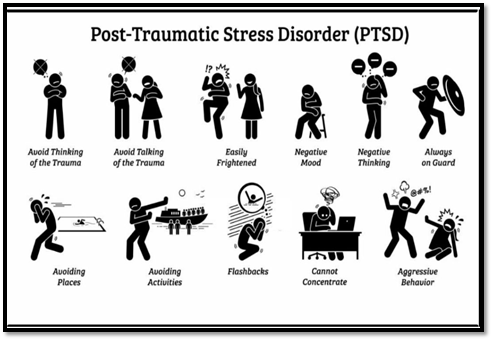
PTSD is a multifaceted illness that arises from a confluence of biological, psychological, and environmental elements. A person's body and mind respond to a traumatic event to keep them safe. The "fight or flight" response is the term used to describe this natural reaction, which is marked by an increase in adrenaline and other stress hormones (Ardino, 2020). This stress response helps people respond to threats efficiently. However, in PTSD sufferers, this reaction turns dysfunctional. Even after they are no longer in danger, the traumatic experience remains ingrained in their memory, causing them to suffer from extreme stress, anxiety, and fear (Gupta, 2023).
"Common symptoms of PTSD: Understanding its impact on thoughts, emotions, and behavior” (Gupta, 2023).
Risk Factors of Post-traumatic StressThere is a lot that goes into whether someone develops PTSD or not after experiencing a certain trauma. It is not just about what exactly happened to them, however, there are other things about them and their situation as well. The more severe the traumatic event the higher the risk (National Institute of Mental Health, 2023). However, someone's own vulnerabilities play a role as well. Certain factors, such as the existing mental health issues, family history of a mental illness, or having gone through trauma before may increase someone's chances to develop PTSD. Moreover, if someone doesn't have much support from people around them or healthy ways of dealing with stress, it may make recovery harder. Biological differences between peoples’ brains may also play a role in people's brains, such as if the amygdala is overly active (Tanasugarn, 2020) The specific type of trauma also matters, since factors, such as violence between people or sexual assault may develop risks due to the fact that how personal and invasive, they are. Therefore, it takes multiple things coming together to determine if someone would develop PTSD or not after experiencing trauma (National Institute of Mental Health, 2023).
By elucidating the relationship between PTSD and entrepreneurial intentions, this study contributed to both academic scholarship and practical interventions. Understanding how trauma may influence entrepreneurial motivations, behaviors, and outcomes may inform the development of targeted support programs for individuals with PTSD who aspire to pursue entrepreneurship as career (Wang & Huang, 2022).
PTSD or psychological stress is a variable that can be manipulated or measured in the study and may be measured using standardized scales or questionnaires assessing stress levels, anxiety, or depression among entrepreneurs. Entrepreneurial intentions comprised dependent variable in the current study, capturing the aspirational and motivational aspects of individuals towards engaging in entrepreneurial activities. This includes the desire to create and innovate, pursue autonomy, take calculated risks, and engage in entrepreneurial behaviors (Sherin et al., 2011). This variable represents the inclination or motivation of individuals to engage in entrepreneurial activities. It can be assessed using scales or items measuring factors such as intention to start a business, interest in entrepreneurship, or willingness to take risks (Li et al., 2023). Entrepreneurial intentions are influenced by various internal and external factors, including psychological factors such as self-efficacy, perceived barriers, and psychological well-being (Lee et al., 2022).
The contribution of women in regional and national productivity is unprecedented. Furthermore, women’s mental and physical health is a top priority in United Nations (UN) SDGs (United Nation, 2022). According to United Nation (2022) and United Nation Women (n.d.) poverty along with food insecurity is rising with more women and girls going hungry. Moreover, due to low social protection systems around the globe, women are mostly affected. Approximately, 55% of mothers of newborns receive no maternity cash benefits during childbirth due to C-section. This is also a cause of mental, physical, and emotional disbalance for women, especially those who are job holders or business owners, which ultimately results in low productivity (United Nation Women, n.d.).
Women's health directly influences their productivity and healthier women tend to contribute more effectively to the economy. The Global Strategy for Women's, Children's, and Adolescents' Health emphasizes the need for health systems that support women's well-being, which is vital for economic growth (Kuruvilla et al., 2016). Gender equality is integral to sustainable development, as highlighted in the SDGs, particularly goal 5, which focuses on gender equality and women's empowerment (Fredman et al., 2016; United Nation, 2022). While Pop-Jordanova (2022) states that distressing experiences during labor may result in PTSD affecting up to 9% of mothers.
The prevalence of PTSD among women following C-section is a significant concern, with studies indicating rates as high as 31.7%. This condition is often linked to inadequate support and negative delivery experiences. Moreover, 20.1% of women experienced PTSD after their C-section, with negative childbirth a major risk factor (Bodin et al., 2022). Another research indicated that 25.97% of women reported PTSD after C-section deliveries, highlighting the emotional trauma associated with such procedures (Orovou et al., 2022).
Kutria et al. (2021) highlighted that there are several factors that may cause PTSD after childbirth including C-section. C-Section is a significant traumatic experience for women, often leading to PTSD, which negatively impacts the behavior (MGH Center for Women’s Mental Health, n.d.). Childbirth may be perceived as a highly stressful experience and even result in the development of PTSD symptoms (Dekel et al., 2017). PTSD negatively effects the behaviour of women with traumatic child-birth experience (Shiva et al., 2021). According to World Health Organization (2024), women are more likely to experience PTSD than men.
Literature Review
Childbirth TraumaChildbirth trauma refers to psychological distress experienced during or after childbirth, often leading to childbirth-related PTSD. This condition affects millions of women globally, with prevalence rates ranging from 1.5% to 9% (Pop-Jordanova, 2022). The trauma may stem from various factors, including negative birth experiences, complications, and lack of support, which can overwhelm a person's coping abilities (Horsch et al., 2024). Childbirth trauma encompasses both physical and psychological aspects with psychological trauma being particularly distressing. It may lead towards significant mental health issues including anxiety and depression (Fraga et al., 2023).
High-risk groups include those with prior trauma and psychological difficulties or adverse birth experiences. Factors, such as operative births and poor maternal support also increase PTSD risk (Frankham et al., 2023). Childbirth trauma refers to distressing experiences during delivery that can lead to PTSD, characterized by symptoms, such as re-experiencing, avoidance, negative alterations in cognition, and heightened arousal (Horesh et al., 2021). Furthermore, childbirth trauma is also defined as an event during labor involving serious injury or death threat to the mother or infant, leading towards overwhelming psychological distress, fear, and potential PTSD (Pop-Jordanova, 2022).
Leinweber et al. (2022) indicated a strong connection between childbirth trauma, including exposure to violence and emotional abuse, and the development of compulsive buying behavior. Childbirth trauma is a multifaceted illness that arises from a confluence of biological, psychological, and environmental elements. Even after they are no longer in danger, the traumatic experience remains ingrained in their memory, causing them to suffer from extreme stress, anxiety, and fear (Vatanparast et al., 2023).
Post-Traumatic Stress Disorder (PTSD)PTSD is a complex psychiatric condition that arises following exposure to traumatic events, characterized by a range of distressing symptoms. Understanding its definition and implications is crucial for effective treatment and management (Gul et al., 2024). PTSD is defined as a mental health disorder triggered by experiencing or witnessing traumatic events, such as natural disasters, violent assaults, or armed conflicts (Koweszko et al., 2023).
Core symptoms include re-experiencing the trauma through flashbacks and nightmares, avoidance of reminders, and heightened arousal, which can severely disrupt daily functioning. The disorder may lead towards profound psychosocial consequences, necessitating comprehensive treatment approaches (Koweszko et al., 2023).
Kutria et al. (2021) showed that there are several factors that cause PTSD symptoms after childbirth including C-section, service by health workers, previous experience of childbirth history, and women having a history of psychosocial disorders. Similarly, Andersen et al. (2012) highlighted the most important risk factors, for instance infant complications, low support during labor and delivery, psychological difficulties in pregnancy, previous traumatic experiences, and obstetrical emergencies.
Another study conducted by Dikmen et al. (2017) examined that PTSD was highly comorbid with depression and anxiety at all-time points. Furuta et al. (2016) showed that post-traumatic stress symptoms were more frequently observed in black women and in women who had a higher pre-pregnancy Body Mass Index (BMI) as compared to those with a lower BMI. Women with a history of mental illnesses as well as those who gave birth before arriving at the hospital, underwent an emergency C-section or experienced severe maternal complications.
Auxéméry (2012) identified risk factors that led to the development of PTSD and these included younger age at the time of trauma, female gender, lower social economic status, lack of social support, premorbid personality characteristics, and pre-existing anxiety or depressive disorders. The psychic trauma is firmly attached to the repetition and the previous traumas are as many risks of developing a subsequent PTSD in the wake of a new trauma. Vatanparast et al. (2023) used the Persian scale version to highlight the latent factor structure and assessment of childbirth-related PTSD.
Garthus-Niegel et al. (2013) suggested that women’s subjective birth experiences are the most important factor in the development of post-traumatic stress symptoms following childbirth. Verreault et al. (2012) indicated that a history of sexual trauma and anxiety may increase the probability of developing PTSD after childbirth. The findings highlight the importance of screening and providing more tailored services for women at a high risk. Halperin et al. (2015) found more similarities than differences between Arab and Jewish women’s experiences of childbirth trauma. Furthermore, no differences were found between them on the prevalence of PTSD symptoms after child-birth.
Another researcher also used the self-reporting scale (Vatanparast et al., 2023) the latent factor structure and assessment of traumatic childbirth-related PTSD psychometric characteristics of the City Birth Trauma scale (Persian version) (City-BiTS-P). Similarly, another study also used self-reporting scale (Maggioni et al., 2006). This study was carried out by submitting a questionnaire to pregnant women.
According to Goleman (1995) emotional intelligence (EI) is the capacity to regulate emotions and manage how people react to different circumstances, feelings, and disappointment. Self-awareness, emotional control, motivation, empathy, and relationship management are crucial to develop EI. People with strong EI are more resilient and create a good social networking.
Emotional Intelligence (EI)The higher level of EI results in less aggression, with more self-disciplined behavior as well as self-esteem. Factors, such as the inability of understanding and lack of controlling emotions might result in negative impact of handling the stress which ultimately causes a detrimental outcome on health, resulting in misguided strategies (Drigas et al, 2020). It also refers to respond or deal with a behavior or any condition without actually experiencing it. The satisfaction is also closely related to EI. In the case of encounter between the service providing employees and customers, the emotional contagion theory shows that the emotions generated by frontline employees would impact the customer response and vice versa (Prentice, 2019).
Entrepreneurship is a natural business phenomenon involving skills, innovation, and management. Types include opportunity-based, market-driven, innovation-driven, and small business entrepreneurship, each contributing to the economic growth and job creation (Prince et al, 2021).
Entrepreneurship is a dynamic process involving the development, launch, and management of new business ventures, characterized by innovation and risk-taking. It plays a crucial role in economic growth by introducing new products and services, creating jobs, and fostering competition. Various types of entrepreneurships exist, each defined by distinct motivations and operational approaches.
Entrepreneurial IntentionsEntrepreneurship involves the implementation of innovative ideas to disrupt markets. Types include small businesses, scalable start-ups, large companies, and social entrepreneurs, each with distinct characteristics and focuses (Tripathi et al., 2022).
Corporate EntrepreneurshipThis type of entrepreneurship involves innovation within large organizations, encouraging employees to act like entrepreneurs to foster new ideas and products (Urbano et al., 2022).
Intrapreneurship combines entrepreneurial spirit with the structure of an existing organization, allowing employees to act like entrepreneurs within their roles (Deprez, 2024). It encompasses behaviors, such as proactivity, risk-taking, and innovativeness, which are crucial for organizational renewal and adaptation (Ashal et al., 2023).
Cognitive Adaptation Theory (CAT)According to Taylor (1983) Cognitive Adaptation Theory (CAT) explains how individuals adapt to life changes, such as chronic illnesses, by seeking positive meaning, regaining control, and enhancing self-esteem. CAT is a psychological framework that emphasizes how individuals adapt to difficult life events by searching for meaning, enhancing self-esteem, and overcoming the situation. The theory posits that cognitive strategies are used to mitigate negative effects on well-being, especially when faced with adversity, such as health problems or social discrimination. CAT has been successfully applied to health-related challenges, for instance in cancer patients, to aid in their coping strategies. According to Raymond (2022) individuals actively search for meaning in their experiences, which is crucial for psychological resilience to bolster self-esteem, vital for recovery and adaptation.
Social InfluenceSocial influence refers to the ways in which individuals change their thoughts, feelings, or behaviors as a result of real or imagined pressure from others. It encompasses various mechanisms, including conformity, compliance, and obedience, which may significantly shape social norms and individual decision-making processes. Research indicates that social influence can manifest in both positive and negative forms, affecting group dynamics and individual actions in diverse contexts, such as marketing, health behaviors, and social interactions (Yu & Poger, 2022). For instance, studies highlight how social influence may lead towards increased adherence to health guidelines when individuals perceive that their peers are also following these practices (Qourrichi, 2023). Conversely, it may also result in negative outcomes, such as peer pressure, leading to risky behaviors (Pandey, 2022).
Social influence significantly impacts the entrepreneurial intentions across various contexts. Gul et al. (2024) indicated that entrepreneurial intention is positively correlated with socioeconomic development, mediated by entrepreneurial knowledge. This suggests that social networks can enhance intentions through shared knowledge and experiences. Additionally, Husain et al. (2024) highlighted that social networking plays a crucial role in shaping the technological entrepreneurial intentions, where university support and perceived risks are influenced by social connections. This highlights the importance of community in fostering entrepreneurial aspirations. Moreover, Yang et al. (2023) suggested that the influence of social norms, both personal and injunctive, has been shown to affect entrepreneurial intentions among working adults. This emphasizes the role of societal expectations in motivating individuals to engage in entrepreneurship.
Methodology
The systematic review methodology outlined by Tranfield et al. (2003) and referred to exemplary entrepreneurship reviews (Stephan, 2018) as well as recent methodological recommendations (Shepherd & Wiklund, 2020) to shape literature search, organization, and analysis. Although, the approach used involved iterative analysis, four primary steps were adhered to in conducting this study. These steps include defining the conceptual boundaries, establishing inclusion criteria, systematically searching for relevant literature, and synthesizing the findings.
Defining the Conceptual BoundariesThe first step involved delineating the conceptual boundaries of PTSD and entrepreneurial intentions. The preliminary examination of the literature highlighted significant distinctions in how PTSD is conceptualized and assessed within the entrepreneurship domain. Thus, this phase was structured as follows:
- Defining PTSD: PTSD is characterized as a mental health condition triggered by traumatic events, influencing cognitive, emotional, and behavioral responses. The literature was reviewed on PTSD symptoms, diagnostic criteria, and its psychological and physiological impacts.
- Defining Entrepreneurial Intentions: Entrepreneurial intentions refer to an individual’s conscious commitment to starting a business. Various theoretical models of entrepreneurial intentions were examined, including the Theory of Planned Behavior (Ajzen, 1991) and the Entrepreneurial Event Model (Shapero & Sokol, 1982) to understand the factors shaping these intentions.
To ensure the selection of relevant and high-quality studies, rigorous inclusion and exclusion criteria was developed. Studies were included if they met the following conditions:
- Topic Relevance: Articles must explicitly examine PTSD and its impact on entrepreneurial intentions or behavior.
- Publication Type: Peer-reviewed journal articles, conference papers, and book chapters.
- Time Frame: Studies published from [Start Year] to [End Year] to ensure recent and relevant findings.
- Language: Only English-language publications were considered.
- Methodological Rigor: Empirical studies with clearly defined methodologies, including quantitative, qualitative, and mixed-methods research.
Studies were excluded if they:
- Focused solely on PTSD without any connection to entrepreneurship.
- Were opinion pieces, editorials, or lacked empirical data.
- Examined PTSD in organizational settings without considering entrepreneurial aspects.
A comprehensive literature search was conducted across multiple academic databases including Scopus, Web of Science, PubMed, PsycINFO, and Google Scholar. The search strategy was designed using Boolean operators (AND, OR, NOT) to refine results. Key search terms included:
- “Post-traumatic Stress Disorder” OR “PTSD”
- “Entrepreneurial Intentions” OR “Entrepreneurial Behavior”
- “Psychological Factors and Entrepreneurship”
- “Trauma and Business Creation”
The search yielded initial studies, which underwent a screening process following PRISMA (Preferred Reporting Items for Systematic Reviews and Meta-Analyses) guidelines. Duplicate studies were removed and titles and abstracts were reviewed for relevance. Full-text articles of selected studies were then assessed based on the inclusion criteria, resulting in a final sample of 145 studies for in-depth analysis.
Figure 2
Systematic Identification of Data Source
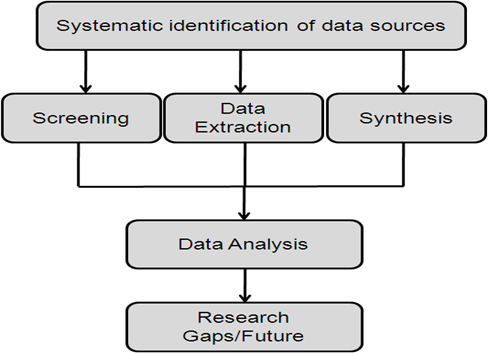
To systematically analyze the selected literature, findings were categorized into personal and contextual factors affecting the relationship between PTSD and entrepreneurial intentions.
Personal FactorsIndividual characteristics, such as personality traits, learning experiences, personal challenges, resilience, coping mechanisms, and mental health impact on business decision-making.
Contextual FactorsExternal influences, such as social support, financial stress, policy frameworks, and market conditions affecting entrepreneurs with PTSD.
A thematic analysis was conducted to identify the recurring patterns, contradictions, and gaps in the existing research. The findings were synthesized to develop a conceptual framework illustrating the mechanisms through which PTSD influences entrepreneurial intentions.
Although the approach involved iterative analysis, four primary steps were adhered to in order to conduct the current study. Initially, it delineated the conceptual boundaries of PTSD on entrepreneurship, as depicted in Figure 1. The preliminary examination of the literature highlighted notable distinctions in how PTSD was conceptualized and assessed in entrepreneurship.
Figure 3
Understanding How and What Effects PTSD on Entrepreneurial Intentions
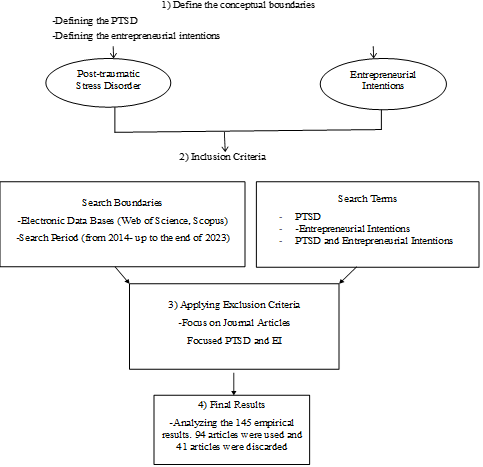
This systematic literature review employed a rigorous methodology to ensure a comprehensive and unbiased analysis of the existing research on PTSD and entrepreneurial intentions. By defining conceptual boundaries, applying strict inclusion criteria, systematically searching for relevant literature, and synthesizing findings, a structured understanding was provided as to how PTSD affects the entrepreneurial behavior. Future research should be conducted based on these findings to explore the intervention strategies and support mechanisms for entrepreneurs facing PTSD-related challenges. A literature review was conducted by focusing on the consequences of PTSD on entrepreneurs, categorizing them into personal and contextual factors. Personal factors encompassed various aspects of the entrepreneur's individual characteristics and experiences including personality traits, learning experiences, personal challenges, commitment, attitudes, and behaviors.
Discussion
The aim of critical review of the literature was to gather the content from the body of knowledge related to the impact or potential impact of PTSD on a patient with entrepreneurial intentions. Entrepreneurs with special traits, for instance perseverance, self-efficacy, and goal-oriented mindset are better not only to set backs, however, also to tackle the adversities. In addition to this for better resilience, the entrepreneurs should have the contingency plan to tackle not only the adverse conditions, however, also to flourish. Many contextual factors including organizational, environmental, and social factors play an important role and may create the dynamic environment that have a better control on their internal and external resources.
Despite valuable insights provided by the existing literature; several notable gaps remain. Firstly, there is a need for a more comprehensive examination of the intricate relationship among stress, physical health, and personal income concerning entrepreneurial intentions (Ferreira-Neto et al., 2023). Secondly, further studies are required to investigate the dynamic interplay between personal income, physical health, and entrepreneurial intentions in the context of stress. Lastly, while the literature offers valuable insights, there is a lack of research contextualized to Egyptian entrepreneurs, highlighting the necessity for a more nuanced understanding of these integrated relationships (Abdelwahed, 2024).
This critical literature review examines the intersection of entrepreneurial intentions and post-traumatic stress disorder (PTSD), focusing on how PTSD influences entrepreneurial motivations and behavior. It synthesizes relevant studies to understand the psychological, social, and economic factors involved. Some of the entrepreneurial intentions are related to social psychology which aims to analyze behavior in general and illuminate the cognitive process from idea to action (Korber & McNaughton, 2018). The Theory of Planned Behavior, a major contribution to entrepreneurship, has gained widespread use in social psychology. It helps explain entrepreneurial intentions and decision-making. Its application offers key insights into the factors shaping entrepreneurial behavior (Ajzen, 2012).
Firstly, the current study proposed a unique framework to measure the consequences of PTSD due to traumatic childbirth of patient’s behaviour by examining the impact of PTSD on compulsive buying behaviour and entrepreneurial intentions, through the mediation of EI and the moderation of social influence (Mishra et al., 2024; Radiman et al., 2024).
Secondly, Ayers et al. (2023) found that there is a significant gap in recognizing and screening for traumatic childbirth and childbirth-related PTSD.
The current study also opened avenues to understand how PTSD may influence CBB and entrepreneurial intentions, particularly in a unique culture, where economic conditions and social norms differ markedly from those in developed countries (Miao et al., 2019).
ConclusionThis study highlights the impact of childbirth-related PTSD on women's mental health, family dynamics, and entrepreneurial aspirations. PTSD symptoms such as anxiety and emotional detachment can hinder business decision-making, while emotional intelligence and social influence play key roles in mitigating its effects. Addressing these challenges requires targeted mental health support, workplace flexibility, and financial assistance to enhance resilience and economic inclusion.
Despite offering valuable insights, this review has limitations, including cultural biases and reliance on self-reported data. Future research should adopt longitudinal approaches and explore additional psychological and contextual factors. By advancing trauma-informed entrepreneurship, this study informs policies that support women facing PTSD-related challenges while pursuing business opportunities.
Future RecommendationsThe current research has significant implications for both women entrepreneurs and women in job roles. For women entrepreneurs, understanding the influence of PTSD on entrepreneurial intentions can make them more aware of how trauma affects their decision-making processes, risk tolerance, and overall business aspirations. Insights into the link between PTSD and compulsive buying behaviors may also guide them in managing stress and avoiding impulsive financial decisions that could hinder business growth.
Additionally, this research could inspire the development of support networks for women entrepreneurs dealing with PTSD, providing a space for resilience and mutual support. By examining EI as a mediator, the study may also encourage women entrepreneurs to cultivate EI, enhancing their ability to manage trauma-related symptoms and handle business challenges with a positive outlook.
Understanding the impact of PTSD on professional life could help job-holding women recognize work-related stress exacerbated by trauma, leading to better work-life balance and greater job satisfaction.
Moreover, by promoting EI training, workplaces may empower women to manage PTSD symptoms effectively, resulting in improved productivity and well-being. Furthermore, the findings could encourage organizations to implement targeted mental health support systems, fostering a more supportive and understanding work environment for women who experience trauma-related stressors. Overall, the research could provide knowledge pertaining to the creation of tailored interventions, support mechanisms, and policies that empower women in managing the professional and financial impacts of PTSD.
Further research is needed to deepen the understanding of the mechanisms underlying entrepreneurs' intentions and their implications for entrepreneurial success. Longitudinal studies tracking entrepreneurs’ intentions over time could provide insights into its development and dynamics. Additionally, comparative studies across different industries, regions, and cultural contexts could shed light on the universality of resilience factors and their contextual variations. Moreover, exploring the role of emerging factors, such as technology, globalization, and socio-economic trends in shaping entrepreneurs' intensions would be valuable. Practical implications may also be drawn from this research, informing the design of entrepreneurship education programs, mentorship initiatives, and support networks tailored to enhance entrepreneurial intentions. By addressing these recommendations, scholars and practitioners can contribute to fostering an entrepreneurial ecosystem conducive to innovation, growth, and societal well-being.
Research ImplicationsThe implications of this literature review lie in its potential to illuminate the complex relationships between PTSD due to childbirth trauma, compulsive buying behaviors, and entrepreneurial intentions, especially among women. By examining the impact of PTSD on financial behaviors and career aspirations, the research may provide valuable insights into specific challenges faced by women who experience trauma. This understanding is crucial to develop targeted support systems and interventions that address the unique needs of women entrepreneurs and women in the workforce.
The research has the potential to inform policymakers, mental health practitioners, and organizational leaders in order to encourage the development of mental health support structures and financial wellness programs tailored for women affected by PTSD. Ultimately, this study aimed to contribute to a deeper understanding of the intersection between mental health and economic behavior in order to promote resilience, stability, and empowerment among women in both entrepreneurial and job-holding roles.
Novelty of Systematic Literature ReviewThis systematic literature review is unique since it explored the underexamined connection between childbirth-related PTSD and entrepreneurial intentions, addressing a critical gap in literature. With the rising number of women entrepreneurs and growing awareness of postpartum mental health challenges, this study provided valuable insights into how traumatic childbirth experiences shape women's entrepreneurial aspirations and behaviors. A key contribution was the investigation of EI as a mediating factor, highlighting its potential to mitigate PTSD’s effects on entrepreneurial decision-making. Additionally, the study introduced social influence as a moderating variable, offering a nuanced perspective on how cultural norms, peer support, and social networks impact entrepreneurial behavior in trauma-affected women.
Focusing specifically on women entrepreneurs, this research contributed to a more inclusive understanding of entrepreneurship and mental health, aligning with global efforts to promote gender equality and women's economic empowerment.. Beyond academic contributions, this study offered practical implications for mental health and entrepreneurship support, providing policymakers, mental health practitioners, and business organizations with actionable strategies to assist women entrepreneurs facing PTSD-related challenges.
LimitationsLimited generalizability may arise as findings could be specific to women entrepreneurs in particular cultural or economic contexts, influenced by differences in healthcare systems, social support, and economic opportunities. The reliance on self-reported data introduces risks of social desirability and recall bias, potentially affecting the accuracy of PTSD symptoms, EI, and entrepreneurial intentions. Additionally, the cross-sectional design limits the ability to establish causal relationships, whereas a longitudinal approach could provide deeper insights into how these variables evolve over time. The study's focus on EI as a mediator and social influence as a moderator may not fully capture the other psychological and contextual factors, such as resilience, financial resources, and family support. Furthermore, cultural and societal variations in the perception of PTSD and entrepreneurship may limit the study’s applicability across diverse populations. The absence of a clinical PTSD diagnosis may lead to inconsistencies in assessing symptom severity and its impact on entrepreneurship. Lastly, sample bias could arise if participants are predominantly those already interested in entrepreneurship or mental health, potentially skewing results. Addressing these limitations in future research may enhance the study’s robustness and applicability.
Conflict of Interest
The authors of the manuscript have no financial or non-financial conflict of interest in the subject matter or materials discussed in this manuscript.
Data Availability Stah2tement
The data associated with this study will be provided by the corresponding author upon request.
Funding Details
No funding has been received for this research.
REFERENCES
Abdelwahed, N. A. A. (2024). The impact of psychological stress on personal income, physical health and entrepreneurial intentions among entrepreneurs. OBM Neurobiology, 8(1), 1–16. https://doi.org/10.21926/obm.neurobiol.2401205
Ajzen, I. (1991). The theory of planned behavior. Organizational Behavior and Human Decision Processes, 50(2), 179–211.
Ajzen, I. (2012). The Theory of planned behavior. In P. A. M. Van Lange, A. W. Kruglanski, E. T. Higgins, & I. Ajzen (Eds.), Handbook of theories of social psychology (pp. 438–459). Sage Publications.
Ajzen, I., & Fishbein, M. (1975). A Bayesian analysis of attribution processes. Psychological Bulletin, 82(2), 261–277. https://doi.org/10.1037/h0076477
Alferaih, A. (2017). Weight-and meta-analysis of empirical literature on entrepreneurship: Towards a conceptualization of entrepreneurial intention and behaviour. The International Journal of Entrepreneurship and Innovation, 18(3), 195–209. https://doi.org/10.1177/1465750317722114
Andersen, L. B., Melvaer, L. B., Videbech, P., Lamont, R. F., & Joergensen, J. S. (2012). Risk factors for developing post‐traumatic stress disorder following childbirth: A systematic review. Acta Obstetricia et Gynecologica Scandinavica, 91(11), 1261–1272. https://doi.org/10.1111/j.1600-0412.2012.01476.x
Ardino, V. (Ed.). (2020). Post-traumatic syndromes in childhood and adolescence: A handbook of research and practice. John Wiley & Sons. https://doi.org/10.1002/9780470669280
Ashal, N., Crowther, D., & Albadri, F. (2023). Intrapreneurship: A competent method toward organizations’ sustainability. In D. Crowther & S. Seifi (Eds.), Preparing for a sustainable future (pp. 27–45). Springer Nature Singapore. https://doi.org/10.1007/978-981-99-2456-1_2
Auxéméry, Y. (2012). Post-traumatic stress disorder as a consequence of the interaction between an individual genetic susceptibility, a traumatic event and a social context. The Brain, 38(5), 373–380. https://doi.org/10.1016/j.encep.2011.12.003
Aydın, K., Kantarcı, T., & Yildirim, S. (2023). Female entrepreneurs and employees among the economy: Selected indicators from Turkey. In A. D. Daniel & C. Fernandes (Eds.), Female entrepreneurship as a driving force of economic growth and social change (pp. 111–135). IGI Global. https://doi.org/10.4018/978-1-6684-7669-7.ch007
Ayers, S., Bond, R., Bertullies, S., & Wijma, K. (2016). The aetiology of post-traumatic stress following childbirth: A meta-analysis and theoretical framework. Psychological Medicine, 46(6), 1121–1134. https://doi.org/10.1017/S0033291715002706
Ayers, S., Horsch, A., Garthus-Niegel, S., Nieuwenhuijze, M., Bogaerts, A., Hartmann, K., Karlsdottir, S. I., Oosterman, M., Tecirli, G., Turner, J. D., & Lalor, J. (2024). Traumatic birth and childbirth-related post-traumatic stress disorder: International expert consensus recommendations for practice, policy, and research. Women and Birth, 37(2), 362–367. https://doi.org/10.1016/j.wombi.2023.11.006
Beck, C. T. (2004). Post-traumatic stress disorder due to childbirth: The aftermath. Nursing Research, 53(4). Retrieved from https://journals.lww.com/nursingresearchonline/fulltext/2004/07000/post_traumatic_stress_disorder_due_to_childbirth_.4.aspx
Bodin, E., Peretti, V., Rouillay, J., Tran, P. L., & Boukerrou, M. (2022). Post-traumatic stress and extreme emergency cesarean section: Incidence and risk factors. Gynecology Obstetrics Fertility & Senology, 50(3), 240–260. https://doi.org/10.1016/j.gofs.2021.12.015
Clerey, H. (2023, May 23). The importance of women in business [Post]. LinkedIn. https://www.linkedin.com/pulse/importance-women-business-hugo-clerey/
Davies, J., Slade, P., Wright, I., & Stewart, P. (2008). Posttraumatic stress symptoms following childbirth and mothers’ perceptions of their infants. Infant Mental Health Journal, 29(6), 537–554. https://doi.org/10.1002/imhj.20197
Dekel, S., Stuebe, C., & Dishy, G. (2017). Childbirth induced posttraumatic stress syndrome: A systematic review of prevalence and risk factors. Frontiers in Psychology, 8, Article e00560. https://doi.org/10.3389/fpsyg.2017.00560
Deprez, J. (2024). Intrapreneurship as a driver of renewal in social organizations. In H. C. Chandan (Ed.), Social innovations in education, environment, and healthcare (pp. 170–190). IGI Global. https://doi.org/10.4018/979-8-3693-2569-8.ch009
Dikmen-Yildiz, P., Ayers, S., & Phillips, L. (2017). Factors associated with post-traumatic stress symptoms (PTSS) 4–6 weeks and 6 months after birth: A longitudinal population-based study. Journal of Affective Disorders, 221, 238–245. https://doi.org/10.1016/j.jad.2017.06.049
Drigas, A., & Papoutsi, C. (2020). The need for emotional intelligence training education in critical and stressful situations: The case of Covid-19. International Journal of Recent Contributions from Engineering, Science & IT (IJES), 8(3), 20. https://doi.org/10.3991/ijes.v8i3.17235
Ferreira-Neto, M. N., de Carvalho Castro, J. L., de Sousa-Filho, J. M., & de Souza Lessa, B. (2023). The role of self-efficacy, entrepreneurial passion, and creativity in developing entrepreneurial intentions. Frontiers in Psychology, 14, Article e1134618. https://doi.org/10.3389/fpsyg.2023.1134618
Fraga, A. M., Quintão, A., Mesquita, B., Melo Santos, C., Soares, F., Correia, J., Albuquerque, M., Neves, S., Moutinho, A., & Cintra, P. (2023). The link between pos-traumatic stress disorder and childbirth. European Psychiatry, 66(S1), S1124–S1124. https://doi.org/10.1192/j.eurpsy.2023.2390
Frankham, L. J., Thorsteinsson, E. B., & Bartik, W. (2023). Birth related PTSD and its association with the mother-infant relationship: A meta-analysis. Sexual & Reproductive Healthcare, 38, 100920. https://doi.org/10.1016/j.srhc.2023.100920
Fredman, S., Kuosmanen, J., & Campbell, M. (2016). Transformative equality: Making the sustainable development goals work for women. Ethics & International Affairs, 30(2), 177–187. https://doi.org/10.1017/S089267941600006X
Furuta, M., Sandall, J., Cooper, D., & Bick, D. (2016). Predictors of birth-related post-traumatic stress symptoms: Secondary analysis of a cohort study. Archives of Women’s Mental Health, 19(6), 987–999. https://doi.org/10.1007/s00737-016-0639-z
Garthus-Niegel, S., von Soest, T., Vollrath, M. E., & Eberhard-Gran, M. (2013). The impact of subjective birth experiences on post-traumatic stress symptoms: A longitudinal study. Archives of Women’s Mental Health, 16(1), 1–10. https://doi.org/10.1007/s00737-012-0301-3
Goleman, D. (1995). Emotional intelligence. Bantam Books.
Gul, S., Limongi, R., & Syed, H. W. U. (2024). Unraveling the nexus: Social entrepreneur intention and socioeconomic development with mediating role of entrepreneurial knowledge. Kybernetes. https://doi.org/10.1108/K-03-2024-0794
Gulvira, A., Ainash, M., Sagynysh, M., Meiramgul, A., & Aliya, K. (2024). The impact of female entrepreneurship on economic growth in developing and developed economies. ECONOMICS, 12(2), 145–162. https://doi.org/10.2478/eoik-2024-0016
Gupta, D. (2023). Post-traumatic stress disorder (PTSD): Symptoms and treatment. Continental Hospital. https://continentalhospitals.com/blog/post-traumatic-stress-disorder-ptsd-symptoms-and-treatment/
Halperin, O., Sarid, O., & Cwikel, J. (2015). The influence of childbirth experiences on women׳s postpartum traumatic stress symptoms: A comparison between Israeli Jewish and Arab women. Midwifery, 31(6), 625–632. https://doi.org/10.1016/j.midw.2015.02.011
Hmieleski, K. M., & Corbett, A. C. (2006). Proclivity for Improvisation as a Predictor of Entrepreneurial Intentions. Journal of Small Business Management, 44(1), 45–63. https://doi.org/10.1111/j.1540-627X.2006.00153.x
Horesh, D., Garthus-Niegel, S., & Horsch, A. (2021). Childbirth-related PTSD: Is it a unique post-traumatic disorder? Journal of Reproductive and Infant Psychology, 39(3), 221–224. https://doi.org/10.1080/02646838.2021.1930739
Horsch, A., Garthus-Niegel, S., Ayers, S., Chandra, P., Hartmann, K., Vaisbuch, E., & Lalor, J. (2024). Childbirth-related posttraumatic stress disorder: Definition, risk factors, pathophysiology, diagnosis, prevention, and treatment. American Journal of Obstetrics and Gynecology, 230(3), S1116–S1127. https://doi.org/10.1016/j.ajog.2023.09.089
Husain, N. A., Hanapiyah, Z. M., Roni, M., Abas, N., Arham, A. F., & Norhisham, N. (2024). Social networking and technological entrepreneurial intention: Demand-resource mechanism. Information Management and Business Review, 16(2(I)), 111–124. https://doi.org/10.22610/IMBR.V16I2(I).3854
Korber, S., & McNaughton, R. B. (2018). Resilience and entrepreneurship: A systematic literature review. International Journal of Entrepreneurial Behavior & Research, 24(7), 1129–1154. https://doi.org/10.1108/IJEBR-10-2016-0356
Koweszko, T., de Barbaro, B., Izydorczyk, B., Mastalerz-Migas, A., Samochowiec, J., Szulc, A., Kowalska, A., Wachowska, K., & Gałecki, P. (2023). The position statement of the Working Group on the treatment of post-traumatic stress disorders in adults. Psychiatria Polska, 57(4), 705–727. https://doi.org/10.12740/PP/166172
Kranenburg, L., Lambregtse-van den Berg, M., & Stramrood, C. (2023). Traumatic childbirth experience and childbirth-related post-traumatic stress disorder (PTSD): A contemporary overview. International Journal of Environmental Research and Public Health, 20(4), 2775. https://doi.org/10.3390/ijerph20042775
Kuruvilla, S., Bustreo, F., Kuo, T., Mishra, C., Taylor, K., Fogstad, H., Gupta, G. R., Gilmore, K., Temmerman, M., Thomas, J., Rasanathan, K., Chaiban, T., Mohan, A., Gruending, A., Schweitzer, J., Dini, H. S., Borrazzo, J., Fassil, H., … Costello, A. (2016). The Global strategy for women’s, children’s and adolescents’ health (2016–2030): A roadmap based on evidence and country experience. Bulletin of the World Health Organization, 94(5), 398–400. https://doi.org/10.2471/BLT.16.170431
Kutria, S., Nuzuliana, R., & Kurniati, N. (2021). Risk factors of post-traumatic stress disorder post-partum: A scoping review. International Journal of Health Science and Technology, 3(2), 128–143. https://doi.org/10.31101/ijhst.v3i2.1968
Lancaster, C., Teeters, J., Gros, D., & Back, S. (2016). Posttraumatic stress disorder: Overview of evidence-based assessment and treatment. Journal of Clinical Medicine, 5(11), 105. https://doi.org/10.3390/jcm5110105
Lee, S., Kang, M.-J., & Kim, B.-K. (2022). Factors Influencing Entrepreneurial Intention: Focusing on Individuals’ Knowledge Exploration and Exploitation Activities. Journal of Open Innovation: Technology, Market, and Complexity, 8(3), Article e165. https://doi.org/10.3390/joitmc8030165
Leinweber, J., Fonstein-Kuipers, Y., Thomson, G., Karlsdottis, S., Nilsson, C., Ekström-Bergström, A., Olza, I., Hadijigeorgiou, E., & Stramrod, C. (2022). Developing a woman‐centered, inclusive definition of traumatic childbirth experiences: A discussion paper. Birth, 49(4), 687–696. https://doi.org/10.1111/birt.12634
Li, Y., Cao, K., & Jenatabadi, H. S. (2023). Effect of entrepreneurial education and creativity on entrepreneurial intention in college students: Mediating entrepreneurial inspiration, mindset, and self-efficiency. Frontiers in Psychology, 14, Article e1240910. https://doi.org/10.3389/fpsyg.2023.1240910
Maggioni, C., Margola, D., & Filippi, F. (2006). PTSD, risk factors, and expectations among women having a baby: A two-wave longitudinal study. Journal of Psychosomatic Obstetrics & Gynecology, 27(2), 81–90. https://doi.org/10.1080/01674820600712875
Maleki, A., Moghaddam, K., Cloninger, P., & Cullen, J. (2023). A cross-national study of youth entrepreneurship: The effect of family support. The International Journal of Entrepreneurship and Innovation, 24(1), 44–57. https://doi.org/10.1177/14657503211054284
MGH Center for Women’s Mental Health. (n.d.). Women’s mental health. Retrieved September 22, 2024, from https://womensmentalhealth.org/posts/category/womens-mental-health/
Miao, J., Wu, X., & Sun, X. (2019). Neighborhood, social cohesion, and the Elderly's depression in Shanghai. Social Science & Medicine, 229, 134–143. https://doi.org/10.1016/j.socscimed.2018.08.022
Mishra, N., Mishra, A., & Singh, P. (2024). Ecological worldview moderates the mediation of implementation‐intentions found in the relationship between ecological concerns and pro‐environmental behaviour. Asian Journal of Social Psychology, 27(2), 129–143. https://doi.org/10.1111/ajsp.12585
National Institute of Mental Health. (2023). Post-Traumatic Stress Disorder. https://www.nimh.nih.gov/health/publications/post-traumatic-stress-disorder-ptsd
Oluwakemi, R. A., Györke, D. K., & Gubacsi, F. (2023). Entrepreneurship as a tool for women empowerment in Nigeria. Studia Mundi – Economica, 10(1), 3–13. https://doi.org/10.18531/sme.vol.10.no.1.pp.3-13
Orovou, E., Dagla, M., Eskitzis, P., Savvidis, G. S., Rigas, N., Papatrechas, A., Sarella, A., Arampatzi, C., & Antoniou, E. (2022). The involvement of past traumatic life events in the development of postpartum PTSD after Cesarean delivery. Healthcare, 10(9), Article e1761. https://doi.org/10.3390/healthcare10091761
Pandey, J. (2022). Social influence in organizational context. In J. Pandey (Ed.), Nature and dynamics of social influence: Interpersonal and organizational contexts (pp. 183–202). Springer Nature Singapore. https://doi.org/10.1007/978-981-19-4598-4_8
Pop-Jordanova, N. (2022). Childbirth-related psychological trauma. Section of Medical Sciences, 43(1), 17–27. https://doi.org/10.2478/prilozi-2022-0002
Prentice, D. C. (2019). Managing service encounters with emotional intelligence. Journal of Retailing and Consumer Services, 51, 344–351. https://doi.org/10.1016/j.jretconser.2019.07.001
Prince, S., Chapman, S., & Cassey, P. (2021). The definition of entrepreneurship: is it less complex than we think? International Journal of Entrepreneurial Behavior & Research, 27(9), 26–47. https://doi.org/10.1108/IJEBR-11-2019-0634
Qourrichi, A. (2023). Social influence and the formation of social norms, a psychosocial approach. International Uni-Scientific Research Journal, 4(1), 41–47. https://doi.org/10.59271/s44970-023-1001-8
Radiman, R., & Zhurham, M. (2024, July). The influence of social competence, physical work environment and financial compensation on employee performance is mediated by job satisfaction at the Bpjs employment office, Medan city branch. Proceeding Medan International Conference on Economic and Business, 2, 263–281.
Ramirez, E. A., Maldonado, J., Arce, B. V., Díaz, M. J. S., & Varon, J. A. T. (2023). An undervalued diagnosis: Post-traumatic stress disorder in the perinatal period: A case report. International Journal of Medical Students, 13, Article eS114. https://doi.org/10.5195/ijms.2023.2386
Raymond, O. B. (2022). Utilisation of cognitive adaptation strategies to counteract discrimination on well-being. Psychology Journal: Research Open, 4(2), 1–2. https://doi.org/10.31038/PSYJ.2022422
Sellers, L. (2021). Women design: Pioneers from the twentieth century to today. Frances Lincoln Children's Books.
Shapero, A., & Sokol, L. (1982). Social dimensions of entrepreneurship. In C. A. Kent, D. L. Sexton, & K. H. Vesper (Eds.), Encyclopedia of entrepreneurship (pp. 72–90). Prentice Hall.
Shepherd, D. A., & Wiklund, J. (2020). Simple rules, templates, and heuristics! an attempt to deconstruct the craft of writing an entrepreneurship paper. Entrepreneurship Theory and Practice, 44(3), 371–390. https://doi.org/10.1177/1042258719845888
Sherin, J. E., & Nemeroff, C. B. (2011). Post-traumatic stress disorder: The neurobiological impact of psychological trauma. Dialogues in Clinical Neuroscience, 13(3), 263–278. https://doi.org/10.31887/DCNS.2011.13.2/jsherin
Shirokova, G., Osiyevskyy, O., Bogatyreva, K., Edelman, L. F., & Manolova, T. S. (2022). Moving from intentions to actions in youth entrepreneurship: An institutional perspective. Entrepreneurship Research Journal, 12(1), 25–69. https://doi.org/10.1515/ERJ-2019-0201/XML
Shiva, L., Desai, G., Satyanarayana, V. A., Venkataram, P., & Chandra, P. S. (2021). Negative childbirth experience and post-traumatic stress disorder—a study among postpartum women in South India. Frontiers in Psychiatry, 12, Article e640014. https://doi.org/10.3389/fpsyt.2021.640014
Stephan, U. (2018). Entrepreneurs’ mental health and well-being: A review and research agenda. Academy of Management Perspectives, 32(3), 290–322. https://doi.org/10.5465/amp.2017.0001
Tanasugarn, A. (2020, April 6). Healing from the past and living in your present. Psych Central. https://psychcentral.com/lib/healing-from-the-past-and-living-in-your-present#1
Taylor, S. E. (1983). Adjustment to threatening events: A theory of cognitive adaptation. American Psychologist, 38(11), 1161–1173. https://doi.org/10.1037/0003-066X.38.11.1161
Tranfield, D., Denyer, D., & Smart, P. (2003). Towards a methodology for developing evidence‐informed management knowledge by means of systematic review. British Journal of Management, 14(3), 207–222. https://doi.org/10.1111/1467-8551.00375
Tripathi, M. A., Tripathi, R., Sharma, N., Singhal, S., Jindal, M., & Aarif, M. (2022). Brief study on entrepreneurship and its classification. International Journal of Health Sciences. https://doi.org/10.53730/ijhs.v6nS2.6907
United Nation Women. (n.d.). SDG 3: Ensure healthy lives and promote well-being for all at all ages. Retrieved September 22, 2024, from https://www.unwomen.org/en/news/in-focus/women-and-the-sdgs/sdg-3-good-health-well-being
United Nation. (2022, July 7). The sustainable development goals report 2022. https://unstats.un.org/sdgs/report/2022/
Urbano, D., Turro, A., Wright, M., & Zahra, S. (2022). Corporate entrepreneurship: A systematic literature review and future research agenda. Small Business Economics, 59, 1541–1565. https://doi.org/10.1007/s11187-021-00590-6
Vatanparast, A., Kamrani, A., Shakiba, S., Amouchie, R., Akbari, E., & Ayers, S. (2023). The latent factor structure and assessment of childbirth-related PTSD: Psychometric characteristics of the city birth trauma scale—Persian version (City-BiTS-P). Frontiers in Psychiatry, 14, Article e1204392. https://doi.org/10.3389/fpsyt.2023.1204392
Verreault, N., Da Costa, D., Marchand, A., Ireland, K., Banack, H., Dritsa, M., & Khalifé, S. (2012). PTSD following childbirth: A prospective study of incidence and risk factors in Canadian women. Journal of Psychosomatic Research, 73(4), 257–263. https://doi.org/10.1016/j.jpsychores.2012.07.010
Wang, L., & Huang, J. (2022). Mediating role of entrepreneurial self-efficacy and prosocial tendency in the relation between college students’ post-traumatic growth and entrepreneurial intention in the post-COVID-19 era. Frontiers in Psychology, 13, Article e861484. https://doi.org/10.3389/fpsyg.2022.861484
West, J. (Ed.). (2022). Work, women and the labour market. Taylor & Francis.
World Health Organization. (2024, May 27). Post-traumatic stress disorder. https://www.who.int/news-room/fact-sheets/detail/post-traumatic-stress-disorder
Yang, Q., Al Mamun, A., Jingzu, G., Siyu, L., & Masud, M. M. (2023). Social entrepreneurial intention among working adults: An emerging country context. Frontiers in Psychology, 14, Article e1123198. https://doi.org/10.3389/FPSYG.2023.1123198/PDF
Yu, S., & Poger, S. (2022, July 20–22). Using matrix operations to measure individual social influence in mobile messaging apps [Paper presentation]. Proceedings of 2022 International Conference on Electrical, Computer and Energy Technologies. Prague, Czech Republic. https://doi.org/10.1109/ICECET55527.2022.9873014