

| Review | Open Access |
|---|
A Qualitative Narrative of Experiences and Challenges Faced by Women-led Organizations on Peacebuilding and Conflict Resolution in Pakistan |
 |
|---|
Rimsha Bashir1* and Sarosh Iqbal2
1Department of Sociology University of Management and Technology, Lahore, Pakistan
2Department of Sociology, Forman Christian College (A Chartered University) Lahore, Pakistan
Peacebuilding has become a fundamental process to avoid bloodshed and accelerate the establishment of ongoing peace and tolerance. Significantly, women’s involvement is becoming more precarious in peacebuilding and conflict resolution. The main objective of this research is to explore the challenges and experiences faced by women-led peacebuilding and conflict resolution initiatives in Pakistan. A qualitative research design has been adopted, using an exploratory technique to explore the women leaders’ challenges, experiences, and effectiveness associated with the local women-led initiatives for peacebuilding and conflict resolution. A total of 20 Key Informant Interviews (KIIs) were conducted with 9 organizations, representing all four provinces of Pakistan. These included women leaders/founders, their management team, and donors. After seeking permission, interviews were recorded and transcribed for thematic analysis. The qualitative analysis revealed that these women-led initiatives were founded to serve the community and save local people, especially girls and women from both short and long-term effects of disputes, tribal conflicts, and civil wars. The same is also evident from their ongoing projects, focusing on raising the women’s unheard voices, their empowerment, and capacity building. Nevertheless, these women-led organizations and their team also face multiple barriers to engaging local women. These included ones were not limited to the lack of interest of all stakeholders, scarcity of finances to mobilize communities, issue of sustainability, lack of community support, law & order situation, patriarchal set-up, cultural norms, gender roles, power dynamics, and religious grounds. This research recommends that these women-led organizations, working for peacebuilding and conflict resolution on regional and provincial levels should be provided with necessary government and community support, both technical and financial, to enhance their effectiveness and sustainability.
1. INTRODUCTION
Peacebuilding refers to resolve disputes in a preventive and proactive manner before they are transformed into violent crises. For the promotion of peace and stability, it demands the policy formulation and implementation via comprehensive economic, political, and social reforms. The main obstacles in the process of peacebuilding are to achieve timely commitment and recognition from the global community to address latent conflicts before they go intensified. If such tensions are left unattended, they lead to the essentiality of ceasefire agreements, outbreaks of violence, and, in certain situations, the deployment of peacekeeping missions, especially those led by the United Nations (UN Women, 2012).
The term "peacebuilding," introduces by Jarstad (2019) is different from peacekeeping and peacemaking. He defines it as positive peace and negative peace; which is simply the absence of direct violence or warfare while positive peace entails a comprehensive and sustainable transformation. Positive peace is considered a process of transformation of the societies that emerged from violent conflict into environments. It incorporates the addressing and eliminating the physical violence, cultural violence, and especially structural violence. The latter refers to the systemic inequalities and injustices that normalize or legitimize the former two (Jarstad et al., 2019). As a result, peacebuilding needs novel and inclusive strategies for conflict transformation, that aimed to establish social structures and cultural norms that enable all members of society to realize their full human potential.
In addition to this, children and women are considered among the most defenseless populations in the times of conflict. They are often the least prepared to cope before, during, and after civil wars, violent upheavals, genocides, and armed conflicts. Despite not being instigators or perpetrators of violence, they disproportionately suffer its consequences. In reality, they are the most susceptible and seriously affected by violent conflicts that they played no role in initiating (Agbalajobi, 2009). Similarly, Mzvondiwa (2007) noted that in post-conflict societies, women bear the brunt of violence and social disintegration, enduring the long-term consequences of war and instability.
Debates about women's participation in conflict as culprits and victims of violence have received a lot of consideration, from local to worldwide levels. Throughout conflicts, both men and women go through, but women are disproportionately affected. Women strive to maintain peace for themselves and their families while emitting for them (Bernstein, 2002). As a result, numerous prominent international mandates and venues now stress how crucial it is to include women in peacebuilding. Women are encouraged to have equal access to and full involvement in power assemblies, as well as full involvement in all aspects of life, including peacebuilding initiatives for conflict resolution and prevention, as per the Beijing Platform for Action (1995) and the Convention on the Elimination of All Forms of Discrimination against Women (CEDAW) (1979). These initiatives are essential for maintaining and promoting global peace and security (Galtung, 2000).
Pakistani women face rising radicalization and extremism. Therefore, they are looking for innovative ways to combat extremist ideology in their communities, as they are frequently the victims of violence (Atlantic Council, 2014). A survey found that about 35,000 persons had been targeted throughout numerous conflicts in Pakistan since 2001. Pakistani communities and women are actively working to oppose major ideologies and implement new measures to moderate societal differences and extremism on the various levels. Civil and women society groups in Pakistan are well positioned in their regions and societies, and they frequently take the lead in offering peaceful ways to avoid conflict and bloodshed.
By centering the plots of grassroots women, this paper contributes to a subtler understanding of peace and conflict dynamics in Pakistan with the purpose to challenge the prevailing narratives that mostly ignore the transformative potential of women’s governance in peacebuilding (UN Women, 2012). Additionally, the insights gleaned from this study have recommendations and suggestions for civil society actors, policymakers, practitioners and engaged in promoting human rights, gender equality, and peace, in Pakistan and beyond (Mahdi, 2021).
Likewise, grassroots women have led the way in peacebuilding initiatives from socio-cultural landscapes of Pakistan, taking cues from regional customs of consensus-building, mediation, and involvement of community. Women have mobilized their communities across boundaries of ethnicity, religion, and geography, from isolated villages to metropolitan areas.
According to the literature, women's limited participation in post conflict communities in peace processes demonstrates the hegemonic inclination of masculinity in most contexts. Post conflict peace procedures often fail to address patriarchal mechanisms of violence against women, as informal and formal peace procedures rarely include active roles for women. Despite accounting for half of the global population, occurrences around the world indicate that women's active engagement is required for long-term peace.
Decker (2010) highlighted that women's equality on the battlefield does not always translate into long-term changes in gender relations acknowledging the presence of women in both irregular and regular armies. Deacon (2010) contends that gendered postwar recovery processes often do not receive sufficient attention, as it is assumed that by meeting the needs of men, the women will be taken care of inadvertently.
Given the scenario, graduate women in Pakistan have actively participated in a range of peacebuilding and conflict resolution projects, such as promoting interfaith dialogue and reconciliation in conflict affected areas like Khyber Pakhtunkhwa and Balochistan. However, scholars also recognize the challenges that women at the grassroots level face in their efforts to promote peace, such as security concerns, patriarchal norms, and institutional hurdles. However, there is a lack of research comprehending the documentation on the contributions of women in peacebuilding and conflict resolution initiatives in Pakistan and the challenges and experiences they face during their work. Hence bridging the gap, the proposed research intends to document the women led initiatives in Pakistan to bring peace and manage the coflicting situations.
Peacebuilding has become a crucial process to avoid bloodshed and accelerate the establishment of long-lasting peace and tolerance. The unique and critical stage of a war known as "peacebuilding" is when the issues of putting an end to violence and rebuilding society are met.
Literature shows that there is a lack of gathered information about women’s contribution to leading peacebuilding and conflict resolutions. This research is designed to explore the state of local women’s initiatives and analyze the effectiveness and challenges associated with these local women’s initiatives for peacebuilding and conflict resolution in the local context of Pakistan.
Research objectiveBased on previous literature, the study is designed to explore experiences and challenges faced by women-led organizations on peacebuilding and conflict resolution in Pakistan. The study follows the research question: What are the experiences and challenges faced by women-led organizations on peacebuilding and conflict resolution in Pakistan?
Conceptual frameworkFeminist Theory, as a broader theoretical perspective, has been adopted for providing philosophical underpinning for this research. In shaping women’s agency and experiences, it provides a robust analytical framework for understanding and explorating the role of gender dynamics inherent within patriarchal norms, societal structures, gender inequalities, and power imbalance.
Traditional gender roles and cultural norms often discourage participation of ‘Fair sex’ in public sphere in the context of Pakistan. Thus, this theory provides a critical lens to look into the fundamental challenges that are faced by organizations under the leadership of women in directing gender-based discrimination and structural inequalities (Atlantic Council, 2014). Feminist analysis is prioritized to critically analyze the specific notions of femininity and masculinity for social construction of gender roles. (Kronsell, 2006; Runsala & Källström, 2018). Owing to this, involvement of women, in peacemaking initiatives, goes beyond simple inclusion. Feminist researchers must emphasize the significance of acknowledging and addressing the distinct viewpoints, contributions, and experiences of women at the local level (True, 2013).
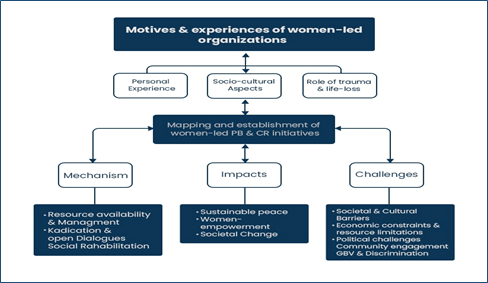
The theoretical framework can be conceptualized into the following model:
External Environment for Grassroots Women’s ContributionSocial and Cultural Context: This study aims to understand the cultural and societal challenges that are faced by women in the breaking stereotypes and taboos that control the social mobilty of women.
Economic Context: This study analyzes the economic challenges of women in conflict zones in critical times and impact of those challenges on peace efforts. In capitalistict society if a woman does not have enough resources and economic power, it is arudous for her to contribute to society.
Political Context: This research study helps to understand the local political dynamics that influence women’s involvement in peacebuilding. It shows that women’s participation in political affairs matters a lot and they can do better things if they have a political background.
Mechanisms of Women-Led PeacebuildingStrategies for Conflict Mediation and Open Dialogues: The study shows that women play a very crucial role in conflict situations. They try to resolve the issue even if it is at individual level or community level. They try their best to mediate between two opposite parties so that they can resolve the dispute.
Cultural practices: This study presents an understanding of the cultural practices used by women-led peacebuilding and conflict resolution initiatives. Women-led initiatives adopt local language and culture to interact with the community, especially women.
Teamwork: The study shows that an organization runs more successfully when its team members have strong bonds with one another. The bond between team members and leadership is so strong that even female members' recommendations are taken seriously by the top management.
ChallengesSocio-cultural barriers: This study analyzed that, although women-led organizations play a critical role in bringing peace to society, they face social and cultural barriers from the community. The old traditions resist the work of a woman outside the house and the strict norms do not permit the people of society to send their female for learning or earning outside the house.
Political challenges: An organization works properly with the help and support of social, cultural, and political aspects. The study reveals that some of the organizations that faced political challenges do not work effectively and have to face hurdles in the fulfillment of their mission.
Economic constraints and resource limitations: Every institution needs a strong financial position to work for the betterment of society. The women-led organizations work with the help of funds from local, national, or international contacts. There are some organizations that do not have donor organizations and they are collecting funds from their own workers and team members as a result their contribution is stays low.
Community engagement: Women-led organizations focus more on empowering local women and establishing peace through awareness sessions and capacity-building projects. Nonetheless their mission and vision face difficulties in engaging the local community, especially women. People from KP, Balochistan, Sindh, and rural areas of Punjab do not permit their women to meet the NGO workers.
Gender-based violence and discrimination: The study verifies the traditions that follow the fact that women always face gender-based discrimination whether they are working in higher positions or at their own house. The women-led organizations work to promote gender equality and save the local women from domestic violence or any other form of violence.
ImpactsSustainable Peace: Peacebuilding initiatives are key performers to bring sustainable peace to the world. The women-led organizations are working to resolve the conflict and bring about a feeling of togetherness among people.
Women Empowerment: The initiatives working for the betterment of women help in the social, economic, and political empowerment of women through their active roles in peacebuilding.
Societal Change: Resultantly, it brings a shift in societal norms and attitudes towards women’s roles in peace processes. People are accepting the work of women and their participation in society.
Figure 1Conceptual Framework
Methods and Materials
This research was conducted at the country level in Pakistan. The aim was to provide deep insights into the contributions, challenges, and opportunities of women-led peacebuilding initiatives within the Pakistani context. Keeping in this aim an exploratory research design was selected which includes primary data. Since this research aimed to provide deeper insight into women who are leading peacebuilding initiatives in Pakistan, a qualitative research design was adopted to achieve the research objectives. This approach explains individual experiences and generates theories.
As the research focuses on women-led organizations, the mapping of organizations were included that were only women-led organizations. The key informative interviews were conducted with women leaders and owners, representative of managment/finance team and representative from donor organizations. The women who were in higher positions and working as leaders in the organizations were selected for KII.
Target PopulationThe target participants for the primary data include key stakeholders e.g., women leaders/owners, representatives of management teams, and donors/development organizations across Pakistan.
Sampling Technique
Considering the qualitative research technique, a purposive sampling approach was adopted to conduct KIIs with key stakeholders. In this study, a purposive sampling technique was used to acquire qualitative data. Purposive sampling is the most commonly utilized approach for identifying and selecting information-rich situations with limited resources.
Table 1Sample Size for KIIs
|
Level of Key Stakeholders |
No. of KIIs per Province |
Total No. of KIIs |
|---|---|---|
|
Women leaders/owners |
2 per Province |
8 |
|
Representative of Management & Finance team |
2 per Province |
8 |
|
Representative of Donors/ development organizations |
1 per Province |
4 |
|
Total |
20 KIIs |
|
Three separate qualitative guides were developed based on the research objectives to explore women leaders’, management teams and donors' experiences and deep insights about the organization regarding peace building and conflict resolution. These guides included following the sections
- Introduction
- Organizational work and impact
- Challenges and networking
- Women’s Leadership and Contributions
- Strategic Planning and Decision-Making
- Training and Collaborations
Following the mapping of organizations, a qualitative research method was employed to gather primary data from selected women-led organizations, identified during the mapping exercise. As proposed above, 20 KIIs were conducted with key stakeholders, using a semi-structured KII guide to explore the contribution, effectiveness, challenges and opportunities associated with these women-led organizations.
Initially, the organizations were contacted through emails and calls to ask about their availability for interviews. In the 30 days, the interviews were conducted and data were used for further analysis. After conducting and analyzing [number] interviews, it became evident that responses were becoming repetitive and no novel themes were identified, suggesting that saturation had been reached. The task was hectic and exhaustive but completed by the researcher with patience and hard work.
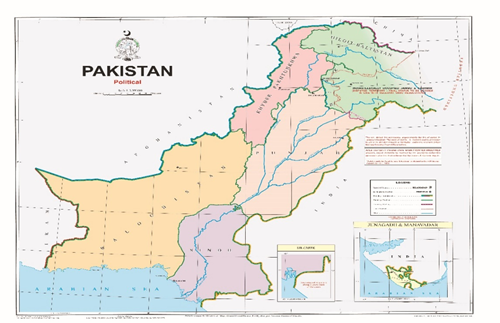
Figure 2
Map of Pakistan
The dialogue was conducted bilingually (English and Urdu) to ensure the participants’ understanding and ease. The written description of the background of research was given to all the participants for analytical purposes with explanation of term peace building and conflict resolution. During KIIs, participants were highly encouraged to express their point of views openly. Each interview continued approximately 25-30 minutes. All interviews were audio-recorded on a digital recorder with the participant consent, and written notes were taken to ensure quality assurance.
Ethical ConsiderationsAll the ethical considerations were observed. All participants were given freehand to discontinue or decline the interview at any point. All respondents were given a brief research objectives and background before the interview to guarantee their informed consent. The participants were advised that there was no danger linked with their participation. Thus, verbal consent was obtained from both parents and the youth, convincing them for their willingness and voluntary engagement in research. Researchers and field teams defended participants' rights and anonymity of their responses. Participants' personal information and responses, such as phone numbers and addresses, were kept completely secret during the research process. Every participant was assigned a unique ID to ensure anonymity and confidentiality. Participants were told that their participation or information would not be used to harm them.
Data Processing and AnalysisData transcription: After conducting KIIs, researchers transcribed the data from written notes and recordings. Data transcription duplicates spoken words from audio recordings to written text, including nonverbal cues such as pauses and quiet for clarity (MacLean et al., 2004). The researcher produced transcripts to confirm quality and reliability, as they serve as analytical proof (Duranti, 2006). According to Poland (2003), transcripts' trustworthiness can be measured by their ability to accurately replicate and capture aural records (Johnson et al., 2020).
The transcribed data was used for further analysis. A thematic data analysis technique was used for the results and findings. Themes and subthemes were used to analyze the data. A theme might have a few subthemes as sections to obtain a detailed view of data and discloses a structure in the participants’ accounts (Lopez & Willis, 2004). Themes analysis was focused on the underlying meaning of data and It can be employed across several theoretical frameworks and research methodologies (Clarke & Braun, 2017; Vaismoradi & Snelgrove, 2019).
Findings
The participants of the research included women leaders, representatives from the management team and donors. Most of the woman were working as leaders or founding memebrs of the organization. The founders and the executive directors had an experience of a minimum of one year and a maximum of 27 years. Most of them were there old (above 50 yrs.) while the management team included memebers of young people aged 23-29. The participants belonged to Punjab, Sindh, Balochistan, and KP.
Findings of KIIsThis section includes the analysis of primary data which was collected through key informative interviews (KII). The analysis was done by making themes and subthemes as follows:
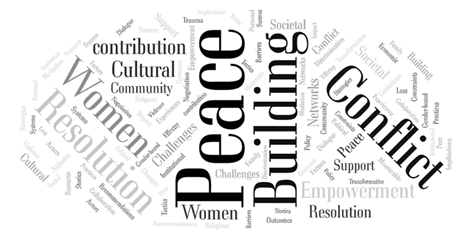
The word cloud of the above, mentioned themes and sub-themes is illustrated in the figure below:
Figure 3Word cloud of Emerging Themes and Sub themes
Findings from the KIIs highlighted that most of the female participants, currently working as women leaders in women-led initiatives either founded or joined their organizations to carry forward their mission of women empowerment. Most women leaders intended to create peace in their societies/communities, aiming for the welfare of women. Analysis revealed the salient features for women leaders to initiate peacebuilding projects within their organizations. These included, but were not limited to their diverse personal experiences as females, cultural and religious factors and in some places, the role of traumatic experiences, faced by them in their lives.
Personal Experiences and Narratives of ConflictUpon asking the reason for women’s interest in peacebuilding and conflict resolution, most of them confirmed that they aspired to strive for equal rights for all women in their patriarchial society, whether they are educated or not. As one notable women leader from KP narrated,
Usually people consider that the concept of peacebuilding and conflict resolution is essential during war or post-war areas, however, this is not the case… Our day-to-day experiences and discriminative behavior towards women in society as a whole is a major drive to raise voices for women’s role in peacebuilding.
A large number of the participants opined that there should be equal treatment for all women in society, including educated working women as well as uneducated but skilled women. People face many issues regarding violence and extremism and they want to eradicate these problems from society. One representative of the management team from Balochistan added, “I faced hurdles and difficulties during my studies… and now I am trying hard so that other girls may not face such problems”.
Socio-Cultural and Religious DriversPakistan is a country with the highest population of women, however, women’s rights and women empowerment are still major issues. There are many underdeveloped areas where people do not prefer for their girls to read, write and work. Even men do not allow their women to leave their homes alone and work outside. Though the religion of Islam advocates for equal rights for every human being, including the right to education; however, this is not the case in Pakistan.
Women are considered to be more religious and sensitive, so they have more tendency to help others. The results show that many women leaders are also serving in the community because of this religious factor. As quoted by one of the leaders from KP:
Our religion promotes helping others who are in problem. Likewise, we are taught to spread the light of knowledge and skills to others for their well-being. Moreover, if we see any woman suffering from violence or extremism, then we must help them and grant them facilities to learn skills to be independent economically and live respectfully.
In the patriarchal society, the belief is that a woman is responsible only for household chores and the upbringing of the children. The results interpreted that these women-led organizations are founded to raise women’s unheard voices and equip them with the necessary skills so they can earn for themselves and become financially independent. In the region of KP, Balochistan and Sindh most of the women are housewives, thus don't get enough opportunities to excel, and even the well-educated and talented women remain deprived. A leader from Sindh added:
We face multiple conflicts and violent extremism situations against women in our society, which inspired me to work in this area. This journey has been very difficult for me as I live in a society, where unfortunately, most of the women are not permitted to go outside and work…even being educated, due to strict cultural norms and practices
Role of Trauma and LossThe civil wars, protests and violation of law and order situations bring conflicts, followed by the destruction of resources, life-loss of loved ones and traumatize its affectees. Women, being the most vulnerable are badly affected by such situations, along with physical and emotional distress. The findings revealed that most of the participants faced conflicted situations in their past, lost their loved ones and went through trauma. Trauma has a long-lasting effect on their lives and it took them a long period to recover from their sufferings and loss. The majority of the women leaders affirmed that it was their mission to save the next generation to face such situations in future and go through the same problems.
Particularly, tribal and individual-level conflicts are also serious, though quite different from war. However, they can create an air of violence between people, making people more aggressive and impatient that they may take a step forward to physical harm. A male representative of the management team from Balochistan stated, “I have lost my brother and cousin brother in tribal conflicts, then we left our homeland… After that, I decided to save others from the tribal conflicts so that no one else can lose their brothers and loved ones”.
Mechanism Used in PeacebuildingPeacebuilding is a complex and decisive process that requires significant effort and strategic planning to foster societal peace and calmness. The involvement of women leaders’ efforts are particularly impactful organizations dedicated to peacebuilding work diligently to resolve conflicts. Women leaders bring a unique perspective to peacebuilding, often leveraging their strategic thinking, creativity, and skills to effectively manage and resolve conflicts. This study examined the roles and strategies of women-led peacebuilding initiatives, exploring their contributions through various perspectives.
Roles of Women in Conflict Resolution – Unheard VoicesWomen are contributing to society and they are playing a key role in peacebuilding and conflict resolution in Pakistan. Women are considered to be more non-violent, peace-minded in avoiding disputes. One participant of the management team from Lahore said, “In my point of view women have more power to resolve the issue and they try their best to avoid the war with their peaceful nature and calm mind”. It is also perceived that men have more tendency toward fight and conflict as compared to women. Men have very short temperaments and they are more likely to fight. As a female participant from the management team from Punjab indicated, “Men have very low patience and they have a lot of anger issues, there is a high chance of war if two men are in front of each other”.
In Pakistan, within the context of a patriarchal society women are supposed to be inferior to men and their voices are not heard. A representative of the management team from Sindh highlighted, “Due to the patriarchal norms and traditions the girls are not allowed to fulfil their wishes to learn and grow, their voices are suppressed”. The findings disclose that women leaders are not only working for peacebuilding but also trying their best to hear the unheard voices of housewives and give them equal rights to live, read and work.
Mediation,Dialogue, and Negotiation TacticsMediation and dialogue are key strategies used to address problems and prevent conflicts. Conflict is not limited to wars between countries or parties, it can also occur individually between two people. Differences in perspectives and diverse mindsets often lead to misunderstandings and conflict. These misunderstandings can escalate into aggression, with anger inhibiting the ability to listen to each other’s viewpoints.
Engaging peaceful dialogue is essential to prevent such conflicts. A senior female leader from the Punjab emphasized, “We develop strategies to resolve disputes and encourage people to sit down and talk through their issues”. Similarly, a leader from Lahore stated: “We work on changing mindsets to discourage violence and educate people to avoid fighting or shouting for their point of view. We provide peace education to university students and facilitate dialogues among them so they can express their feelings”.
Use of Local Knowledge and Cultural PracticesA person possesses extensive knowledge and understanding of the area in which they live, enabling them to identify what is the best for their community. The women-led organizations conducted surveys and sent their teams to the area concerned to learn about it. The teams go for their interaction with local people and learn their lifestyles and culture so that the local people can easily accomodate them. Local people are more likely to connect and share their problems with individuals who are natives, familiar with their language, and aware of their cultural practices.
Women leaders and management teams leverage local knowledge and language to effectively engage with local women and the broader community. The results demonstrated that these leaders recognize the need for changes in their working areas and are committed to addressing them. For example, in Balochistan, many women have the skills to create handmade crafts but lack the platforms and opportunities to market their products. A founder from Balochistan noted: “There is a great demand in the market for handicrafts but the supply is very low… so we decided to teach the local women about the necessary skills and knowledge so that they can earn and meet the market demand”.
The local people especially women gained knowledge and awareness about their rights and after the completion of capacity-building projects thoughts of local people changed towards violence and conflicts. They learnt that all people have equal rights and if they need to create peace and harmony then they must avoid the conflicts and resolve their issues with patience and dialogue. These initiatives and programs changed the mindset of people and they started living in harmony without any kind of violence against females to stop them from learning and earning.
Team-work and Collaboration with National and International EntitiesAn organization functions more effectively when its team members maintain strong connections with one another. A leader from Sindh remarked, “My entire team is my strength, with their support, our organization has sustained its operations for so long”. The relationship between team members and leadership is so strong that even suggestions from female members are taken seriously by senior managers. As shared by a female management team member from the Punjab, “Although I am a junior member, my suggestions are listened to carefully by the senior male managers, and they make changes if they find my input valuable”.
On the other hand, in organizations where team members lack coordination, gender discrimination prevails, and male members disregard female opinions and struggle to thrive and succeed. All team members must maintain positive relationships and strong communication with one another for organizations focused on peacebuilding and conflict resolution. Rationally, an organization striving to cultivate harmony in society should also exemplify harmony within its team.
Collaboration between organizations enhances their efficiency and effectiveness. Through partnerships, organizations can connect and support each other in the times of need. This often involves signing Memorandums of Understanding (MOUs) with other entities to formalize these collaborations. It is also believed that the quality of one's work can establish their reputation, leading to recognition from international bodies. As one leader from the Punjab explained, “People approach you by seeing your work. Tokyo University contacted me through my online articles, which led to talks, conferences, and published books known solely by the work”. Organizations often improve their performance through connections and funding from other entities, thereby contributing to their peacebuilding efforts. Women-led organizations are working with the help of local communities and international entities. Most of the organizations are working with the collaboration of national and international organizations. A manager from Balochistan stated:
The International and national organizations usually annoucne a request for proposal on their websites, newspaper and social media pages. Upon determing our eligibility aganist the defined criteria, we apply for a competitive bidding. Once the best proposal is shortlisted, the most qualified firm secure funding for the project… that’s how we launch projects and engage community
Further, she elaborated:
These awarded projects provide us with an opportunity to collaborate with local stakeholders at district, provincial and federal levels to plan and execute our activities effectively… Once this network is established, it keeps on expanding considering the nature of our project activities and stakeholders engagemnet… Also local community infleuntial and their engagemnet strengthen our network
Effectiveness and Impacts of Women-led InitiativesPeacebuilding initiatives have had a positive impact on local women. Every project leaves its mark, and organizations led by women are often seen as strong change-makers in the society. The focus of feminist organizations was on creating educational opportunities to empower women specifically. They launch capacity-building and peacebuilding programs aimed to foster independence by shaping thoughts through awareness sessions and campaigns. These impacts are essential in the measurable outcomes that emerge from these efforts to prevent violence.
Transformative Effects of Gender Equality and Women EmpowermentIt is seen that now women are working in leadership roles, they have acquired influential positions in society. They positively contribute in society as peacebuilders alongside men. Capicty-building projects of feminist organizations emphasise on women’s empowerment by strengthening their positions in the society.
In the historically backward regions of the Punjab, KP, Balochistan, and Sindh, cultural norms often contain girls from pursuing education independently or interacting with peacemakers and NGO workers. However, over time, and with the success of awareness sessions, attitudes have shifted, leading to a recognition that the importance of education for the girls is equal to that for the boys. Moreover, they promote gender equality and provide opportunities to young boys and girls so they can know the market trends and run with the fast world. A manager from Balochistan narrated:
The people in villages do not send their girls to colleges and universities as they think they will become open-minded and go against their customs and traditions but they want their boys to be educated and successful. Nevertheless, when they met our NGO workers and female leaders their thoughts were reshaped and they wanted their girls to follow in the footsteps of the female leaders and serve society.
Changes in Local Community BehaviorsAll initiatives have some level of impact on the community and the society, whether small or large. Communities have begun to understand that education plays a crucial role in preventing violence and disputes. As the old saying goes, “An educated mother can shape the entire society”. Additionally, many of the respondents shared that people thought women are not able to multitask, they can’t balance their personal and professional lives. There is a taboo for girls and women that they are emotional and make childish decisions. Women-led organizations present themselves as a strong competition against men.
A manager from Sindh highlighted, “When women learn skills, they make handicrafts and, with the organization’s support, send them to the market without needing to leave their homes”. The awareness campaigns and training sessions focusing on peacebuilding create a strong impact on the minds of people. As a women leader from Sindh uttered
After the completion of our projects and sessions … those people who are always ready to fight with their opponents and those who have opposite thoughts are now calm and think peacefully. They now tried to solve the matter by sitting in front of each other and through dialogues. Moreover, many of the young people become mediators between two rival parties.
Promoting Sustainable Peace and HarmonyOrganizations employ specific methodologies to measure the impact and effectiveness of their initiatives within society. These outcome measurement methods include surveys and monthly reports. In the context of peace education, a female representative from the management team in Lahore noted, “After the completion of peace education seminars, students often tell us that their thinking has changed … they now think peacefully and strive to avoid conflict”.
Peacebuilding projects not only transform the mindsets of participants but also those of the individuals working on them. As she further elaborated, “These projects have changed my thoughts. If someone argues with me and I start to feel angry, I now control my anger and try to remain calm. After listening to the complete argument, I encourage having a peaceful dialogue”.
Challenges Faced by Women in PeacebuildingThe women-led organizations are working very effectively although they have to face some challanges from the community and society. Whether in the present day or 30 years ago, the women have consistently faced gender discrimination and violence. Despite these challenges, they continue to strive for stronger positions and equal opportunities to lead successful lives. Women in leadership roles are actively challenging traditional norms and creating platforms for young girls to access education and develop skills. By acquiring new skills and knowledge, these young women are better equipped to contribute to society. The following outlines the challenges faced by female-led organizations and women leaders.
Social and Cultural BarriersThe Pakistani society is predominantly patriarchal, with traditions and norms that often restrict girls from leaving the house to advocate for their rights or the rights of others facing violence. For more, there is a predominant belief that if a girl wishes to work, she should receive extensive compensation, as unpaid work is generally disfavored. A representative from the management team in Balochistan noted:
My family initially did not support my decision to work with an NGO. Unpaid work is not favored, but when they saw that we were working for the welfare of women and that our efforts were recognized, they allowed me to continue.
Moreover, the women are prohibitted to earn the livlihoods in the conservative areas by the head of the house to sustain their patriarchal practices and norms. Various initiatives have been taken to change the patriarchal mindsets, as well as to enable the women to pursue education and to employment opportunities in the male dominated society. As a participant from Sindh shared:
A widow with three children who was struggling financially found no external support for her family ... She learned sewing skills at our skill centre, started a small business, and now she is selling her designs in the market, earning an income.
Economic Constraints and Resource LimitationsIt is observed while conducting research that mosly organizations rely on donations and funds to serve their communities. These funds are collected from community, families, team members and sometimes international organizations. A leader from Lahore explained, “Primarily, we collect donations from our relatives and then use these capitals for our projects”.
A female manager from Balochistan noted, “As part-time workers and students, we still contribute a quota of our income each month to support our community initiatives”. A local donor from Balochistan remarked, “I find it meaningful to fund money that contributes to societal reform”. Additionally, a management team head from Balochistan emphasized, “We need more donors and funding to operate effectively”. Hence, limited resources and insufficient funds negatively affect the performance of organizations.
Geo-Political ChallengesInvolvenmet of political parties and influential leaders hinders the performance and operations of the organizations at both local and national level. A manager from KPK noted, “Political parties are major obstacles … they do not want us to work for the people because it diminishes their position and importance in the eyes of the locals”. As political bodies see organizations as threat to their political power that is why, the organizations face obstacles from these parties
Community Engagement and MobilizationCommunity support is inevitable for women and girls to learn and grow; without their support, personal development is severely limited because women require support and networks to effectively reach and engage with the society. The family serves as a fundamental learning unit, providing essential survival skills and life lessons. Women who work without familial backing often encounter hostility and rude behavior from family members and relatives. As a leader from Lahore recounted, “My parents stopped speaking to me and severed all ties, claiming that I was insulting them when I was arrested during protests against violence towards women and peacebuilders”.
The findings indicate that women leaders are actively working to engage the local community, particularly other women. However, they face significant challenges, such as resistance from families who do not permit their women to leave the house. A leader from Sindh explained, “When we go into the field, the men in the households often prevent us from meeting their wives, fearing that an NGO worker might mislead them”.
Gender-based Violence and DiscriminationThe community may not appreciate the importance of women's education; they are not allowed to pursue education in rural areas; in such areas, women-led organizations face backlash. They even face abuse, humiliation, discrimination and violence from their own families. As a woman from KP expressed, “A female has to work three times harder than a male”.
The findings indicate that women who work or leave the house often face violence. A leader from Sindh noted, “Women who go outside the house to learn skills and earn are not considered to be good wives or daughters. They are punished and prevented from going outside”. Women-led organizations address these issues by conducting seminars and deploying teams to these areas to spread knowledge and work towards changing mindsets.
Discussion
The findings of this study highlight the complex and deeply gendered environment in which women-led organizations in Pakistan operate as they work toward peace. Viewed through the lens of Feminist Theory, the discussion shows how women’s participation, the approaches they adopt, and the barriers they face are shaped by entrenched patriarchal norms, overlapping social inequalities, and long-standing structural constraints. Feminist scholars contend that gender is a socially produced system of power that influences what women are perceived as capable of doing. The lived realities shared by participants reflect these limitations in practice. Women leaders often find themselves navigating, challenging, and at times strategically adapting to patriarchal expectations in their peacebuilding work. These expectations can also grant women a certain degree of social legitimacy, especially in mediation or community-level dialogue because their roles are seen as less politically threatening.
The study further shows that women’s agency does not emerge outside patriarchal systems but develops through continuous interaction with them. The participants from rural regions particularly Sindh, KP, and Balochistan—described limited family support, constraints on mobility, and fewer educational opportunities as factors shaping their engagement in peace initiatives. These observations align with feminist scholars like True (2013), who argue that women in conflict-affected societies face a dual burden of institutional violence and gender-based discrimination. Yet, despite such constraints, many women were able to rely on their social identities as caregivers, mothers, and trusted community members to build trust and mediate disputes. Their efforts reflect what feminist theorists describe as the “strategic use of gender roles,” where women draw upon culturally accepted identities to create openings for dialogue and conflict resolution (Adler, 1997).
Intersectional feminist perspectives also help explain the variations in women’s experiences. The factors such as class, geographic location, education, and proximity to conflict intersect to shape their roles and opportunities in peacebuilding. Women belonging to tribal or marginalized communities often face compounded structural barriers which include poverty, displacement, and limited access to resources. Economic constraints appeared as both a restraining and an incentive for women's participation in peacebuilding (Hussain et al., 2019). Limited access to jobs and resources reduced women’s bargaining power within communities, yet economic empowerment initiatives enabled women to challenge gender hierarchies. Women-led organizations that trained women in handicrafts, skill development, or capacity-building became platforms for both economic participation and gender transformation, supporting feminist arguments that economic agency strengthens women’s role in sustaining peace (Alaga, 2010).
The findings also demonstrate ongoing gendered power disparities in political and institutional settings. Women leaders referred to political parties as hurdles and emphasized their exclusion from formal decision-making procedures. These experiences mirror feminist critiques that political arrangements in patriarchal societies elevate male leadership and marginalize women’s participation. Nonetheless, women displayed gendered political agency by traversing informal networks, pushing local authorities, and rallying community support to confront issues of violence and instability. Their capacity to influence local governance despite institutional impediments demonstrates their tenacity, but it also underscores the continued need for formal acknowledgment and institutional support for women's political involvement (Mbabazi et al., 2020).
The cultural knowledge and relational techniques emerged as significant assets of women-led projects. Women used native language, customs, and community links to build trust and mobilize participation. This is consistent with feminist peacebuilding literature, which emphasizes that women's peace work frequently occurs through everyday social activities rather than formal organizations. Women leaders' ability to undertake home visits, foster conversations, and involve marginalized groups exemplifies a culturally entrenched paradigm of peacebuilding that challenges state-centric methods and emphasizes the value of grassroots initiatives (Muradov, 2021).
Gender-based violence (GBV) was identified in the findings as both a barrier to women's engagement and a target for active intervention. According to feminist theory, GBV is a mechanism used by patriarchy to maintain control over women, and the narratives of participants reflect this. Women leaders not only helped survivors of abuse, but also aggressively opposed the gender norms that allow such behavior. Awareness campaigns, peace education, and skill development projects all contributed to a transformation in community attitudes around women's rights and roles. These endeavors reflect feminist views that long-term peace entails addressing gendered oppression rather than simply resolving political strife.
The study also demonstrates how women-led initiatives have influenced community attitudes, resulting in long-term shifts in gender norms. As women gained visibility in leadership positions, communities began to appreciate their abilities and importance. The parents who had previously restricted their daughters' mobility began permitting them to pursue school or skill training after seeing successful role models (Naqvi & Riaz, 2015). The feminist claims that gender norms are socially created and thus subject to change are supported by these changes. Women's increasing participation in peacebuilding has a knock-on effect, opening the door for wider acceptance of gender equality in society as a whole (Ramsbotham et al., 2011).
The findings, seen through the lens of Feminist Theory, demonstrate that women-led organizations in Pakistan play critical but frequently underappreciated roles in peacebuilding. Their activities aim to challenge patriarchal norms, address intersecting injustices, and develop alternative conflict resolution routes based on relational, cultural, and community-driven approaches (Ozoani-ene et al., 2022). Despite considerable social, economic, and political constraints, their tenacity and careful navigation of gendered expectations indicate their relevance as change agents. Sustainable peace in Pakistan demands not just acknowledging these efforts, but also institutionalizing support for women's agency at both the community and policy levels, ensuring that peacebuilding processes become more inclusive, equitable, and long-lasting.
Women often rely on their personal connections and relationships with local leaders to safeguard their communities and to ensure that women’s concerns find a place in peace discussions. Despite these efforts, the study stresses that stronger institutional backing is needed to elevate women’s voices and secure their formal recognition in peace processes (Fuest, 2008; Porter, 2007).
From a feminist perspective, women tend to prioritize collaboration and community cohesion, which strengthens the prospects for lasting peace (True, 2013). The contributions of grassroots women’s groups significantly influence peacebuilding outcomes, helping create solutions that are both more durable and more inclusive. By tackling underlying drivers of conflict such as economic marginalization, social exclusion, and deprivation, women help lay the foundation for long-term stability (Shepherd & Hamilton, 2016). Their inclusive approaches also ensure that those who are frequently overlooked, including the most marginalized, are able to participate meaningfully in peace processes (Tunney, 2014). Moreover, engagement in peace initiatives enhances women’s visibility in public life and strengthens their leadership capacities (O’Reilly, 2013).
Women’s involvement in peacebuilding also produces broader societal change. As women take on more public and influential roles, they disrupt long-held cultural assumptions about women’s abilities and appropriate roles, contributing to a gradual shift toward greater gender equality (True, 2013). The findings from this study reinforce the need for a sustained support for local women’s peace efforts and for their lived experiences to be incorporated into peace processes at both community and policy levels.
Overall, the discussion demonstrates the importance of acknowledging and backing grassroots women’s work in promoting peace and resolving conflicts in Pakistan. Although these women face considerable socio-economic and political obstacles, their contributions are central to achieving sustainable peace and advancing gender equality. The study underscores the importance of rethinking conventional peacebuilding narratives so that women’s perspectives and experiences are fully reflected in academic debates and policy agendas.
ConclusionThe study throws light on the major obstacles that women experience in these regions, including gender discrimination, assault, and limited access to education and economic opportunities. Despite these hurdles, female leaders in these organizations are actively trying to empower other women. They accomplish this by providing skill training and lobbying for women's rights, thus elevating their social standing.
Furthermore, the organizations acknowledge the value of collaborating with other community actors to increase their effectiveness and reach. These organizations have made significant progress in increasing women's roles in society through a variety of capacity-building projects. This empowerment not only enables women to participate monetarily, but it also promotes a culture of peace and awareness in their communities, resulting in more stable and harmonious settings.
Limitations and strengths of studyThe limitations of this study are identified as follows:
The sample size for this research is just 20 KIIs due to the lack of contact information provided on the websites of the organizations concerned. The contact information on the websites is not updated and wrong information misguided the researcher to reach the members of organizations. Once an organization is contacted and scheduled an interview then due to their busy schedule there were many rescheduling of the interviews which wasted a lot of time. The proposed time period of data collection took a longer time due to unavailability of the eligible participants. Many of the participants did not respond to calls and emails, those who responded were not cooperating and not believing that these interviews were for academic purpose only. Therefore, an approval letter was obtained from the department of Sociology, University of Management and Technology.
Moreover, the leaders were briefed with the objectives of the research and before the interview they were provided with the interview guide so that they can be more confident about the interview and the study. The interviews were conducted with the CEOs, representatives from the management team and donor organizations at the office timings, resultantly they were busy in their work and could not be able to give a comprehensive interview. Some of the interviews were conducted online and the internet service got down during the field days. It led toward problems in connecting and communicating. The researcher had to complete the interview after connecting 3-4 times.
There is a gap in the past researches about the women-led peacebuilding initiatives in Pakistan. Therefore, it took a long time to make a complete list of the organizations which are working specifically for peacebuilding and conflict resolution. Further, there is a limit due to the small number of participants selected for KIIs from only a few organizations, therefore two additional interviews were conducted to complete the proposed sample size.
Despite the limitations, the study is a great addition to the literature. There is a gap in the existing literature about women-led peacebuilding and conflict resolution initiatives in Pakistan. This study provides comprehensive information about the experiences and challenges faced by women leaders who are specifically working on peacebuilding and conflict resolution projects in Pakistan. The strength of this study lies in the fact that it is the first study of this type which presents a complete picture of women-led initiatives, and the experiences and challenges faced by them while working for the establishment of peace in the society.
RecommendationsBased on the findings of the research, following are the recommendations for policymakers, institutions and individuals:
Development of policies with the help of the Provincial and Federal governments to facilitate the organizations that are led by women and working to promote sustainable peace and harmony in the society. The government should be responsible for implementing the strategies suggested by peacemakers so that society may become more peaceful and developed. The provision of necessary technologies and protection for women leaders and those who are working on small level should be so that they can work properly. The support and funding from the political parties who stop and create hurdles in the path of the mission of peacebuilding projects. Implementation policies to conduct capacity building programs, courses and sessions for girls and women who are uneducated and responsible for only household tasks. Making and implementing strict laws and order for the people who create misbalance and disputes among the society. Cooperating with the female leaders and give them chance to show their skills and thoughts to bring peace and resolve the conflict.
Conducting awareness sessions, capacity building programs and training courses for the young girls and women. Increasing the efficiency of the peacemaking institutions by polishing the skills of the team members. Providing opportunities for education and employment to those who are marginalized on the basis of region, race and ethnicity. The women from such backward backgrounds like Sindh, Balochistan, should be skilled enough that they can do something for their own. Moreover, the people of the society should accept that the women have equal right to learn and participate and there should be no need of violence against women to stop them for going outside.
Conflict of Interest
The authors of the manuscript have no financial or non-financial conflict of interest in the subject matter or materials discussed in this manuscript.
Data Availability Statement
Data supporting the findings of this study will be made available by the corresponding author upon request.
Funding Details
No funding has been received for this research.
REFERENCES
Agarwal, V., Jiang, L., & Wen, Q. (2022). Why do mutual funds hold lottery stocks? Journal of Financial and Quantitative Analysis, 57(3), 825–856. https://doi.org/10.1017/S0022109021000211
Adler, N. J. (1997). Global leadership: Women leaders. MIR: Management International Review, 37, 171–196.
Agbalajobi, D. (2009). The role of African women in peace building and conflict resolution: The case of Burundi. African Journal for the Psychological Study of Social Issues, 12(1–2), 1–20. https://doi.org/10.4314/ajpssi.v12i1-2.48179
Alaga, E. (2010). Challenges for women in peacebuilding in West Africa. Africa Institute of South Africa (AISA).
Atlantic Council. (2014, April 2). Countering violent extremism in Pakistan. https://www.atlanticcouncil.org/commentary/event-recap/countering-violent-extremism-in-pakistan/
Bernstein, A. R. (2002). Review of Women, gender, and human rights: A global perspective (M. Agosín, Ed.). Ethics & International Affairs, 16(2), 162–164. https://doi.org/10.1017/S0892679400008285
Clarke, V., & Braun, V. (2017). Thematic analysis. The Journal of Positive Psychology, 12(3), 297–298. https://doi.org/10.1080/17439760.2016.1262613
Deacon, Z. (2010). Mozambique: The gendered impact of warfare. In Z. Deacon (Ed.), Mozambique: The gendered impact of warfare (pp. 141–152). Boydell & Brewer. https://doi.org/10.1515/9781580467070-009
Decker, A. C. (2010). Pedagogies of pain: Teaching women, war, and militarism in Africa. In H. ter Haar & T. Falola (Eds.), Narrating war and peace in Africa (pp. 79–97). Boydell & Brewer.
Duranti, A. (2006). Transcripts, like shadows on a wall. Mind, Culture, and Activity, 13(4), 301–310. https://doi.org/10.1207/s15327884mca1304_3
Fuest, V. (2008). “This is the time to get in front”: Changing roles and opportunities for women in Liberia. African Affairs, 107(427), 201–224. http://www.jstor.org/stable/27667021
Galtung, J. (2000). Searching for peace: The road to TRANSCEND. Pluto Press.
Hussain, S. S., Mustafa, G., Khan, R., & Azhar, M. (2020). Issues and challenges of peace building in South Asia. South Asian Studies, 34(1), 165–183.
Jarstad, A., Eklund, N., Johansson, P., Olivius, E., Saati, A., Sahovic, D., Strandh, V., Söderström, J., Wimelius, M., & Åkebo, M. (2019). Three approaches to peace: A framework for describing and exploring varieties of peace. Diva Portal. https://doi.org/10.13140/RG.2.2.33478.63048
Johnson, J., Adkins, D., & Chauvin, S. (2020). A review of the quality indicators of rigor in qualitative research. American Journal of Pharmaceutical Education, 84, Article e7120. https://doi.org/10.5688/ajpe7120
Kronsell. (2006, April 19). Public opinions survey of UNMIL’s work in Liberia. ReliefWeb. https://reliefweb.int/report/liberia/public-opinions-survey-unmils-work-liberia
Lopez, K. A., & Willis, D. G. (2004). Descriptive versus interpretive phenomenology: Their contributions to nursing knowledge. Qualitative Health Research, 14(5), 726–735. https://doi.org/10.1177/1049732304263638
MacLean, L., Meyer, M., & Estable, A. (2004). Improving accuracy of transcripts in qualitative research. Qualitative Health Research, 14, 113–123. https://doi.org/10.1177/1049732303259804
Mahdi, M. (2021). Factors affecting E-learning adoption in Afghanistan: Empirical evidence from technical and vocational education and training authority. Kardan Journal of Economics and Management Sciences, 4(2), 1–22.
Mbabazi, V., Naiga, R., & Helen, N. N. (2020). Towards gendered peacebuilding processes for sustainable peace. Jadavpur Journal of International Relations, 24(2), 133–151. https://doi.org/10.1177/0973598419896441
Muradov, I. (2021). Introduction to peace and conflict studies. DNIPRO University of Technology.
Mzvondiwa, C. N. (2007). The role of women in the reconstruction and building of peace in Rwanda: peace prospects for the Great Lakes Region: essay. African Security Review, 16(1), 99–106.
Naqvi, Z. Z., & Riaz, S. (2015). Women in Pakistan: Countering conflicts and building peace. Asian Journal of Women’s Studies, 21(3), 326–338. https://doi.org/10.1080/12259276.2015.1072945
O’Reilly, M. (2013). Gender and peacebuilding. In R. M. Ginty (Ed.), Routledge handbook of peacebuilding (pp. 57–68). Routledge.
Ozoani-Ene, F. N., Oyebode, M. O., & Ojo, O. M. (2022). The roles of women in peace advocacy, conflict resolution and peacebuilding initiatives in Enugu State, Nigeria. ESCAE Journal of Management and Security Studies, 4(2), 31–47.
Poland, B. (2003). Transcription quality. In J. Holstein & J. F. Gubrium (Eds.), Inside interviewing: New lenses, new concerns (pp. 267–288). Sage Publications.
Porter, E. (2007). Peacebuilding: Women in international perspective. Routledge.
Ramsbotham, O., Miall, H., & Woodhouse, T. (2011). Contemporary conflict resolution (3rd ed.). Polity Press.
Runsala, O., & Källström, A. (2018). Ellen Johnson Sirleafs arbete för kvinnliga rättigheter i Liberia [Doctoral dissertation, Lund University]. LUP Student Papers. https://lup.lub.lu.se/student-papers/search/publication/8940188
Shepherd, L. J., & Hamilton, C. (2016). Gender and peacebuilding. In S. Sharoni, J. Welland, L. Steiner, & J. Pedersen (Eds.), Handbook on gender and war (pp. 467–482). Edward Elgar Publishing.
True, J. (2013). Women, peace and security in post-conflict and peacebuilding contexts. NOREF Norwegian Centre for Conflict Resolution. https://peacewomen.org/system/files/global_study_submissions/Jacqui%20True_NOREF%20policy%20brief.pdf
Tunney, E. (2014). Women in peace processes. The Fletcher Forum of World Affairs, 38(1), 127–152.
UN Women. (2012). Year in review: United Nations peace operations, 2012. United Nations iLibrary. https://www.un-ilibrary.org/content/books/9789210562195
Vaismoradi, M., & Snelgrove, S. (2019). Theme in qualitative content analysis and thematic analysis. Forum: Qualitative Social Research, 20(3), Article 23. https://doi.org/10.17169/fqs-20.3.3376