

| Review | Open Access |
|---|
Bridging the Gap: Manual and Digital Pattern-drafting in Fashion Education |

|
|---|
 Takbeer Mohi Ud Din* and
Sajid Hussain
Takbeer Mohi Ud Din* and
Sajid Hussain
School of Art and Design, Superior University Lahore Pakistan
Pattern-drafting, a core skill in fashion design education, bridges the gap between technical garment manufacturing and creative designing. It was once taught by hand, has changed drastically with the introduction of digital technologies, such as CLO 3D and Gerber AccuMark. The current study aimed to examine the attitudes, techniques, and potential of both manual and digital pattern drawing within the context of Pakistani fashion education. Sample size included Eight instructors and 100 students out of which 92 responses were added in the study, using a mixed-methods approach, surveys and interviews were conducted at a number of institutions in Lahore, Sialkot, and Faisalabad. The findings demonstrated that although manual drawing is still preferred for foundational learning, students recognize the value of digital skills for career advancement. Institutional problems, such as inflexible curricula, poor faculty preparation, and a lack of infrastructure make it difficult to integrate digital resources. In order to prepare graduates for the rapidly-changing fashion business, the study aimed to promote a hybrid curriculum model that embraces digital innovation while valuing manual workmanship.
I. INTRODUCTION
The structural basis of fashion designing is ‘pattern-drafting’. By enabling designers to transform two-dimensional drawings into three-dimensional apparel that meets exacting requirements for fit, shape, and utility, it acts as the vital link between creative vision and wearable form [1]. Whether it is for costume, ready-to-wear, or haute couture, pattern-drafting creates the garment's architecture. It is the blueprint that outlines how fabric is worked to achieve the designer's vision [2].
Pattern-drafting has always been taught and done using manual methods. Designers and students use tools, such as tracing wheels, French curves, set squares, and rulers to create their own patterns on paper or muslin. These approaches remain extensively utilized in studio culture and design education today, having been handed down through the generations of designers [3].
Usually, this entails making flat patterns and applying them on clothing shapes. Manual pattern-drafting allows for a tangible understanding of form and structure. It fosters the development of abilities, such as craftsmanship, problem-solving, and iterative design thinking that are essential to the identities of many fashion professionals.
However, digital technologies have rapidly transformed the fashion sector worldwide. Programs, such as Gerber AccuMark, Optitex, Lectra, and CLO 3D are examples of computer-aided design (CAD) applications that have improved pattern development, classification, correction, and visualization [4]. By implementing such approaches, designers can create virtual prototypes, use 3D simulations to assess how well clothing fits, and reduce the prices of actual samples [5]. Digital pattern-drafting aligns with industry-wide objectives, such as sustainability, efficiency, and globalization [6]. The fashion industry's quick manufacturing cycles demand accuracy and speed to market and digital technology provides significant advantages in all of these areas [7].
In this dynamic climate, fashion education is at a turning point. The way that institutions recognize the educational value of traditional practices is now up to them, simultaneously offering students the skills needed for modern design practice.
A. RESEARCH QUESTIONSThis brings up a number of important points for legislators, developers of curriculum, and educators mentioned as follows:
- Are the digital rules that regulate the workplace effectively conveyed to students?
- Are traditional methods becoming outdated or do they still have an importance in design pedagogy?
- What barriers—a lack of software, inadequate training, old infrastructure, or unwillingness to change—stand in the way of introducing technological innovations into the classroom [8]?
The current study used a thorough case study of fashion design programs in Pakistan to investigate the above mentioned concerns. Pakistan's flourishing textile and apparel sector has made the country more conscious of the significance of bringing fashion education into line with international norms.
However, due to differing levels of access to digital technologies, many institutions in the region still mostly use manual methods. Students may graduate with outstanding traditional credentials but limited exposure to the technology that would shape fashion in the future due to this complicated background [9].
The study examined the benefits, drawbacks, and perceived utility of manual versus digital pattern drawing from the viewpoints of students, instructors, and institutional leadership. Furthermore, the study investigated the methods currently employed at Pakistani institutions to teach pattern-drafting through questionnaires and interviews. It looked at the degree of digital integration, the infrastructure preparedness of the institutions, the credentials and training of the instructors, as well as the openness of the students to learning new technologies [10].
According to preliminary research, students and instructors are becoming more aware of the significance of digital tools for creativity and employability, even though manual pattern-making is still highly regarded for its aesthetic value and useful learning advantages [11]. However, several problems prevent the widespread use of computerized pattern-making software in Pakistani institutions. These include curriculum frameworks that are reluctant to change, traditionalists who believe that manual skills are superior, the high cost of computer-aided program licenses, and a shortage of qualified teachers [12].
Keeping in view these problems and obstacles, there are multiple reasons in favor of a hybrid teaching model that incorporates digital and manual methods of pattern-drafting. Originality, technical proficiency, and awareness pertaining to garment shape and form are all improved by manual drafting [13]. Moreover, it helps students grasp the physical features of fabric and the tactile aspects of clothing. However, digital pattern-drafting on CLO 3D and Gerber both software makes it easier to be precise, quick, and flexible all of which are essential in the global fashion industry. A well-developed curriculum should use these strategies rather than replace them in order to achieve the best learning outcomes for students [14].
This study offered an educational point of view that relies on the mutually-beneficial advantages of both approaches. The framework suggests to start pattern-making manually in order to introduce students with the basics of pattern-making and drafting. As students’ progress, they should be exposed to digital methods of pattern-making to improve their expertise in order to make them sustainable in fashion industry. Students’ expertise in both of the digital and manual methods of pattern-drafting would make it easy for them to transition from manual work to digital products [15].
The study also highlighted the importance of universities spending on software purchase and upgradation. Without these basic facilities, the incorporation of digital and advanced technologies into curriculum would prove to be unproductive and unsustainable [16]. Some of the approaches to reduce this gap include teachers’ training, obtaining high-end software for digital pattern-making as well as spending on computer labs to update them accordingly. Educational leaders must recognize that the transition to digital pattern-drafting requires a shift in curriculum philosophy, pedagogy, and mindset, in addition to the use of new technology [17].
In conclusion, manual vs digital pattern-drafting must be seen as an opportunity to integrate change and a step towards a new technological world that embraces and works on sustainability rather than to remain stuck to old and traditional methods that are not sustainable. Both of these methods add value to fashion education and fashion industry and are regarded as important skills required by the modern industry. A hybrid teaching method can act as a bridge between the traditional and the new technological methods of pattern development in Pakistan, where traditional pattern-making coexists with an increasing need for technological innovation. In order to prepare the upcoming generation of fashion designers to be competent in traditional pattern-drafting methods and to be conscious of the technological advancement in the field of pattern development, by offering data-driven insights and practical suggestions this study contributes to the discussion.
B. RESEARCH OBJECTIVES- The current study aimed to address the following research objectives:
- To compare the perceptions of manual and digital pattern-drafting among students and teachers.
- To assess the integration level of digital tools in Pakistani fashion institutes.
- To identify challenges and benefits in adopting hybrid pattern-drafting model.
The study employed two main theoretical frameworks, namely the Technology Acceptance Model (TAM) [18] and Kolb’s Experiential Learning Theory (ELT) [19]. Both of these together provide an extensive and comprehensive explanation on how students learn new things and how educational institutes accept or reject technological advancement or evolvement.
1) KOLB’S EXPERIENTIAL LEARNING THEORY (ELT)
In accordance with the Kolb’s ELT theory, learning is a process through which experience changes into knowledge and following are the four stages to this process:
- Concrete Experience (doing/having an experience)
- Reflective Observation (reviewing and reflecting on the experience)
- Abstract Conceptualization (concluding/learning from the experience)
- Active Experimentation (planning/trying out what was learned)
This paradigm is important to fashion education specially when it comes to mathematics of pattern-drafting and development, which require both technical skill and intellectual understanding. The processes of active exploration and real-life experiences are closely-intertwined in manual pattern development. Students face and solve difficulties in real time as they measure, cut, mark, and sew patterns. When students take fit issues and other problems into account, they tend to better understand the concepts of dart manipulation, seam allowances, and grainlines. Digital pattern-making can also be included in ELT model despite of its abstract appearance.
The process of making digital pattern-drafting involves many steps and revisions. Resultantly, it provides proficiency of the software being used as well as encourages fast exploration and introspective learning and provides instant visual outputs despite being less tactile. However, if students do not have a proper training or understanding of the tool, they may not produce the required results. Consequently, it would exhaust them therefore, proper training of the software before use is crucial.
2) DAVIS’S TECHNOLOGY ACCEPTANCE MODEL (TAM)
In order to understand how different people understand and use a new technology, Davis created a new model in 1989 known as Davis’s Technology Model (TAM). It highlights two primary determinants of technology adoption mentioned as follows:
- Perceived Usefulness (PU): the degree to which a person believes that using a particular system would enhance their job performance
- Perceived Ease of Use (PEOU): the degree to which a person believes that using the system would be free of effort
TAM aids in the explanation of why teachers and students might or might not use digital pattern-drafting tools in the context of fashion education. If students think that using CLO 3D or Gerber would enhance their designs or make them more employable, they are more likely to use it. However, if users find the application interface intimidating or have issues due to inadequate training, they may still be against its use even if they recognize its need.
Faculty members are subject to the same reasoning. If educators believe that digital tools complicate instruction or undermine their authority in manual skills, they may be against their integration. On the other hand, adoption rates rise when digital solutions are presented with obvious advantages, easily-available training, and institutional support.
A strong framework to examine the educational, psychological, and infrastructure aspects of pattern-drafting methods in fashion schools is offered by combining ELT and TAM. It reflects both the macro-level preparedness of institutions to change in response to industry demands and the micro-level learning processes of students.
The argument between manual and digital pattern-drafting is shifting from "which is better" to "how can both be integrated for optimal learning" as the fashion industry continues to digitize. According to the literature, digital tools are essential for contemporary practice, even though hand writing encourages experiential, embodied learning. However, in countries, such as Pakistan, there are systemic barriers to technological advancement in fashion education, ranging from resource constraints to pedagogical hesitation.
The current study explored the relationship between technology, pedagogy, and capacity of an institute to incorporate new technology. Moreover, it highlighted the need for a well-rounded curriculum that incorporates both the approaches of manual pattern-drafting and digital pattern-drafting. Additionally, the study aimed to promote a handsome investment in teacher development training, curriculum change, and infrastructure. By anchoring the study in both TAM model and ETL theory, the study sought to offer both descriptive and useful frameworks for future educational planning.
II. RESEARCH METHODOLOGY
The research approach utilized to look into the viewpoints, customs, and possibilities of manual versus digital pattern-drafting in Pakistani fashion education was explained in methodology to ensure the authenticity of the study. A mixed method approach was used in which both qualitative and quantitative data were collected. Surveys were used to collect quantitative data and interviews were conducted to collect qualitative data. Using mythological triangulation, researcher identified patterns in drafting preferences in addition to get in-depth information on educational methods and institution capabilities.
A. RESEARCH DESIGNA mixed method approach was used which is a mix of qualitative and quantitative analysis since the study was comparative in nature. This approach was used due to its flexibility in adapting to various data sources and its ability to combine the benefits of both qualitative and quantitative paradigms [20]. The goals of the study’s quantitative element were to identify statistically significant differences, trends, and frequency in students and instructors’ responses about different methods of pattern development and drafting. On the other hand, qualitative components intended to delve into the pedagogical dynamics, institutional obstacles, and real-life experiences of students and instructors that could not be gathered only by quantitative data.
Due to this execution of mixed methods approach, both forms of data were collected at the same time and given equal weight. In order to create a complete and comprehensive understanding, the findings from both data collection methods were examined, contrasted, and incorporated during the interpretation process.
B. RESEARCH SITES AND CONTEXTFor data collection, 4 institutes across Pakistan in cities of Lahore, Sialkot, and Faisalabad were chosen which included Pakistan Institute of Fashion Design (PIFD) Lahore, National Textile University (NTU) Faisalabad, University of Sialkot, and University of Management and technology (UMT) Sialkot campus. These cities were chosen due to their various contributions to Pakistan's textile and fashion industry. Numerous reputable fashion schools may be found in Lahore which is a center of culture and education. Faisalabad—often referred to as the "Manchester of Pakistan"—has a long history of textile manufacturing, while Sialkot, distinguished by its export-oriented businesses, provided insights into vocational and technical education.
The selection of institutions reflected a deliberate attempt to include a variety of institutional types:
- Private Universities offering degree programs in fashion designing
- Public Universities offering fashion designing degree
This diversity ensured that the study captured a broad range of pedagogical practices, resource allocations, and student demographics.
C. SAMPLING STRATEGYParticipants and institutions were chosen using a purposive sampling technique. Purposive sampling involves choosing units that are thought to be information-rich in relation to the study's goals [21]. The selection of institutions was based on their reputation for teaching both manual and digital drafting, as well as their active fashion designing departments. Participants were chosen from these institutions to reflect a variety of teaching positions, levels of expertise, and exposure to digital tools.
The total sample consisted of:
- 92 fashion designing students, ranging from second-year undergraduates to final-year thesis students
- 8 faculty members, including senior instructors and lab technicians.
Efforts were made to ensure representation across gender, year of study, and digital experience level among students, as well as across teaching experience and digital training among faculty.
D. DATA COLLECTION METHODSTwo primary data collection tools were employed mentioned as follows:
- Surveys (Quantitative)
- Semi-structured interviews (Qualitative)
1) SURVEYS (QUANTITATIVE)
A structured survey questionnaire was administered to 92 fashion designing students. The survey was divided into the following sections:
- Demographics: Age, gender, year of study, type of institution
- Tool Usage: Frequency of manual vs. digital drafting, types of software/tools used
- Access to Resources: Availability of labs, hardware, internet, and faculty support
- Skill Confidence: Self-assessed proficiency in manual and digital drafting
- Perceived Educational Value: Likert-scale items assessing beliefs about the importance and effectiveness of each method
The survey utilized both close-ended and Likert-scale questions. Responses were collected digitally via Google Forms. The Demographic data is shown in Table 1 below.
2) SEMI-STRUCTURED INTERVIEWS (QUALITATIVE)
To gain deeper insights, semi-structured interviews were conducted with 8 instructors and a sub-sample of 12 students from the surveyed group. These participants were chosen based on two primary criteria:
- Prior experiences with both manual and digital pattern-drafting techniques.
- Representation from each of the four participating institutions to ensure diverse insights.
The selection aimed to include a balanced mix of academic level and gender. Two faculty members from each of the university were selected for interviews who had an experience with pattern-drafting either manual or digital. This provides a broader and more balanced insight into teaching methodologies, curriculum design, and institutional challenges. Faculty participants included senior lecturers and lab instructors with various teaching experiences starting from at least 2 years.
- Questions were formulated based on gaps identified in the literature [22] and aligned with the study objectives. Four key areas were emphasized:
- Perceived challenges in teaching digital tools
- Pedagogical beliefs about manual and digital drafting
- Institutional support or lack thereof for curricular innovation
- Student experiences with learning both drafting methods
- Attitudes towards hybrid curricula
- Each interview lasted approximately 20 to 25 minutes and was conducted either in person or via Zoom/Google Meet, depending on the participant’s availability and location.
DEMOGRAPHIC CHARACTERISTICS OF THE PAARTICIPANTS
|
Attribute |
Category |
Frequency (n) |
Percentage (%) |
|---|---|---|---|
|
Gender |
Male |
19 |
21% |
|
Female |
73 |
79% |
|
|
Age Group |
18–22 years |
51 |
55% |
|
23–27 years |
41 |
45% |
|
|
Institute/City |
University of Management & Technology, Sialkot |
23 |
25% |
|
University of Sialkot |
23 |
25% |
|
|
National Textile University, Faisalabad |
23 |
25% |
|
|
PIFD, Lahore |
23 |
25% |
1) QUANTITATIVE ANALYSIS
Quantitative data was collected through a structured Google Form distributed among students across four fashion institutions including PIFD Lahore, NTU Faisalabad, UMT Sialkot, and University of Sialkot. The data analysis was designed to align directly with the study’s objectives using appropriate statistical methods.
- Descriptive Statistics: Basic statistical measures including frequencies, percentages, and cross-tabulations were used to summarize demographic variables (e.g., gender, age group, and institute affiliation). These are given in Table 1 as well as responses on preferences for manual and digital pattern-drafting are also mentioned. For instance, 79% of respondents were females and 55% belonged to the 18–22 age group.
- Comparative Analysis (Inferential Statistics): To explore differences between groups
- Independent-samples t-tests were conducted to compare the perceived usefulness of digital pattern-drafting between students from different institutions. Results showed a statistically significant difference (t (90) = 2.19, p < 0.05), with some institutions’ students reporting higher perceived usefulness than others.
- Chi-square tests were used to explore associations between gender and drafting preferences . A significant association was found (χ² (1, N = 92) = 6.24, p = 0.013), indicating female students were more likely to prefer manual methods initially. However, it also showed increasing openness to digital tools over time.
Pearson correlation analysis showed a moderate positive correlation (r = 0.48, p < 0.01) between students’ self-rated digital proficiency and their intention to use digital pattern-drafting professionally. This suggests that greater confidence in using digital tools is associated with stronger professional integration.
These analyses supported the hypothesis that exposure and access shape perceptions and preferences, with private institutions demonstrating greater digital integration and student confidence.
2) QUALITATIVE ANALYSIS
Qualitative data was obtained through semi-structured interviews with 12 purposively selected students at the four institutions including PIFD Lahore, NTU Faisalabad, UMT Sialkot, and University of Sialkot. A thematic analysis approach was applied following a six-step method [23], which allowed institution-level cross-comparison. Faculty at PIFD and NTU highlighted resource availability but emphasized the need for continuous training.
- UMT and University of Sialkot faculty pointed towards outdated labs and lack of software licenses. Transcription and Familiarization: All interview recordings were transcribed verbatim. Transcripts and field notes were read multiple times to ensure immersion in the data.
- Initial Coding: Manual line-by-line coding was performed. Both deductive codes (e.g., “manual learning value,” “software accessibility”) and inductive codes (e.g., “fear of technology,” “peer support”) were used.
- Theme Development: Codes were grouped into themes that reflected recurring patterns and narratives. Key themes included:
- “Manual as Foundation” – Students appreciated the tactile and conceptual value of manual pattern-making.
- “Digital Divide in Faculty” – Many faculties lacked confidence and training in digital tools.
- “Infrastructure Gaps” – Institutions had outdated labs or limited licenses for software.
- “Student Anxiety with Software” – Several students expressed hesitation due to fear of error or lack of digital exposure.
- “Hybrid Potential” – Strong support emerged for starting with manual methods and transitioning to digital as skills developed.
- Triangulation and Inter-coder Reliability: Findings were triangulated across survey responses, interviews, and classroom observation. A second independent coder reviewed 20% of the transcripts and field notes. The inter-coder agreement rate was 87%, indicating strong consistency.
Together, the quantitative and qualitative analyses offered a comprehensive picture of the current state of pattern-drafting education in Pakistan. The combination of statistical insight and contextual narratives highlighted the urgent need for curricular reform, faculty training, and infrastructural support to realize a hybrid model of manual and digital integration.
III. RESULTS
The following section outlines the results of the data collected from the students and faculty members of the selected institutes. The Findings are presented in a sequence, supported by figures and tables to ensure clarity.
A. STUDENT DEMOGRAPHICS AND INSTITUTIONAL BACKGROUND
Approximately, 79% of the 92 students who responded identified as females and 21% identified as males as shown in Table 1 above. This gender distribution is consistent with enrolment statistics in Pakistani fashion education programs, where sociocultural views of fashion as a feminine field frequently result in female students predominating in the sector. Since the majority of the respondents were in their third or final year of undergraduate fashion designing programs, all of them had significant exposure to pattern-drafting during their academic careers.
The resources and curriculum designs of the institutions included in this study differed greatly. A total of 2 from the 4 universities had completely functional labs with all the up-to-date software including CLO 3D and Adobe Illustrator. Moreover at least one faculty member either lecturer or assistant professor, had undergone a proper training in this regard. On the other hand, the other 2 institutes completely depended on traditional pattern-drafting methods and also lacked proper fashion designing labs with necessary equipment. These universities' students reported inadequate exposure to new digital methods, outdated equipment, and little to no access to basic pattern development software. The collected data is presented in Figure 1 and Table 2 below. This difference reflected the wider inequality among different institutes of fashion designing across Pakistan and their focus towards the establishment of digital labs for students studying fashion designing. It also provided a strong foundation for comparison among different types of educational institutes.
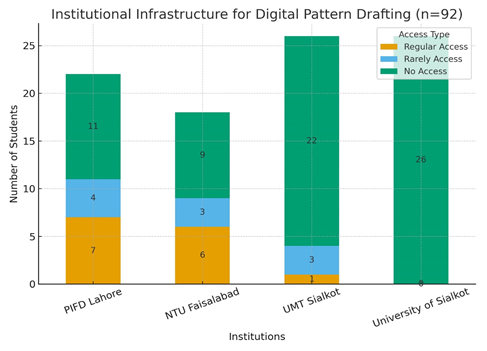
FIGURE 1. Institutional infrastructure for digital pattern-drafting (n=92). Only PIFD and NTU had functional labs with CLO 3D, whereas UMT and University of Sialkot lacked updated digital resources
TABLE IIINSTITUTIONS WITH ACCESS INFORMATION
|
Institution |
Regular Access |
Rarely Access |
No Access |
Total |
|---|---|---|---|---|
|
PIFD Lahore |
7 (Regular) |
4 (Rarely) |
11 (No) |
22 |
|
NTU Faisalabad |
6 (Regular) |
3 (Rarely) |
9 (No) |
18 |
|
UMT Sialkot |
1 (Regular) |
3 (Rarely) |
22 (No) |
26 |
|
University of Sialkot |
0 (Regular) |
0 (Rarely) |
26 (No) |
26 |
|
Total |
14 |
10 |
68 |
92 |
The survey gave many opinions showing that the traditional manual pattern-drafting and development is carried out in various institutes among different cities in Pakistan. However, students are well aware about the importance of digital pattern-making nationally and internationally and they are conscious about the use of digital pattern-making as well.
When asked how they would love to learn and practice technology-integrated digital pattern-drafting they said:
64% of students indicated a preference for manual drafting, citing its hands-on learning benefits, better understanding of fabric behaviour, and ease of conceptualizing garment construction.
18% of the students said that they have no idea as they do not have any exposure to digital pattern-drafting tools.
Only 18% preferred digital drafting as their primary mode of design.
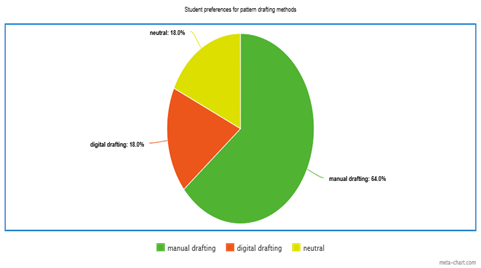
Figure 2 illustrates that 64% of students preferred manual drafting, emphasizing its hands-on learning benefits. However, only 18% selected digital drafting as their primary mode, while another 18% remained neutral due to lack of exposure. This demonstrates that although manual methods dominate, there is significant recognition of digital tools’ importance once access barriers are reduced.
A noteworthy 61% of respondents suggested that digital pattern drawing should be made a required component of the curriculum, notwithstanding the preponderance of manual choice. This implies that even individuals who did not like digital tools for learning clearly recognized their technical and professional advantages.
Students remarked how manual drafting let them "feel the fabric", "make mistakes and learn physically", and "understand fit better" in open-ended comments and interviews. The ELT, which emphasizes learning by direct, hands-on participation, is in line with these feelings.
However, students also acknowledged that digital tools are essential for freelance work, international fashion careers, remote collaboration, and efficient prototyping. One student commented:
“We need manual for learning, but digital is necessary for earning.”
Another noted:
“Manual teaches you accuracy; digital teaches you speed and innovation.”
These perspectives suggest that students are aware of the complementary strengths of both methods and support a hybrid model in education. The data collected for student preference is shown in the Figure 2 below:
FIGURE 2. Student preferences for pattern-drafting methods (n=92). A majority (64%) preferred manual drafting, citing hands-on learning benefits, while 18% preferred digital and 18% remained neutral due to limited exposure.
C. CHALLENGES TO DIGITAL ADOPTION IN FASHION EDUCATIONQualitative analysis of interviews revealed four dominant themes that hinder the adoption of digital pattern-drafting tools in the institutions studied. These barriers exist at individual, institutional, and systemic levels.
1) LACK OF TRAINED FACULTY
Faculty members often lacked training in CAD or 3D software and expressed discomfort in teaching tools they were unfamiliar with. One senior instructor stated:
“I have 20 years of teaching experience, but never used Gerber or CLO 3D. I only teach what I know.”
This lack of digital fluency among educators not only limits student exposure but also reinforces reliance on manual methods, regardless of industry needs. The lack of faculty support for digital pattern-drafting is presented in the Figure 3 below:

FIGURE 3. Faculty support for digital tools
Faculty readiness for digital pattern-drafting (n=8). Six out of eight instructors reported no formal training in CLO 3D or Gerber, reflecting a significant barrier to digital adoption in curricula.
TABLE IIITRAINING STATUS AND INSTRUCTORS
|
Training Status |
Number of Instructors |
% of Instructors |
|---|---|---|
|
Trained |
2 |
25% |
|
Untrained |
6 |
75% |
|
Total |
8 |
100% |
2) LIMITED ACCESS TO SOFTWARE
Students complained that they lacked access to functional labs and licensed digital fashion software. Computers were not employed for designing purposes; they were either out-of-date or used for general academic reasons. Software access was restricted to certain classes and was not available for practice outside of regular hours, even in universities with digital labs.
3) OPTIONAL COURSEWORK
When digital drafting tools were offered, they were frequently taught as electives or optional workshops rather than as part of required courses. This is because digital training hardly ever included sophisticated features or 3D simulation capabilities, students thought it was superficial. This method diminished the significance of digital resources in the curriculum as a whole.
IV. DISCUSSION
The conclusion supports and broadens the body of research that highlighted the fundamental importance of manual pattern-drafting in fashion education. Approximately, 64% of the students (Figure 2) showed their preference towards manual pattern-drafting. Both students and teachers have consistently seen manual drawing as a teaching method that fosters tactile involvement, spatial reasoning, and problem-solving abilities [24]. In the early phases of design education, when students are still learning about body proportions, fabric behavior, and the logic of garment production, these competences are very important. This is entirely consistent with earlier study as discussed in [19], which emphasizes how reflective observation and tangible encounters shape profound, embodied learning [25].In practice, students who physically manipulate muslin, mark patterns by hand, and interact directly with materials, develop a grounded sense of how garments function in three dimensions—skills that are difficult to replicate fully in a digital environment [26].
Nonetheless, the study also showed that students clearly understand the practical requirement of digital technologies and their importance to the sector. As 61% of the students expressed their interest in making digital pattern-drafting compulsory. This is because digital drafting abilities, especially those using CAD software and 3D simulation platforms, are becoming more and more crucial for jobs in both domestic and foreign fashion sectors, according to the majority of respondents [27]. According to the students, digital tools are necessary for e-commerce, virtual prototyping, speed-driven production settings, freelancing, and cross-border collaboration [28]. This confirms previous results that digital literacy is now a professional necessity rather than an elective in fashion designing. However, this distribution of digital resources is uneven. Figure 1 shows that only PIFD and NTU had fully functional labs with all the necessary and updated software. Faculty interviews reinforced this disparity: instructors at resource-rich institutions described experimenting with CLO 3D in coursework. Whereas, those at resource-poor universities admitted that outdated labs forced them to rely exclusively on manual methods. This confirms earlier that institutional readiness is a decisive factor in digital adoption.
Faculty readiness also emerged as another barrier for the integration of digital tools as Figure 3 represents that majority of the faculty have not received any formal trainings regarding digital pattern development and drafting. This “faculty digital divide” means that even when labs exist, students do not always receive structured instruction. Teachers themselves, frustrated that there are no formal training programs, either have to teach themselves or only pass on the basics.
The study investigated the disparity between the perceived and real uses of digital technologies using Davis' (TAM) as it was discussed previously in [18]. According to TAM, the two primary factors influencing technology adoption are perceived utility (PU) and perceived ease of use (PEOU). The findings indicated that while PU was high—the vast majority of students believed that utilizing digital technology would enhance their performance and employability—PEOU was still low due to a lack of institutional resources, insufficient exposure, and untrained teachers [29]. They were enraged by the idea that students learn software tools independently or in shortened workshops, often without access to working labs or qualified instructors. This discrepancy between expectations and support leads towards a fragmented learning experience [30].
The study also emphasized the significance of institutional readiness as a mediating factor in the adoption of digital technology. Institutions with more funding, updated curricula, and faculty with digital skills had greater success implementing digital tools [31]. However, poor institutions, often public colleges, struggled to pay for advanced digital education, let alone maintain basic sketching tools. This finding emphasizes the need for policy-level actions, including financing for teacher development programs, digital infrastructure, and curriculum reforms [32].
Importantly, students’ varied preferences across institutions suggest that manual and digital methods alone are inadequate. Instead, the results clearly support a hybrid instructional approach that gradually integrates digital tools in intermediate and advanced modules while incorporating manual drawing in foundational semesters [33]. Such a model reflects the modern blended workflows of the fashion industry, where designers often begin with sketches and physical prototypes before proceeding to digital rendering and virtual fitting. Because a phased curriculum is founded on both industry practice and pedagogical concepts, it offers a more thorough and future-ready approach to fashion education.
A. CONCLUSIONPakistani fashion education is at a crossroads in its history, where it must strike a balance between the needs of a rapidly-evolving digital global fashion industry and its traditional pedagogical strengths. It is no longer sufficient to prepare students for the realities of contemporary fashion workplaces, even though manual pattern-drafting remains the structural cornerstone of fashion programs, valued for its tactile engagement, and reinforcement of design principles. Fashion graduates now need to be proficient in CAD and virtual prototyping due to the growing use of these tools by global fashion firms, manufacturers, and design studios.
The current study highlighted the integration of a hybrid teaching method that incorporates both manual and digital pattern-making into the curriculum. When students begin learning pattern-drafting, they should initiate from manual pattern development to grasp the basis of the pattern development techniques, manual tools and garments forms and fabric properties. Then, as students advance, they must be exposed to digital pattern-drafting as it is precise and accurate. Furthermore, it is used in modern industry and is more sustainable and less time-consuming. This multi-layered strategy respects the educational value of manual procedures while emulating industry operations and guarantees that students graduate with marketable digital expertise. The proposed model can be implemented through a phased approach. During the first and second years, students should concentrate on manual drafting to develop accuracy, fabric handling, and construction logic while being gradually introduced to basic digital tools through short workshops to reduce technological hesitation. In the third year, digital drafting should become compulsory, with assignments requiring students to digitize manual prototypes using CLO 3D or Gerber, thereby reinforcing continuity between traditional and modern practices. By the final year, digital application must be fully integrated into thesis projects, where students present hybrid outputs that combine manual prototypes with digital simulations, aligning academic outcomes with industry expectations. To support this time appropriate shift, faculty development programs and trainings must take place twice a year so that every institute must have an in-house expert ideally though “train the trainer”. At the policy level, the Higher Education Commission (HEC) should include hybrid drafting skills in national curriculum and assist educational institutions by providing financial aid and industry collaborations for hardware and software purchases. This methodical and progressive approach guarantees that the hybrid model is both aspirational and practical, giving Pakistani fashion graduates the technical literacy necessary to meet future industry demands as well as the craftsmanship of manual methods.
Author Contribution
Takbeer Mohi Ud Din: Conceptualization, Writing – Original Draft, Methodology, Supervision, Project administration
Sajid Hussain: Review & Editing, Supervision, Validation
Conflict of Interest
The authors of the manuscript have no financial or non-financial conflict of interest in the subject matter or materials discussed in this manuscript.
Data Availability Statement
Data supporting the findings of this study will be made available by the corresponding author upon request.
Funding Details
No funding has been received for this research.
Generative AI Disclosure Statement
The authors did not used any type of generative artificial intelligence software for this research.
REFERENCES
- K.-H. Choi, “3D dynamic fashion design development using digital technology and its potential in online platforms,” Fash. Text., vol. 9, no. 9, Mar. 2022, doi: https://doi.org/10.1186/s40691-021-00286-1.
- Papahristou and N. Bilalis, “3D virtual prototyping traces new avenues for fashion design and product development: A qualitative study,” J. Text. Sci. Eng., vol. 7, no. 2, 2017, Art. no. 1000297, doi: https://doi.org/10.4172/2165-8064.1000297.
- Pietroni et al., “Computational pattern making from 3D garment models,” ACM Trans. Graph., vol. 41, no. 4, pp. 1–14, July 2022.
- Fengyi and S. Liu, “3D garment design model based on convolution neural network and virtual reality,” Computat. Intell. Neurosci., vol. 2022, June 2022, Art. no. 9187244, doi: https://doi.org/10.1155/2022/9187244.
- E. Papachristou and H. T. Anastassiu, “Application of 3D virtual prototyping technology to the integration of wearable antennas into fashion garments,” Technologies, vol. 10, no. 3, May 2022, Art. no. 62, doi: https://doi.org/10.3390/technologies10030062.
- E. Papachristou and N. Z. Tatsi, “A review of 3D design knowledge and its impact on creativity in fashion design education,” Commun. Dev. Assembl. Text. Prod., vol. 5, no. 2, pp. 266–277, 2024, doi: https://doi.org/10.25367/cdatp.2024.5.p266-277.
- A. Hameed, S. Zaheer, N. Amin, and S. Hussain, “Exploring low‑waste patternmaking techniques for sustainable solutions in fashion industry,” J. Des. Text., vol. 2, no. 2, pp. 41–64, Dec. 2023, doi: https://doi.org/10.32350/jdt.22.03.
- H. Joseph‑Armstrong, Patternmaking for Fashion Design. 4th ed. Prentice Hall, 2005.
- McQuillan, J. Archer‑Martin, G. Menzies, J. Bailey, K. Kane, and E. Fox Derwin, “Make/Use: A system for open source, user‑modifiable, zero waste fashion practice,” Fash. Pract., vol. 10, no. 1, pp. 7–33, 2018, doi: https://doi.org/10.1080/17569370.2017.1400320.
- A. Y. Gözene and H. H. Metlioğlu, “Zero waste approach in sustainable fashion design: Designer perspective for pre‑consumer waste management,” J. Text. Eng., vol. 32, no. 137, pp. 79–93, 2025, doi: https://doi.org/10.7216/teksmuh.1471793.
- J. Hoch, “3D virtual prototyping in apparel design,” Iowa State Univ. Dig. Rep., Ames, IA, 2014. Accessed: Nov. 18, 2025. [Online]. Available: https://dr.lib.iastate.edu/entities/publication/f24645a1-f90d-4154-a0df-198adc46525d
- N. Särmäkari, “Digital fashion’ on its way from niche to the new norm,” in (The New Normal), L. Aliabieva, Ed., Moscow: Novoe literaturnoe obozrenie, 2021, pp. 117–134.
- Huggard and N. Särmäkari, “How digital-only fashion brands are creating more participatory models of fashion co-design,” Fash. Style Pop. Cul., vol. 10, pp. 583–600, Sep. 2023, doi: https://doi.org/10.1386/fspc_00176_1.
- Bertola and A. Vandi, “Fashion design education towards twin transition: Developing multidisciplinary skills for future professionals,” Politecnico di Milano, 2021. [Online]. Available: https://re.public.polimi.it/retrieve/e0c31c12-746c-4599-e053-1705fe0aef77/BERTOLA-VANDI_Fashion-Design-Education-Towards-Twin-Transition-Developing-multidisciplinary-skills-for-future-professionals.pdf
- J. Huang and L. Huang, “CLO3D‑Based 3D virtual fitting technology of down jacket and simulation research on dynamic effect of cloth,” Wireless Commun. Mobile Comput., vol. 2022, Feb. 2022, Art. no. 5835026, doi: https://doi.org/10.1155/2022/5835026.
- Long and X. Ma, “Intelligent simulation design and application of garment digitization based on virtual image recognition technology,” Appl. Math. Nonlin. Sci., vol. 9, no. 1, Nov. 2024, doi: https://doi.org/10.2478/amns-2024-3138.
- M. P. Beduschi and I. C. Italiano, “Guidelines for patternmaking teaching and for didactic materials,” Int. J. Arts Commerce, vol. 2, no. 9, pp. 146–156, Oct. 2013.
- Marikyan and S. Papagiannidis. “Technology acceptance model.” Open University’s Theory Library. [Online]. Available: https://open.ncl.ac.uk/theory-library/technology-acceptance-model.pdf (accessed Nov. 19, 2025).
- D. A. Kolb, Experiential Learning: Experience as the Source of Learning and Development. Prentice Hall, 1984.
- J. W. Creswell and V. L. P. Clark, Mixed Methods Research. Thousand Oaks, CA: Sage, 2011.
- L. A. Palinkas et al., “Purposeful sampling for qualitative data collection and analysis in mixed‑method implementation research,” Administ. Policy Mental Health Mental Health Serv. Res., vol. 42, no. 5, pp. 533–544, Sep. 2015, doi: https://doi.org/10.1007/s10488-013-0528-y.
- M. Q. Patton, Qualitative Research & Evaluation Methods. Thousand Oaks, CA: Sage Publications, 2002.
- M. Naeem, W. Ozuem, K. Howell, and S. Ranfagni, “A step‑by‑step process of thematic analysis to develop a conceptual model in qualitative research,” Int. J. Qual. Meth., vol. 22, pp. 1–18, Nov. 2023, doi: https://doi.org/10.1177/16094069231205789.
- A. Al‑Rqaibat, S. Al‑Nusair, and R. Bataineh, “Enhancing architectural education through hybrid digital tools: Investigating the impact on design creativity and cognitive processes,” Smart Learn. Environ., vol. 12, Apr. 2025, Art. no. 26, doi: https://doi.org/10.1186/s40561-025-00370-9.
- Kazlacheva, V. Stoykova, K. Georgieva, and J. Ilieva, “Application of innovative technologies in fashion design education,” IOP Conf. Ser.: Mater. Sci. Eng., vol. 459, no. 1, 2019, Art. no. 012080, doi: https://doi.org/10.1088/1757-899X/459/1/012080.
- N. M. S. Azman et al., “Sustainable practices in pattern-making at local fashion institutions: A qualitative study,” in 5th Int. Conf. Edu. Soc. Sci. Res., June 2022, pp. 719–729.
- Schweisfurth, M. A. Thomas, and A. Smail, “Revisiting comparative pedagogy: Methodologies, themes, and research communities since 2000,” Compare: A J. Comp. Int. Educ., vol. 52, no. 4, pp. 560–580, doi: https://doi.org/10.1080/03057925.2020.1797475.
- N. T. H. Giang and L. T. Hang, “Research and application of CLO3D fashion design software in the development of evening dress models,” J. Appl. Sci. Technol., vol. 43, pp. 123–129, 2024.
- P. Grice, Digital Pattern Cutting for Fashion with Lectra Modaris: From 2D Pattern Modification to 3D Prototyping. London, UK: Bloomsbury, 2019.
- S. P. Ashdown, Sizing in Clothing: Developing Effective Sizing Systems for Ready-to-Wear Clothing. Woodhead Publishing, 2007.
- P. Dormer, The Art of the Maker: Skill and Its Meaning in Art, Craft and Design, Thames & Hudson, 1994.
- N. Thakur and A. Atre, “Integrating traditional craft practices into fashion education: A pathway for sustainable rural development,” ShodhKosh: J. Visual Perform. Arts, vol. 5, no. 5, pp. 1803–1812, May 2024, doi: https://doi.org/10.29121/shodhkosh.v5.i5.2024.6393.
- G. A. Umarova, “Enhancing student competencies in clothing design and modeling through innovative and digitally‑integrated vocational training methods,” Web Teach.: Indersci. Res., vol. 3, no. 6, pp. 236–240, June 2025.