

| Review | Open Access |
|---|
Reusable Cotton Face Mask Treated with Botanical Extracts: A Sustainable Textile Design Approach |

|
|---|
 Shama Sadaf*,
Ayesha Saeed, and
Komal Hassan
Shama Sadaf*,
Ayesha Saeed, and
Komal Hassan
School of Art and Design, Superior University Lahore Pakistan
Microscopic respiratory droplets produced while coughing, sneezing, or even regular speaking are frequently used to spread airborne illnesses, which pose ongoing dangers in crowded and poorly ventilated areas. Even if they effectively reduce transmission, disposable face masks and gowns have a substantial negative impact on the environment and the economy, especially in areas with little resources. In order to overcome this difficulty, the current study used extracts from Azadirachta indica, Butea monosperma, and Litchi chinensis to create an environmentally friendly, reusable cotton fabric with long-lasting antibacterial qualities. To achieve wash fastness, cotton that was chosen for its comfort, breathability, and biodegradability was prepped and completed using the pad-dry-cure method with a polyurethane binder. The ASTM E2149 shake flask method was used to assess the antimicrobial efficacy, and molecular bonding and surface morphology of the treated fabrics were confirmed by Fourier-transform infrared spectroscopy (FTIR) and scanning electron microscopy (SEM) examinations. To verify treatment effects across microbiological counts and wash durability, statistical analysis, including ANOVA and MANOVA, was carried out. Microbial reduction rates of 80% for A. indica and 100% for B. monosperma and L. chinensis were found in the results. Compared to several documented herbal finishes, these antimicrobial actions showed exceptional wash durability, remaining steady up to 25 laundering cycles. While SEM micrographs demonstrated the extracts' homogeneous deposition on fiber surfaces, FTIR verified the existence of functional groups responsible for the antibacterial effect. Significant differences between treated and untreated fabrics were established by statistical testing (p < 0.05, η² > 0.4). In line with eco-friendly textile design and public health goals, this study demonstrates the possibility of plant-derived antimicrobial treatments as sustainable substitutes for synthetic agents. The results point to potential uses for hospital gowns and other protective clothing in addition to reusable face masks. Antiviral testing, wearer comfort studies, environmental exposure assessments, and scale-up for industrial uses should all be included in future study.
I. INTRODUCTION
In crowded and poorly ventilated settings, airborne transmission of pathogenic germs is still a major concern, particularly when respiratory droplets smaller than 5 µm stay suspended and travel long distances [1], [2]. The extensive use of disposable personal protective equipment (PPE) has increased environmental pollution and financial hardship, especially in low-income areas, even while face masks have become crucial for preventing the transmission of infections [3]. According to studies, disposable masks complicate waste management, discharge microplastics into terrestrial and aquatic habitats, and contribute significantly to plastic trash. The need for reusable, durable, and environmentally friendly textile-based protective solutions that cut waste without sacrificing safety has grown as a result of the global trend toward sustainability. In this regard, eco-friendly innovation and contemporary textile design are compatible with textile-based solutions like reusable, washable masks [4].
Cotton is preferred among natural textiles due to its breathability, comfort, moisture management, and biodegradability, all of which make it ideal for extended usage in close proximity to skin [5]. However, pure cotton textiles are vulnerable to microbial colonization, which can jeopardize safety and hygiene, especially in humid or repeated environments. Eco-friendly antimicrobial finishes made from plant sources, particularly those high in flavonoids, tannins, phenolics, and other bioactive substances known to stop microbial development, have been used by researchers to address this [6] Synthetic vs. natural antimicrobial agents for safer textiles. According to recent studies, natural extracts (such as those from Rumex steudelii Hochst) can give cotton fabric long-lasting antibacterial activity that maintains its functional efficacy even after several wash cycles. Furthermore, it has been shown that combining plant extracts, essential oils, or biopolymer-based systems (like chitosan) can improve durability and antimicrobial efficacy while preserving comfort and biodegradability [7].
According to the study's hypothesis, adding plant extracts from Azadirachta indica, Butea monosperma, and Litchi chinensis to cotton fabric will produce an environmentally benign, washable substance that dramatically lowers microbial growth, making it appropriate for long-lasting face mask applications. The main goal is to create a plant-based antimicrobial finishing technique that works with both public health and textile design goals. The specific goals are to: extract bioactive compounds from the three botanicals; apply the finish using a pad-dry-cure technique with polyurethane binder; assess antimicrobial efficacy using standard assays (such as ASTM E2149); examine finish retention using FT-IR and SEM; and test antimicrobial durability over 25 cycles of home laundering.
The project aims to support sustainable design methods in medical textiles by evaluating these finishes under strict laboratory and statistical protocols. This work may be expanded in the future to include antiviral testing, evaluations of comfort and breathability, industrial production scalability, and use in synthetic or blended textiles. The sole focus on bacterial pathogens, the lack of real-world user comfort trials, and the lack of evaluation beyond 25 washes or under environmental stresses like UV exposure, perspiration, or high humidity are some of the limitations of the current work.
II. MATERIALS AND METHODS A. MATERIALS AND FABRIC PREPARATIONThe cotton fabric used in this study was a plain-weave material with 86 ends per inch (warp) and 56 picks per inch (weft). The yarn count was 53.92 Ne in the warp and 44.2 Ne in the weft, and the fabric weight was 65 g/m² (GSM). This study utilized 100% cotton fabric to develop a reusable face mask with antimicrobial properties to reduce the risk of airborne disease transmission. The cotton fabric was subjected to standard pre-treatment processes. Desizing was carried out with 1 g/L of Bactasal HTN enzyme at 70°C and pH 5–6. After that, scouring was done for an hour at 90°C using 4 g/L sodium hydroxide, 2 g/L wetting agent, and 1 g/L detergent. Using 5 g/L hydrogen peroxide, sodium hydroxide (pH 10–10.5), 2 g/L stabilizer, and 2 g/L sequestering agent, bleaching was carried out for an hour at 90°C.
B. EXTRACTION AND APPLICATION OF ANTIMICROBIAL FINISHAzadirachta indica, Butea monosperma, and Litchi chinensis leaves were gathered from Government College University's botanical garden in Lahore. The leaves were thoroughly cleaned, shade-dried for eight weeks, and then ground up in a stainless-steel grinder. 100 g of powdered leaves were extracted by soaking them in 250 ml of distilled water twice a day for seven days. Whatman No. 1 filter paper was used after muslin cloth to filter the mixture. The crude antibacterial agent was obtained by concentrating the extract using a rotary evaporator.
200 milliliters of plant extract, 50 milliliters of polyurethane-based binder, and 150 milliliters of distilled water were combined to create a finishing solution. The National Textile University (NTU), Faisalabad, used a pad-dry-cure method to treat the cotton samples. The fabric was treated for two minutes at 120°C after being dried for three minutes at 150°C. The control group consisted of untreated cotton.
C. ANTIMICROBIAL ASSESSMENTThe ASTM E2149 (Shake Flask Method) was used to assess antimicrobial activity. Fabric samples were cultured under sterile conditions in a phosphate buffer solution containing a bacterial inoculum. After 22 hours and 6 days of incubation, colony-forming units (CFUs) were enumerated. Microbial presence and decrease percentages were ascertained by microscopic enumeration and agar plate analysis.
D. FTIR SPECTROSCOPYThe chemical structures and functional groups found in the plant extracts and treated textiles were identified using Fourier Transform Infrared (FTIR) Spectroscopy. The Institute of Chemistry at the University of the Punjab used standard FTIR equipment to record spectra in the 4000–400 cm⁻¹ range.
E. STATISTICAL ANALYSISSPSS Version 25 was used for statistical analysis. To find significant variations in microbial decrease between the treatment groups, a One-Way ANOVA was first performed. Additionally, MANOVA was used to simultaneously assess the overall impact of the antimicrobial treatments on other dependent variables (such as microbial counts at various time points). When significant effects were found, post hoc comparisons were performed using Tukey's HSD test, with significance defined at p < 0.05. To ascertain the extent of the treatment effects, effect sizes (η²) were also computed.
1) SCANNING ELECTRON MICROSCOPY (SEM)
The morphological changes between treated and untreated cotton fabrics were examined using SEM analysis. At the University of Punjab's Physics Department, micrographs were taken both before and after the antimicrobial finish was applied..
2) WASH DURABILITY
The fabric samples, both treated and untreated, underwent numerous cycles of washing. After five, ten, twenty, and twenty-five washes, antimicrobial activity was reassessed to ascertain the applied finish's wash fastness and long-term efficacy. The treated cotton fabrics were subjected to standardized laboratory washing cycles using a domestic washing machine, with cold water (25–30 °C) and mild detergent, following ISO 6330:2012 guidelines for domestic laundering.
III. RESULTS
A. MICROBIAL REDUCTION ON COTTON FABRICCotton fabrics treated with A. indica, B. monosperma, and L. chinensis extracts demonstrated notable antimicrobial effects. As shown in Table 1, there was no microbial growth after 22 hours across all treated samples. Nevertheless, only the untreated cloth showed microbial colonies after six days, and the A. indica-treated sample showed very few. The rapid bacteriostatic or bactericidal effect of the applied extracts is indicated by the absence of identifiable colonies at 22 hours for all treated samples, which is consistent with the plants' known fast-acting phenolic and flavonoid constituents. Therefore, B. monosperma and L. chinensis seem to offer higher persistent antimicrobial persistence under the storage and incubation conditions used, even if all three extracts offer strong initial protection.
TABLE IMICROBIAL REDUCTION (%) IN TREATED AND UNTREATED COTTON FABRICS
|
Condition |
22 hr |
6 Days |
Reduction (%) |
|---|---|---|---|
|
Untreated |
5 |
5 |
0% |
|
A. indica |
0 |
1 |
80% |
|
B. monosperma |
0 |
0 |
100% |
|
L. chinensis |
0 |
0 |
100% |
A One-Way ANOVA with a substantial effect size (η² =.407) showed significant differences in microbial decrease across the treatment groups (F(3, 20) = 4.577, p =.013). MANOVA was used concurrently to evaluate the treatment effects across the course of the two time periods (22 hours and 6 days). The antimicrobial treatments caused statistically significant overall differences, indicating strong treatment effects across several dependent measures, according to the MANOVA data.
TABLE IIANOVA RESULTS FOR ANTIMICROBIAL TREATMENT EFFECTIVENESS
|
Source |
df |
SS |
MS |
F |
p |
η² |
|---|---|---|---|---|---|---|
|
Between Groups |
3 |
23.458 |
7.819 |
4.577 |
.013 |
.407 |
|
Within Groups |
20 |
34.167 |
1.708 |
|||
|
Total |
23 |
57.625 |
Tukey's HSD post hoc tests revealed significant pairwise differences between each treatment group and the control group. For example, A. indica (mean difference = 2.167, p =.009), B. monosperma (mean difference = 2.333, p =.006), and L. chinensis (mean difference = 2.333, p =.006) showed substantial decreases.
TABLE IIIPAIRWISE COMPARISONS OF MICROBIAL PRESENCE
|
Comparison |
Mean Difference |
Std. Error |
Sig. |
|---|---|---|---|
|
Control vs A. indica |
2.167* |
0.755 |
.009 |
|
Control vs B. monosperma |
2.333* |
0.755 |
.006 |
|
Control vs L. chinensis |
2.333* |
0.755 |
.006 |
These findings validate the effectiveness of the natural antibacterial treatments used on cotton fabric and are backed by both univariate (ANOVA) and multivariate (MANOVA) statistical techniques. All three plant extracts showed statistically and practically significant decreases when compared to the untreated control, according to Tukey's HSD post hoc tests, which display statistically significant mean differences between control and each treatment.
C. FTIR CONFIRMATORY TESTBoth treated fabrics and plant extracts had hydroxyl (O–H), carbonyl (C=O), and ester functional groups, according to FTIR spectra. Additional peaks in the treated samples' spectra demonstrated that the active chemicals had successfully bound to the cotton fibers. Additional peaks and peak shifts in treated fabrics indicate interactions between phytochemicals and cellulose hydroxyl groups. These interactions may involve hydrogen bonding and, in cases where a crosslinking/curing step was employed, esterification or covalent attachment—mechanisms that improve the fiber's ability to retain active ingredients. We used infrared spectrophotometers to record spectra in the 4000-400 cm-1 region. Fourier transform spectrophotometers calculate the frequency domain spectrum from the original data using polychromatic photons and Fourier transformation. The FTIR analysis findings for both treated and untreated fabrics are displayed in Figure 1.
Several functional groups were found in the leaf extracts of L. chinensis, A. indica, and B. monosperma, according to Fourier Transform Infrared (FTIR) research. Strong absorption bands in the spectra of L. chinensis were indicative of O-H, C-H, and C=O stretching vibrations. C-O bonds, symmetrical ring vibrations, and antisymmetric ring vibrations were also noted. Additionally, characteristic peaks for O-H out-of-plane vibrations and β-D-mannose were found.
O-H stretching vibrations, C-H stretching vibrations, and C=O stretching vibrations were identified as separate peaks in the FTIR spectra of A. indica. Additionally, it was clear that C-O and C-O-C stretching vibrations were present. These functional groups point to the extract's possible bioactive qualities.
Amide I and II connections were indicated by the widening of peaks in the 1680 and 3450 cm-1 areas of the B. monosperma leaf extract. Additionally, the spectra showed >C=C< vibrations, unsaturated -C-H vibrations, and O-H band vibrations. In addition to C-C vibration, methyl stretching and bending vibrations, methylenic vibrations, and methylene rocking movement were noted. These results demonstrate the leaf extracts' possible bioactive qualities by confirming the presence of several functional groups.
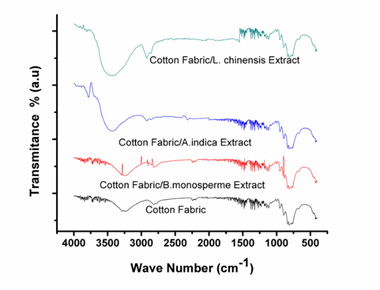
FIGURE 1. FTIR spectra of untreated vs treated cotton fabrics
With trace amounts of waxes, proteins, pectic chemicals, organic acids, ash, and sugars, cellulose makes up the bulk of cotton fiber. Figure 5, which shows the O-H stretch at 3300 cm-1, the C-H asymmetric stretch at 2900 cm-1, the C-H symmetric stretch at 2850 cm-1, the C=O stretch of a carboxylic acid, the ester at 1700 cm-1, and the C=O stretch of an acid salt at 1600 cm-1, provides all the information regarding the presence of cotton fabric. Due to the modest percentage of each non-cellulosic material and environmental factors, there may be some noise in the infrared spectrum. The outcome showed that treated fabric, which may be used to make cloth face masks, had an antibacterial finish.
D. SEM TESTSEM micrographs demonstrated visible changes in the fiber morphology of treated fabrics. Compared to untreated cotton, the treated samples exhibited a uniform layer of antimicrobial finish, indicating successful application and surface modification. The uniform coating observed by SEM supports the FTIR evidence and indicates good coverage of the active material across fibers, which is important for achieving homogeneous antimicrobial protection.
An additional confirmatory examination, both before and after the antimicrobial finish, was applied and SEM was inspected. Images from a scanning electron microscope (SEM) were captured, and treated and untreated cotton cloth were compared.
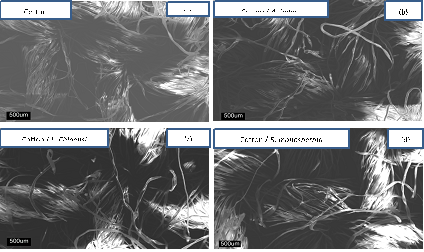
FIGURE 2. SEM micrographs of untreated and treated cotton fabric
Figure 2 shows how Azadhrachta indica (A. Indica), Litchi chinensis (L. chinensis), and Butea monosperma (B. monosperma) were treated on cotton fabric using SEM microgarph. The impact of extract treatment on cotton fabric is depicted in Figure 8. The SEM picture of untreated cotton fabric is shown in Figure 8a. A. indica, L. chinensis, and B. monosperma antimicrobial finish treated cotton fabric are shown in Figures 8b, C, and D. Compared to untreated fabric, treated cotton demonstrates the presence of the finish. The outcome suggests that treated fabric exhibits an antibacterial finish. Uniform surface coverage also explains the low variability in microbial results between replicate samples.
E. WASH FASTNESS OF REUSABLE CLOTH FACE MASKPost-wash microbial tests showed that treated fabrics retained their antimicrobial activity even after 25 washes. The untreated samples showed increased microbial growth with successive washes, while treated samples continued to demonstrate 100% microbial reduction. Retention of activity after 25 wash cycles strongly indicates durable fixation of active compounds to the fiber, rather than weak surface adsorption; this durability is essential for reusable PPE, and supports the practical feasibility of washable antimicrobial masks.
The microorganisms testing after successive washes were studied in comparison of control group (untreated fabric).
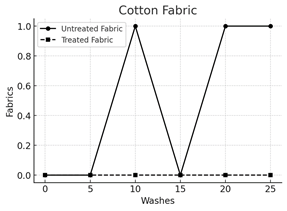
FIGURE 3. Different behaviour of treated and untreated fabric
The figure illustrates the comparison between treated and untreated cotton fabric across multiple wash cycles. After several washes, the untreated fabric (solid line with circles) revealed the existence of microbial colonies, with 100% contamination seen at the tenth, twentieth, and twenty-fifth washes. On the other hand, during every washing cycle, the treated fabric (dashed line with squares) continuously showed no microbial growth, suggesting total inhibition. This shows that even after several washings, the antimicrobial finish made with Azadirachta indica, Butea monosperma, and Litchi chinensis remained strong and efficient. The findings support the possibility of treated cotton fabric for use in reusable face masks and healthcare clothing, such as nurses' and doctors' gowns, where durability and long-term antimicrobial protection are crucial.
IV. DISCUSSION
The findings support the idea that cotton fabrics treated with extracts from A. indica, B. monosperma, and L. chinensis have strong antibacterial efficacy. One Way ANOVA and MANOVA tests confirmed the considerable microbial reduction in treated samples (p < 0.05; η² > 0.4), indicating that treatment and laundering cycles had a significant impact on antimicrobial performance.
The results are in line with earlier textile research highlighting their antibacterial effectiveness [8] [9]. B. monosperma and L. chinensis showed 100% microbial inhibition, whereas A. indica reached 80% decrease after six days. The greater effectiveness of B. monosperma and L. chinensis in this investigation can be explained by the well-established function of phenolic chemicals in rupturing microbial cell membranes and preventing protein production.
The retention of activity up to 25 washes found in this study significantly supports the feasibility of plant-based binders and pad dry cure application methods [10], in contrast to earlier neem-based finishes that frequently lost potency before five wash cycles [11]. Stronger chemical affinity between the bioactive chemicals and cellulose macromolecules is suggested by this endurance, which has previously been linked to hydrogen bonding and covalent esterification at curing temperatures [12].
The molecular attachment of bioactive substances to the cotton fibers was confirmed by FTIR spectra, which showed novel absorption peaks corresponding to O-H, C-H, and carbonyl groups. The presence of a continuous antimicrobial layer on treated fabrics was further confirmed by SEM micrographs, which are in line with results from studies on green textile finishes [13]. This kind of surface modification is essential for guaranteeing the controlled release of phytochemicals, which helps to maintain antibacterial activity even after repeated washings. These confirmatory investigations support user-safe and long-lasting textile functionality while also validating the finish and adhering to sustainable design standards.
These results present the botanical treatment approach as a strong substitute for synthetic antimicrobials such as silver nanoparticles, which are frequently successful but have toxicity and environmental issues [14]. Sustainable textile design solutions are well-aligned with the ease of plant extraction, cost, and biodegradability [15]. Therefore, the results of this study support the use of biodegradable, non-toxic plant-based solutions in place of synthetic antimicrobials in personal protective textile items.
But it is important to take the study's shortcomings into account. Environmental exposure effects (such as UV and perspiration) have not been investigated, user comfort and long-term use evaluations have not been conducted, and viral efficacy has not been verified. To transfer laboratory efficacy into useful textile design applications, this work must be expanded to synthetic textiles, large-scale manufacturing, and complete user testing.
A. CONCLUSIONUsing plant-based extracts from Azadirachta indica, Butea monosperma, and Litchi chinensis to finish cotton fabric, this study effectively demonstrated the creation of a long-lasting and reusable antimicrobial face mask. Significant antibacterial activity was seen in the treated fabrics, especially in B. monosperma and L. chinensis, which completely inhibited microbial development. Even after 25 laundry cycles, the antibacterial efficacy was still significant, demonstrating the natural finish's endurance. The adherence and preservation of bioactive chemicals on the fabric surface were verified by FTIR and SEM characterization. The significance of the treatment effects (p < 0.05) was confirmed by statistical analysis using SPSS, including ANOVA and MANOVA.
These results demonstrate the potential of plant-derived agents in producing safe, efficient, and environmentally friendly substitutes for synthetic chemical finishes on personal protective fabrics. By providing reusable textile-based solutions with antimicrobial properties, the strategy not only solves the sustainability issues raised by disposable masks but also improves public health.
Although the study verified bacterial inhibition, more investigation is required to evaluate long-term environmental exposure, user comfort, and antiviral effectiveness. This work's industrial and clinical value would be increased if it were expanded to include mixed or synthetic materials and evaluated in real-world usage settings. In general, this discovery opens the door for face mask solutions that are sustainable, biodegradable, and scalable in the battle against airborne illnesses.
B. RECOMMENDATIONSIt is advised that plant-based antimicrobial agents like A. indica, B. monosperma, and L. chinensis be investigated further and used as sustainable substitutes for synthetic chemicals in protective fabrics in light of the study's findings. To assess the pad-dry-cure method's industrial viability, durability, and cost-effectiveness, textile manufacturers can think about conducting pilot-scale trials. Assessments of user comfort, antiviral effectiveness, and long-term performance under environmental exposures such UV radiation, perspiration, and frequent laundry should also be included of future studies. This work's usefulness in various protective and medical textile goods would be improved by extending it to other textile substrates, such as blended or synthetic fabrics. Furthermore, life cycle assessments will assist quantify the environmental benefits of botanical finishes, while biocompatibility and toxicological evaluations are required to guarantee user safety. The overall goal of these suggestions is to aid in the creation of high-performing, environmentally sustainable, and scalable antimicrobial fabrics.
Author Contribution:
Shama Sadaf: conceptualization, formal analysis, writing original draft. Ayesha Saeed: methodology, supervision, writing, review & editing. Komal Hassan: investigation, methodology, writing original draft
Conflict of Interest
The authors of the manuscript have no financial or non-financial conflict of interest in the subject matter or materials discussed in this manuscript.
Data Availability Statement
Data supporting the findings of this study will be made available by the corresponding author upon request.
Funding Details
No funding has been received for this research.
Generative AI Disclosure Statement
The authors did not used any type of generative artificial intelligence software for this research.
REFERENCES
- M. I. Litter and A. Ahmad, Industrial Applications of Nanoparticles. Boca Raton, FL, USA: CRC Press, 2023.
- M. Al-Amin, M. A. Hossain, K. M. Islam, M. J. Hossain, M. S. H. Faruki, and M. A. U. Rahman, “A critical review on reusable face coverings: Mechanism, development, factors, and challenges,” Textiles, vol. 3, no. 1, pp. 142–162, Mar. 2023, doi: https://doi.org/10.3390/textiles3010011.
- J. Lee and H. Kim, “COVID-19 pandemic and microplastic pollution,” Nanomaterials, vol. 12, no. 5, Mar. 2022, Art. no. 851, doi: https://doi.org/10.3390/nano12050851.
- A. Mehmood et al., “Spatiotemporal variability of COVID-19 pandemic in relation to air pollution, climate and socioeconomic factors in Pakistan,” Chemosphere, vol. 271, May 2021, Art. no. 129584, doi: https://doi.org/10.1016/j.chemosphere.2021.129584.
- T. Islam and S. Asaduzzaman, “Environmentally-friendly textile finishing,” in Textiles and Clothing, M. Shabbir, Ed., 2019, pp. 101–129.
- A. Thakur et al., “Antibacterial and photocatalytic activity of undoped and (Ag, Fe) co-doped CuO nanoparticles via microwave-assisted method,” Nanofabrication, vol. 7, pp. 62–88, June 2022, doi: https://doi.org/10.37819/nanofab.007.186.
- A. Tegegne and A. Haile, “Improving hydrophilicity and comfort characteristics of polyester/cotton blend fabric through lipase enzyme treatment,” Clean Technol. Environ. Policy, vol. 27, no. 1, pp. 3–16, 2025, doi: https://doi.org/10.1007/s10098-024-02756-8.
- S. Sadaf, A. Saeed, K. Hassan, and Z. Ahmad, “Impact of antibacterial finish on mechanical properties of cotton/polyester textiles with the extract of Azadirachta indica, Butea monosperma and Litchi chinensis: Antibacterial finishing of cotton/polyester,” Plantarum, vol. 5, no. 1, pp. 105–120, 2023.
- S. Sadaf, K. Hassan, A. Saeed, and Z. Ahmad, “Antimicrobial finish for cotton/polyester from natural bio-extracts,” Proc. Pakistan Acad. Sci., B: Life Environ. Sci., vol. 61, no. 4, pp. 371–378, Dec. 2024, doi: https://doi.org/10.53560/PPASB(61-4)760.
- S. H. Mahmud and M. R. Repon, “Bioactive finishes for sustainable and functional textiles,” in Sustainable Finishing Techniques in Textiles, S. Biranje, M. Shahid, and R. V. Adivarekar, Eds., Singapore: Springer Nature Singapore, 2025, pp. 41–53.
- M. M. Iqbal, I. Abid, S. Hussain, N. Shahzad, M. S. Waqas, and M. J. Iqbal, “The effects of regional climatic condition on the spread of COVID-19 at global scale,” Sci. Total Environ., vol. 739, Oct. 2020, Art. no. 140101, doi: https://doi.org/10.1016/j.scitotenv.2020.140101.
- A. Sharif, S. T. Jawaid, M. N. Khan, and A. H. Siddiqui, “How does climate policy uncertainty influence sustainable development? Unraveling role of recycling and natural resources in the United States,” Mineral Economics, vol. 37, no. 4, pp. 943–960, Oct. 2024, doi: https://doi.org/10.1007/s13563-024-00475-6.
- M. M. Hossain, “Advancements of eco-friendly natural antimicrobial agents and their transformative role in sustainable textiles,” SPE Polymers, vol. 5, no. 3, pp. 241–276, July 2024, doi: https://doi.org/10.1002/pls2.10135.
- Z. Xu et al., “Pathological findings of COVID-19 associated with acute respiratory distress syndrome,” Lancet Respiratory Medicine, vol. 8, no. 4, pp. 420–422, Apr. 2020, doi: https://doi.org/10.1016/S2213-2600(20)30076-X.
- R. Jadoun, A. Verma, and R. Arif, “Green synthesis of nanomaterials for textile applications,” in Green Chemistry for Sustainable Textiles, N. Ibrahim and C. M. Hussain, Eds., Woodhead Publishing, 2021, pp. 315–324.