Actantial Paradigm of Narrative Structures in Techno-thriller and Visionary Fiction
Ramsha Khan1*, and Azka Khan2
1Wapda Degree College Tarbela, Khyber Pakhtunkhwa, Pakistan
2Rawalpindi Women University, Rawalpindi, Pakistan


ABSTRACT
This study examines the structural patterns of two radically distinct genres, namely techno-thriller and visionary fiction, by focusing on the actantial elements of fictional works. It seeks to clarify misconceptions about traditional literary analysis by comparing the novels Rumi’s Daughter by Maufroy (2004) and Deception Point by Brown (2001). The actant theory, first introduced by Greimas (1971) and later amended by Hébert (2020), is employed to analyze the roles of characters, exploring both their similarities and differences within the internal narrative structure of the selected novels. The study investigates narratives’ universal “grammar” by focusing on three pairings of binary oppositions, that is, subject/object, sender/receiver, and helper/opponent. Despite the differences in theme, culture, characters, and genre, the study shows that the characters’ narrative structure and actantial function are the same, proving Greimas’ claim that the actantial theory applies to all narratives. This study contributes to the basic understanding of the fundamental patterns that connect human narratives, despite the apparent differences between their respective civilizations.
1. INTRODUCTION
Narratology is the study of narrative, which is rooted in structural linguistics. It aims to extract a similar structure from all narratives using a critical classification system. The structuralists believe text can take various forms, such as folktales, comic strips, and films. Today, narratology includes comparative studies, historiography, gender studies, reception theory, theories of authorship, psychoanalysis, and information technology (Adams, 2007). Narratology serves as an umbrella term and both Structuralism and Actantial Analysis fall under the broader field of narratology, with each offering specific insights into the analysis of narrative elements and structures. Narratology, influenced by structuralist principles, examines the internal structures of narratives, such as plot, character, time, and space (Oktodila & Hapsarani, 2023). The emphasis is on identifying recurring patterns and organizing principles in storytelling across various genres.
The structuralists apply their ideas to literature by analyzing narrative structures and the relationships between different elements in a text. This involves examining binary oppositions, narrative patterns, and the way language constructs meaning. Algirdas Julien Greimas, a Lithuanian-French linguist, made significant contributions to the application of structuralist principles to the analysis of narratives. Greimas developed the actantial model as part of his semiotic approach to narrative. This model identifies fundamental roles or “actants” in a narrative, each with specific functions and relationships. Actantial analysis, rooted in Greimasian semiotics, identifies basic roles such as the Subject, Object, Sender, Receiver, Helper, Opponent, and others within a narrative. Hernandez et al. (2023) argue that these actants play specific functions and contribute to the overall structure and meaning of a text. The narrative function of any narration can be investigated through actantial analysis that goes beyond examining the narrative structures only. It delves into the functions of characters and their roles in the development of a story.
Continued Influence and Evolution
Both structuralism and actantial analysis have left a lasting impact on narratology, the study of narrative structures. The scholars and theorists in the field of structuralism, continue to build upon these foundations, incorporating new ideas and adapting the frameworks to various literary and cultural contexts (Wang & Roberts, 2005). In essence, Actantial Analysis can be perceived as a development or specialization within the broader framework of Structuralism, particularly in the context of applying structuralist principles to the analysis of narratives and storytelling (Thomsen, 1990).
Narrative Dynamics: An Introduction to Actantial Model in Literary Theory
Greimas (1917-1992), a linguist from Lithuania, established the Paris School of Semiotics and strongly advocated structuralism in literary and linguistic theory. His contributions to narratology are significant, particularly in developing the actantial model and the semiotic square. In 1966, he introduced the actantial model by simplifying Propp's analysis of the functions of characters in folktales. The actantial model comprises six functions categorized as actants: subject/object, sender/receiver, and helper/opponent. He extended this model to encompass all narratives, not just folktales (Vilhjálmsdóttir & Tulinius, 2009).
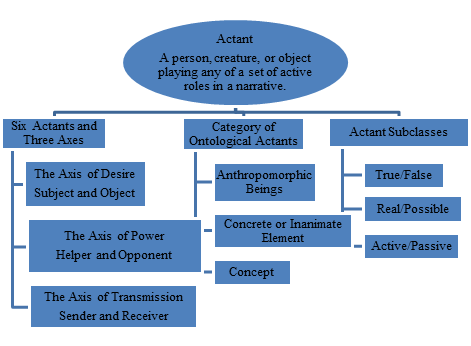
Figure 1 Graphical Representation of the Typology of Actants
The actantial model is a structuralist idea since it defines a collection of universally valid relations that are not limited to one or a few examples. It proposes that every character in a story, who may or may not be human, be considered one of the six actants. Each of the six actants is separated into three oppositions, each forming an axis of the actantial description (Hébert, 2020). For example, the axis of desire is the conflict between the subject and the object. The subject is attempting to obtain or dispose of something. The object is the person, thing, or event the subject tries to win or eliminate.
The following elements of the selected narratives must be identified during this process:
- Six actants and three axes
- Character/non-character Actant (Ontological category)
- The type of junction between subject and object
- The occurrence of actantial syncretism and actant subclasses
- Time of observation
Language comprises meaningful signs shaped by underlying structures and systems that determine meaning. From this perspective, the language used in literature can be likened to a kind of algebra (10), according to Saussure (Greaney, 2006). Greaney suggests that writing a sonnet is not solely about expressing intense emotions on paper but rather about utilizing established literary principles. New sonnets are therefore only partially original, as they are one possible variation of these norms (Greaney, 2006). According to Roland Barthes, the originating voice of a literary piece is always lost in the broad perspective of the already-written (Telli et al., 2015). Saussure's discoveries are not limited to literature. His intellectual successors, particularly Roland Barthes, have demonstrated that every verbal utterance results from an underlying linguistic system, and so are everyday events resulting from cultural systems that lie beneath them (Greaney, 2006). Structuralism backs the idea of the author’s death and strongly implies that human nature is shaped by language and cultural systems.
Structuralist analysis in literature involves exploring the structure of shorter stories to discover the principles guiding their composition. This includes examining plot events and character roles. Structuralists identify distinct buildings or literary works that demonstrate the underlying structures. They aim to explain the fundamental patterns underlying all human experience, behaviour, and production (Tyson, 2006). As a result, structuralism should be considered a topic of study rather than a method of organizing human experience that is applied across various disciplines, including linguistics, anthropology, sociology, psychology, and literary studies (Tyson, 2006).
From the perspective of narratology, the current research work is significant since it adds to a better understanding of the narrative structure of the two selected texts that belong to distinct genres. The analysis of the characters' actantial function helps in understanding the characteristics of narratology. This approach is a "systematic, thorough, and disinterested one to the mechanics of narrative". It is in "stark contrast to those approaches that observe or seek out ‘value’ in some narratives (and not others) or provide hierarchies of narratives based on spurious categories, such as the ‘genius’ of an author or artiste" (Cobley, 2016, p. 24). The actantial hypothesis, according to Greimas, applies to all narratives (Max et al., 2023). Greimas' use of actantial theory in the selected texts corroborated and substantiated this assumption. The current research study is also significant in this regard since the data, after a thorough examination, confirms and substantiates Greimas' thesis. Furthermore, the research study gives a complete overview of the actantial traits and explains the structural patterns of the two distinct genres: techno-thriller and visionary fiction. This focus on comparing the fundamental and structural characteristics of the chosen novels has helped to clear up some of the misunderstandings that hinder traditional literary analysis.
The study aims to see how the character's acting role aids in identifying similarities and variations in the underlying narrative structure of the novels. As a result, the following question guides the investigation.
How does the character's actant function aid in examining the similarities and variations in the internal narrative structure of two distinct sub-genres of novels?
Theoretical Underpinning and Methodological FrameworkThe actantial model is operationalised in this research by following Hébert's standard methodological procedures outlined in Tools for Text and Image Analysis: An Introduction to Applied Semiotics. Actantial analysis entails allocating each aspect of the activity under consideration to one of the actantial classes (Hébert, 2020, p. 80). One may put up an actantial model for each observer and each appropriate temporal location of individual actions (Hébert, 2020, p. 84). The following stages outline the process of conducting an actantial analysis:
- Choose an appropriate action for using the actantial model.
- Define the subject and object relative to the specified axis, and subsequently, define the other actors in relation to it. Determine the sort of connection between the subject and the object, which allows us to identify if the sentence is a conjunction or a disjunction. Further, determine if the connection is complete or incomplete.
- Choose the other actors. Each choice must be rationalised.
- Note that not all elements, such as sub-classes of actants, may be present in the selected texts' actantial models.
In Actantial Analysis, the selection of actions is determined by the roles or "actants" within a narrative. Here's a brief explanation of how actions are selected from the narrative in Actantial Analysis:
Identification of ActantsActants are the fundamental components of a narrative, each representing a specific function or role. These roles include characters, entities, or concepts that contribute to the development of the story.
Defining Roles and FunctionsEach actant has a specific function or set of functions within the narrative. For example, the subject is the one who performs the main action, the object is the target or goal of the action, the helper assists the subject, and the opponent opposes the subject.
Mapping RelationshipsActantial Analysis involves mapping the relationships between these actants to understand how they interact and contribute to the narrative structure. The relationships are crucial in determining the nature of the actions that are unfolded in the story.
Actional SchemesGreimas proposed the idea of "actantial schemas" or actional schemes that represent the possible combinations of actants and the actions they perform. These actional schemes provide a framework for understanding how different roles interact to move the narrative forward.
Dynamic Narrative FunctionsActions are based on the dynamic interplay of actants and their functions. The narrative unfolds as actants, perform specific actions in relation to one another, creating a sequence of events that drive the story.
Semantic RelationsActantial Analysis also considers the semantic relations between actants and actions. The meanings associated with each actant, and action contribute to the overall significance of the narrative.
Cultural and Genre ContextThe selection of actions may also be influenced by cultural norms, societal expectations, and the specific genre conventions of the narrative. Different cultures and genres may emphasize certain actions or roles over others.
In summary, actions are selected in Actantial Analysis through the careful examination of actants, their defined roles, and the relationships between them. The dynamic interplay of actants and their functions forms the basis for understanding how actions unfold in a narrative.
Selection of Action for the Application of the Actantial ModelAlthough one usually picks the action that best summarizes the text, Hébert (2020) argues that there is no rule against evaluating a group or collection of actantial models. In his book, Hébert applies his modified actantial model to the New Testament, making it easier for academics to use his approach in their research. Hébert has chosen the action in which Jesus must save humankind as the central actantial model of the New Testament. Hébert focuses "mainly on the anthropomorphic actants, which provide plentiful and complicated subject matter from literary and theological viewpoints" to simplify the analysis (Hébert, 2020, p. 81). He uses the actantial paradigm to analyze only the selected action of Jesus saving humankind and the anthropomorphic actants rather than the entire narrative and all the actors. Hébert's presentation demonstrates that in narrative analysis, researchers can selectively choose the necessary actions and characters for their research purposes. However, given the length of literary works, applying the actantial model to some of the actions may only be feasible. In this study, we focus on identifying the primary challenges faced by the main characters in Deception Point and Rumi's Daughter.
It is important to note that the actant's status does not change with every action. Only those activities of the main character are chosen that aid in the plot's progression. This notion is demonstrated with an example from the novel Deception Point that includes crucial and trivial actions. Senator Sexton's sexual connection with Gabrielle is significant because, at the end of the story, Sexton's life is turned upside down when the secret is revealed. Sexton is voted out of the presidency. As a result, a disjunction between the subject and the object is formed, establishing a narrative pattern. This action is significant because it aids in the plot's progression by altering the status of a character. On the other hand, Rachel and Tolland's love and affection for each other do not represent a change in the status of any of the characters or significantly impact the plot's progression. Therefore, these actions are considered less relevant for the study.
For the actantial analysis of the book Deception Point, the action that revolves around NASA's finding and its implications on the impending presidential election has been chosen. When exploring multiple actantial models, Herbert suggests that equal attention can be given to each, or one model can be developed more thoroughly. As a result, rather than constructing just one actantial model in depth, both the models are given equal weight recognizing that the selected actions directly influence the two main characters throughout the story.
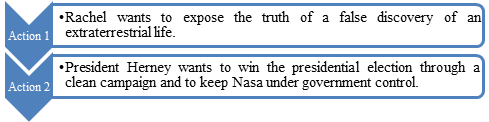
Figure 2 Chronology of the Steps Chosen for the Application of Actantial Model in Deception Point
For the actantial study of the selected novel Rumi's Daughter, Kimya has been chosen as the central character, who fulfills the role of the subject and protagonist. The other characters around Kimya, such as Evdokia, Farokh, and Ahmed, assist her in her spiritual growth. Greimas' standard actantial model was used to visually portray actantial models, including Evdokia, Farokh, and Ahmed. However, Hébert's different characteristics were also incorporated to enhance the understanding of various models while undertaking an actantial analysis of these chosen characters. The researcher could make sharp contrasts between these models and the actantial models about Kimya because of Hébert's added characteristics.
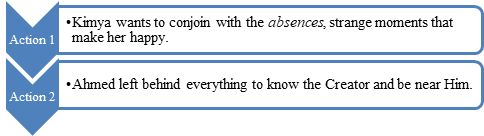
Figure 3 Chronology of the Steps Chosen for the Application of Actantial Model in Rumi’s Daughter
Findings and Discussion
Narrative Trajectory of Selected Action of RachelThe application of an actantial model is based on simultaneity, meaning it considers how specific actions occur alongside others. For applying the actantial model to this particular action, the focus is on the action Rachel is acting as the subject. Rachel is chosen as the subject due to her pivotal role in connecting the central plot with the subplot. Ontologically, the subject, Rachel, falls into the category of an anthropomorphic being. Rachel's search for extraterrestrial life leads her to uncover NASA's dishonesty instead of authentic discovery. This revelation endangers her life and the lives of her fellow scientists. At first, Rachel seeks to safeguard herself and those who know the truth. However, after witnessing brutal killings, Rachel resolves to reveal the truth to everyone. She aims to ensure that the mastermind behind the scientific deceit and murders fails in his/her endeavours. Towards the end of the action, Rachel is wholly prepared to "kill or be killed" (Brown, 2001, p. 512). She says, "it is not…about us. It is about the information in my pocket" (Brown, 2001, p. 278). Rachel is classified as an active subject because of her fervour and pain.
Table 1 Application of Actantial Model on the Action where Rachel Acts as a Subject
| No | Character/ Non-Character Actants |
Actant Name | Actant Class s/o, send/rec, help/opp |
Junction Conjunction /disjunction |
Actant subclass Real/ possible |
Actant subclass True/ false |
Other Actant Subclasses (Active/ passive, etc.) |
Ontological Category |
|---|---|---|---|---|---|---|---|---|
| 1 | Character actant | Rachel | Subject | Conjunction | Real | True | Active | Anthropomorphic being |
| 2 | Non character actant | Exposition of the truth of false discovery of an extraterrestrial life | Object | Conjunction | Real | True | Active | Inanimate Object |
| 3 | Character actant | Corky, Tolland, and Gabrielle | Helper | Conjunction | Real | True | Active | Anthropomorphic being |
| 4 | Character actant | William Pickering | Helper | Conjunction | Possible | False | Active | Anthropomorphic being |
| 5 | Non character actant | Delta Force | Opponent | Disjunction | Real | True | Active | Inanimate Object |
| 6 | Character actant | William Pickering, Marjorie Trench | Opponent | Disjunction | Real | True | Active | Anthropomorphic being |
| 7 | Non character actant | President Herney’s meeting with Rachel | Sender | Conjunction | Real | True | Active | Inanimate Object |
| 8 | Character actant | People of the USA | Receiver | Conjunction | Real | True | Passive | Anthropomorphic being |
The revelation of the truth of the false sighting of a meteorite is the object in action. Ontologically, the object of the truth revelation falls into the concept category. The subject, Rachel, tells the truth to President Herney after enduring a great deal of physical pain and mental suffering. Herney further broadcasts it on television so that the public knows about the mistake made by NASA. The object conjoins with the subject Rachel because she hits a target with fervour and ferocity. The people of the USA play the actant function of the receiver because of Rachel's eagerness, to tell the truth to everyone in the United States, not just Herney. Therefore, Herney plays the actant function of a sender. Herney tells Pickering that he would like to meet Rachel personally. In the meeting, Herney briefly discusses the discovery made by NASA with Rachel. He further instructs her to meet Lawrence Ekstrom, the administrator of NASA. Herney is an active sender because the discovery made by NASA directly affects his presidential campaign. Ontologically, the sender, Herney, belongs to the category of an anthropomorphic being.
The collaboration between the subject Rachel and the object becomes possible with Corky and Tolland's assistance. Both civilian scientists were summoned to substantiate the authenticity of the discovery. Summoned to authenticate the discovery as civilian scientists, they both endure agony coupled with a threat to life, and use their good sense and human resources to escape the perilous situation. Thus, Tolland and Corky are the actants that function as active and real helpers belonging to the category of anthropomorphic beings.
Contrastingly, Pickering emerges as a false helper in action. Despite Rachel's long-held belief in his supportive role, Pickering leads her astray and exploits her trust. He fails in his mission of killing Rachel and her companions, even after meticulous planning and repeated attempts. Ontologically, the false helper actant Pickering falls into the category of an anthropomorphic being. Pickering helps Rachel by restoring her confidence that he will be of assistance in exposing the truth. He warns Rachel not to count on anyone because anyone could be behind the masterful gambit. However, disguising himself as the Controller of Delta Force, he commands to "eliminate all the passengers" (Brown, 2001, p. 490) because he worries about the truth coming to the surface.
In the selected action, the character actant William Pickering is classified as an active and actual opponent. It is because he does his best to stop Rachel from giving away the truth by taking advantage of technology and the workforce. However, he remains hidden behind a smokescreen of father figure and helper until the end of the action. Thus, Rachel needs to learn the opponent's name and appearance. Delta Force, working under Pickering's control, is an active and true opponent because it attempts to assassinate Rachel and her confidantes on different occasions. Ontologically, Delta Force falls into the category of an inanimate element. Marjorie Tench is an opponent because she does not hand over the phone to Herney, though Rachel tells her about the mistake made by NASA. Tench rudely informs Rachel that she will pay the price for propagating lies to the whole world. She does not give any chance to Rachel to approach the president on the phone. Thus, Marjorie Tench is a true and active opponent who ontologically falls into the category of an anthropomorphic being.
Rachel bears physical pain and mental suffering to pull off the target. She goes beyond her pain threshold to unveil the truth and expose the enemy who deceives everyone nationally. The physical pain is described in this way, "her limbs feel like granite, all her joints screaming in pain as she bent her legs and arms" (Brown, 2001, p. 277). Even in her delirious state, Rachel's dedication to delivering essential information to NRO remains steadfast. Her highest priority is seeking justice for lost lives, even above her well-being. Rachel endures immense pain with unwavering strength and a willingness to do whatever it takes to reveal the truth. Despite her tough exterior, Rachel is profoundly affected when she discovers that the treacherous villain behind it all is none other than her father, Senator Sexton. Rachel's relationship with her father has always been strained, marked by a lack of affection for him.
In contrast, Rachel initially views William Pickering as a father figure but is devastated when she realizes he, too, is a traitor and killer. However, Rachel remains impartial and is not afraid to call out to Pickering when he is in the wrong. She is committed to the truth, even if it means risking her own life or the life of someone she once respected. Rachel's emotional strength is remarkable, as it does not waver even in the face of betrayal and heartbreak. She embodies resilience and strength, returning from adversity with even more remarkable fortitude.
Considering the above discussion, it is identified that actantial syncretism has occurred in this action. Hébert says, “in Greimas' theory, actantial syncretism occurs when a single actor, such as a character, corresponds to two or more different actants” (Brown, 2001, p. 81). For example, the character Pickering embodies two actants from different classes, serving as both the helper and the opponent in the same action.
Narrative Trajectory of Selected Action of President HerneyThe application of an actantial model is based on simultaneity, i.e., the specific action and the other selected actions occur at the same time. In applying the actantial model to the selected action, President Herney is chosen as the subject. Herney's role as the subject is pivotal as it sets the plot in motion. The meeting between Herney and Rachel has established the ground for the other actions in the novel as all the actions influence each other. Ontologically, Herney belongs to the category of an anthropomorphic being. Herney is an active subject because he devotedly makes moves to triumph over the opponent in the upcoming presidential election. Herney is committed to running a clean campaign and earning the trust of his nation. He values moral compassion and believes that dirty tactics to sabotage his opponent are not worth becoming president. Herney's strategy for winning the upcoming presidential election is to support NASA and firmly stand up for the organization, unlike his opponent, Sexton.
Herney believes that keeping NASA under government control is essential to both the nation's progress and his own electoral success. It is evident from the discussion that the subject Herney's object is to win the presidential election and keep NASA under governmental control; therefore, it belongs to the ontological category of an inanimate element. The object is classified as an active actant because Herney fervently desires it. Ontologically, the opponent character, actant Senator Sexton falls into the category of an anthropomorphic being. Sexton and Herney stand against each other for the upcoming presidential election of the USA. Believing in different ideologies, they take every possible step to defeat each other to win the election. Sexton emerges as a real and active opponent, vigorously seeking to harm Herney once he becomes aware of his weakness.
Table 2 Application of Actantial Model on the Action where President Herney Acts as a Subject
| No | Character/ Non-Character Actants |
Actant Name | Actant Class s/o, send/rec, help/opp |
Junction Conjunction /disjunction |
Actant subclass Real/ possible |
Actant subclass True/ false |
Other Actant Subclasses (Active/ passive, etc.) |
Ontological Category |
|---|---|---|---|---|---|---|---|---|
| 1 | Character actant | President Herney | Subject | Conjunction | Real | True | Active | Anthropomorphic being |
| 2 | Non character actant | to win the presidential election and keep NASA under governmental control | Object | Conjunction | Real | True | Active | Inanimate Object |
| 3 | Non character actant | Nasa’s victory that has profound implications for the impending presidential elections | Sender | Conjunction | Real | True | Active | Inanimate Object |
| 4 | Character actant | President Herney | Receiver | Conjunction | Real | True | Active | Anthropomorphic being |
| 5 | Non character actant | NASA | Receiver | Conjunction | Real | True | Active | Inanimate Object |
| 6 | Character actant | Marjorie Trench and Lawrence Ekstrom | Helper | Conjunction | Possible | False | Active | Anthropomorphic being |
| 7 | Character actant | Gabrielle, Rachel, Tolland | Helper | Conjunction | Real | True | Active | Anthropomorphic being |
| 8 | Character actant | Senator Sexton | Opponent | Disjunction | Real | True | Active | Anthropomorphic being |
| 9 | Non character actant | Private aerospace companies | Opponent | Disjunction | Real | True | Active | Inanimate Object |
Aerospace companies, along with Sexton, also play the actant function of the opponent. Ontologically, the non-character-actant aerospace company falls into the category of an inanimate element. Companies' cause is endangered if Herney wins the election, so they fully support Sexton to make him win the election. The owners of these companies do not engage in direct confrontation with the president; instead, they work against Herney secretly but very efficiently. Therefore, aerospace companies are the active and real opponents in this action.
In this action, both true and false character helper actants are encountered who belong to the ontological category of an anthropomorphic being. Marjorie Tench, the competent advisor of President Herney, and Lawrence Ekstrom, the administrator of NASA, are examples of active and false helpers. Despite Herney's blind trust and reliance on their guidance, Tench deliberately withholds crucial information regarding the false meteorite discovery and supports Ekstrom in deceiving the President. NASA learned of the meteorite's presence in the Arctic ice through radio transmission. Ekstrom is unconcerned about the source of information if it is accurate, and Tench agrees with him. She sees no harm in keeping this information hidden from the President, but this ultimately leads to the biggest deception orchestrated by Pickering. Although misguided in their actions, these false helpers are sincere in their loyalty to Herney. Tench gets killed in the end because of her involvement in wrongdoing. Ekstrom encounters an appalling failure in his mission and loses his integrity. Tench and Ekstrom are the possible helpers. Had they followed the right path, they could have helped Herney become president.
Herney uncovers deceit with the help of Rachel, Corky, and Tolland. Rachel risks her life to inform him, and they take necessary actions to regain control. Gabrielle and Rachel aid in keeping NASA under government control by limiting Sexton's disclosure of their failure. In addition, Gabrielle switched the fake meteorite data with photos of Sexton and herself. This ruined Sexton's chance of becoming the US president when the truth came out. Gabrielle, an anthropomorphic being, plays the role of an active character actant in this action.
The selected action uses the mereological opposition between the whole and its parts. For example, Herney's part, i.e., his honest and loyal nature, plays the role of a real non-character actant. Ontologically, loyalty and honesty fall into the category of a concept.
Herney's transparency about NASA's failed mission helped him win the US presidential seat. He put NASA under government control during his presidency. The subject, President Herney gets the desired object, so the junction established between them is the conjunction.
The news of NASA's victory, an inanimate element, is the active and real sender because it profoundly influences the upcoming presidential election. Herney, as well as NASA, play the actant function of active receivers. Herney is the real receiver because he becomes the president. NASA is a receiver because it remains under the control of the government. Had Herney not become a president, the aerospace companies would have privatised and commercialised NASA. Ontologically, NASA, a non-character actant, belongs to the category of an inanimate element.
Herney faces betrayal from two trusted individuals, jeopardizing his power and position. He stays composed and refuses to use unethical tactics, maintaining his strong moral compass. Despite moments of frustration and anger, his calm demeanour prevails. His true feelings remain unclear to the reader.
Narrative Trajectory of Selected Action of AhmedThe action chosen to apply the actantial model is based on chronological order. To apply the actantial model, an action in which Ahmed is acting as the subject of the action has been carefully chosen. The subject Ahmed, classified as the character actant because he is a human being, falls into the ontological category of an anthropomorphic being. Ahmed is the subject because he has introduced the readers to Rumi - the character actant who plays a significant role in the novel. In the same action, Ahmed comes across Kimya, which is crucial because it helps in the movement of the plot. Ahmed is also chosen as a subject so that the readers see Ahmed's struggle with himself. The novel also shows how he selects the right path by rising above his fears. Ahmed is an active subject because he tries hard to get the desired object. Ahmed does his utmost to know and be near to the one who is the "Creator and the Provider. To Him, all things shall return" (Maufroy, 2004, p. 23), whose "love is latent in all men" (Maufroy, 2004, p. 27). The principal object for Ahmed and the other characters, actants, throughout the novel, is the desire to know the Creator and be near Him, which helps to build the plot. The object is classified as an active object because the subject keenly strives towards getting it. Ahmed feels a pang of guilt for wasting his twenty-two years only on worthless leisure activities and living an insignificant life. To pay for damages, Ahmed decides to leave everyone and everything behind and begin a new phase of life in solitude to find peace and meaning in his life. Ahmed's life develops to be more spirited and profound within himself by living in the woods. It feels like a world of ecstasy to him. It is safe to say that Ahmed plays the role of helper actant in his spiritual growth. He is a valuable support for enhancing the worth of seeking spiritual enlightenment by renouncing worldly pleasures, which is the essential theme of the novel.
Table 3Application of Actantial Model on the Action where Ahmed Acts as a Subject
| Sender | Receiver | Subject | Object | Helper | Opponent |
|---|---|---|---|---|---|
| Allah | Ahmed | Ahmed | To know the Creator and be near Him | Urge to go and listen to what Maulana preaches. Rumi, Ahmed. | The vague feeling that Maulana might reach somewhere in him. |
After encountering the object, Ahmed's happiness and ecstasy unveil that a conjunction is established between the subject and the desired object. Ontologically, the object falls into the concept category since it is about understanding Allah and His love. The junction is achieved fully because Ahmed treasures each moment of living a meaningful life. Therefore, the junction remains the same throughout this particular action, i.e., conjunction. The other non-character actant selected in this actantial model for analysis is Allah, who falls into the ontological category of a concept. The selected non-character actant Allah functions as the sender and object. Allah is the sender, for he puts this longing inside Ahmed's heart to listen to Maulana's sermon, which ultimately changes Ahmed's life completely. Simultaneously, Allah is the object, too, because Ahmed wants to be associated with Him.
Ahmed's desire for the object is known when he hears Rumi preaching. Rumi teaches him that love for the Creator is hidden inside everyone. Rumi's words penetrate Ahmed's heart, and his whole being is filled with love for Allah. Hence, the sender Allah makes the subject Ahmed know and desire the object Allah with the help of Rumi. It becomes clear through the conjunction between the subject and the object that Ahmed is also the beneficiary receiver of the object. Different actants have helped the subject to achieve his desired goal. Ahmed begins walking on the path paved by Allah when he pursues his urge to listen to what Rumi preaches. Ahmed's urge plays the actantial role of helper in action. Ahmed's urge to listen to Rumi's talk is passive but is a real helper since it helps him in bonding with the other real and active helper Rumi. Ahmed believes that Rumi has saved him from worshipping his desires, which is why he is an active and real helper. Rumi's words rekindle Ahmed's love for Allah, and instantly, he settles on going and seeking Him in solitude. However, Ahmed's course of life is changed unknowingly by Rumi, i.e., Rumi has yet to approach Ahmed to help him directly. So, there are two helpers in the selected action. a) Ontologically, Rumi, the real helper actant, falls into the category of an anthropomorphic being. Rumi has played his role unintentionally, i.e., he has yet to learn that he is a helper in the selected action. b) Ontologically, Ahmed's urge to listen to Rumi's sermon, a non-character actant, falls into the concept category.
Ahmed’s vague feeling about Rumi reaching somewhere in him where he avoids looking is the opponent in the selected action. Ahmed could not attend Maulana's sermons because of an unknown feeling of unease. He was not ready to reflect on his thoughts and made excuses to ignore his inner voice. Ahmed repeatedly dismissed his gut instincts. That is why his vague feelings play the role of an active and real opponent. External forces do not oppose Ahmed; his worries, yearnings, and impulses function as the opponents. Ontologically, the non-character opponent’s feelings and characteristics of Ahmed fall into the category of a concept. Ahmed embraces his fears and problems to get rid of them. Ahmed demonstrates resilience by facing his challenges head-on instead of avoiding or complaining about them. He embraces his struggles and believes they will bring him closer to Allah, the world’s Creator. Ahmed willingly sacrifices everything for Allah's sake, trusting Allah will provide what is necessary for his spiritual development. Ahmed now believes that Allah’s blessings can be found even in the littlest of things, as he expresses toward the end of the chosen action, “O You, the Merciful, you have even provided a cushion of leaves for my comfort” (Maufroy, 2004, p. 35).
Narrative Trajectory of Selected Action of Kimya: Desire to Conjoin with Doost (Friend)The action selected to apply the actantial model is based on chronological order. This is a cumulative action, as it results from the outcome of a series of actions. To apply the actantial model, an action in which Kimya is acting as the subject of the action has been selected. Ontologically, Kimya falls into the category of an anthropomorphic being. Kimya is the subject because she finally gets to understand the question of an answer she already knows. Ahmed explains to Kimya the worth of the word Doost, that is, “the One I Love, the One I Long For” (Maufroy, 2004, p. 54). Kimya knows by heart that the answer to an unknown question is Doost. The word Doost leaves Kimya awestruck. In her childhood, when Kimya was unsure why certain unusual things were happening to her, she was sure she had found something. In her marriage, Kimya suffers intense agony, loneliness, and aching, which ultimately help her in knowing Allah. The character, actant Rumi is the real sender of the action because he begins the action by getting Shams married to Kimya. Throughout the novel, very few incidences make sense to Kimya; otherwise, she does not understand, on most occasions, God's plan for her. Shams, Kerra, and Rumi help Kimya survive the pain.
Kimya finally feels what she has known for so long, Doost, but the meaning she gets after enduring an agonising process of love. At the end of the action, Kimya says, “my heart is bursting open” (Maufroy, 2004, p. 168), which shows that the junction between the subject and the object is a conjunction. Kimya must suffer greatly to fathom her spiritual growth process, which conjoins her with the object. Kimya is torn between loving Shams or God more. Shams warns her that she may be mistaking earthly love for divine love. However, God sent Shams to fill Kimya's heart with His love.
Kimya’s inner turmoil and confusion concerning whether she loves Shams or God are functioning as the opponents. Ontologically, the real and active non-character opponents of Kimya's inner turmoil and confusion fall into the category of a concept. Kimya struggles to understand love after Shams withdraws his affection. Despite his unorthodox methods, Shams aims to help her comprehend true love and promote her spiritual development. This reason alone disqualifies him as an opponent.
Table 4 Application of Actantial Model on the Action where Kimya Acts as a Subject: Passionate Desire to Conjoin with Doost
| No | Character/ Non-Character Actants |
Actant Name | Actant Class s/o, send/rec, help/opp |
Junction Conjunction /disjunction |
Actant subclass Real/ possible |
Other Actant Subclasses (Active/ passive, etc.) |
Ontological Category |
|---|---|---|---|---|---|---|---|
| 1 | Character actant | Kimya | Subject | Conjunction | Real Subject | Active | Anthropomorphic being |
| 2 | Non character actant | Nothingness. Dost the One I love the One I long for | Object | Conjunction | Real Object | Active | Concept |
| 3 | Character actant | Rumi | Sender | Conjunction | Real Sender | Active | Anthropomorphic being |
| 4 | Character actant | Kimya | Receiver | Conjunction | Real Receiver | Active | Anthropomorphic being |
| 5 | Character actant | Shams, Kera, and Rumi | Helpers | Conjunction | Real Helpers | Active | Anthropomorphic being |
| 6 | Non character actant | Kimya’s confusion whether she loves extraordinary love for Shams or for God. Kimya’s inner turmoil | Opponent | Disjunction | Real Opponents | Active | Concept |
Shams meets the requirement of a helper actant rather than the opponent actant because of his good intentions towards Kimya. In this actantial model, the position of helper actant is also occupied by Allah, Rumi, Kerra, and Shams. Ontologically, the chosen character helper actants Shams, Rumi, and Kerra fall into the category of an anthropomorphic being. Ontologically, the non-character actant Allah falls into the category of a concept. Kimya fully trusts Allah. That is why He is categorised as the helper actant. She understands that Allah will make way if He wants to change things. Only to make Kimya come near Him, Allah afflicts Kimya with pain. Even with resolute faith in Him, sometimes she questions Allah why she cannot find inner calm. In those vulnerable moments, Kimya is helped either by Shams, Rumi, or Kerra. The relationship between Kimya and Kerra is candid. Whenever Kimya bares her soul to Kerra, her comforting words enlighten Kimya about the hidden blessing behind her pain. For example, Kimya cannot comprehend why her heart aches so much, "with joy and pain more and more intertwined. What is happening to me?" (Maufroy, 2004, p. 194). Kerra advises Kimya that her heart pain is a positive indication of personal growth and will eventually lead her to her true path. However, Kimya is unsure of how to cope with it. Kerra confidently tells Kimya that there are only three ways to manage immense pain, i.e., "not to push the pain away, not to try to understand it, and not to indulge in it" (Maufroy, 2004, p. 202).
Rumi told her not to resist remembering her first intimate experience with Shams after their marriage. Rumi's advice strikes a chord: "when realisation had reached her, she was abandoned to the moment, receptive, in no way trying to grasp anything" (Maufroy, 2004, p. 199). Rumi and Kerra advised Kimya to embrace her emotions and let things unfold naturally.
Shams help Kimya to know Him through physical intimacy along with spiritual means. Kimya feels joy she has never experienced before when she and Shams consummate their marriage. "A completeness was flooding her whole body" (Maufroy, 2004, p. 193). This experience makes Kimya overlook the months of aching, longing, and loneliness. Shams expresses making love this way, "The gift, the gift! Body knows the soul, soul the body" (Maufroy, 2004, p. 193). For Shams, this is also prayer, but Kimya visualises this relationship as "man and woman, the whole" (Maufroy, 2004, p. 193). At this stage, the love is purely physical for Kimya.
When Kimya and Shams make love to each other for the second time, Kimya grasps that she is disappearing into being. In her life, for the first time, in a sensual session of lovemaking with Shams, Kimya "was entering the nothingness in all consciousness, all the cells of her body drinking in a knowledge that was beyond words" (Maufroy, 2004, p. 196). This is the first incident when Kimya suddenly feels what is happening to her. Shams makes love to Kimya in such a way that realisation touches her without her endeavouring to comprehend anything. Hence, among the chosen helper actants in action, Shams is the most significant, real, and active character actant. Kimya is also the beneficiary receiver of the action because it ends with Kimya expressing, “my heart is bursting open” (Maufroy, 2004, p. 168).
The preceding analysis establishes the occurrence of actantial syncretism in this action. Hébert says, “in Greimas' theory, actantial syncretism occurs when a single actor, such as a character, corresponds to two or more different actants” (2011, p. 81). The character Kimya epitomises two different actants in the selected action. Kimya is the subject and opponent at once, i.e., she is performing the actant function of several actants from different classes (Hébert, 2011).
Conclusion
The actantial functions of the characters in the two novels Rumi's Daughter and Deception Point have been analyzed in this research. Rumi's Daughter has Eastern culture characters, while Deception Point has Western culture characters. The research purpose is met through the application of actantial model to analyse the selected novels' plots and subplots.
Structurally, there are many similarities and differences between the two novels. The actantial analysis assisted in classifying the plots/subplots of the novels by "means of actants, or character functions, which are slots filled by the actual characters in any selected story" (Hébert, 2020, pp. 224–225).
In Deception Point, one central plot and one sub-plot are revealed by the actantial function of the characters. In this techno-thriller fiction, conflict and resolution's plot formula represents the binary opposition structure. The conflict and resolution plot formula are accomplished because of the chosen actant, Rachel. Actantial analysis unearths that the subplot affects the main plot by using characters, especially the characters that are carefully chosen for the actantial analysis.
In contrast, in Rumi’s Daughter, one central plot and two sub-plots are revealed by the actantial function of the characters. In this visionary fiction, the plot formula of separation and union represents the structure of binary opposition. The plot formula of separation and union is accomplished because of the chosen actant Kimya. Actantial analysis unearths that both subplots are connected to the main plot thematically and through characters.
The actantial models help to classify the real/possible and active/passive actants and the ontological classification of the chosen actants given by Hébert (2020). We have found the real/possible and active/passive actants in both novels. However, in Deception Point, the actantial analysis unearths both true and false actants in the novel. In Rumi’s Daughter, the actantial analysis reveals the absence of false actants in the novel. Only true actants are found in this novel. The actantial models also identify the occurrence of actantial syncretism in the selected actions of both novels. It means that each novel's character actants embody different actants simultaneously in different actantial models. The number of times character actants embody different actants is not the same in the novels. However, in the selected novels, the comparison reveals that both novels follow the same narrative structure provided by Greimas, which answers the research question targeted in this research.
Temporally, the relation between the selected actions is dissimilar in the chosen novels. In Deception Point, the selected narrative programs are in reciprocal presupposition, which means the existence of one action depends on the existence of the other. Chronologically, the relation between the actions is simultaneity, i.e., the narrating follows promptly as the story unfolds. Instead, in Rumi’s Daughter, the selected actions are temporally related to each other through "succession", i.e., the narration happens chronologically. In Rumi’s Daughter, the selected narrative programs are in reciprocal presupposition, which means the existence of one action depends on the existence of the other.
Conflict of Interest
The authors of the manuscript have no financial or non-financial conflict of interest in the subject matter or materials discussed in this manuscript.
Data Availability Statement
Data availability is not applicable as no new data was created.
Funding Details
No funding has been received for this research.
REFERENCES
Adams, J. (2007). Interference patterns. Bucknell University Press.
Brown, D. (2001). Deception point. Simon & Schuster.
Cobley, P. (2016). Narrative. In P. Moy (Ed.), Oxford bibliographies in communication. Oxford University Press.
Greaney, M. (2006). Contemporary fiction and the uses of theory: The novel from structuralism to postmodernism. Palgrave Macmillian.
Greimas, A. J. (1971). Narrative grammar: Units and levels. Modern Language Notes, 86(6), 793–806. https://doi.org/10.2307/2907443
Hébert, L. & Tabler, J. (2020). An introduction to applied semiotics: Tools for text and image analysis. Routledge.
Hébert, L. (2011). Tools for text and image analysis and introduction to applied semiotics: The Actantial model. University of Quebec. https://citeseerx.ist.psu.edu/document?repid=rep1&type=pdf&doi=8efb82b11a799ff9481354036b5bab3140632213
Hernandez, G. L., Drzewiecka, J. A., & Greco, S. (2023). FortressEurope integrating through division: An actantial narrative analysis. Journal of Contemporary European Studies, 31(4), 1437–1451. https://doi.org/10.1080/14782804.2023.2171968
Maufroy, M. (2004). Rumi's daughter. Random House.
Max, J. I. S. D., Sudirman, E. P., Rahayu, F. E. S., & Nugroho, B. A. (2023). Discourse in billboard woman of the decade award: An actantial analysis. Leksika: Jurnal Bahasa, Sastra dan Pengajarannya, 17(1), 39–55.
Oktodila, H. T., & Hapsarani, D. (2023). Actantial model as a tool in analyzing video games narrative. In S. M. G. Tambunan (Ed.), Fourth Asia-Pacific research in social sciences and humanities, arts and humanities stream (pp. 409–419). Atlantis Press.
Telli, P., & Mahdiar, M. (2015). Barthesian narrative codes as a technique for the analysis of Attar's 'Sheikh San'an'. Persian Literary Studies Journal, 3(4), 57–71. https://doi.org/10.22099/jps.2015.2901
Thomsen, U. (1990). A structuralist approach. Scandinavian Studies, 62(4), Article e403.
Tyson, L. (2006). Critical theory today: A user-friendly guide. Routledge.
Vilhjálmsdóttir, G., & Tulinius, T. H. (2009). Tales of two subjects: Narratives of career counseling. Journal of Vocational Behavior, 75(3), 267–274. https://doi.org/10.1016/j.jvb.2009.06.008
Wang, Y., & Roberts, C. W. (2005). Actantial analysis: Greimas's structural approach to the analysis of self-narratives. Narrative Inquiry, 15(1), 51–74. https://doi.org/10.1075/ni.15.1.04wan