Differential Hematopoietic Activities of Carica papaya Plant Parts: A Comparative Analysis of Erythropoietic, Leucopoietic, and Thrombopoietic Effects in Rabbits
DOI:
https://doi.org/10.32350/cpr.41.02Keywords:
Anemia, erythropoiesis, leucopoiesis, leucopenia, natural remedy, thrombocytopenia, thrombopoiesisAbstract
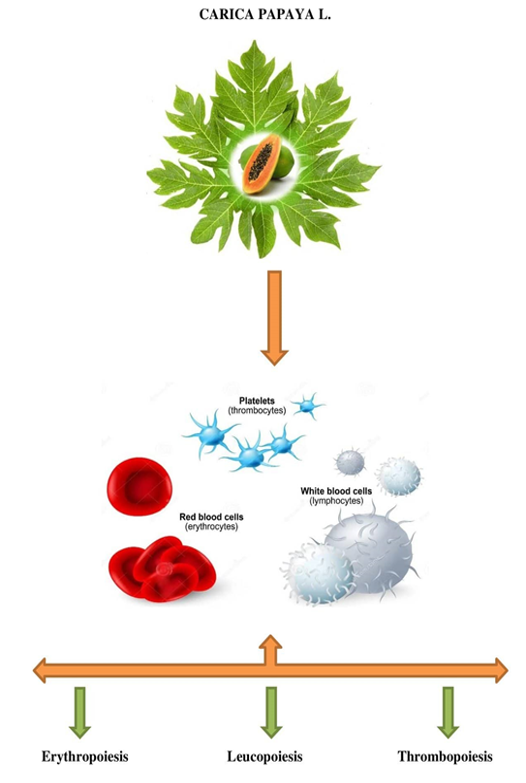
Carica papaya Linn. (Caricaceae) or commonly known as pawpaw and papaya, is extensively cultivated in tropical regions due to its nutritional and therapeutic properties. Recently, however, research into papaya leaves for its hematological effects as a thrombopoietic agent for infection-induced thrombocytopenia have gained traction. The use of papaya has been documented extensively in blood-related disorders. However, there is no comprehensive study available which evaluates the differential hematopoietic effects of its ripe fruit, seeds, unripe fruit, and leaves during prolong treatment periods. The current study addresses this critical literature gap by evaluating the hematological impact of these four distinct aerial parts. Healthy albino rabbits of both sexes were administered with aqueous preparations of four C. papaya parts over a two- month period in a controlled experimental study. Hematological assessments were performed during blood sample collection, analysis on day 11 during the acute phase and on day 61 of the subchronic phase to evaluate the erythropoietic, leucopoietic, and thrombopoietic effects was carried out. Complete Blood Count (CBC) parameters were analyzed to determine changes in Red Blood Cells (RBCs), White Blood Cells (WBCs), and platelet populations. Significant hematopoietic activity was observed across different C. papaya preparations. Unripe fruit and leaf extracts demonstrated notable broad-spectrum hematopoietic effects, enhancing multiple blood cell lineages. In contrast, ripe fruit and seed preparations exhibited selective activity, showing potent erythropoietic and thrombopoietic properties while demonstrating minimal leucopoietic potential. The differential effects were evident in both acute and subchronic treatment phases, suggesting time-dependent and part-specific bioactive mechanisms. Overall, these findings show the promising potential of C. papaya as a natural therapeutic application for anemic and thrombocytopenic conditions. Although the differential hematological effects observed across various plant parts may suggest distinct bioactive profiles which warrant future investigation. Furthermore, phytochemical characterization studies are needed to identify the active compounds responsible for the observed hematopoietic effects.
Downloads
References
1. Safiri S, Kolahi AA, Noori M, et al. Burden of anemia and its underlying causes in 204 countries and territories, 1990–2019: results from the Global Burden of Disease Study 2019. J Hematol Oncol. 2021;14:e185. https://doi.org/10.1186/s13045-021-01202-2
2. American Cancer Society. Key statistics for myelodysplastic syndromes. American Cancer Society Web site. https://www.cancer.org/cancer/types/myelodysplastic-syndrome/about/key-statistics.html. Updated, 2018.
3. Osama M, Ikram R, Wei CR. Beyond beauty: the potent dual action of Rosa damascena in managing diabetes and hyperlipidemia. Curr Nutr Food Sci. 2025;21(10):1051-1061. https://doi.org/10.2174/0115734013367622250711172441
4. Zamani S, Fathi M, Ebadi MT, Máthé Á. Global trade of medicinal and aromatic plants: a review. J Agric Food Res. 2025;21:e101910. https://doi.org/10.1016/j.jafr.2025.101910
5. Musa DD, Hafiz SS, Garba SM. Plants used in traditional herbal medicine in Dutsin-Ma Local Government Area Katsina, Nigeria. Int J Pure Appl Sci. 2019;23(1):83-94.
6. Sartayeva A. Natural remedies in diabetes management: efficacy and economic considerations. West Kazakhst Med J. 2025;67(3):317-324. https://doi.org/10.4103/wkmj.wkmj_7_26
7. Osama M, Ikram R. Aqua distillation enhances the analgesic and anti-inflammatory properties of Rosa damascena Mill.: a pilot study. Int J Pharm Sci Res. 2018;9(12):5344-5349. https://doi.org/10.13040/IJPSR.0975-8232.9(12).5344-49
8. Ahmed SN, Ahmad M, Zafar M, et al. Herbal drugs: safety, cost-effectiveness, regulation, current trends, and future directions. In: Arunachalam K, Yang X, Sasidharan SP, eds. Bioprospecting of Tropical Medicinal Plants. Springer Nature Switzerland; 2023:1479-1493. https://doi.org/10.1007/978-3-031-28780-0_62
9. Astutik S, Pretzsch J, Ndzifon Kimengsi J. Asian medicinal plants’ production and utilization potentials: a review. Sustainability. 2019;11(19):e5483. https://doi.org/10.3390/su11195483
10. Sarfaraz S, Ikram R, Osama M, Anser H. Effect of different doses of lyophilized beetroot on fertility and reproductive hormones. Pak J Pharm Sci. 2020;33(6):2505-2510.
11. Shan S, Huang X, Shah MH, Abbasi AM. Evaluation of polyphenolics content and antioxidant activity in edible wild fruits. Biomed Res Int. 2019:e1381989. https://doi.org/10.1155/2019/1381989
12. Koul B, Pudhuvai B, Sharma C, et al. Carica papaya L.: a tropical fruit with benefits beyond the tropics. Diversity. 2022;14(8):e683. https://doi.org/10.3390/d14080683
13. Ujjan PA, Soomro MA, Ibupoto SA, et al. Exploring the phytochemical composition, nutritional value, and biomedical applications of Carica papaya. Insights J Life Soc Sci. 2025;3(1):114-122. https://doi.org/10.71000/s6918e42
14. Dotto JM, Abihudi SA. Nutraceutical value of Carica papaya: a review. Sci Afr. 2021;13:e00933. https://doi.org/10.1016/j.sciaf.2021.e00933
15. Upadhyay RK. Nutritional, therapeutical, and pharmaceutical uses of papaya: a review. Int J Green Pharm. 2024;18(3):161-172. https://doi.org/10.22377/ijgp.v18i03.3591
16. Ugbogu EA, Dike ED, Uche ME, et al. Ethnomedicinal uses, nutritional composition, phytochemistry and potential health benefits of Carica papaya. Pharmacol Res Mod Chin Med. 2023;7:e100266. https://doi.org/10.1016/j.prmcm.2023.100266
17. Jain D, Daima HK, Kachhwaha S, Kothari SL. Synthesis of plant-mediated silver nanoparticles using papaya fruit extract and evaluation of their antimicrobial activities. Dig J Nanomater Biostruct. 2009;4(3):557-563.
18. Maqdoom F, Sabeen H, Zarina S. Papaya fruit extract: a potent source for synthesis of bionanoparticle. J Environ Res Dev. 2013;7(4A):e1518.
19. Osama M, Ikram R, Wei CR, et al. A comparative in vivo study to evaluate chronic biochemical effects of some edible and non-edible parts of Carica papaya plant. J Popul Ther Clin Pharmacol. 2023;30(2):478-486. https://doi.org/10.53555/jptcp.v30i2.2865
20. National Research Council. Occupational Health and Safety in the Care and Use of Research Animals. National Academies Press; 1997.
21. Osama M, Ikram R, Wei CR, et al. Alterations in serum electrolytes following acute and chronic dosing of some parts of papaya tree. J Popul Ther Clin Pharmacol. 2023;30(1):546-552.
22. Udoh P, Essien I, Udoh F. Effects of Carica papaya seeds extract on the morphology of pituitary–gonadal axis of male Wistar rats. Phytother Res. 2005;19(12):1065-1068. https://doi.org/10.1002/ptr.1388
23. Sadek KM. Antioxidant and immunostimulant effect of Carica papaya Linn. aqueous extract in acrylamide intoxicated rats. Acta Inform Med. 2012;20(3):180-185. https://doi.org/10.5455/aim.2012.20.180-185
24. Patil S, Shetty S, Bhide R, Narayanan S. Evaluation of platelet augmentation activity of Carica papaya leaf aqueous extract in rats. J Pharmacogn Phytochem. 2013;1(5):57-60.
25. Osama M, Ikram R, Sarfaraz S, Ahmed S, Iqbal A. Screening of water distilled Rosa damascena Mill. flowers as hematopoietic agent in an animal model. Pak J Pharm Sci. 2020;33(1):103-107.
26. Fibach E, Rachmilewitz E. The role of oxidative stress in hemolytic anemia. Curr Mol Med. 2008;8(7):609-619. https://doi.org/10.2174/156652408786241384
27. Ekpenyong CE, Akpan UP, Ben EE, et al. Hematological effect of chronic administration of ethanolic extract of Garcinia conruana seed on rat. J Nat Prod. 2011;4:173-176.
28. Maisarah AM, Nurul Amira B, Asmah R, Fauziah O. Antioxidant analysis of different parts of Carica papaya. Int Food Res J. 2013;20(3):1043-1048.
29. Asghar N, Naqvi SA, Hussain Z, et al. Compositional difference in antioxidant and antibacterial activity of all parts of Carica papaya. Chem Cent J. 2016;10(1):e5. https://doi.org/10.1186/s13065-016-0149-0
30. Chukwuka KS, Okonko IO, Adekunle AA. Microbial ecology of organisms causing pawpaw fruit decay in Nigeria. Am Eurasian J Toxicol Sci. 2010;2(1):43-50.
31. Yogiraj V, Goyal PK, Chauhan CS, et al. Carica papaya Linn: an overview. Int J Herb Med. 2014;2(5):1-8.
32. Makanjuola OM, Makanjuola JO. Proximate and selected mineral composition of ripe pawpaw seeds and skin. J Sci Innov Res. 2018;7(3):75-77.
33. Didier AJ, Stiene J, Fang L, et al. Antioxidant and anti-tumor effects of dietary vitamins A, C, and E. Antioxidants (Basel). 2023;12(3):e632. https://doi.org/10.3390/antiox12030632
34. Zhang R, Lv J, Yu J, et al. Antioxidant analysis of different parts of several cultivars of papaya (Carica papaya L.). Int J Fruit Sci. 2022;22(1):438-452. https://doi.org/10.1080/15538362.2022.2047138
35. Prasad AS, Bao B, Beck FW, et al. Antioxidant effect of zinc in humans. Free Radic Biol Med. 2004;37(8):1182-1190. https://doi.org/10.1016/j.freeradbiomed.2004.07.007
36. Humphry E, Armstrong CE. Physiology of red and white blood cells. Anaesth Intensive Care Med. 2022;23(2):118-122.
37. Archetti I, Tittarelli C, Cerioli M, et al. Serum chemistry and hematology values in commercial rabbits. In: Proc World Rabbit Congr. 2008:10-13.
38. Richards JR, Farias VF, Clingan CS. Association of leukocytosis with amphetamine and cocaine use. Sci World J. 2014;2014:e207651. https://doi.org/10.1155/2014/207651
39. Pandey S, Cabot PJ, Shaw PN, Hewavitharana AK. Anti-inflammatory and immunomodulatory properties of Carica papaya. J Immunotoxicol. 2016;13(4):590-602. https://doi.org/10.3109/1547691X.2016.1149528
40. Chukwuka KS, Iwuagwu M, Uka UN. Evaluation of nutritional components of Carica papaya at different stages of ripening. IOSR J Pharm Biol Sci. 2013;6(4):13-16. https://doi.org/10.9790/3008-0641316
41. Tham CS, Chakravarthi S, Haleagrahara N, De Alwis R. Morphological study of bone marrow and effects of Carica papaya. Exp Ther Med. 2013;5(2):648-652. https://doi.org/10.3892/etm.2012.851
42. Briggs TA, Oli AN, Okoye EI, et al. Assessment of immunostimulating effect of Carica papaya. Int J Pharm Investig. 2020;10(3):384-389. https://doi.org/10.5530/ijpi.2020.3.68
43. Dharmarathna SL, Wickramasinghe S, Waduge RN, et al. Does Carica papaya leaf extract increase platelet count? Asian Pac J Trop Biomed. 2013;3(9):720-724. https://doi.org/10.1016/S2221-1691(13)60145-8
44. Bano S, Uzairullah M, Tayyab Q, Akhter F. Papaya-based poly-herbal extract eases thrombocytopenia. J Hunan Univ Nat Sci. 2023;50(3):129-136. https://doi.org/10.55463/issn.1674-2974.50.3.13
45. Noviar NG, Hayati NE, Ramadhani NRN. Effectiveness of papaya leaf extract as an antiaggregation agent. J Voc Health Stud. 2025;9(1):38-46. https://doi.org/10.20473/jvhs.V9.I1.2025.38-46
46. Nugraha SE, Marianne M, Syahputra RA, et al. Efficacy of Carica papaya leaves extract for thrombocytopenia. Adv Anim Vet Sci. 2024;12(7):1325-1334. https://doi.org/10.17582/journal.aavs/2024/12.7.1325.1334
47. Hettige S. Salutary effects of Carica papaya leaf extract in dengue fever patients. Sri Lankan Fam Physician. 2008;29(1):17-19.
48. Shoyshob TZ, Heya IA, Afrin N, et al. Protective mechanisms of Carica papaya leaf extract against dengue. Immuno. 2024;4(4):629-645. https://doi.org/10.3390/immuno4040037
49. Wiggins RW, Woo J, Cauba JN, Mito S. Herbal extracts in immune thrombocytopenia. Appl Biosci. 2024;4(1):e1. https://doi.org/10.3390/applbiosci4010001
50. Aziz J, Abu Kassim NL, Abu Kasim NH, et al. Carica papaya induces thrombopoietic cytokines secretion. BMC Complement Altern Med. 2015;15:1-8. https://doi.org/10.1186/s12906-015-0749-6
51. Adewuyi HA, Kabiru AY, Muhammad HL, et al. Protective potentials of Carica papaya in anemia. Am J Transl Res. 2024;16(7):3259-3272. https://doi.org/10.62347/zqdc9694
52. Batool S, Zafar S, Alam S, et al. Evaluation of Carica papaya leaf extract on megakaryocytes. Khyber J Med Sci. 2022;15(2):81-86. https://doi.org/10.70520/kjms.v15i2.345
53. Vij T, Prashar Y. Medicinal properties of Carica papaya Linn: a review. Asian Pac J Trop Dis. 2015;5(1):1-6. https://doi.org/10.1016/S2222-1808(14)60617-4
Downloads
Published
How to Cite
Issue
Section
License
Copyright (c) 2026 Muhammad Osama, Rahila Ikram, Calvin R Wei, Aisha Kamal

This work is licensed under a Creative Commons Attribution 4.0 International License.
Authors retain copyright and grant the journal right of first publication with the work simultaneously licensed under a Creative Commons Attribution (CC-BY) 4.0 License that allows others to share the work with an acknowledgement of the work’s authorship and initial publication in this journal