
Circulating RASSF1A Promoter Methylation and MicroRNA Profiles in Plasma of Breast Cancer Patients from Pakistan
Circulating RASSF1A Promoter Methylation and MicroRNA Profiles
DOI:
https://doi.org/10.32350/cto.52.04Keywords:
Biomarkers, Blood-based Diagnosis, Breast Cancer, Circulating MicroRNAs, RASSF1A gene, Real-time PCRAbstract
Abstract
Background: The present study assessed the promoter DNA methylation status of a tumor suppressor gene, Ras association domain family 1 isoform A (RASSF1A), and the expression levels of selected cancer-associated microRNAs (miR-10b and miR-34a) in plasma samples of breast cancer patients, to evaluate the diagnostic relevance of circulating nucleic acids.
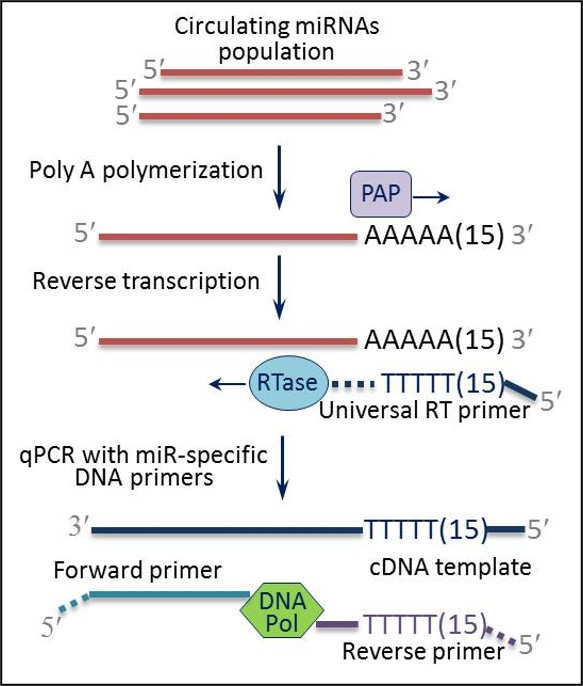
Methods: Circulating DNA (cfDNA) was isolated from plasma samples of 40 breast cancer patients, followed by bisulfite modification and methylation-specific PCR to determine RASSF1A promoter hypermethylation. For the detection of microRNA levels, a miR-specific real-time qRT-PCR approach, employing DNA primers instead of stem-loop/locked nucleic acid (LNA) primers, was used.
Results: Aberrant promoter hypermethylation of RASSF1A was detected in 40% of patient samples. Circulating miR-10b a showed statistically significant difference between patients and healthy controls (p < 0.001). Receiver operating characteristic (ROC) curve analysis demonstrated a high discriminative performance of miR-10b, with an area under the curve (AUC) of 0.97 (95% CI: 0.90–0.99; SE = 0.16).
Conclusion: These findings suggest potential utility of circulating microRNA profiling, particularly miR-10b, as a minimally invasive and cost-effective adjunct to existing breast cancer diagnostic approaches. Further validation studies in larger cohort, however, are necessary to establish their clinical applicability in resource-limited settings.
Downloads
References
1. Zaib S, Masood N, Khan JS, Yasmin A. Breast cancer: epidemiology, risk factors and survival analysis in the Pakistani population. J Univ Coll Med Dent. 2024;4:18-23. https://doi.org/10.51846/jucmd.v3i1.2784.
2. Zaheer S, Shah N, Maqbool SA, Soomro NM. Estimates of past and future time trends in age-specific breast cancer incidence among women in Karachi, Pakistan: 2004–2025. BMC Public Health. 2019;19(1):e1001. https://doi.org/10.1186/s12889-019-7330-z.
3. Cardinali B, Tasso R, Piccioli P, Ciferri MC, Quarto R, Del Mastro L.Circulating miRNAs in breast cancer diagnosis and prognosis. Cancers (Basel). https://doi.org/10.3390/cancers14092317.
4. Szczepanek J, Skorupa M, Jarkiewicz-Tretyn J, Cybulski C, Tretyn A.Harnessing epigenetics for breast cancer therapy: the role of DNA methylation, histone modifications, and microRNA. Int J Mol Sci. 2023;24(8):e7235. https://doi.org/10.3390/ijms24087235.
5. Prabhu KS, Sadida HQ, Kuttikrishnan S, Junejo K, Bhat AA, Uddin S.Beyond genetics: exploring the role of epigenetic alterations in breast cancer. Pathol Res Pract. 2024;254:e155174.https://doi.org/10.1016/j.prp.2024.155174.
6. Gonzalez T, Nie Q, Chaudhary LN, Basel D, Reddi HV. Methylation signatures as biomarkers for non-invasive early detection of breast cancer: a systematic review of the literature. Cancer Genet. 2024;282:1-8. https://doi.org/10.1016/j.cancergen.2023.12.003.
7. Rajkumar T, Amritha S, Sridevi V, et al. Identification and validation of plasma biomarkers for diagnosis of breast cancer in South Asian women. Sci Rep. 2022;12(1):e100. https://doi.org/10.1038/s41598 021-04176-w.
8. Panagopoulou M, Esteller M, Chatzaki E. Circulating cell-free DNA in breast cancer: searching for hidden information towards precision medicine.Cancers (Basel). 2021;13(4):e728. https://doi.org/10.3390/cancers13040728.
9. El Hejjioui B, Bouguenouch L, Melhouf MA, El Mouhi H, Bennis S. Clinical evidence of circulating tumor DNA application in aggressive breast cancer. Diagnostics (Basel). 2023;13(3):e470. https://doi.org/10.3390/diagnostics13030470.
10. Vlataki K, Antonouli S, Kalyvioti C, et al. Circulating tumor DNA in the management of early-stage breast cancer. Cells. 2023;12(12):e1573. https://doi.org/10.3390/cells12121573.
11. Gupta V, Agarwal P, Deshpande P. Impact of RASSF1A gene methylation on clinico-pathological features of tumor and non-tumor tissue of breast cancer. Ann Diagn Pathol. 2021;52:e151722. https://doi.org/10.1016/j.anndiagpath.2021.151722.
12. Vietri MT, Delia G, Benincasa G, Ferraro G, Caliendo G, Nicoletti GF, et al. DNA methylation and breast cancer: a way forward. Int J Oncol. 2021;59(5):1-2. https://doi.org/10.3892/ijo.2021.5278.
13. Hum M, Lee AS. DNA methylation in breast cancer: early detection and biomarker discovery through current and emerging approaches. J Transl Med. 2025;23(1):e465. https://doi.org/10.1186/s12967-025 06495-2.
14. Zhang X, Zhao D, Yin Y, et al. Circulating cell-free DNA-based methylation patterns for breast cancer diagnosis. NPJ Breast Cancer. 2021;7(1):e106. https://doi.org/10.1038/s41523-021-00316-7.
15. Cao YN, Li QZ, Liu YX, Jin W, Hou R. Discovering the key genes and important DNA methylation regions in breast cancer. Hereditas. 2022;159(1):e7. https://doi.org/10.1186/s41065-022-00220-5.
16. Arif T, Anwar N. Promoter hypermethylation and expression changes of BRCA1 gene in a cohort of sporadic breast cancer cases among Pakistani population. Asian Pac J Cancer Prev. 2020;21(8):2395 2401. https://doi.org/10.31557/APJCP.2020.21.8.2395.
17. He S, Hou Y, Hou L, et al. Targeted RASSF1A expression inhibits proliferation of HER2-positive breast cancer cells in vitro. Exp Ther Med. 2023;25(6):e245. https://doi.org/10.3892/etm.2023.11944.
18. Bin Y, Ding Y, Xiao W, Liao A. RASSF1A: a promising target for the diagnosis and treatment of cancer. Clin Chim Acta. 2020;504:98-108. https://doi.org/10.1016/j.cca.2020.01.014.
19. Xin-Ling D, Chao-Si Q, Gui-Ting T, Xue-Yan C, Li-Ying F, Ying Hua Y. Association of methylation of RASSF1A between breast cancer and benign breast lesions: a meta-analysis. Clin Surg. 2020;5:e2789.
20. Garcia-Martinez L, Zhang Y, Nakata Y, Chan HL, Morey L. Epigenetic mechanisms in breast cancer therapy and resistance. Nat Commun. 2021;12(1):1786. https://doi.org/10.1038/s41467-021 22024-3.
21. Uzuner E, Ulu GT, Gürler SB, Baran Y. The role of miRNA in cancer: pathogenesis, diagnosis, and treatment. In: Allmer J, Yousef M, eds. miRNomics. Methods in Molecular Biology. Vol 2257. Humana; 2022.
https://doi.org/10.1007/978-1-0716-1170-8_18.
22. Otmani K, Lewalle P. Tumor suppressor miRNA in cancer cells and the tumor microenvironment: mechanism of deregulation and clinical implications. Front Oncol. 2021;11:e708765. https://doi.org/10.3389/fonc.2021.708765.
23. Kanwal N, Al Samarrai O, Al-Zaidi HM, Mirzaei A, Heidari M. Comprehensive analysis of microRNA (miRNA) in cancer cells. Cell Mol Biomed Rep. 2023;3(2):89-97.
24. Imran K, Iqbal MJ, Ahmed MM, et al. Epigenetic dysregulation in
cancer: mechanisms, diagnostic biomarkers and therapeutic strategies.
Med Oncol. 2025;42(8):e359. https://doi.org/10.1007/s12032-025
02905-z
25. Beilankouhi EA, Maghsoodi MS, Sani MZ, et al. miRNAs that regulate apoptosis in breast cancer and cervical cancer. Cell Biochem Biophys. 2024;82(3):1993-2006. https://doi.org/10.1007/s12013-024 01405-7.
26. Xing Y, Ruan G, Ni H, et al. Tumor immune microenvironment and its related miRNAs in tumor progression. Front Immunol. 2021;12:e624725. https://doi.org/10.3389/fimmu.2021.624725.
27. McGuire A, Casey MC, Waldron RM, et al. Prospective assessment of systemic microRNAs as markers of response to neoadjuvant chemotherapy in breast cancer. Cancers (Basel). 2020;12(7):e1820. https://doi.org/10.3390/cancers12071820.
28. Halim A, Kim B, Kenyon E, Moore A. miR-10b as a clinical marker and a therapeutic target for metastatic breast cancer. Technol Cancer Res Treat. 2025;24:1-7. https://doi.org/10.1177/15330338251339256.
29. Asadirad A, Khodadadi A, Talaiezadeh A, et al. Evaluation of miRNA-21-5p and miRNA-10b-5p levels in serum-derived exosomes of breast cancer patients in different grades. Mol Cell Probes. 2022;64:e101831. https://doi.org/10.1016/j.mcp.2022.101831.
30. Elgeshy KM, Abdel Wahab AH. The role, significance, and association of microRNA-10a/b in physiology of cancer. MicroRNA. 2022;11(2):118-138. https://doi.org/10.2174/2211536611666220523104408.
31. Yoo B, Ross A, Pantazopoulos P, Medarova Z. miRNA10b-directed nanotherapy effectively targets brain metastases from breast cancer. Sci Rep. 2021;11(1):e2844. https://doi.org/10.1038/s41598-021-82528-2.
32. Halim A, Al-Qadi N, Kenyon E, et al. Inhibition of miR-10b treats metastatic breast cancer by targeting stem cell-like properties. Oncotarget. 2024;15:591-606. https://doi.org/10.18632/oncotarget.28641.
33. Tokumaru Y, Katsuta E, Oshi M, et al. High expression of miR-34a associated with less aggressive cancer biology but not with survival in breast cancer. Int J Mol Sci. 2020;21(9):e3045. https://doi.org/10.3390/ijms21093045.
34. Li S, Wei X, He J, et al. The comprehensive landscape of miR-34a in cancer research. Cancer Metastasis Rev. 2021;40(3):925-948. https://doi.org/10.1007/s10555-021-09973-3.
35. Li W, Wang Y, Liu R, et al. MicroRNA-34a: potent tumor suppressor, cancer stem cell inhibitor, and potential anticancer therapeutic. Front Cell Dev Biol. https://doi.org/10.3389/fcell.2021.640587.
Published
How to Cite
Issue
Section
License
Copyright (c) 2025 Jawaria Shaheen, Dr. Safia Firdous, Khulod Ibrahim Hassan, Saima Sadaf

This work is licensed under a Creative Commons Attribution 4.0 International License.
Author(s) retain copyright and grant the journal right of first publication with the work simultaneously licensed under a Creative Commons Attribution (CC-BY) 4.0 License that allows others to share the work with an acknowledgment of the work’s authorship and initial publication in this journal.