A Design and Evaluation of Bilayer Diclofenac Sodium Tablets Combining Orodispersible and Sustained-Release Systems
DOI:
https://doi.org/10.32350/cpr.42.02Keywords:
bilayer tablet, direct compression, diclofenac sodium, orodispersible, sustained release, wet granulationAbstract
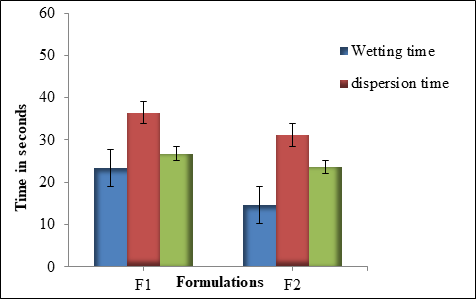
Diclofenac sodium is a popular Non- Steroidal Anti-Inflammatory Drug (NSAID), and an analgesic medication. However, its classic dosage preparations do not ensure the rapid effect and a long-term therapeutic response. The objective of the current study was the creation and testing of a bilayer tablet with an orodispersible immediate-release layer and a sustained-release core of diclofenac sodium. The sustained-release core was made by wet granulation. Whereas, the orodispersible outer coating was made by direct compression using super disintegrants, that is, primogel (Sodium starch glycolate) and crospovidone. The pre-compression and post-compression properties of the powder blends and tablets were determined based on pharmacopeias standards. The physicochemical characteristics of the tablets, such as consistent weight, hardness, and friability were acceptable. The orodispersible layer dissolved within less than 30 seconds, with diclofenac sodium being released as a loading dose. The sustained-release core-maintained drug release over the 10-h study period. This demonstrated prolonged drug release consistent with the intended sustained-release behavior of the formulation. Crospovidone proved to be the best among the tested super disintegrants in terms of wetting, water absorption, and disintegration. The optimized bilayer tablet was able to attain a dual-release profile, providing a rapid and long-lasting therapeutic effect. The proposed formulation strategy offered an encouraging method to improve therapeutic efficacy, decrease the dosing frequency, and increase patient compliance in the treatment of inflammatory conditions.
Downloads
References
1. Lees P, Toutain PL, Elliott J, Giraudel JM, Pelligand L, King JN. Pharmacology, safety, efficacy and clinical uses of the COX-2 inhibitor robenacoxib. J Vet Pharmacol Ther. 2022;45(4):325–351. https://doi.org/10.1111/jvp.13052
2. Zehravi M, Shoaib MH, Yousuf RI, Saleem MT, Siddiqui F. Development and validation of sensitive RP-HPLC bioanalytical method of diclofenac sodium and its predictive in-silico physiologically based pharmacokinetic modeling in hepatic and renal impairment. Biomed Chromatogr. 2026;40(8):e70516. https://doi.org/10.1002/bmc.70516
3. Yadav VK, Jain P, Alex TS, Mirza MA, Iqbal Z. Solubility enhancement of diclofenac using solid dispersions. Int J Pharm Pharmacol. 2021;5(1):1–6. https://doi.org/10.31531/2581-3080.1000154
4. Ferdousi FM, Safrin F, Ali MN, Juhan AA, Akter P. Composition and drug release characteristics of bi-layered and multi-layered tablets: A comprehensive review. J Drug Deliv Ther. 2025;15(1):169–176. https://doi.org/10.22270/jddt.v15i1.6936
5. Amanullah A, Upadhyay A, Dhiman R, et al. Development and challenges of diclofenac-based novel therapeutics: Targeting cancer and complex diseases. Cancers (Basel). 2022;14(18):e4385. https://doi.org/10.3390/cancers14184385
6. Dastidar DG, Biswas A, Das A, Naskar S, Mahish R. Development and optimization of sustained-release matrix tablets of diclofenac sodium using carboxymethylated chitosan through systematic application of design of experiments. Drug Metab Bioanal Lett. 2024;17(3):121–136. https://doi.org/10.2174/0118723128351869250213102431
7. Li T, Guo M, Zhang W. Comparison of therapeutic effects of topical application of diclofenac sodium nanoparticles and conventional placebo on knee osteoarthritis. Cell Mol Biol (Noisy-le-grand). 2022;68(3):171–178. https://doi.org/10.14715/cmb/2022.68.3.20
8. Bishal A, Ali KA, Bandyopadhyay B, Bandyopadhyay R, Debnath B. Study of different super-disintegrants and their use as a magic ingredient for different immediate-release tablets. J Pharm Negat Results. 2022;13(suppl 5):1222–1232. https://doi.org/10.47750/pnr.2022.13.S05.194
9. Abbas J, Bashir S, Samie M, et al. Formulation and evaluation of a bilayer tablet comprising of diclofenac potassium as orodispersible layer and diclofenac sodium as sustained release core. Marmara Pharm J. 2017;21(3):707–716. https://doi.org/10.12991/marupj.323595
10. Hu J, Mo PQ, Li XP, Gao L, Zhu B, Li RL. The angle of repose and base stress distribution of granular piles: An experimental investigation. Constr Build Mater. 2024;448:e138209. https://doi.org/10.1016/j.conbuildmat.2024.138209
11. Akseli I, Hilden J, Katz JM, et al. Reproducibility of the measurement of bulk/tapped density of pharmaceutical powders between pharmaceutical laboratories. J Pharm Sci. 2019;108(3):1081–1084. https://doi.org/10.1016/j.xphs.2018.10.009
12. Shah DS, Moravkar KK, Jha DK, Lonkar V, Amin PD, Chalikwar SS. A concise summary of powder processing methodologies for flow enhancement. Heliyon. 2023;9(6):e16498. https://doi.org/10.1016/j.heliyon.2023.e16498
13. Saripilli R, Teella P, Nataraj KS. Development and characterisation of valsartan immediate release dosage form using solubility enhancement technique. Eur Pharm J. 2024;71(1):32–42. https://doi.org/10.2478/afpuc-2024-0005
14. Emagn Kasahun A, Joseph NM, Belete A. Practices of tablet splitting and dose uniformity of fragments at public hospitals in Ethiopia: A cross-sectional study supported by experimental findings. PLoS One. 2022;17(12):e0279135. https://doi.org/10.1371/journal.pone.0279135
15. Chinnala KM, Vodithala S. Formulation development and evaluation of fast disintegrating tablets of cinitapride hydrogen tartarate by using direct compression technique. Int J Curr Pharm Res. 2017;9(6):98–103. https://doi.org/10.22159/ijcpr.2017v9i6.23659
16. Zhao H, Yu Y, Ni N, et al. A new parameter for characterization of tablet friability based on a systematical study of five excipients. Int J Pharm. 2022;611:e121339. https://doi.org/10.1016/j.ijpharm.2021.121339
17. Monton C, Wunnakup T, Suksaeree J, Charoenchai L, Chankana N. Impact of compressional force, croscarmellose sodium, and microcrystalline cellulose on black pepper extract tablet properties based on design of experiments approach. Sci Pharm. 2023;91(3):30. https://doi.org/10.3390/scipharm91030030
18. Kemp IC, van Millingen A, Khaled H, Iler L, Mavani M, Li L. Simultaneous wetting and drying: Fluid bed granulation and tablet film coating. Dry Technol. 2021;39(2):187–202. https://doi.org/10.1080/07373937.2019.1650760
19. Mankar SD, Satpute A, Siddheshwar SS, Bhawar SB, Dighe SB. Design, development and optimization of mouth dissolving tablet of ambrisentan using Design Expert software. Int J Appl Pharm. 2023;15(4):282–290. https://doi.org/10.22159/ijap.2023v15i4.36398
20. Kalný M, Grof Z, Štěpánek F. Microstructure based simulation of the disintegration and dissolution of immediate release pharmaceutical tablets. Powder Technol. 2021;377:257–268. https://doi.org/10.1016/j.powtec.2020.08.093
21. Kumar M, Mandal UK. In-vitro dissolution study of pharmaceutical products with USP apparatus-IV. Drug Deliv Lett. 2021;11(3):195–202. https://doi.org/10.2174/2210303111666210712101322
22. Rashid R, Zaman M, Ahmad M, et al. Press-coated aceclofenac tablets for pulsatile drug delivery: Formulation and in vitro evaluations. Pharmaceuticals (Basel). 2022;15(3):e326. https://doi.org/10.3390/ph15030326
23. Charoo NA. Critical excipient attributes relevant to solid dosage formulation manufacturing. J Pharm Innov. 2020;15(1):163–181. https://doi.org/10.1007/s12247-019-09372-w
24. Berardi A, Janssen PHM, Dickhoff BHJ. Technical insight into potential functional-related characteristics (FRCs) of sodium starch glycolate, croscarmellose sodium and crospovidone. J Drug Deliv Sci Technol. 2022;70:e103261. https://doi.org/10.1016/j.jddst.2022.103261
25. Sabbatini B. Advancements in Excipient Characterization for the Optimization of Oral Solid Dosage Forms: From Characterization to Formulation [doctoral dissertation]. University of Camerino; 2024. https://hdl.handle.net/11581/492445
26. Hirun N, Kraisit P. Drug-polymers composite matrix tablets: Effect of hydroxypropyl methylcellulose (HPMC) K-series on porosity, compatibility, and release behavior of the tablet containing a BCS class I drug. Polymers (Basel). 2022;14(16):e3406. https://doi.org/10.3390/polym14163406
27. De la Cruz Gómez AV, Ramos Iglesias RM, Ruiz Afanador TS, Pájaro Bolívar IB, Domínguez Moré GP. Comparison between the dissolution profiles of prolonged-release ciprofloxacin tablets available in the Colombian market. J Appl Pharm Sci. 2022;12(3):209–217. https://doi.org/10.7324/JAPS.2022.120322
28. Lin Y, Lin X, Hong Y, Shen L, Zhao L. Mechanisms of multiscale granular material properties in roll compaction/dry granulation and tableting processes: From macro to micro. Arch Comput Methods Eng. Published online June 2026. https://doi.org/10.1007/s11831-026-10605-8
29. Wang J, Wen H, Desai D. Lubrication in tablet formulations. Eur J Pharm Biopharm. 2010;75(1):1–15. https://doi.org/10.1016/j.ejpb.2010.01.007
30. Mendonça Costa ML, Ribeiro Lucena L, Silva Bezerra BM, Oshiro-Júnior JA, Chiari-Andréo BG. Polymers for the production of conventional dosage forms. In: Applications of Polymers in Surgery II. Materials Research Forum LLC; 2025:246–262. https://doi.org/10.21741/9781644903353-10
31. Berardi A, Janssen PHM, Dickhoff BHJ. Technical insight into potential functional-related characteristics (FRCs) of sodium starch glycolate, croscarmellose sodium and crospovidone. J Drug Deliv Sci Technol. 2022;70:e103261. https://doi.org/10.1016/j.jddst.2022.103261
32. Floryanzia S, Ramesh P, Mills M, et al. Disintegration testing augmented by computer vision technology. Int J Pharm. 2022;619:e121668. https://doi.org/10.1016/j.ijpharm.2022.121668
33. Mishra SM, Sauer A. Effect of physical properties and chemical substitution of excipient on compaction and disintegration behavior of tablet: A case study of low-substituted hydroxypropyl cellulose (L-HPC). Macromol. 2022;2(1):113–130. https://doi.org/10.3390/macromol2010007
34. Ozon EA, Novac M, Gheorghe D, et al. Formation and physico-chemical evaluation of nifedipine-hydroxypropyl-β-cyclodextrin and nifedipine-methyl-β-cyclodextrin: The development of orodispersible tablets. Pharmaceuticals (Basel). 2022;15(8):e993. https://doi.org/10.3390/ph15080993
35. Baraiya R. Formulation and evaluation of fast dissolving tablets of rizatriptan using Hibiscus mutabilis mucilage as a natural superdisintegrant. TMP Universal Journal of Advances in Pharmaceutical Sciences. 2026;2(3):253–264. https://doi.org/10.69557/r2z3z552
36. Wan B, Andhariya JV, Bao Q, Wang Y, Zou Y, Burgess DJ. Effect of polymer source on in vitro drug release from PLGA microspheres. Int J Pharm. 2021;607:e120907. https://doi.org/10.1016/j.ijpharm.2021.120907
37. Park C, Lee JH, Jin G, et al. Release kinetics of hydroxypropyl methylcellulose governing drug release and hydrodynamic changes of matrix tablet. Curr Drug Deliv. 2022;19(5):520–533. https://doi.org/10.2174/1567201818666210820101549
38. Senarat S, Phaechamud T, Pornsawad P, Chaiya P. Effervescence-modulated drug release from HPMC matrix tablets: Mechanistic insight and numerical estimation of water and ibuprofen diffusivity. J Drug Deliv Sci Technol. 2025;113:e107285. https://doi.org/10.1016/j.jddst.2025.107285
Downloads
Published
How to Cite
License
Copyright (c) 2026 Hira Javed, Eesha Tariq Bhatty, Rabia Javaid, Omer Mahmood Mumtaz, Aiman Mahmood, Tayyaba Rana, Saleha Babar, Hadeeqa Khan, Rizwana Raheel

This work is licensed under a Creative Commons Attribution 4.0 International License.
Authors retain copyright and grant the journal right of first publication with the work simultaneously licensed under a Creative Commons Attribution (CC-BY) 4.0 License that allows others to share the work with an acknowledgement of the work’s authorship and initial publication in this journal