
Clinical Biomarkers of Dyslipidemia in Diabetes Mellitus Type II Patients
DOI:
https://doi.org/10.32350/bsr.62.1Keywords:
biomarkers, cholesterol, dyslipidemia, lipids, type II diabetes mellitus (TBDM)Abstract
Background. This study aims to comparatively investigate the clinical biomarkers of diabetic dyslipidemia in type II diabetes mellitus (TIIDM) patients and healthy controls with no clinical diabetic history.
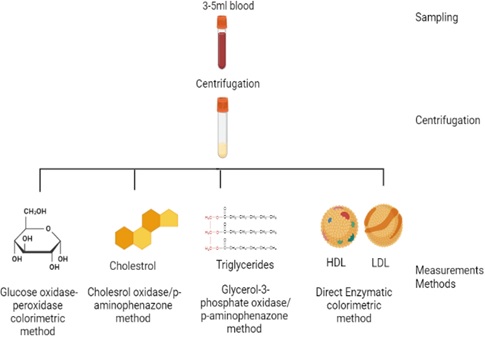
Method. A cross-sectional study was conducted on 100 TIIDM patients age-matched with 100 control subjects. They were evaluated from January 2021 to July 2022 in Narowal, Pakistan. Various biomarkers including total cholesterol (TL), low-density lipoprotein (LDL), high-density lipoprotein (HDL), and triglycerides were measured for each subject.
Results. The results showed significantly higher levels of TC (238 ± 30 mg/dl), triglycerides (201 ± 72 mg/dl), and LDL (141 ± 47 mg/dl) in TIIDM patients as compared to control groups’ levels of TC (167 ± 23 mg/dl), triglycerides (175 ± 75 mg/dl), and LDL (95 ± 30 mg/dl). However, HDL level was significantly lower (46 ± 21 mg/dl) in TIIDM patients as compared to control group (54 ± 27 mg/dl).
Conclusion. The clinical biomarkers of dyslipidemia are effective risk predictors for cardiovascular diseases in low-income countries such as Pakistan.
Downloads
References
Saeedi P, Petersohn I, Salpea P, et al. Global and regional diabetes prevalence estimates for 2019 and projections for 2030 and 2045: Results from the International Diabetes Federation Diabetes Atlas. Diabetes Res Clin Pract. 2019;157:e107843. https://doi.org/10.1016/j.diabres.2019.107843
Basit A, Fawwad A, Qureshi H, Shera AS. Prevalence of diabetes, pre-diabetes and associated risk factors: second National Diabetes Survey of Pakistan (NDSP), 2016–2017. BMJ Open. 2018;8(8):e020961. https://doi.org/10.1136/bmjopen-2017-020961
Astrup A, Finer N. Redefining type 2 diabetes:‘diabesity’or ‘obesity dependent diabetes mellitus’? Obes Rev. 2000;1(2):57–59. https://doi.org/10.1046/j.1467-789x.2000.00013.x
Krauss RM. Lipids and lipoproteins in patients with type 2 diabetes. Diabetes Care. 2004;27(6):1496–1504. https://doi.org/10.2337/diacare.27.6.1496
Fletcher B, Gulanick M, Lamendola C. Risk factors for type 2 diabetes mellitus. J Cardiovas Nurs. 2002;16(2):17–23.
Midhet FM, Al-Mohaimeed AA, Sharaf FK. Lifestyle related risk factors of type 2 diabetes mellitus in Saudi Arabia. Saudi Med J. 2010;31(7):768–774.
Al-Shammari FKH, Al-Meraghi O, Nasif A, Al-Otaibi S. The prevalence of diabetic retinopathy and associated risk factors in type 2 diabetes mellitus in Al-Naeem area (Kuwait). Middle East J Fam Med. 2005;3(2):e3.
Ding H, Triggle CR. Endothelial cell dysfunction and the vascular complications associated with type 2 diabetes: assessing the health of the endothelium. Vasc Health Risk Manag. 2005;1(1):55–71. https://doi.org/10.2147/vhrm.s115558939
Vijayaraghavan K. Treatment of dyslipidemia in patients with type 2 diabetes. Lipids Health Dis. 2010;9(1):1–12. https://doi.org/10.1186/1476-511X-9-144
de Macedo GMC, Nunes S, Barreto T. Skin disorders in diabetes mellitus: an epidemiology and physiopathology review. Diabetol Metabo Syndr. 2016;8(1):1–8. https://doi.org/10.1186/s13098-016-0176-y
Mooradian AD. Dyslipidemia in type 2 diabetes mellitus. Nat Revi Endocrinol 2009;5(3):150–159. https://doi.org/10.1038/ncpendmet1066
Garg A, Simha V. Update on dyslipidemia. J Clin Endocrinol Metabol. 2007;92(5):1581–1589. https://doi.org/10.1210/jc.2007-0275
Kahn SE, Hull RL, Utzschneider KM. Mechanisms linking obesity to insulin resistance and type 2 diabetes. Nature. 2006;444:840–846. https://doi.org/10.1038/nature05482
Katsiki N, Banach M, Mikhailidis D. Is type 2 diabetes mellitus a coronary heart disease equivalent or not? Do not just enjoy the debate and forget the patient! Archiv Med Sci. 2019;15(6):1357–1364. https://doi.org/10.5114/aoms.2019.89449
Khan HU, Khan I, Khan AA, Rahman AU, Khan Z, Khan RU. Lipid Profile In type 2 Diabetics versus non-diabetic controls in adult population of district bannu, PAKISTAN. Gomal J Med Sci. 2022;20(1):17–23. https://doi.org/1046903/gjms/20.01.1015
Rehman HU. Co-Relation Between Glycated Hemoglobin (HbA1c) and Dyslipidemia in Type II Diabetics Presenting in a Tertiary Care Hospital in Pakistan. J Pak Soc Intern Med. 2021;2(3):236–240.
Borle AL, Chhari N, Gupta G, Bathma V. Study of prevalence and pattern of dyslipidaemia in type 2 diabetes mellitus patients attending rural health training centre of medical college in Bhopal, Madhya Pradesh, India. Int J Commun Med Public Health. 2016;3(1):832–836. http://dx.doi.org/10.18203/2394-6040.ijcmph20151549
Dallinga-Thie GM, van Tol A, Hattori H, Van Vark-van der Zee LC, Jansen H, Sijbrands EJG. Plasma apolipoprotein A5 and triglycerides in type 2 diabetes. Diabetologia. 2006;49(7):1505–1511. https://doi.org/10.1007/s00125-006-0261-0
Barter P, Gotto AM, LaRosa JC, et al. HDL cholesterol, very low levels of LDL cholesterol, and cardiovascular events. New England J Med. 2007;357(13):1301–1310. https://doi.org/10.1056/NEJMoa064278
Rached FH, Chapman MJ, Kontush A. HDL particle subpopulations: Focus on biological function. Biofactors. 2015;41(2):67–77. https://doi.org/10.1002/biof.1202
Artha IMJR, Bhargah A, Dharmawan NK, et al. High level of individual lipid profile and lipid ratio as a predictive marker of poor glycemic control in type-2 diabetes mellitus. Vasc Health Risk Manag. 2019;15:149–157. https://doi.org/10.2147/VHRM.S209830
Shahwan MJ, Jairoun AA, Farajallah A, Shanabli S. Prevalence of dyslipidemia and factors affecting lipid profile in patients with type 2 diabetes. Diabetes & Metabolic Syndrome: Clin Res Rev. 2019;13(4):2387–2392. https://doi.org/10.1016/j.dsx.2019.06.009
Rahmoun MN, Ghembaza CE, Ghembaza ME-A. Lipid profile in type 2 patients with diabetes from Tlemcen: A Western Algerian population. Diabetes & Metabolic Syndrome: Clin Res Rev. 2019;13(2):1347–1351. https://doi.org/10.1016/j.dsx.2019.02.008
Fanni G, Rosato R, Gentile L, et al. Is HDL cholesterol protective in patients with type 2 diabetes? A retrospective population-based cohort study. J Transl Med. 2020;18(1):1–9. https://doi.org/10.1186/s12967-020-02357-1
Biadgo B, Abebe SM, Baynes HW, Yesuf M, Alemu A, Abebe M. Correlation between serum lipid profile with anthropometric and clinical variables in patients with type 2 diabetes mellitus. Ethiop J Health Sci. 2017;27(3):215–226. https://doi.org/10.4314/ejhs.v27i3.3
Chehade JM, Gladysz M, Mooradian AD. Dyslipidemia in type 2 diabetes: prevalence, pathophysiology, and management. Drugs. 2013;73(4):327–339. https://doi.org/10.1007/s40265-013-0023-5
Published
How to Cite
Issue
Section
License
BSR follows an open-access publishing policy and full text of all published articles is available free, immediately upon publication of an issue. The journal’s contents are published and distributed under the terms of the Creative Commons Attribution 4.0 International (CC-BY 4.0) license. Thus, the work submitted to the journal implies that it is original, unpublished work of the authors (neither published previously nor accepted/under consideration for publication elsewhere). On acceptance of a manuscript for publication, a corresponding author on the behalf of all co-authors of the manuscript will sign and submit a completed the Copyright and Author Consent Form.