
Insights into Chemical Interaction between Plants and Microbes and its Potential Use in Soil Remediation
DOI:
https://doi.org/10.32350/BSR.0104.05Keywords:
colonization, plant-bacterial synergism, root exudates, soil remediationAbstract
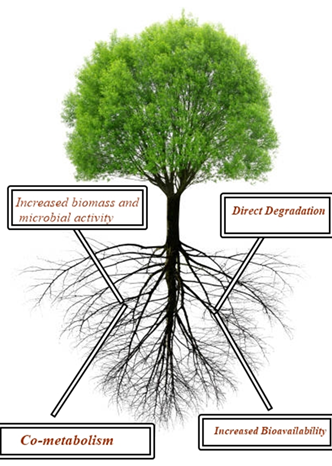
Soil bacteria are very vital and they are frequently used in production of crop. Chemical dialogues between bacteria and plant roots result in the proliferation and biofilm formation of plant growth promoting and contaminant degrading bacteria. Plant-bacterial interactions in the rhizosphere are the determinants of plant health and soil fertility. Plant growth promoting rhizobacteria (PGPR) which is also known as plant health promoting rhizobacteria (PHPR) or nodule promoting rhizobacteria (NPR). It can benefit the host plant directly by enhancing plant growth or indirectly by producing hydrolytic enzymes and by priming plant defence. This review elaborates the effect of plant and bacterial products on the remediation of contaminated soil.
Downloads
Downloads
Published
How to Cite
Issue
Section
License
BSR follows an open-access publishing policy and full text of all published articles is available free, immediately upon publication of an issue. The journal’s contents are published and distributed under the terms of the Creative Commons Attribution 4.0 International (CC-BY 4.0) license. Thus, the work submitted to the journal implies that it is original, unpublished work of the authors (neither published previously nor accepted/under consideration for publication elsewhere). On acceptance of a manuscript for publication, a corresponding author on the behalf of all co-authors of the manuscript will sign and submit a completed the Copyright and Author Consent Form.