JNC 8 Guideline Adherence and Systolic Blood Pressure Outcomes: Real-world Evidence from Sri Lanka
DOI:
https://doi.org/10.32350/cpr.41.06Keywords:
blood pressure control, hypertension, Joint National Committee guidelines, prescribing patterns, primary care, Sri LankaAbstract
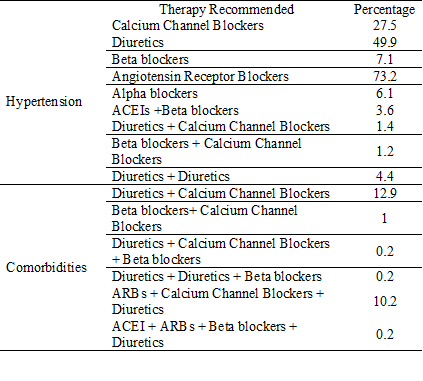
Hypertension is a leading cause of cardiovascular morbidity globally, including Sri Lanka. Data on prescribing pattern adherence to Joint National Committee (JNC 8) guidelines in Sri Lankan primary care remains limited. The aim of this study was to evaluate antihypertensive prescribing patterns according to JNC 8 guidelines. Furthermore, the study also intended to assess Blood Pressure (BP) control among hypertensive patients at a primary care hospital in Kandy, Sri Lanka. A retrospective cross-sectional study was conducted among 411 hypertensive patients attending the primary care hospital, Ududumbara, Kandy, Sri Lanka, using prescription records abstracted over a one-month period (November 2025). Prescribing patterns were assessed against JNC 8 criteria using a structured data collection tool. JNC 8 guideline adherence was found to be high at 92%. Most patients (59.4%) received combination therapy. The most commonly prescribed drug classes were Angiotensin Receptor Blockers (ARBs) and diuretics. Systolic Blood Pressure (SBP) control was achieved in 82.7% of patients. Diabetes mellitus was identified as an independent predictor of poor BP control (OR = 0.504, 95% CI: 0.293–0.847, p = 0.012). This study revealed high adherence to JNC 8 prescribing guidelines. Additionally, the study also discovered that SBP control was achieved in most patients, though nearly one-fifth remained uncontrolled within the recommended targets in this rural Sri Lankan population. The association between diabetes and BP control highlights the need for intensified treatment strategies. As a retrospective cross-sectional analysis, these associations should not be interpreted as causal. Health systems should complement prescriber education with patient-centered interventions and expedited protocols for diabetic hypertensives.
Downloads
References
1. World Health Organization. Global Report on Hypertension 2025: High Stakes—Turning Evidence Into Action. World Health Organization; 2025. https://www.who.int/publications/i/item/9789240115569
2. Jobe M, Mactaggart I, Bell S, et al. Prevalence of hypertension, diabetes, obesity, multimorbidity, and related risk factors among adult Gambians: a cross-sectional nationwide study. Lancet Glob Health. 2024;12(1):e55–e65. https://doi.org/10.1016/S2214-109X(23)00508-9
3. Takase M, Hirata T, Nakaya N, et al. Associations of combined genetic and lifestyle risks with hypertension and home hypertension. Hypertens Res. 2024;47(8):2064–2074. https://doi.org/10.1038/s41440-024-01705-8
4. Grave C, Bonaldi C, Carcaillon-Bentata L, et al. Burden of cardio-cerebrovascular and renal diseases attributable to systolic hypertension in France in 2021. Hypertension. 2025;82(2):357–369. https://doi.org/10.1161/HYPERTENSIONAHA.124.23760
5. Shankpal PD, Lohi SM, Karande S, Bonde VN. A study of the prescription patterns of antihypertensive drugs in patients attending the outpatient department of medicine at a tertiary care hospital. Cureus. 2025;17(7):e88270. https://doi.org/10.7759/cureus.88270
6. Ranasinghe P, Perera T, Liyanage S, Manchanayake M, Rupasinghe N, Webb DJ. Hypertension in Sri Lanka: a systematic review of prevalence, control, care delivery and challenges. J Hypertens. 2025;43(3):371–386. https://doi.org/10.1097/HJH.0000000000003953
7. Hashmi M, Mumtaz T. Antihypertensive drugs’ prescribing pattern in hypertensive patients and adherence with JNC guidelines. Wah Academia Journal of Health and Nutrition. 2025;1(3):24–31. https://doi.org/10.63954/fgm0bc82
8. World Health Organization. Introduction to Drug Utilization Research. World Health Organization; 2003. https://www.who.int/publications/i/item/8280820396
9. Nwosu IC, Okonjo EP. Antihypertensive prescribing patterns and JNC-8 guideline compliance in a Southern Nigeria healthcare setting. Research Journal of Nursing and Clinical Practice. 2024;12(1):16–25. https://doi.org/10.5281/zenodo.13880386
10. Suthar KM, Dumra GH. Drug utilization study of anti-hypertensive drugs and prescription pattern adherence with joint national committee-8 guideline. Int J Basic Clin Pharmacol. 2022;11(3):262–266.
https://doi.org/10.18203/2319-2003.ijbcp20221042
11. Halboup AM, Othman GQ, Battah MM, Alzoubi KH, Sallom H. Awareness of physicians in Yemen toward high blood pressure management according to the eighth joint national committee (JNC 8) guideline. Int J Gen Med. 2020;13:529–537. https://doi.org/10.2147/IJGM.S265118
12. Prabahar K. Comparison of prescription patterns of antihypertensives in the geriatric population with JNC 8 guidelines. J Appl Pharm Sci. 2021;11(10):88–92. https://doi.org/10.7324/JAPS.2021.1101012
13. Panda J, Jena R, Mickey AR, Pradhan SK. Prescription patterns and comorbidities in hypertensive patients: a prospective study in Odisha. Journal of Contemporary Clinical Practice. 2025;11(1):119–126. https://doi.org/10.61336/jccp/25-01-16
14. Mahdavi M, Parsaeian M, Mohajer B, et al. Insight into blood pressure targets for universal coverage of hypertension services in Iran: the 2017 ACC/AHA versus JNC 8 hypertension guidelines. BMC Public Health. 2020;20:347. https://doi.org/10.1186/s12889-020-8450-1
15. Selvaskanthan K, Ghetheeswaran S, Kumanan T, Rajeshkannan N. A descriptive study on prescription pattern of antihypertensive medications in a tertiary care hospital in Northern Sri Lanka. Sri Lanka J Med. 2021;30(2):156–170. https://doi.org/10.4038/sljm.v30i2.294
16. Tomas A, Tomić Z, Milijašević B, et al. Patterns of prescription antihypertensive drug utilization and adherence to treatment guidelines in the city of Novi Sad. Vojnosanit Pregl. 2016;73(6):531–537. https://doi.org/10.2298/VSP141119047T
17. Khan Z, Gul A, Mlawa G, et al. Statins as anti-hypertensive therapy: a systematic review and meta-analysis. Cureus. 2024;16(4):e57825. https://doi.org/10.7759/cureus.57825
18. Venkataraman R, Rashid M, Shashikantha B, et al. Prescribing pattern of antihypertensive medication and adherence to Joint National Commission-8 guidelines in a rural tertiary care Indian teaching hospital. J Basic Clin Physiol Pharmacol. 2020;31(1):20190133. https://doi.org/10.1515/jbcpp-2019-0133
19. Pirasath S, Sundaresan T. Descriptive cross-sectional study on knowledge, awareness and adherence to medication among hypertensive patients in a tertiary care center, Eastern Sri Lanka. SAGE Open Med. 2021;9:20503121211012497. https://doi.org/10.1177/20503121211012497
20. Michael S. Improving Hypertension Management in the Family Care Practice Through the Education of Clinical Staff on JNC-8 Guidelines. DNP project. Arkansas State University; 2024. https://arch.astate.edu/dnp-projects/88/
21. James PA, Oparil S, Carter BL, et al. 2014 evidence-based guideline for the management of high blood pressure in adults: report from the panel members appointed to the Eighth Joint National Committee (JNC 8). JAMA. 2014;311(5):507–520. https://doi.org/10.1001/jama.2013. 284427
22. Abrahamowicz AA, Ebinger J, Whelton SP, Commodore-Mensah Y, Yang E. Racial and ethnic disparities in hypertension: barriers and opportunities to improve blood pressure control. Curr Cardiol Rep. 2023;25(1):17–27. https://doi.org/10.1007/s11886-022-01826-x
23. Muxfeldt ES. Blood pressure control and therapeutic adherence—the challenges of hypertension. Int J Cardiovasc Sci. 2021;34(4):409–410. https://doi.org/10.36660/ijcs.20210172
24. Mohan PL, Nadishaa TK, Dilip C. Appraising the compliance to Joint National Committee-8 guidelines for antihypertensives in a teaching hospital by drug utilization evaluation method and impact of patient counselling. J Pharm Health Serv Res. 2022;13(3):246–252. https://doi.org/10.1093/jphsr/rmac030
25. Wijewickrama ES, Weerasinghe D, Sumathipala PS, Horadagoda C, Lanarolle RD, Sheriff RMH. Epidemiology of chronic kidney disease in a Sri Lankan population: experience of a tertiary care center. Saudi J Kidney Dis Transpl. 2011;22(6):1289–1293.
26. Niriayo YL, Girmay S, Tesfay N, Gidey K, Asgedom SW. Therapeutic inertia and contributing factors among ambulatory patients with hypertension. BMC Cardiovasc Disord. 2024;24:523.
https://doi.org/10.1186/s12872-024-04109-1
27. Williams B, Mancia G, Spiering W, et al. 2018 ESC/ESH guidelines for the management of arterial hypertension. J Hypertens. 2018;36(10):1953–2041. https://doi.org/10.1097/HJH.0000000000001940
28. Laba TL, Hayes A, Lo S, et al. An economic case for a cardiovascular polypill? A cost analysis of the Kanyini GAP trial. Med J Aust. 2014;201(11):671–673. https://doi.org/10.5694/mja14.00266
29. Chaminda JLP, Kularatna S, Dharmagunawardene D, et al. Health system interventions for the cost containment of drugs used for cardiovascular diseases: a systematic review and exploration of how the results could be adapted to the Sri Lankan context. Glob Health J. 2024;8(4):181–189. https://doi.org/10.1016/j.glohj.2024.11.005
Downloads
Published
How to Cite
Issue
Section
License
Copyright (c) 2026 Zainab Razeen, Fawas Hakeem, Yumna Fouzer, Hasna Faris , Ali Akhtar, Hazmath Shakeenah, Waqas Akram

This work is licensed under a Creative Commons Attribution 4.0 International License.
Authors retain copyright and grant the journal right of first publication with the work simultaneously licensed under a Creative Commons Attribution (CC-BY) 4.0 License that allows others to share the work with an acknowledgement of the work’s authorship and initial publication in this journal