
Portable Qur’ānic Inscriptions in Kazakh Culture: from Daily Use to Museum and Library Collections
DOI:
https://doi.org/10.32350/jitc.162.20Keywords:
miniature Qur’ān, Qur’ānic Inscriptions, Arabic, artifacts, Kazakh culture, Islamic culture, apotropaic purposeAbstract
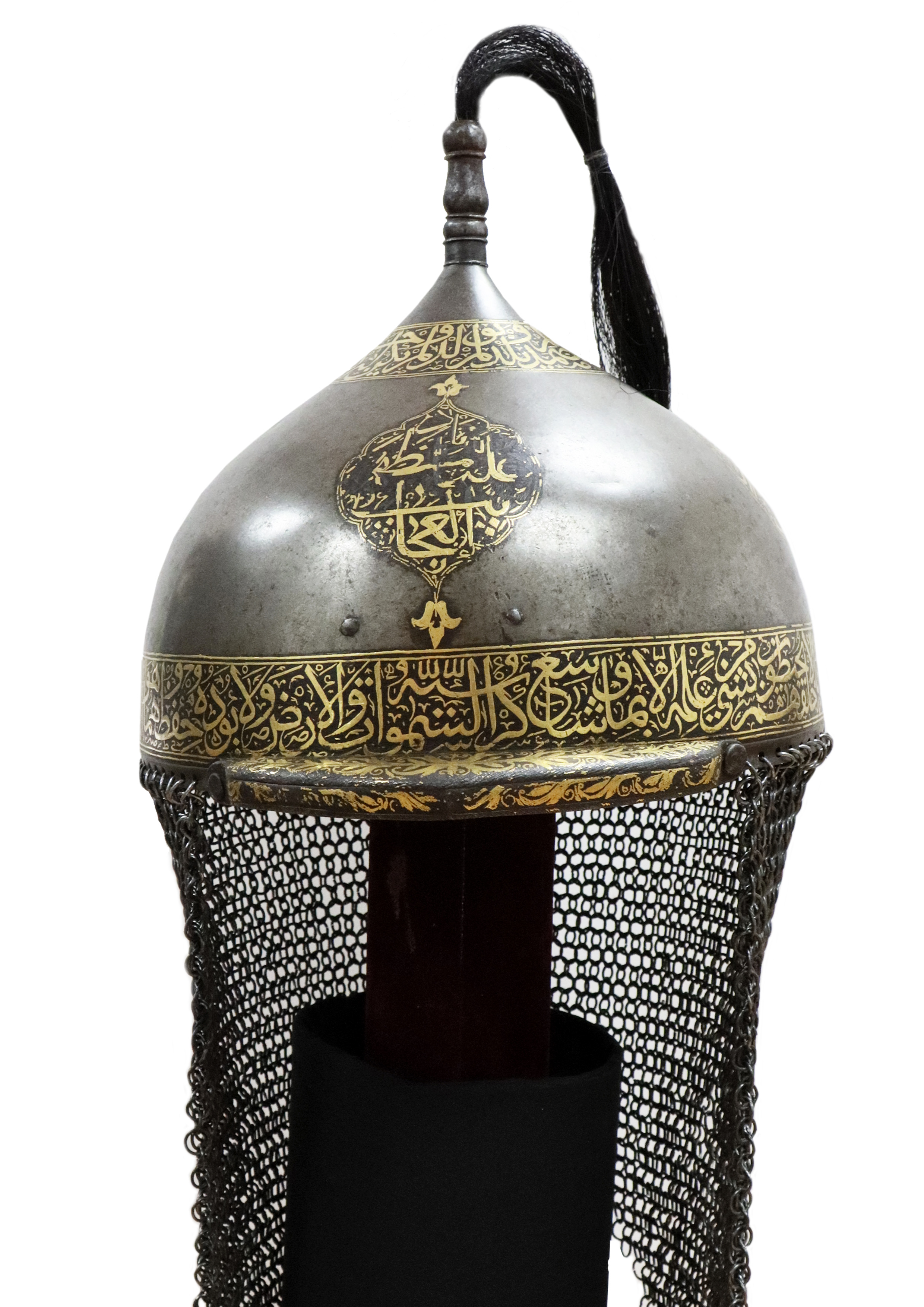
Studies of traditional Kazakh culture often portray their customs, rituals, and worldview as being closely linked with Islam. In these works, the elements of the Islamic faith are treated as a cultural layer adapted to the nomadic way of life. However, the specific ways in which Qur’ānic texts were applied in daily life of Kazakhs – particularly their material, apotropaic, and sacred functions – have not been thoroughly researched. Among the various influences on Kazakh folk art, Islam and its sacred text, the Qur’ān, occupy a particularly a significant role. The article examines material objects of traditional Kazakh culture which contain Qur’ānic text. These artefacts differ from other items also held in libraries and museums in Kazakhstan in their portability – that is, they were carried by their owners. A second distinctive is their connection to Islam. Thirdly, they are practical items which saw regular use and served a dual function, usually possessing an apotropaic feature. The first group of artifacts consists of miniature Qur’āns, and the second contains personal items, inscribed passages from the Qur’ān. Despite the Soviet Union’s atheistic policy, these artifacts were preserved through that period and transferred to state institutions for safekeeping. In addition to the primary functions of these artifacts – educational, aesthetic, or military – this study identified an additional function of healing and protecting. Serving an apotropaic purpose, they combined every day and ritual significance. All the examined wearable items were made of durable materials suitable for constant use and adapted to the local nomadic culture.
Downloads
References
Agatay, Otkirbay M., Akmaral G. Ibrayeva, Olzhas D. Mysyr, and Sayalbek M. Gizzatov. “Battle Helmets in Kazakh Heroic Epics.” Bylye Gody 20, no. 4 (2025): 1625–1636. https://doi.org/10.13187/bg.2025.4.1625.
Argynbayev, Khalel. Qazaq xalqynyñ qolöneri [The Art of the Kazakh People]. Almaty: Oner, 1987.
Balamir, Figen., and Selman Yılmaz. “Religious Healing in the Modern World: Faith, Culture, and Social Dynamics.” Religions 16, no. 7 (2025): 883. https://doi.org/10.3390/rel16070883.
Bekmakhanov, Ermukhan. Kazakhstan v 20–40 gody XIX veka [Kazakhstan in the 1820s–1840s]. Almaty: Kazakh University, 1992.
Beltenov, Zhasulan. “Arabographic Epigraphic Data on Old Relics (Based on the Materials of the CSM of the RK).” History of the Homeland 99, no. 3 (2022): 5–18. https://doi.org/10.51943/1814-6961_2022_3_5.
Blair, Sheila S., and Jonathan Bloom. “Inscriptions in Art and Architecture.” In The Cambridge Companion to the Qur’ān, edited by Jane Dammen McAuliffe, 163–178. Cambridge: Cambridge University Press, 2006. https://doi.org/10.1017/CCOL0521831601.009.
Blair, Sheila S., Islamic Inscriptions. Edinburgh: Edinburgh University Press, 1998. https://www.jstor.org/stable/10.3366/j.ctvxcrq3p.
—. “Inscribing God’s Word: Qur’ānic Texts on Architecture, Objects, and Other Solid Supports.” In The Oxford Handbook of Qur’anic Studies, edited by Mustafa Shah and Muhammad Abdel Haleem, 239–254. Oxford: Oxford University Press, 2020. https://doi.org/10.1093/oxfordhb/9780199698646.013.15.
Bobrov, Leonid A., and Daniyar Ismailov. “A Central Asian Helmet from the Northern Kazakhstan Regional Museum.” Archaeology, Ethnology & Anthropology of Eurasia 47, no. 1 (2019): 113–118. https://doi.org/10.17746/1563-0110.2019.47.1.113-118.
Bromer, Anne C., and Julian I. Edison. Miniature Books: 4,000 Years of Tiny Treasures. New York: Abrams in association with the Grolier Club, 2007. https://openscholarship.wustl.edu/books/31/.
Calgaro, Ilaria., Antonina Sergeevna Yermolayeva, and Miljana Radivojević. “In the Heat of the Furnaces: 300 Years of Metalmaking at Bronze Age Taldysai, Central Kazakhstan.” Antiquity (2026): 1–19. https://doi.org/10.15184/aqy.2026.10390.
Coffey, Heather. “Between Amulet and Devotion: Islamic Miniature Books in the Lilly Library.” In The Islamic Manuscript Tradition: Ten Centuries of Book Arts in Indiana University Collections, edited by Christiane Gruber, 78–115. Bloomington: Indiana University Press, 2010. https://doi.org/10.2307/j.ctt2005ssv.8.
Déroche, François., and Claire Juvin. “Introduction.” Journal of Material Cultures in the Muslim World 4, no. 1 (2023): 1–8. https://doi.org/10.1163/26666286-12340037.
Hammed, Ursula. “Arabic Magical Texts in Original Documents: A Papyrologist Answers Five Questions You Always Wanted to Ask.” In Amulets and Talismans of the Middle East and North Africa in Context: Transmission, Efficacy and Collections, edited by Marcela A. Garcia Probert, and Petra M. Sijpesteijn, 211–229. Leiden: Brill, 2022. https://doi.org/10.1163/9789004471481_010.
Kazani, Zahra. “Between the Foreign and the Familiar: A Qurʾan Manuscript and Its Later English Annotations at the East India Company.” Journal of Islamic Manuscripts 11, no. 3 (2020): 373–409. https://doi.org/10.1163/1878464X-01103004.
Keane, Webb. “The Evidence of the Senses and the Materiality of Religion.” Journal of the Royal Anthropological Institute 14, no. S1 (2008): S110–S127. https://doi.org/10.1111/j.1467-9655.2008.00496.x.
Kenzheakhmetuly, Seit. Kazakh Customs and Traditions. Almaty: Atamura, 2013.
Kiyanrad, Sarah. “Sasanian Amulet Practices and Their Survival in Islamic Iran and Beyond.” Der Islam 95, no. 1 (2018): 65–90. https://doi.org/10.1515/islam-2018-0003.
Klyashtorny, Sergey G., and Tursun I. Sultanov. Kazakhstan: Letopis’ trekh tysyacheletii [Kazakhstan: Chronicle of Three Millennia]. Alma-Ata: Rauan, 1992.
Kurbanova, Dilafruz., Zukhra Dosmetova, Usmon Karabaev, Eshmamat Khaitov, Noila Nabieva, and Gulkhayo Abdullaeva. “Museum Artifacts as Linguistic Archives: Exploring Linguistic Insights from Timurid Artifacts.” Jurnal Arbitrer 12, no. 4 (2025): 628–647. https://doi.org/10.25077/ar.12.4.628-647.2025.
Leemhuis, Fred. “From Palm Leaves to the Internet.” In The Cambridge Companion to the Qur’ān, edited by Jane Dammen McAuliffe, 145–162. Cambridge: Cambridge University Press, 2006. https://doi.org/10.1017/CCOL0521831601.008.
Margulan, Alkey Kh., Kazakhskoye narodnoe prikladnoe iskusstvo [Kazakh Folk Applied Art]. Alma-Ata: Oner, 1986.
—. Kazakhskoye narodnoe prikladnoe iskusstvo [Kazakh Folk Applied Art]. Vol. 3. Almaty: Oner, 1994.
McGuire, Meredith B., Lived Religion: Faith and Practice in Everyday Life. New York: Oxford University Press, 2008. https://doi.org/10.1093/acprof:oso/9780195172621.001.0001.
Meyer, Birgit., David Morgan, Crispin Paine, and S. Brent Plate. “The Origin and Mission of Material Religion.” Religion 40, no. 3 (2010): 207–211. https://doi.org/10.1016/j.religion.2010.01.010.
Muminov, Alisher K. “Kazakhskie khodzhi [Kazakh Khojas].” Shygys, no. 1 (2004): 229–235.
Mustafayeva, Anar., Shynar Kaliyeva, Rashid Mukhitdinov, and Yktiyar Paltore. “The Formation and Evolution of Islamic Studies Educational Program in Kazakhstan through the Integration of Local Culture and Secular Principles.” Ulumuna 29, no. 1 (2025): 543–574. https://doi.org/10.20414/ujis.v29i1.1458.
Mustafayeva, Anar., Yktiyar Paltore, Meruyert Pernekulova, and Meirim Issakhanova. “Islamic Higher Education as a Part of Kazakhs’ Cultural Revival.” Journal of Ethnic and Cultural Studies 10, no. 3 (2023): 103–127. https://doi.org/10.29333/ejecs/1515.
Myrvold, Kristina., and Andreas Johansson. “Miniature Qurans in the First World War: Religious Comforts for Indian Muslim Soldiers.” Postscripts: The Journal of Sacred Texts, Cultural Histories, and Contemporary Contexts 9, nos. 2–3 (2019): 194–221. https://doi.org/10.1558/post.35862.
Myrvold, Kristina., and Dorina Miller Parmenter. “Religious Miniature Books: Introduction and Overview.” Postscripts: The Journal of Sacred Texts, Cultural Histories, and Contemporary Contexts 9, nos. 2–3 (2019): 93–103. https://doi.org/10.1558/post.37754.
Nieber, Hanna. “Authority with Textual Materials—Power of the Written Qur’ān.” Material Religion 20, no. 1 (2024): 51–72. https://doi.org/10.1080/17432200.2024.2303905.
Nurtazina, Nazira D. “Islam in the History of Kazakhstan: New Approaches and Findings from 30 Years of Independence (1991–2021).” Journal of History 102, no. 3 (2021): 3–11. https://doi.org/10.26577/JH.2021.v102.i3.01.
—. Islam i genezis kazakhskoi musul’manskoi traditsii [Islam and the Genesis of the Kazakh Muslim Tradition]. Astana: Muftiyat, 2024.
Orsi, Robert A. “Is the Study of Lived Religion Irrelevant to the World We Live In? Special Presidential Plenary Address, Society for the Scientific Study of Religion, Salt Lake City, November 2, 2002.” Journal for the Scientific Study of Religion 42, no. 2 (2003): 169–174. https://doi.org/10.1111/1468-5906.t01-1-00170.
Peacock, A. C. S. “The Rise of New Epigraphic Languages in the Medieval Islamic East: The Interplay of Persian, Turkish and Arabic on Inscriptions.” In Inscriptions of the Medieval Islamic World, edited by Bernard O’Kane, A. C. S. Peacock, and Mark Muehlhaeusler, 283–323. Edinburgh: Edinburgh University Press, 2023. https://doi.org/10.1515/9781474489461-017.
Privratsky, Bruce G. Muslim Turkistan: Kazak Religion and Collective Memory. Richmond, Surrey: Curzon Press, 2001. https://doi.org/10.4324/9781315028293.
Satubaldin, Abay., and Kunikey Sakhiyeva. “The Museum System of Modern Kazakhstan: Classification and Typology of Museums.” Muzeológia a Kultúrne Dedičstvo 9, no. 2 (2021): 79–89. https://doi.org/10.46284/mkd.2021.9.2.5.
Schaefer, Karl R. “The Material Nature of Block Printed Amulets: What Makes Them Amulets?.” In Amulets and Talismans of the Middle East and North Africa in Context: Transmission, Efficacy and Collections, edited by Marcela A. Garcia Probert and Petra M. Sijpesteijn, 180–208. Leiden: Brill, 2022. https://doi.org/10.1163/9789004471481_009.
Su, Bihai. Qazaq madenietinin tarihy [History of Kazakh Culture]. Almaty: Dauir-Kitap, 2013.
Suslova, Svetlana V., and Larisa N. Donina. “Yuvelirnye ukrasheniya volgo-ural’skikh tatar v kontekste etnokul’turnykh traditsii Evrazii: itogi etnologo-tekhnologicheskogo issledovaniya [Jewelry of the Volga-Ural Tatars in the Context of the Ethnocultural Traditions of Eurasia: Results of an Ethnological and Technological Study].” Narody i religii Evrazii 30, no. 2 (2025): 40–58. https://doi.org/10.14258/nreur(2025)2-02.
Valikhanov, Chokan. “O musul’manstve v stepi [On Islam in the Steppe].” In Sobranie sochinenii, vol. 4. Almaty: Alatau, 2018.
Zholdassuly, Talgat. “A Practice Against Islam in Soviet Kazakhstan: The League of Militant Atheists.” Türk Kültürü ve Hacı Bektaş Veli Araştırma Dergisi, no. 96 (2020): 531–556. https://doi.org/10.34189/hbv.96.024.
Downloads
Published
How to Cite
Issue
Section
License
Copyright (c) 2026 Shynar Kaliyeva, Anar Mustafayeva, Yktiyar Paltore, Yerkinbek Shokay

This work is licensed under a Creative Commons Attribution 4.0 International License.

This work is licensed under a Creative Commons Attribution 4.0 International License. Authors retain copyright and grant the journal right of first publication with the work simultaneously licensed under a Creative Commons Attribution (CC-BY) 4.0 License that allows others to share the work with an acknowledgement of the work’s authorship and initial publication in this journal.




Funding data
-
Ministry of Education and Science of the Republic of Kazakhstan
Grant numbers BR28712621







.png)