Development of Chitosan-Based Antimicrobial and Fluid-Repellent Cotton Fabric for Eco-Friendly Surgical Gowns
DOI:
https://doi.org/10.32350/jdt.51.05Keywords:
antibacterial, chitosan, cotton, fluid repellent, RUCO-BAC MED, RUCO-GUARD AFR, surgical gownAbstract
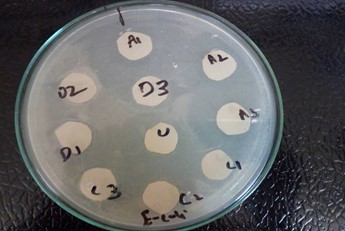
Bacteria and other hazardous substances are produced onto the surgical gowns during various surgical operations. These undesirable substances cause problems for the medical staff and the patients as well. To avoid the production of bacteria, and to avoid the absorption of liquid contaminations, the surgical gown fabric is given both an antibacterial and fluid repellent treatment. Pure cotton fabric is used due to its properties of high absorbency, high tensile strength, comfortability, and durability. Three finishes are applied by pad dry-cure method in different concentrations onto the pure cotton fabric, including antibacterial RUCO-BAC (MED), fluid repellent RUCO-GUARD AFR, and Chitosan, to achieve antibacterial, fluid repellent, high strength, comfortable and durable effects. In this investigation, one untreated control sample and fifteen treated samples, three replicates for each finish combination, were examined. The following standardized test procedures were used to evaluate the treated cotton fabric: AATCC 147 (qualitative zone of inhibition test) for antibacterial activity, ISO 22958:2005 (water resistance to penetration through impact) for fluid repellency, ASTM D737-96 for air permeability, ISO 13934-2 (constant rate of extension method) for tensile strength, and the cup method for moisture vapor transmission rate (MVTR) to determine breathability. Chitosan-treated samples exhibited improved breathability and moisture management due to their hydrophilic nature, whereas repellent-treated samples showed reduced vapor transmission, where the OMMC value was ‘0’ because of pore blockage within the fabric structure. Air permeability and tensile strength tests demonstrated that the applied finishes maintained acceptable comfort and mechanical properties of the cotton fabric. Among all formulations, the chitosan (2 g/L) and RUCO-GUARD AFR (30 g/L) combination showed the best performance across all evaluated parameters, with acceptable antibacterial activity, sufficient fluid repellency, adequate air permeability, and maintained tensile strength. Hence, Chitosan and RUCO-GUARD AFR (repellent) treated cotton fabric exhibited superior antimicrobial activity along with sufficient repellency, better tensile strength, air permeability, and MVTR as compared to the fabric treated with RUCO-BACMED (antibacterial) in combination with RUCO-GUARD AFR (repellent). Basically, chitosan is a natural eco-friendly substance and does not cause any degradation in the environment while the other finishes were fluorine based, which is carcinogenic and toxic in nature, causing various harmful diseases. So, chitosan is the preferred material to utilize in the manufacturing of surgical gowns. The developed fabric can be effectively utilized in eco-friendly surgical gowns to provide protection, hygiene, and comfort for healthcare professionals.
Downloads
References
[1] G. Shalini and D. Anitha, “A review: Antimicrobial property of textiles,” Int. J. Sci. Res. (IJSR), vol. 5, no. 10, pp. 766–768, Oct. 2016.
[2] K. E. van Nieuwenhuizen, H. J. Friedericy, S. van der Linden, F. W. Jansen, and A. C. van der Eijk, “User experience of wearing comfort of reusable versus disposable surgical gowns and environmental perspectives: A cross-sectional survey,” BJOG, vol. 131, no. 5, pp. 709–715, Apr. 2024, https://doi.org/10.1111/1471-0528.17685.
[3] E. K. Gebeyehu et al., “Antibacterial and physicomechanical properties of cellulosic nonwovens functionalized with chitosan: A study on interaction effects of influencing factors and assessment methods,” Bioresour. Bioprocess., vol. 12, art. no. 11, Feb. 2025, https://doi.org/10.1186/s40643-025-00843-2.
[4] A. Caliaro, A. Pontirolli, F. Canzan, and E. Ambrosi, “The effect of textiles and their management on healthcare-associated infections: A scoping review,” Am. J. Infect. Control, vol. 54, no. 2, pp. 210–221, Feb. 2026, https://doi.org/10.1016/j.ajic.2025.08.027.
[5] K. L. Hatch, “Chemicals and textiles: Part I: Dermatological problems related to fiber content and dyes,” Text. Res. J., vol. 54, no. 10, pp. 664–682, Oct. 1984, https://doi.org/10.1177/004051758405401005.
[6] S. K. Chinta and K. V. Veena, “Significance of textiles in surgical gowns,” Int. J. Eng. Res. Technol. (IJERT), vol. 1, no. 7, pp. 1–8, Sep. 2012.
[7] W. P. Virgin and H. Wakeham, “Cotton quality and fiber properties: Part IV. The relation between single fiber properties and the behavior of bundles, slivers, and yarns,” Text. Res. J., vol. 26, no. 3, pp. 177–191, Mar. 1956, https://doi.org/10.1177/004051755602600302.
[8] J. N. Grant, R. S. Orr, and R. D. Powell, “Cotton fiber structure and physical properties altered by environment,” Text. Res. J., vol. 36, no. 5, pp. 432–440, May 1966, https://doi.org/10.1177/004051756603600506.
[9] K. Klinkhammer, H. Hohenbild, M. T. Hoque, L. Elze, H. Teshay, and B. Mahltig, “Functionalization of technical textiles with chitosan,” Textiles, vol. 4, no. 1, pp. 70–90, Feb. 2024, https://doi.org/10.3390/textiles4010006.
[10] A. S. Aly, A. Hashem, and S. S. Hussein, “Utilization of chitosan citrate as crease-resistant and antimicrobial finishing agent for cotton fabric,” Indian J. Fibre Text. Res., vol. 29, no. 2, pp. 218–222, Jun. 2004.
[11] A. E. Sunder, N. K. Palaniswamy, and G. Nalankilli, “Protective finishes on cotton textiles using chitosan,” Sci. Int. (Lahore), vol. 26, no. 2, pp. 709–715, 2014.
[12] R. Rajendran, C. Balakumar, J. Kalaivani, and R. Sivakumar, “Dyeability and antimicrobial properties of cotton fabrics finished with Punica granatum extracts,” J. Text. Apparel Technol. Manag., vol. 7, no. 2, pp. 1–12, Dec 2011.
[13] L. Teufel and B. Redl, “Improved methods for the investigation of the interaction between textiles and microorganisms,” Lenzinger Ber., vol. 85, pp. 54–60, 2006.
[14] S. Das and V. K. Kothari, “Moisture vapour transmission behaviour of cotton fabrics,” Indian J. Fibre Text. Res., vol. 37, no. 2, pp. 151–156, Jun. 2012.
[15] N. Liu et al., “Effect of MW and concentration of chitosan on antibacterial activity of Escherichia coli,” Carbohydr. Polym., vol. 64, no. 1, pp. 60–65, Apr. 2006, https://doi.org/10.1016/j.carbpol.2005.10.028.
[16] H. Liu, Y. Du, X. Wang, and L. Sun, “Chitosan kills bacteria through cell membrane damage,” Int. J. Food Microbiol., vol. 95, no. 2, pp. 147–155, Sep. 2004, https://doi.org/10.1016/j.ijfoodmicro.2004.01.022.
[17] Y.-C. Chung et al., “Relationship between antibacterial activity of chitosan and surface characteristics of cell wall,” Acta Pharmacol. Sin., vol. 25, no. 7, pp. 932–936, Jul. 2004.
[18] H.-A. Kim, “Water repellency/proof/vapor permeability characteristics of coated and laminated breathable fabrics for outdoor clothing,” Coatings, vol. 12, no. 1, art. no. 12, Jan. 2022, https://doi.org/10.3390/coatings12010012.
[19] S. Wang and Y. Jing, “Effects of a chitosan coating layer on the surface properties and barrier properties of kraft paper,” BioResources, vol. 11, no. 1, pp. 1868–1881, 2016, https://doi.org/10.15376/biores.11.1.1868-1881.
[20] American Association of Textile Chemists and Colorists, “Water repellency: Spray test,” AATCC Test Method 22-2005, in AATCC Technical Manual. Research Triangle Park, NC, USA: American Association of Textile Chemists and Colorists, 2006.
[21] R. T. Ogulata, “Air permeability of woven fabrics,” J. Text. Apparel Technol. Manag., vol. 5, no. 2, pp. 1–10, Summer 2006.
[22] Y.-M. Deng, S.-F. Wang, and S.-J. Wang, “Study on antibacterial and comfort performances of cotton fabric finished by chitosan-silver for intimate apparel,” Fibers Polym., vol. 17, no. 9, pp. 1384–1390, Oct. 2016, https://doi.org/10.1007/s12221-016-6277-2.
Downloads
Published
How to Cite
Issue
Section
License
Copyright (c) 2025 Faiza Anwar, Ahamd Fraz

This work is licensed under a Creative Commons Attribution 4.0 International License.

This work is licensed under a Creative Commons Attribution 4.0 International License. Authors retain copyright and grant the journal right of first publication with the work simultaneously licensed under a Creative Commons Attribution (CC-BY) 4.0 License that allows others to share the work with an acknowledgement of the work’s authorship and initial publication in this journal.