
Developing Critical Analysis and Argumentation Competence in Higher Education: The Role of Multimodal Pedagogy
DOI:
https://doi.org/10.32350/uer.82.02Keywords:
argumentation skills, academic writing, curriculum design, educational strategies, multimodal methods, university studentsAbstract
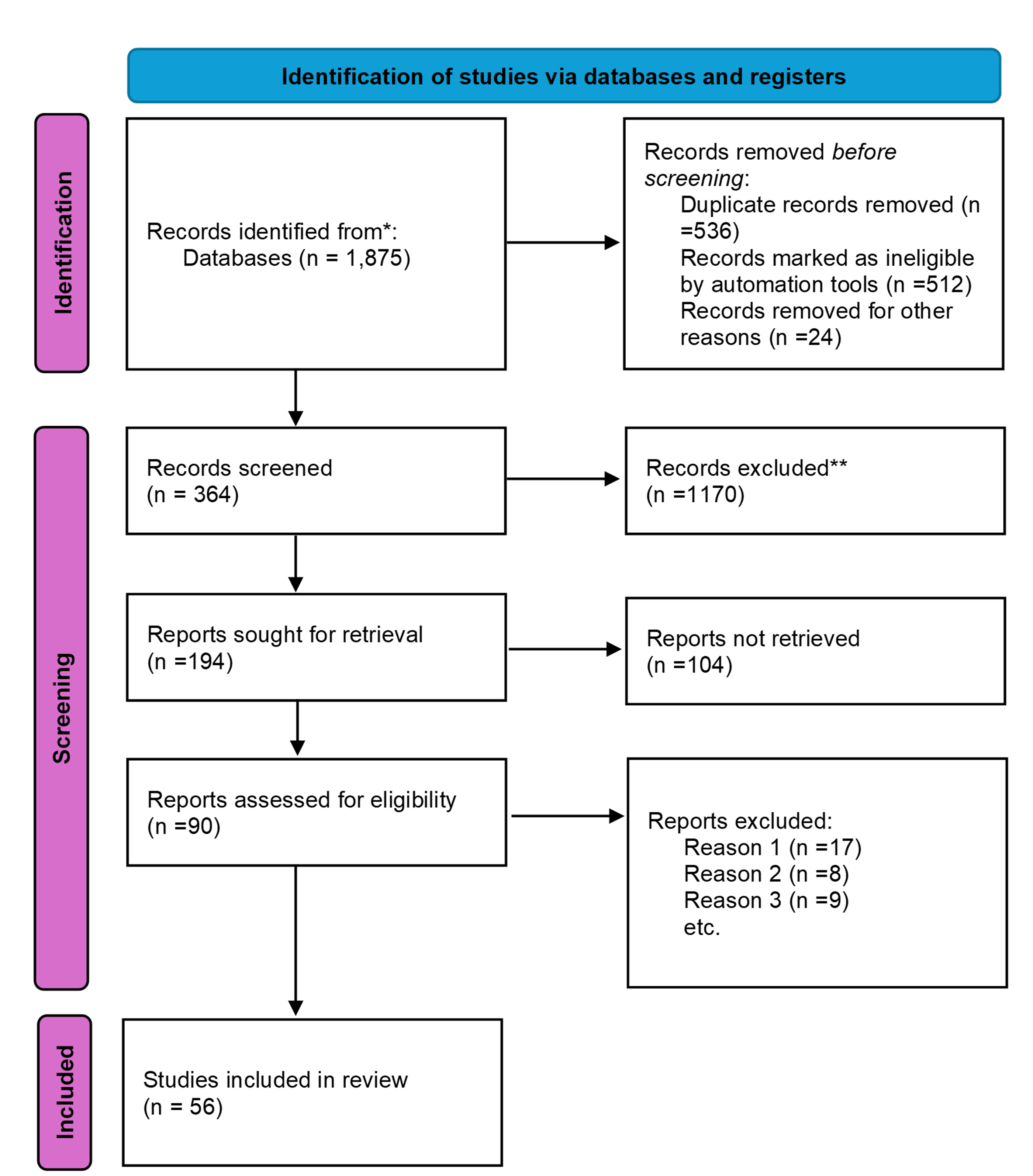
The scoping review examines how multimodal teaching methods in higher education institutions foster students' critical analysis skills, which are essential for academic argumentation. The study uses evidence from 56 peer-reviewed studies published between 2010 and 2026 to identify multimodal strategies that educational institutions used alongside their theoretical frameworks and learning outcomes. The synthesis demonstrates that teaching designs that combine visual, auditory, textual, and digital elements produce better cognitive learning outcomes than those that depend exclusively on text. The review of the studies revealed that multimodal interventions helped participants develop stronger evaluative reasoning skills, showed them how to use evidence, and enabled them to achieve greater depth in reflective judgment and to build stronger academic arguments. Digital technologies enabled these outcomes by supporting interactive learning environments and implementing inclusive practices aligned with Universal Design for Learning principles. The review shows that successful multimodal practices most commonly draw on Transformative Learning Theory and Experiential Learning Theory because both theories highlight how critical reflection and experiential learning help people develop advanced thinking skills. The study uses existing empirical evidence to show that multimodal teaching methods improve students' ability to analyse and argue in higher education, while also demonstrating the need for more longitudinal studies.
Downloads
References
Ajani, O. A., & Matiyenga, T. C. (2025). Enhancing critical analysis and argumentation skills in university students through multimodal approaches: A comprehensive study. International Journal of Educational Reform. Advance online publication. https://doi.org/10.1177/10567879251326556
Andrews, R. (2010). Argumentation in higher education: Improving practice through theory and research. Routledge.
Arksey, H., & O’Malley, L. (2005). Scoping studies: Towards a methodological framework. International Journal of Social Research Methodology, 8(1), 19–32. https://doi.org/10.1080/1364557032000119616
Bailey, R. P., Hoe, T. W., Morrison, G. Z., Ali, A., & Samsudin, N. (2026). Rethinking higher education: Embodied learning and pedagogical transformation. Higher Education, 2026, 1–21. https://doi.org/10.1007/s10734-025-01581-2
Braun, V., & Clarke, V. (2006). Using thematic analysis in psychology. Qualitative Research in Psychology, 3(2), 77–101. https://doi.org/10.1191/1478088706qp063oa
Brookfield, S. D. (2012). Teaching for critical thinking: Tools and techniques to help students question their assumptions. Jossey-Bass.
Buckingham, D. (2013). Media education: Literacy, learning and contemporary culture. Polity Press.
Carciu, O. M., & Muresan, L. M. (2024). Designing multimodal learning for developing multilingual undergraduate students' communication competences in English: A case study. In F. V. Lim & M. Querol-Julián (Eds.), Designing learning with digital technologies (pp. 185–205). Routledge.
Cope, B., & Kalantzis, M. (2015). A pedagogy of multiliteracies: Learning by design. Palgrave Macmillan.
Dalton, B. (2012). Multimodal composition and the common core state standards. The Reading Teacher, 66(4), 333–339. https://doi.org/10.1002/TRTR.01128
Gatti, L., & Procter, C. (2013). Visual analysis and critical thinking: Teaching history to the millennial generation. Journal of Educational Multimedia and Hypermedia, 22(2), 141–155.
Grant, M. J., & Booth, A. (2009). A typology of reviews: An analysis of 14 review types and associated methodologies. Health Information & Libraries Journal, 26(2), 91–108. https://doi.org/10.1111/j.1471-1842.2009.00848.x
Harun, R. N. S. R., & Singh, A. K. J. (2024). A systematic review of multimodal learning in higher education. In M. M. Asad, P. P. Churi, F. Sherwani, & R. B. Hassan (Eds.), Innovative pedagogical practices for higher education 4.0 (pp. 288–303). IGI Global. https://doi.org/10.4018/979-8-3693-6963-6.ch014
Hobbs, R. (2010). Digital and media literacy: Connecting culture and classroom. Corwin Press.
Hong, Q. N., Fàbregues, S., Bartlett, G., Boardman, F., Cargo, M., Dagenais, P., Gagnon, M., Griffiths, F., Nicolau, B., O’Cathain, A., Rousseau, M., Vedel, I., & Pluye, P. (2018). The Mixed Methods Appraisal Tool (MMAT) version 2018 for information professionals and researchers. Education for Information, 34(4), 285–291. https://doi.org/10.3233/efi-180221
Hoque, M. (2025). Multimodal literacy in higher education: University students' perspective on digital resources in English language learning [Doctoral dissertation, BRAC University]. BRAC University Institutional Repository. https://dspace.bracu.ac.bd/xmlui/handle/10361/26256?show=full
Jewitt, C. (2013). Multimodal methods for researching digital technologies. In S. Price, C. Jewitt, & B. Brown (Eds.), The SAGE handbook of digital technology research (pp. 250–265). Sage Publications.
Kolb, A. Y., & Kolb, D. A. (2017). Experiential learning theory as a guide for experiential educators in higher education. Experiential Learning & Teaching in Higher Education, 1(1), 7–44. https://doi.org/10.46787/elthe.v1i1.3362
Kolb, D. A. (1984). Experiential learning: Experience as the source of learning and development. Prentice Hall.
Kolb, D. A. (2015). Experiential learning: Experience as the source of learning and development (2nd ed.). Pearson Education.
Kress, G. (2010). Multimodality: A social semiotic approach to contemporary communication. Routledge.
Levac, D., Colquhoun, H., & O’Brien, K. K. (2010). Scoping studies: Advancing the methodology. Implementation Science, 5(1), Article e69. https://doi.org/10.1186/1748-5908-5-69
Meyer, A., Rose, D. H., & Gordon, D. (2014). Universal design for learning: Theory and practice. CAST Professional Publishing.
Mezirow, J. (2000). Learning as transformation: Critical perspectives on a theory in progress. Jossey-Bass.
Merriam, S. B., & Bierema, L. L. (2013). Adult learning: Linking theory and practice. John Wiley & Sons.
Mills, K. A. (2011). “I’m making it different to the book”: Transmediation in young children’s multimodal and digital texts. Australasian Journal of Early Childhood, 36(3), 56–65. https://doi.org/10.1177/183693911103600308
Nykyporets, S. S., Melnyk, O. D., Ibrahimova, L. V., Hadaichuk, N. M., & Derun, V. H. (2024). Advancing critical thinking skills among higher education students through English language instruction: Contemporary approaches and strategies. Prospects and Innovations of Science, 1(35), 34–45. https://doi.org/10.52058/2786-4952-2024-1(35)-34-45
Olivier, L. (2021). Multimodal composition pedagogy in higher education: A paradigm shift. Per Linguam: A Journal of Language Learning, 37(2), 13–31. https://doi.org/10.5785/37-2-970
Rahmanu, I. W. E. D., & Molnár, G. (2024). Multimodal immersion in English language learning in higher education: A systematic review. Heliyon, 10(19), Article e38357. https://doi.org/10.1016/j.heliyon.2024.e38357
Riwayatiningsih, R., Prastikawati, E. F., Muchson, M., Haqiqi, F. N., Setyowati, S., & Kartiko, D. A. (2025). Empowering higher-order thinking skills in writing through gamification and multimodal learning within PBL. Forum for Linguistic Studies, 7(2), 385–398. https://doi.org/10.30564/fls.v7i2.7111
Romero, E. D., & Bobkina, J. (2026). Epistemic, emotional, and effective stance strategies for the linguistic articulation of visual critical thinking in interculturally responsive EFL instruction. Thinking Skills and Creativity, 60, Article e102054. https://doi.org/10.1016/j.tsc.2025.102054
Rowsell, J., & Walsh, M. (2011). Rethinking literacy education in new times: Multimodality, multiliteracies, & new literacies. Brock Education: A Journal of Educational Research and Practice, 21(1), 53–62. https://doi.org/10.26522/brocked.v21i1.236.
Selwyn, N. (2016). Education and technology: Key issues and debates (2nd ed.). Bloomsbury Academic.
Serafini, F. (2014). Reading the visual: An introduction to teaching multimodal literacy. Teachers College Press.
Siregar, T. (2025). An analysis of lecturers’ pedagogical practices: Balancing higher‐and lower‐order thinking skills in higher education. Preprint.Org. https://doi.org/10.20944/preprints202510, 1231, v1.
Suri, D., Wicaksono, A., Siska, Y., Murtika, W. A., & Ryeo, P. J. (2026). Enhancing literary literacy through multimodal representations: A development study of folklore-based creative puppetry. Jurnal Pendidikan Progresif, 16(1), 158–172. https://doi.org/10.23960/jpp.v16i1.pp158-172
Taylor, E. W., & Cranton, P. (2012). The handbook of transformative learning: Theory, research, and practice. Jossey-Bass.
Wingate, M. E. (2012). The structure of stuttering: A psycholinguistic analysis. Springer Science & Business Media.
Published
How to Cite
Issue
Section
License

This work is licensed under a Creative Commons Attribution 4.0 International License.
UER follows an open-access publishing policy and full text of all published articles is available free, immediately upon publication of an issue. The journal’s contents are published and distributed under the terms of the Creative Commons Attribution 4.0 International (CC-BY 4.0) license. Thus, the work submitted to the journal implies that it is original, unpublished work of the authors (neither published previously nor accepted/under consideration for publication elsewhere). On acceptance of a manuscript for publication, a corresponding author on the behalf of all co-authors of the manuscript will sign and submit a completed Copyright and Author Consent Form.
Copyright (c) The Authors