
Effect of Inquiry-Based Teaching on Problem-Solving Skills at Secondary Level
DOI:
https://doi.org/10.32350/uer.82.04Keywords:
advance organizers, inquiry-based teaching, problem-solving skills, quasi-experimental, secondary levelAbstract
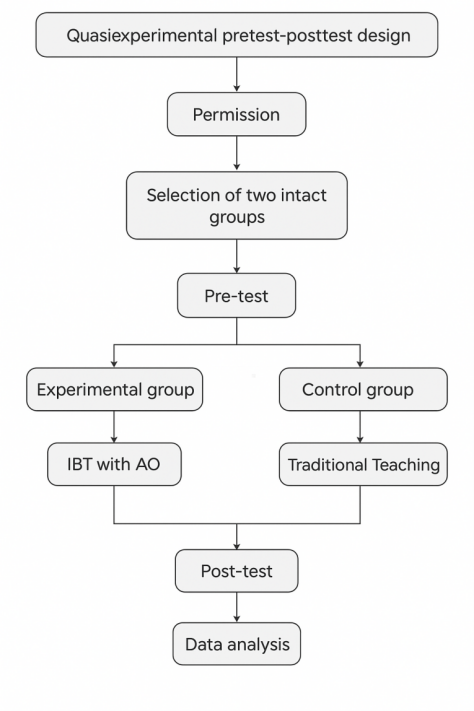
Students’ problem-solving skills can be significantly developed at secondary level when Inquiry-Based Teaching (IBT) is used in combination with Advance Organizers (AOs). Given the dynamic nature of scientific concepts, their modern applications have become increasingly relevant. The objective of this study is to contribute to educational improvement by focusing on how to better equip the students with the ability to think critically and solve problems effectively. Hence, the main objective of this study is to strengthen students’ problem-solving skills. To achieve this, a quasi-experimental design using pre- and post-tests with intact groups was adopted. Over six weeks, the experimental group received a 40-minute session (from Monday to Friday), where lessons were delivered through IBT supported by AOs specifically designed by the researchers. A test to measure problem-solving skill was developed by researchers and used as pre- and post- assessment. The data analyzed revealed that IBT using AOs has a positive effect on the problem-solving skills of the learners. It was concluded that in general, IBT with the inclusion of AOs, has a significant effect.
Downloads
References
Ausubel, D. P. (1960). The use of advance organizers in the learning and retention of meaningful verbal material. Journal of Educational Psychology, 51(5), 267–272. https://doi.org/10.1037/h0046669
Ausubel, D. P. (1968). Educational psychology: A cognitive view. Holt, Rinehart & Winston.
Banawi, A., Rumasoreng, M. I., Hasanah, N., Rahawarin, D. A., & Basta, I. (2024). The relationship between problem-solving skills and student academic achievement: A meta-analysis in education. Journal of Ecohumanism, 3(3), 1287–1299. https://doi.org/10.62754/joe.v3i3.3413
Brown, A., & White, D. (2021). Problem-solving in the 21st-century classroom: A global perspective. International Journal of Educational Development, 82, 102–374. https://doi.org/10.1016/j.ijedudev.2021.102374
Bruner, J. S. (1961). The act of discovery. Harvard Educational Review, 31(1), 21–32. https://doi.org/10.17763/haer.31.1.0314m5637730t534
Bunterm, T., Wattanathorn, J., Vangpoomyai, P., & Muchimapura, S. (2012). Impact of open inquiry in science education on working memory, saliva cortisol, and problem-solving skill. Procedia - Social and Behavioral Sciences, 46, 5387–5391. https://doi.org/10.1016/j.sbspro.2012.06.444
Cairns, D. (2025). Balancing teacher-led and student-led learning in science: The importance of cognitive load. Large-Scale Assessments in Education, 13(1), Article e27. https://doi.org/10.1186/s40536-025-00263-w
Dewey, J. (1910). How we think. D.C. Heath & Co. https://www.scribd.com/document/730461773/John-Dewey-How-we-think-D-C- Heath-1910
Dobber, M., Zwart, R., Tanis, M., & van Oers, B. (2017b). Regulating inquiry-based learning: The interplay between teacher guidance and student self-regulation. Learning and Instruction, 49, 53–62. https://doi.org/10.1016/j.learninstruc.2016.12.004
Dobber, M., Zwart, R., Tanis, M., Oers, B. (2017a). Literature review: The role of the Teacher in inquiry-based education. Educational Research Review, 22, 194–214. https://doi.org/10.1016/j.edurev.2017.09
Gunawan, G., Harjono, A., Nisyah, M., Kusdiastuti, M., & Herayanti, L. (2020). Improving students’ problem-solving skills using inquiry learning model combined with advance organizer. International Journal of Instruction, 13(4), 427–442.
Hmelo-Silver, C. E. (2004). Problem-based learning: What and how do students learn? Educational Psychology Review, 16(3), 235–266. https://doi.org/10.1023/B:EDPR.0000034022.16470.f3
Khan, R., & Rashid, S. (2019). Active learning strategies for physics classrooms: Improving problem-solving skills. International Journal of Science Education, 41(10), 1295–1313. https://doi.org/10.1080/09500693.2019.1596789
KNILT. (2008). What are some examples of advance organizers and how can they be used? The Knowledge Network for Innovations in Learning and Teaching. https://knilt.arcc.albany.edu/UNIT_2-_What_are_some_examples_of_advance_organizers_and_how_can_they_be_used%3F
Mayer, R. E. (2003). The promise of multimedia learning: Using the same instructional design methods across different media. Learning and Instruction, 13(2), 125–139. https://doi.org/10.1016/S0959-4752(02)00016-6
Nahar, L., & Machado, C. (2025). Inquiry-based learning in Bangladesh: Insights into middle and high school students’ experiences and 21st century skill development. Disciplinary and Interdisciplinary Science Education Research, 7, Article e2. https://doi.org/10.1186/s43031-025-00122-2
Nisula, A.-M., Heikkinen, A., Hynynen, S.-T., Kianto, A., Ritala, P., & Vanhala, M. (2025). Students’ problem-solving skills in-depth: Ready for “real life”? The International Journal of Management Education, 23(3), Article e101267. https://doi.org/10.1016/j.ijme.2025.101267
Novak, J. D., & Gowin, D. B. (1984). Learning how to learn: An illustrated guide for students, teachers, and parents. Cambridge University Press.
Pedaste, M., Mäeots, M., Siiman, L. A., de Jong, T., van Riesen, S. A., Kamp, E. T., & Tsourlidaki, E. (2015). Phases of inquiry-based learning: Definitions and the inquiry cycle. Educational Research Review, 14, 47–61. https://doi.org/10.1016/j.edurev.2015.02.003
Ringo, E. S., Kusairi, S., Latifah, E., & Tumanggor, A. M. R. (2019). Student’s problem solving skills in collaborative inquiry learning supplemented by formative e-assessment: Case of static fluids. Journal of Physics: Conference Series, 1397(1), Article e012012. https://doi.org/10.1088/1742-6596/1397/1/012012
Rust, P. M. H. (2011). The effects of inquiry instruction on problem solving and conceptual knowledge in ninth grade physics class (Master’s thesis, Montana State University). Montana State University Scholar Works. https://scholarworks.montana.edu/server/api/core/bitstreams/98dba1c0-7a08-467c-9460-3365b97a3379/content
Saigar, S. C. A. P., & Jamaludin, K. A. (2025). Challenges and strategies in the implementation of differentiated instruction in rural schools: A systematic literature review. International Journal of Research and Innovation in Social Science, 20(20), 6641–6660.
Selcuk, G. S., Sahin, M., & Acıkgoz, K. U. (2008). The effects of problem-based learning on problem-solving skill and self-efficacy beliefs of students. Eurasia Journal of Mathematics, Science & Technology Education, 4(1), 7–13. https://doi.org/10.1007/s11165-007-9047-6
Wang, J., & Guo, D. (2015). A study on the effects of model-based inquiry pedagogy on students’ inquiry skills in a virtual physics lab. Computers in Human Behavior, 49, 614–623. https://doi.org/10.1016/j.chb.2015.01.043
Wenning, C. J. (2011). The levels of inquiry model of science teaching. Journal of Physics Teacher Education Online, 6(2), 3–11.
Yani, S., Mochsen, A., & Karmaley, I. (2023). Effects of advance organizer-based learning on critical thinking skills. Journal of Educational Research, 116(4), 523–536. https://doi.org/10.1080/00220671.2023.2194512
Yuliati, L., Parno, Hapsari, F., Nurhidayah, I., & Halim, A. (2018). Enhancing physics problem-solving skill through guided inquiry. Journal of Science and Physics Education, 22(1), 78–85. https://doi.org/10.1088/1742-6596/1108/1/012128
Published
How to Cite
Issue
Section
License

This work is licensed under a Creative Commons Attribution 4.0 International License.
UER follows an open-access publishing policy and full text of all published articles is available free, immediately upon publication of an issue. The journal’s contents are published and distributed under the terms of the Creative Commons Attribution 4.0 International (CC-BY 4.0) license. Thus, the work submitted to the journal implies that it is original, unpublished work of the authors (neither published previously nor accepted/under consideration for publication elsewhere). On acceptance of a manuscript for publication, a corresponding author on the behalf of all co-authors of the manuscript will sign and submit a completed Copyright and Author Consent Form.
Copyright (c) The Authors