Therapeutic Potential of Phytocompounds in Medicinal Plants: A Comprehensive Overview in Treating Diseases
DOI:
https://doi.org/10.32350/bsr.82.08Keywords:
anti-aging, anti-diabetic, anti-inflammatory, hepato-protective, immunomodulatory NeuroprotectiveAbstract
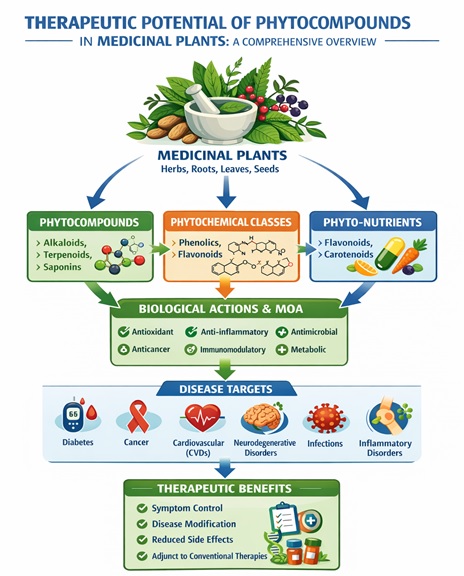
Background. Nature acts as a source of abundant bioactive compounds. These compounds hold enormous potential for use in medicine, and phytocompounds are of significance here. They consist of primary and secondary plant metabolites, which are found in different parts of the plants and have a considerable influence on human well-being. They may be phenols, alkaloids, tannins, saponins, flavonoids, glycosides, and steroids. Furthermore, these have promising effects to inhibit, treat, and cure numerous diseases when used naturally or synthetically.
Methods. This review covered almost all different classes of phytocompounds with their potential activities (i.e., antioxidants, anti-inflammatory, anti-aging, anti-cancer, anti-diabetic, anti-allergic, neuroprotective, cardio-protective, hepato-protective, renal-protective, and immunomodulatory) according to their benefits and targeted pathways. Moreover, the study also described some combination therapies of different phytocompounds. These strategies enhance the working capability of phytocompounds and help to provide a strong shield against various life-threating diseases.
Conclusion. The review provided a comprehensive information about phytocompounds and their therapeutic effectiveness. Moreover, it may serve as a starting point to discover or develop new and novel drugs in order to cure various ailments in future.
Downloads
References
1. Mathai K. Nutrition in the adult years. In: Mahan LK, Escott-Stump S, eds. Krause’s Food, Nutrition, and Diet Therapy. 10th ed. WB Saunders; 2000:271–275.
2. Hasler CM, Blumberg JB. Phytochemicals: biochemistry and physiology. Introduction. J Nutr. 1999;129(3):756S–757S. https:// doi.org/10.1093/jn/129.3.756S
3. Walton NJ, Mayer MJ, Narbad A. Vanillin. Phytochemistry. 2003;63(5):505–515.
https://doi.org/10.1016/S0031-9422(03)00134-0
4. Teiten MH, Gaascht F, Dicato M, Diederich M. Anticancer bioactivity of compounds from medicinal plants used in European medieval traditions. Biochem Pharmacol. 2013;86(9):1239–1247. https://doi.org/10.1016/j.bcp.2013.08.010
5. Zheng Z, Sun Y, Liu Z, Zhang M, Li C, Cai H. The effect of curcumin and its nanoformulation on adjuvant-induced arthritis in rats. Drug Des Devel Ther. 2015;9:4931–4942. https://doi.org/10.2147/DDDT.S90038
6. Oleszek M, Oleszek W. Saponins in Food. Springer; 2020.
7. Balkwill F, Mantovani A. Inflammation and cancer: back to Virchow? Lancet. 2001;357(9255):539–545.
https://doi.org/10.1016/S0140-6736(00)04046-0
8. Zhao R, Liang H, Clarke E, Jackson C, Xue M. Inflammation in chronic wounds. Int J Mol Sci. 2016;17(12):e2085. https://doi.org/10.3390/ijms17122085
9. Kim HG, Ju MS, Ha SK, et al. Acacetin protects dopaminergic cells against 1-methyl-4-phenyl-1,2,3,6-tetrahydropyridine-induced neuroinflammation in vitro and in vivo. Biol Pharm Bull. 2012;35(8):1287–1294. https://doi.org/10.1248/bpb.35.1287
10. Yatoo MI, Gopalakrishnan A, Saxena A, et al. Anti-inflammatory drugs and herbs with special emphasis on herbal medicines for countering inflammatory diseases and disorders: a review. Recent Pat Inflamm Allergy Drug Discov. 2018;12(1):39–58. https://doi.org/10.2174/1872213X12666171211114816
11. Wang ZL, Luo XF, Li MT, et al. Resveratrol possesses protective effects in a pristane-induced lupus mouse model. PLoS One. 2014;9(12):e114792. https://doi.org/10.1371/journal.pone.0114792
12. Kang HK, Ecklund D, Liu M, Datta SK. Apigenin, a non-mutagenic dietary flavonoid, suppresses lupus by inhibiting autoantigen presentation for expansion of autoreactive Th1 and Th17 cells. Arthritis Res Ther. 2009;11(2):eR59. https://doi.org/10.1186/ar2668
13. Guo L, Liu W, Lu T, et al. Decrease of functional activated T and B cells and treatment of glomerulonephritis in lupus-prone mice using a natural flavonoid astilbin. PLOS ONE. 2015;10(4):e0124002. https://doi.org/ 10.1371/journal.pone.0124002
14. Kim CY, Kang B, Suh HJ, Choi HS. Parthenolide, a feverfew-derived phytochemical, ameliorates obesity and obesity-induced inflammatory responses via the Nrf2/Keap1 pathway. Pharmacol Res. 2019;145:104259. https://doi.org/10.1016/j.phrs.2019.104259
15. Tsai PY, Ka SM, Chang JM, et al. Epigallocatechin-3-gallate prevents lupus nephritis development in mice via enhancing the Nrf2 antioxidant pathway and inhibiting NLRP3 inflammasome activation. Free Radic Biol Med. 2011;51(3):744–754. https://doi.org/10.1016/j.freeradbiomed.2011.05.021
16. Kumar B, Gupta SK, Srinivasan BP, et al. Hesperetin rescues retinal oxidative stress, neuroinflammation and apoptosis in diabetic rats. Microvasc Res. 2013;87:65–74. https://doi.org/10.1016/j.mvr.2013.04.006
17. Yang LP, Sun HL, Wu LM, et al. Baicalein reduces inflammatory process in a rodent model of diabetic retinopathy. Invest Ophthalmol Vis Sci. 2009;50(5):2319–2327. https://doi.org/10.1167/iovs.08-2408
18. Mehboob R. Global cancer burden and its projected growth by 2050: trends, disparities, and future implications. Pakistan J Health Sci. 2025;6(8):1–2. https://doi.org/10.54393/pjhs.v6i8.3460
19. Luo XQ, Li A, Yang X, et al. Paeoniflorin exerts neuroprotective effects by modulating the M1/M2 subset polarization of microglia/macrophages in the hippocampal CA1 region of vascular dementia rats via cannabinoid receptor 2. Chin Med. 2018;13:14. https://doi.org/10.1186/s13020-018-0164-0
20. Kim MO, Moon DO, Choi YH, et al. Platycodin D induces apoptosis and decreases telomerase activity in human leukemia cells. Cancer Lett. 2008;261(1):98–107. https://doi.org/10.1016/j.canlet.2007.11.004
21. Wang Y, Huang X, Han J, Zheng W, Ma W. Extract of Perilla frutescens inhibits tumor proliferation of HCC via PI3K/AKT signal pathway. Afr J Tradit Complement Altern Med. 2013;10(2):251–257.
https://doi.org/10.4314/ajtcam.v10i2.5
22. Huang CS, Lii CK, Lin AH, et al. Protection by chrysin, apigenin, and luteolin against oxidative stress is mediated by the Nrf2-dependent up-regulation of heme oxygenase 1 and glutamate cysteine ligase in rat primary hepatocytes. Arch Toxicol. 2013;87(1):167–178. https://doi.org/10.1007/s00204-012-0958-7
23. Wang X, Hang Y, Liu J, Hou Y, Wang N, Wang M. Anticancer effect of curcumin inhibits cell growth through miR-21/PTEN/Akt pathway in breast cancer cell. Oncol Lett. 2017;13(6):4825–4831. https://doi.org/10.3892/ol.2017.6032
24. Androutsopoulos VP, Ruparelia K, Arroo RR, Tsatsakis AM, Spandidos DA. CYP1-mediated antiproliferative activity of dietary flavonoids in MDA-MB-468 breast cancer cells. Toxicology. 2009;264(3):162–170. https://doi.org/10.1016/j.tox.2009.07.008
25. Wang P, Wang B, Chung S, Wu Y, Henning SM, Vadgama JV. Increased chemopreventive effect by combining arctigenin, green tea polyphenol and curcumin in prostate and breast cancer cells. RSC Adv. 2014;4(66):35242–35250. https://doi.org/10.1039/ C4RA04583C
26. Guo YJ, Deng GF, Xu XR, et al. Antioxidant capacities, phenolic compounds and polysaccharide contents of 49 edible macro-fungi. Food Funct. 2012;3(11):1195–1205. https://doi.org/10.1039/c2fo10261f
27. Yamada T, Hayasaka S, Shibata Y, et al. Frequency of citrus fruit intake is associated with the incidence of cardiovascular disease: the Jichi Medical School cohort study. J Epidemiol. 2011;21(3):169–175. https://doi.org/10.2188/jea.JE20100125
28. Hui Y, Chengyong T, Cheng L, Haixia H, Yuanda Z, Weihua Y. Resveratrol attenuates the cytotoxicity induced by amyloid-β(1–42) in PC12 cells by upregulating heme oxygenase-1 via the PI3K/Akt/Nrf2 pathway. Neurochem Res. 2018;43(2):297–305. https://doi.org/10.1007/s11064-017-2370-3
29. Kwon SH, Ma SX, Hwang JY, Lee SY, Jang CG. Involvement of the Nrf2/HO-1 signaling pathway in sulfuretin-induced protection against amyloid beta25–35 neurotoxicity. Neuroscience. 2015;304:14–28. https://doi.org/10.1016/j.neuroscience.2015.06.065
30. Fang J, Wang H, Zhou J, et al. Baicalin provides neuroprotection in traumatic brain injury mice model through Akt/Nrf2 pathway. Drug Des Devel Ther. 2018;12:2497–2508. https://doi.org/10.2147/DDDT.S169400
31. Xu XH, Li GL, Wang BA, et al. Diallyl trisulfide protects against oxygen glucose deprivation-induced apoptosis by scavenging free radicals via the PI3K/Akt-mediated Nrf2/HO-1 signaling pathway in B35 neural cells. Brain Res. 2015;1614:38–50. https://doi.org/10.1016/j.brainres.2015.04.006
32. Gao Y, Xu X, Chang S, et al. Totarol prevents neuronal injury in vitro and ameliorates brain ischemic stroke: potential roles of Akt activation and HO-1 induction. Toxicol Appl Pharmacol. 2015;289(2):142–154. https://doi.org/10.1016/j.taap.2015.06.013
33. Alam S, Sarker MMR, Sultana TN, et al. Antidiabetic phytocompounds from medicinal plants: prospective candidates for new drug discovery and development. Front Endocrinol (Lausanne). 2022;13:e800714.
https://doi.org/10.3389/fendo.2022.800714
34. Liu Y, Bian Y, Luo X, et al. Synergistic effect of docosahexaenoic acid or conjugated linoleic acid with caffeic acid on ameliorating oxidative stress of HepG2 cells. J Food Sci. 2021;86(7):3240–3251.
https://doi.org/10.1111/1750-3841.15887
35. Venkatesan R, Ji E, Kim SY. Phytocompounds that regulate neurodegenerative disease by targeting neurotrophins: a comprehensive review. Biomed Res Int. 2015;2015:e814068. https://doi.org/10.1155/2015/814068
36. Kumar R, Verma V, Jain A, Jain RK, Maikhuri JP, Gupta G. Synergistic chemoprotective mechanisms of dietary phytoestrogens in a select combination against prostate cancer. J Nutr Biochem. 2011;22(8):723–731. https://doi.org/10.1016/j.jnutbio.2010.02.009
37. Shim SB, Lee SH, Chae KR, et al. Nicotine leads to improvements in behavioral impairment and an increase in the nicotine acetylcholine receptor in transgenic mice. Neurochem Res. 2008;33(9):1783–1788.
https://doi.org/10.1007/s11064-008-9608-1
38. Anandhan A, Tamilselvam K, Radhiga T, Rao S, Essa MM, Manivasagam T. Theaflavin, a black tea polyphenol, protects nigral dopaminergic neurons against chronic MPTP/probenecid-induced Parkinson’s disease. Brain Res. 2012;1433:104–113. https://doi.org/10.1016/j.brainres.2011.11.046
39. Yang R, Liu S, Zhou J, Bu S, Zhang J. Andrographolide attenuates microglia-mediated Aβ neurotoxicity partially through inhibiting NF-κB and JNK MAPK signaling pathway. Immunopharmacol Immunotoxicol. 2017;39(5):276–284. https://doi.org/10.1080/08923973.2017.1342450
40. Zhang L, Wang X, Zhang L, Virgous C, Si H. Combination of curcumin and luteolin synergistically inhibits TNF-α-induced vascular inflammation in human vascular cells and mice. J Nutr Biochem. 2019;73:e108222. https://doi.org/10.1016/j.jnutbio.2019.108222
41. Li F, Wang HD, Lu DX, Wang YP, Qi RB, Fu YM, Li CJ. Neutral sulfate berberine modulates cytokine secretion and increases survival in endotoxemic mice. Acta Pharmacol Sin. 2006;27(9):1199–1205.
https://doi.org/10.1111/j.1745-7254.2006.00327.x
42. Kumari P, Khatkar B, Duhan A. Aonla phytocompounds: extraction, identification and quantification. J Food Sci Technol. 2019;56(4):2278–2286. https://doi.org/10.1007/s13197-019-03686-5
43. Gharagozloo M, Velardi E, Bruscoli S, et al. Silymarin suppresses CD4+ T cell activation and proliferation: effects on NF-κB activity and IL-2 production. Pharmacol Res. 2010;61(5):405–409. https://doi.org/10.1016/j.phrs.2010.02.005
44. Guo HW, Yun CX, Hou GH, et al. Mangiferin attenuates TH1/TH2 cytokine imbalance in an ovalbumin-induced asthmatic mouse model. PLoS One. 2014;9(6):e100394. https://doi.org/10.1371/journal.pone.0100394
45. Chiang LC, Ng LT, Chiang W, Chang MY, Lin CC. Immunomodulatory activities of flavonoids, monoterpenoids, triterpenoids, iridoid glycosides and phenolic compounds of Plantago species. Planta Med. 2003;69(7):600–604. https://doi.org/10.1055/s-2003-40783
46. Pandey S, Cabot PJ, Shaw PN, Hewavitharana AK. Anti-inflammatory and immunomodulatory properties of Carica papaya. J Immunotoxicol. 2016;13(4):590–602. https://doi.org/10.1080/1547691X.2016.1213324
47. Bennett RN, Shiga TM, Hassimotto NMA, Rosa EA, Lajolo FM, Cordenunsi BR. Phenolics and antioxidant properties of fruit pulp and cell wall fractions of postharvest banana (Musa acuminata Juss.) cultivars. J Agric Food Chem. 2010;58(13):7991–8003. https://doi.org/10.1021/jf101145r
48. He Y, Xiao C, Wang Y, et al. Antioxidant and anti-inflammatory effects of cyanidin from cherries on rat adjuvant-induced arthritis. Zhongguo Zhong Yao Za Zhi. 2005;30(20):1602–1605.
49. Rechner AR, Kroner C. Anthocyanins and colonic metabolites of dietary polyphenols inhibit platelet function. Thromb Res. 2005;116(4):327–334. https://doi.org/10.1016/j.thromres.2005.04.003
50. Singh B, Singh JP, Kaur A, Singh N. Bioactive compounds in banana and their associated health benefits: a review. Food Chem. 2016;206:1–11. https://doi.org/10.1016/j.foodchem.2016.03.033
51. Rasool M, Varalakshmi P. Immunomodulatory role of Withania somnifera root powder on experimental induced inflammation: an in vivo and in vitro study. Vasc Pharmacol. 2006;44(6):406–410. https://doi.org/10.1016/j.vph.2006.02.002
52. Lu DY, Chen EH, Wu HY, Lu TR, Xu B, Ding J. Anticancer drug combinations, how far we can go through? Anticancer Agents Med Chem. 2017;17(1):21–28. https:// doi.org/10.2174/1871520616666161128143146
53. Heeba GH, Mahmoud ME, El Hanafy AA. Anti-inflammatory potential of curcumin and quercetin in rats: role of oxidative stress, heme oxygenase-1 and TNF-α. Toxicol Ind Health. 2014;30(6):551–560.
https://doi.org/10.1177/0748233712463440
54. Oriakhi K, Orumwensodia KO. Combinatorial effect of gallic acid and catechin on some biochemical and pro-inflammatory markers in CCl4-mediated hepatic damage in rats. Phytomed Plus. 2021;1(1):e100017. https://doi.org/10.1016/j.phyplu.2021.100017
55. Zaky A, Bassiouny A, Farghaly M, El-Sabaa BM. A combination of resveratrol and curcumin is effective against aluminum chloride-induced neuroinflammation in rats. J Alzheimers Dis. 2017;60(s1):S221–S235. https://doi.org/10.3233/JAD-170333
56. Chen J, Li DL, Xie LN, et al. Synergistic anti-inflammatory effects of silibinin and thymol combination on LPS-induced RAW264.7 cells by inhibition of NF-κB and MAPK activation. Phytomedicine. 2020;78:e153309. https://doi.org/10.1016/j.phymed.2020.153309
57. Mohammed FZ, Al-Hussaini ASE-D, El-Shehabi ME-S. Antidiabetic activity of caffeic acid and 18β-glycyrrhetinic acid and its relationship with the antioxidant property. Asian J Pharm Clin Res. 2015;8(5):229–235.
58. Al-Otaibi SS, Arafah MM, Sharma B, Alhomida AS, Siddiqi NJ. Synergistic effect of quercetin and α-lipoic acid on aluminium chloride induced neurotoxicity in rats. J Toxicol. 2018;2018:e2817036.
https://doi.org/10.1155/2018/2817036
59. Majumdar AP, Banerjee S, Nautiyal J, Patel BB, Patel V, Du J, Sarkar FH. Curcumin synergizes with resveratrol to inhibit colon cancer. Nutr Cancer. 2009;61(4):544–553. https://doi.org/10.1080/01635580902825733
60. Aromokeye R, Si H. Combined curcumin and luteolin synergistically inhibit colon cancer associated with Notch1 and TGF-β signaling pathways in cultured cells and xenograft mice. Cancers (Basel). 2022;14(12):e2934. https://doi.org/10.3390/cancers14122934
61. Oboh G, Agunloye OM, Akinyemi AJ, Ademiluyi AO, Adefegha SA. Comparative study on the inhibitory effect of caffeic and chlorogenic acids on key enzymes linked to Alzheimer’s disease and some pro-oxidant induced oxidative stress in rats’ brain in vitro. Neurochem Res. 2013;38(2):413–419. https://doi.org/10.1007/s11064-012-0875-5
62. Rinwa P, Kumar A, Garg S. Suppression of neuroinflammatory and apoptotic signaling cascade by curcumin alone and in combination with piperine in rat model of olfactory bulbectomy-induced depression. PLOS ONE. 2013;8(4):e61052. https://doi.org/10.1371/journal.pone.0061052
63. Wu T, Fang X, Xu J, Jiang Y, Cao F, Zhao L. Synergistic effects of ginkgolide B and protocatechuic acid on the treatment of Parkinson’s disease. Molecules. 2020;25(17):3921. https://doi.org/10.3390/molecules25173921
64. Zhang BW, Li X, Sun WL, Xing Y, Xiu ZL, Zhuang CL, Dong YS. Dietary flavonoids and acarbose synergistically inhibit α-glucosidase and lower postprandial blood glucose. J Agric Food Chem. 2017;65(38):8319–8330.
https://doi.org/10.1021/acs.jafc.7b03315
65. Feng WW, Kuang SY, Tu C, et al. Natural products berberine and curcumin exhibited better ameliorative effects on rats with non-alcohol fatty liver disease than lovastatin. Biomed Pharmacother. 2018;99:325–333. https://doi.org/10.1016/j.biopha.2018.01.110
66. Schlernitzauer A, Oiry C, Hamad R, et al. Chicoric acid is an antioxidant molecule that stimulates AMP kinase pathway in L6 myotubes and extends lifespan in Caenorhabditis elegans. PLOS ONE. 2013;8(11):e78788. https://doi.org/10.1371/journal.pone.0078788
Downloads
Published
How to Cite
Issue
Section
License
Copyright (c) 2026 Sumaira Sharif, Quindeel Naveed, Anzeela Ghaffar, Ghulam Mustafa, Asia Atta, Iffat Nayila, Hafsa Malik

This work is licensed under a Creative Commons Attribution 4.0 International License.
BSR follows an open-access publishing policy and full text of all published articles is available free, immediately upon publication of an issue. The journal’s contents are published and distributed under the terms of the Creative Commons Attribution 4.0 International (CC-BY 4.0) license. Thus, the work submitted to the journal implies that it is original, unpublished work of the authors (neither published previously nor accepted/under consideration for publication elsewhere). On acceptance of a manuscript for publication, a corresponding author on the behalf of all co-authors of the manuscript will sign and submit a completed the Copyright and Author Consent Form.